A 1996 to 2002 two-seat grand tourer with a 5,474 cc V12, a Barchetta roadster and a racing family that won titles across Europe.
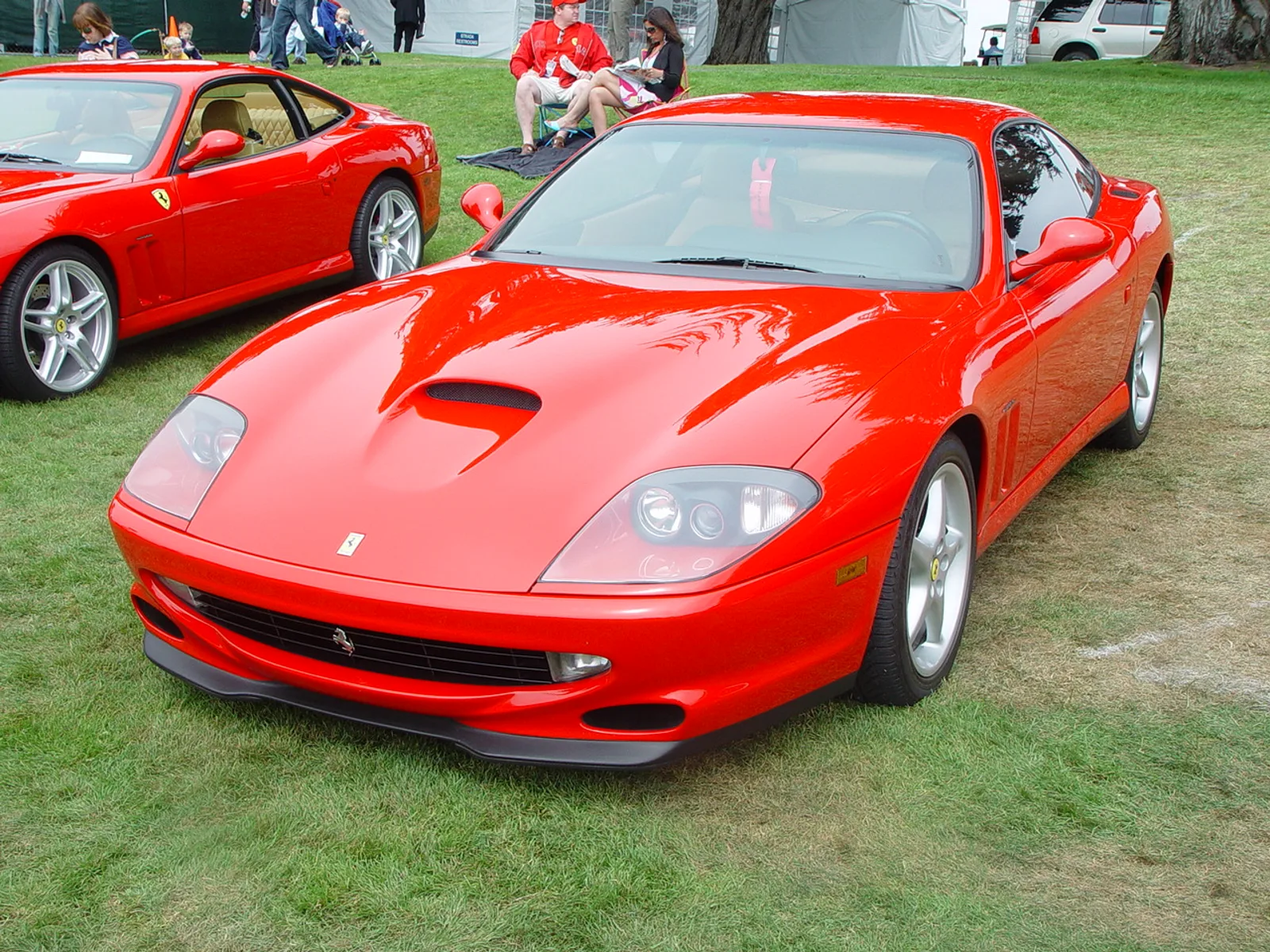
The Ferrari 550 Maranello was a two-seat front-engined V12 grand tourer built from 1996 to 2002. Its 5,474 cc engine made 485 PS, and a Barchetta roadster and racing versions followed.
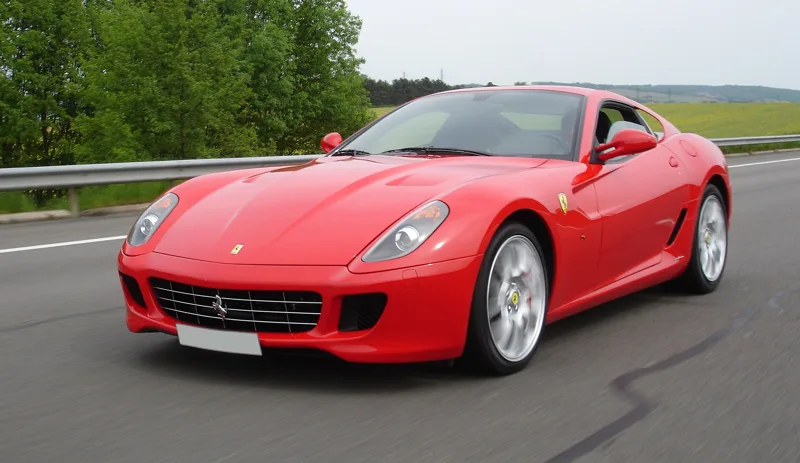
The Ferrari 550 Maranello was a front-engined V12 two-seat grand tourer that Ferrari built from 1996 to 2002. It restored a layout the company had dropped in 1973. Its Barchetta roadster and racing versions extended the car's story.
Why did Ferrari return to a front-engined V12?
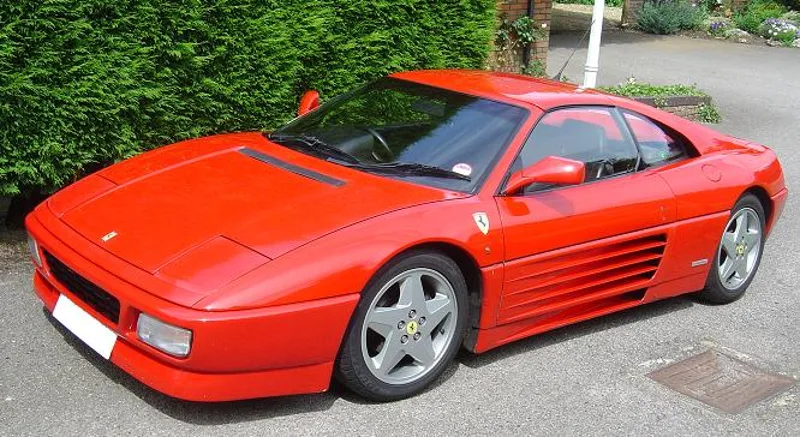
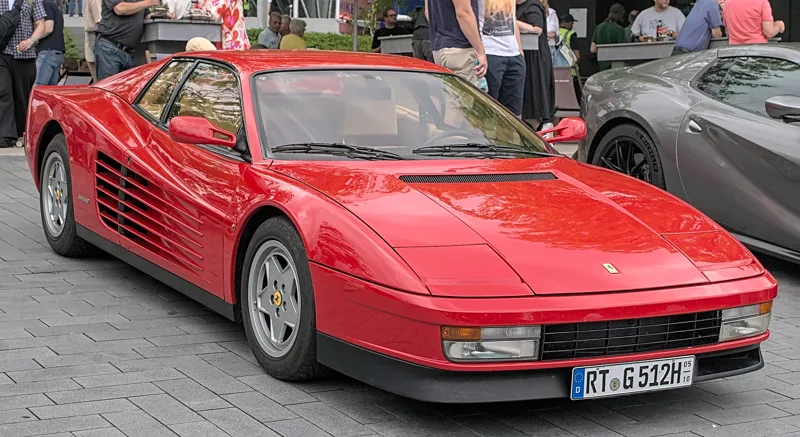
The 550 Maranello marked Ferrari's return to a front-engined, rear-wheel drive layout for its two-seat V12 model. That came 23 years after the 365 GTB/4 Daytona was replaced by the mid-engined Berlinetta Boxer in 1973. The Berlinetta Boxer had been developed into the Testarossa, whose final evolution was the F512 M in 1994.
Luca Cordero di Montezemolo became president of Ferrari in 1991. Under his leadership the F512 M replacement was developed as a traditional front-engined V12 grand tourer.
The development programme took 30 months. The car was unveiled in July 1996 at the Nurburgring racing circuit in Germany, and production followed as the 550 Maranello.
A front-engined V12 that brought back Ferrari's classic grand tourer layout in 1996.
Where did the 550's name come from?
The interior was penned by Goran Popovic.
The 550's interior therefore came from a different designer than its exterior.
Pininfarina executed both the exterior and interior design. The exterior was credited to Elvio D'Aprile under the supervision of Lorenzo Ramaciotti, and the work was carried out between 1993 and 1996. The interior was penned by Goran Popovic.
How was the 550 built and what did it share with the 456?
The 550 used a tubular steel space frame, to which aluminium body panels were soldered. Its frame and main engine components were shared with the 2+2 Ferrari 456.
The 550's wheelbase measured 2,500 mm (98.4 in), which was 100 mm (3.9 in) shorter than the 456's.
In 2002 the 550 was replaced by the 575M Maranello. The 575M was an all-around improved version of the car rather than an all-new design, and it used a larger 5.75-litre version of the F133 engine.
Its F133 engine line therefore carried on into the next model.
A total of 3,083 units of the 550 Maranello were produced between 1996 and 2001.
What engine powered the 550 Maranello?
The F133 A is a naturally aspirated V12 set at 65 degrees, with four valves per cylinder and twin overhead camshafts. Its capacity is 5,474 cc, and its intake manifold is variable in length.
Bore and stroke measure 88 mm and 75 mm, and the engine used a variable length intake manifold.
The Barchetta used a very similar engine with the same output, which carried the F133 C engine code.
The coupe and the roadster therefore shared the same powertrain.
How fast was the 550 Maranello?
According to Ferrari, the 550 Maranello had a top speed of 320 km/h (199 mph) and could accelerate from a standstill to 100 km/h (62 mph) in 4.4 seconds.
Motor Trend ran the car in 2000 and timed 0 to 60 mph (0 to 97 km/h) at 4.2 seconds. The same test gave 9.6 seconds from 0 to 100 mph (0 to 161 km/h), and 12.5 seconds for a quarter mile at 116.9 mph.
The Motor Trend time for 0 to 60 mph was close to the claimed 4.4 seconds for 0 to 100 km/h.
What chassis and braking systems did the 550 use?
The Pininfarina-designed body had a drag coefficient of 0.33. The suspension used double wishbones, with a coaxial coil spring and damper unit on all four corners, along with anti-roll bars at the front and rear.
Front discs were 330 mm (13.0 in) across and rear discs 310 mm (12.2 in), both vented. A four-way anti-lock braking system was fitted.
The 18-inch wheels were made from magnesium alloy. The electronic driver aids included traction control that could be set to two levels or turned off entirely.
The steering was rack and pinion, with variable power assist.
The gearbox was a six-speed unit located at the rear axle, paired with a limited-slip differential.
What speed records did the 550 set?
In October 1998 Ferrari sent a lightly modified 550 to a 12-kilometre oval test track at the Transportation Research Center in East Liberty, Ohio. The car set three new world records on that track.
The first record was 100 miles at an average of 190.2 mph (306 km/h). The second was 100 kilometres at an average of 188.9 mph (304 km/h), and the third was one hour at an average of 184 mph (296 km/h).
Ferrari then built 33 road cars matching the specification of the record car. Those cars were finished to European specifications and carried the Fiorano handling pack and a leather-trimmed roll cage.
A preproduction Lamborghini Murcielago broke the records in 2002.
What was the 550 Barchetta?
The Barchetta went on show at the Paris Motor Show in 2000, marking Pininfarina's 70th anniversary. It was a true barchetta with no real convertible top, and it was fitted with a deeply raked windscreen and roll-over hoops behind the seats.
Barchetta is an Italian term for a small open sports car, and the name reflects the car's lack of a real roof.
The factory supplied a cloth top, but only as a temporary cover against rain. Going above 70 mph (113 km/h) with it fitted was considered unsafe.
The Barchetta had a longer rear section than the coupe, which gave it more cargo space. Other changes included new 19-inch alloy wheels made especially for the Barchetta. The same anniversary also produced the Rossa concept, which was shown at the 2000 Turin Motor Show.
A total of 448 cars were produced, four more than the 444 first planned. The number was changed because of concerns about superstition in the Japanese market, where four is considered unlucky.
The 448 cars were preceded by 12 prototypes numbered P01 to P12 on their interior plaques. To an observer the prototypes and production cars were indistinguishable. The Barchetta's top speed was 186 mph (300 km/h), against 320 km/h (199 mph) for the coupe.
Those prototypes were built before the production cars were finished.
Every production car had a numbered plaque on the dashboard, reading x of 448, with the signature of Sergio Pininfarina.
Which concept cars and one-offs followed the 550?
The Rossa was a 550-based concept car introduced at the 2000 Turin Motor Show, also to celebrate Pininfarina's 70th anniversary. It shared the mechanical components of the 550 Maranello, and it was a two-door speedster in form.
The Rossa was designed by Ken Okuyama at Pininfarina, and it was inspired by the 1958 Ferrari 250 Testa Rossa. Some of its styling elements later found their way onto production Ferraris such as the Enzo and the F430.
On 28 October 2009, Zagato and Ferrari revealed a roadster version of the GTZ coupe, marking the long collaboration between the two companies. The result, the 550 GTZ Barchetta, was limited to three units, one of them right-hand drive.
Each GTZ Barchetta was priced at 1 million pounds sterling.
The right-hand drive car sold at a Bonhams auction in December 2019 for 575,000 pounds.
The Touring Superleggera Veloce12 was a later coachbuilt grand tourer, based on the Ferrari 550 and built by Carrozzeria Touring Superleggera. Only 30 were planned, and it was unveiled at Monterey Car Week in 2024.
The Veloce12 therefore marked a later return of the 550 platform to the market.
How did the 550 perform in motorsport?
Although the 550 was not intended for motorsport, privateer teams developed it for various series. The first racing 550, known as the 550 GT, was built for the French team Red Racing. It was first tested in April 1999 and raced in the GT3 class of the French FFSA GT Championship.
The older 550 GT also appeared at the 2003 24 Hours of Le Mans in the ACO GT class, but it failed to finish because of technical problems.
In 2000, Italtecnica built another race car called the 550 Millennio for the FIA GT Championship. The first car debuted in the 2000 championship, and in 2001 Team Rafanelli fielded two cars.
In November 2000, the German entrepreneur and engineer Franz Wieth launched a further racing version named the 550 GTS. Two cars were built.
In 2001 Prodrive built a racing version of the 550 for the sports car series and the 24 Hours of Le Mans. It was built for Care Racing Development, and ten cars were built.
Did the 550 race win titles?
Yes. Prodrive's 550 GTS won the GTS class at the 2003 24 Hours of Le Mans, and BMS Scuderia Italia took the FIA GT Championship crown in 2004.
Prodrive switched to its next project, the Aston Martin DBR9, in 2005.
Following the success of Prodrive's 550 GTS, Ferrari developed the 575 GTC race car from the 575M, which was then offered to privateers as a customer car.
What awards did the 550 Maranello win?
In 2004, Evo magazine ran a Greatest Drivers' Car showdown that included cars from the previous ten years. The 550 Maranello won that contest, and the magazine said that no single facet dominated the experience.
The 5.5-litre F133 V12 won the over 4 litre class of the International Engine of the Year award in 2000 and again in 2001.
What were the Ferrari 550 specifications?
| Specification | Detail |
|---|---|
| Type | F133, front-engined V12 two-seat grand tourer |
| Years built | 1996 to 2002 |
| Engine | 5,474 cc naturally aspirated 65-degree V12, F133 A |
| Bore and stroke | 88 mm by 75 mm |
| Output | 485 PS (357 kW; 478 hp) at 7,000 rpm |
| Torque | 568.1 N-m (419 lb-ft) at 5,000 rpm |
| Top speed | 320 km/h (199 mph), Ferrari claim |
| 0-100 km/h | 4.4 seconds, Ferrari claim |
| Drag coefficient | 0.33 |
| Wheelbase | 2,500 mm (98.4 in) |
| Brakes | Vented discs, 330 mm (13.0 in) front and 310 mm (12.2 in) rear |
| Wheels | 18-inch magnesium alloy |
| Gearbox | Six-speed at the rear axle with limited-slip differential |
| Production | 3,083 units, 1996 to 2001 |
Its 448-unit production run was a separate count from the coupe's 3,083 units, and the table sets out the coupe's figures.