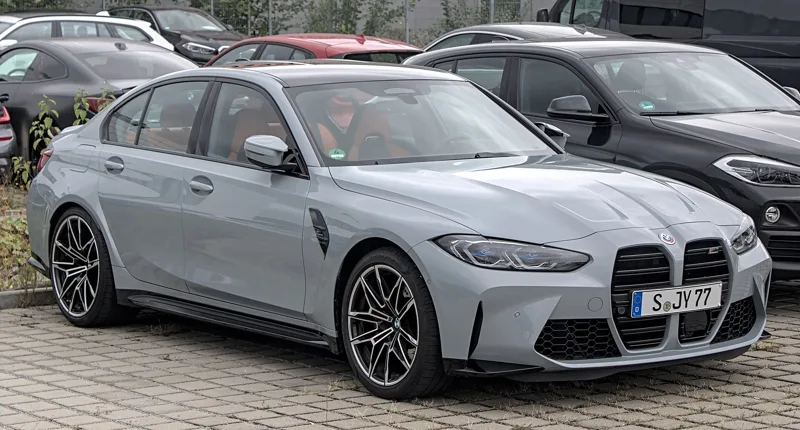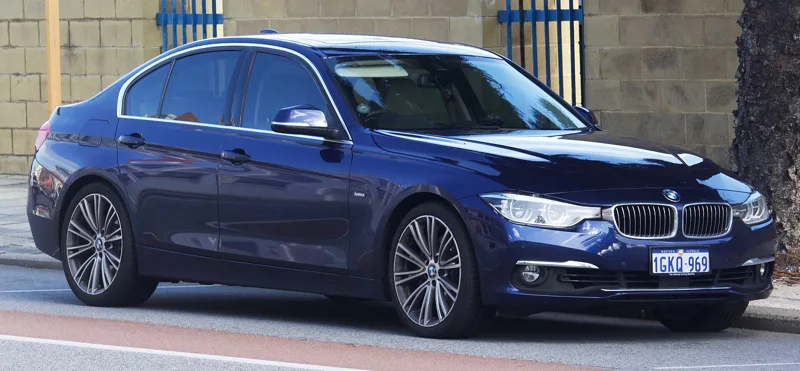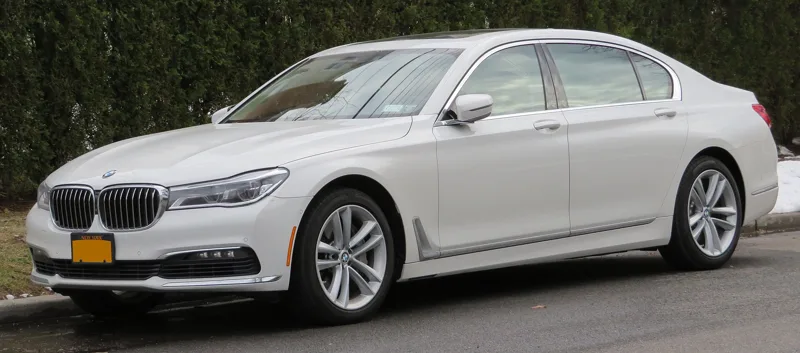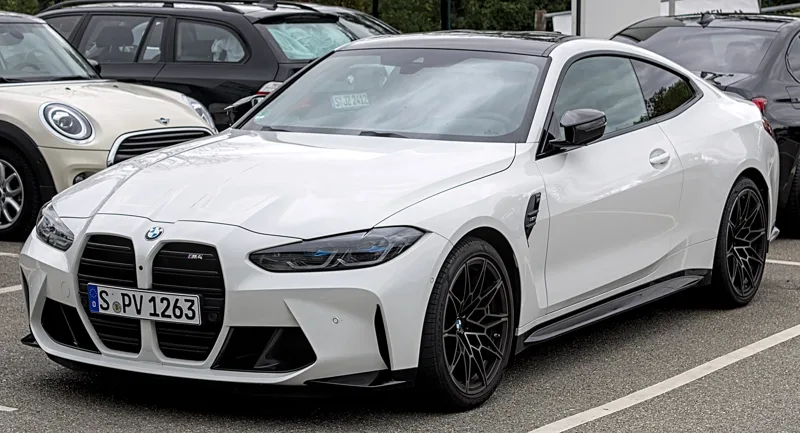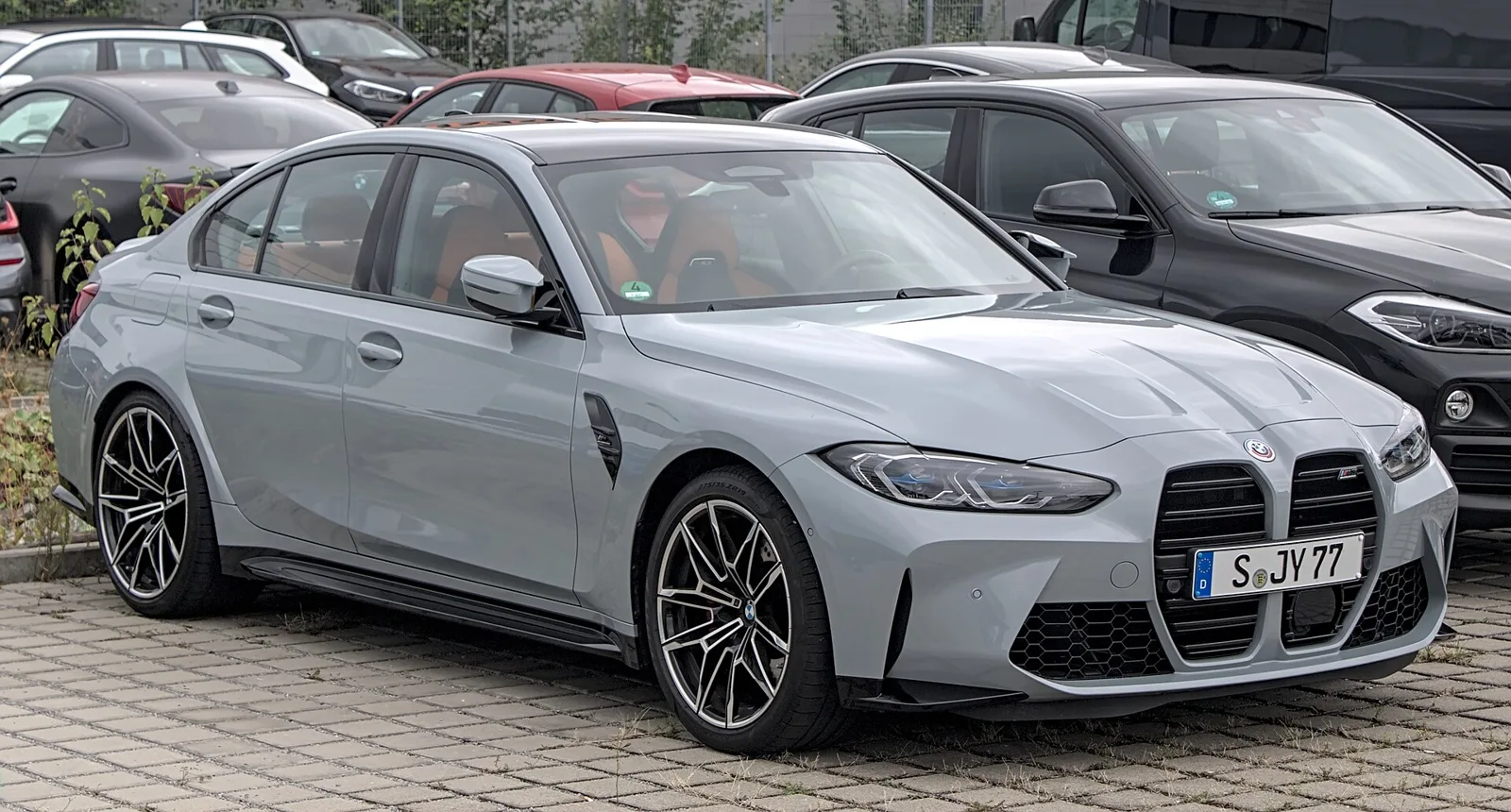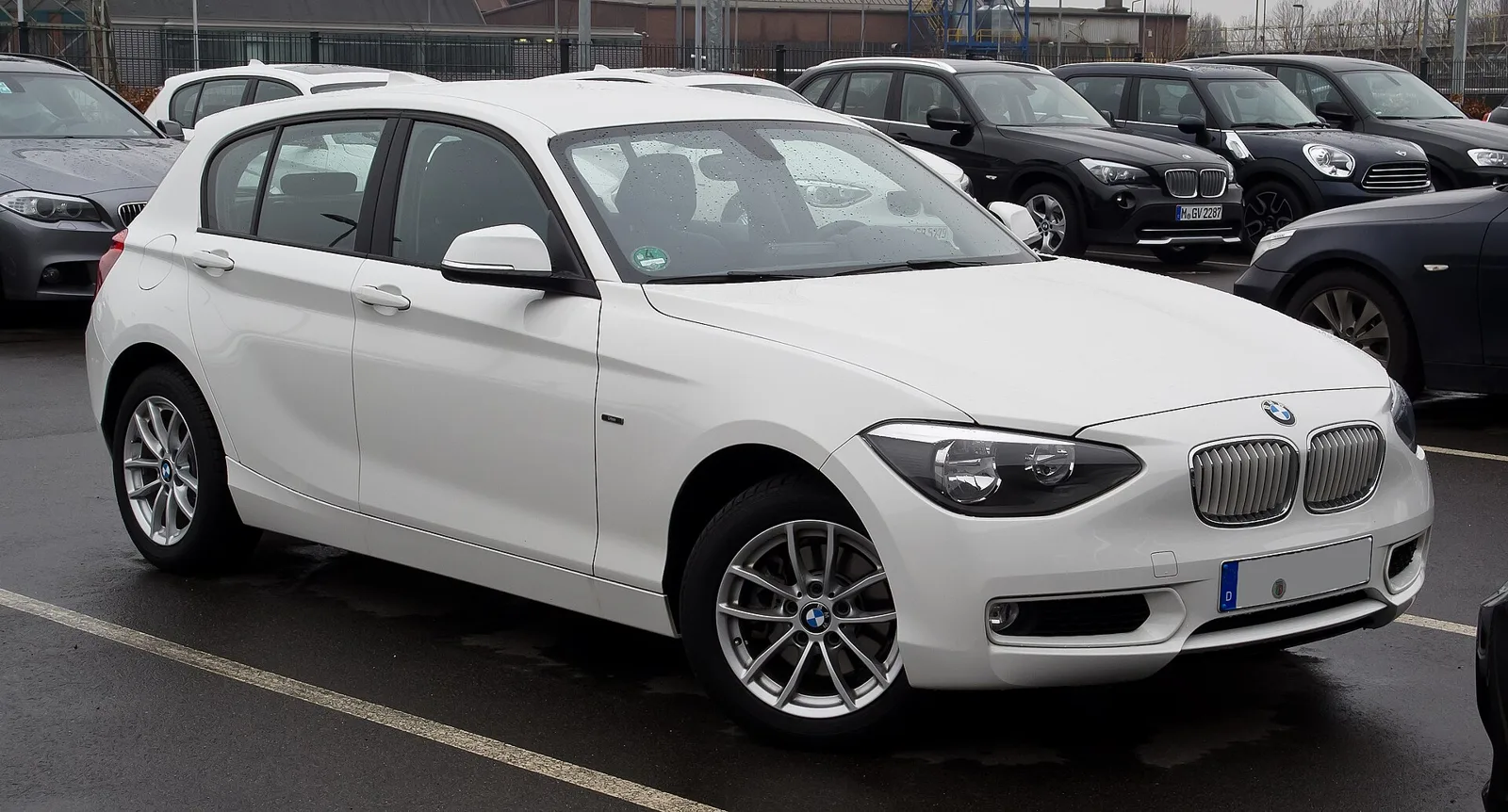
The even numbers took the two-door cars, then the 2 Series wandered onto front-wheel drive with an MPV and a four-door Gran Coupe.
The 2 Series dates from 2014, when the two-door coupe and convertible left the 1 Series, and the 4 Series likewise took over from the 3 Series coupe and convertible. The 2 Series later added a front-drive Active Tourer MPV and a four-door Gran Coupe.
The first BMW-branded car without rear-wheel drive carries a 2 Series badge, and before it launched it was supposed to be called the 1 Series Gran Turismo. That mismatch sits at the heart of how BMW's even numbers work today: the 2 Series and 4 Series began as coupes and convertibles carved off the 1 Series and 3 Series, then grew into something much broader.
The 1 Series hatchbacks, the 2 Series in its many bodies and the 4 Series in three can look like a tangle of codes. Following the chassis numbers from F20 to G42 and from F32 to F36 shows which cars share a platform, which ones broke BMW's rear-drive tradition and where each one raced.
Where do BMW's even numbers come from?
BMW created the 2 Series in 2014 by spinning the two-door coupe and convertible out of the 1 Series, and the 4 Series line took over from the coupe and convertible of the fifth-generation 3 Series. The odd-numbered cars kept the hatchbacks and saloons, and the even-numbered ones took the two-door bodies.
On the 1 Series side the story is simple. The second-generation 1 Series, the F20 five-door and F21 three-door, was built from 2011 to 2019, and for it the coupe and convertible were marketed separately under the new 2 Series nameplate. The first 2 Series coupe and convertible, the F22 and F23, entered production in November 2013 as successors to the E82 1 Series coupe and E88 convertible. They were built in Leipzig alongside the F20 and used the same platform.
The 4 Series followed the same logic from the 3 Series side. Official details of the Concept 4 Series appeared in December 2012, setting out the intention to replace the E92 3 Series coupe with a new 4 Series line, and Won Kyu Kang's design for a concept coupe debuted at the 2013 Detroit show. The production F32 took over from the E92 and E93 coupe and convertible, built alongside and sharing many features with the F30 3 Series.
The even numbers started as a way to separate two-door cars from hatchbacks and saloons, then stretched to cover an MPV and a four-door.
What changed with the BMW 1 Series F20 and F21?
The F20 and F21 were subcompact hatchbacks that kept rear-wheel drive for most models, unlike most hatchback rivals. They were also the first 1 Series offered with optional all-wheel drive, which BMW calls xDrive, and every engine was turbocharged.
The five-door F20 appeared first, at the Frankfurt Motor Show in 2011 and then at Auto Guangzhou. Early models were the 116i, 118i, 116d, 118d and 120d, with the 125i, 125d and a 116d EfficientDynamics Edition added in 2012. In July 2012 the 114i and M135i joined, followed by xDrive on the 120d and M135i. The three-door F21 was unveiled at Auto Mobil International Leipzig in 2012, with styling overseen by Nicolas Huet, and the inline-six M135i was shown in that body at the Geneva show the same year.
Early engines were petrol and diesel fours plus a petrol six, all inline. Inline-three engines, petrol and diesel, arrived in 2015. Most cars used a six-speed manual from Getrag, the M135i and M140i used a ZF manual, and an eight-speed ZF automatic was offered across the range. Aluminium multi-link suspension carried over from the E87 predecessor.
Trim levels were Sport Line, Urban Line and M Sport, and equipment included an 8.8-inch navigation screen, iDrive, LED headlights and digital radio. Owners of M Sport and M Performance cars could add M Performance Parts such as black kidney grilles, carbon-fibre mirrors and a silencer for the M135i and M140i.
Facelift and later updates
The facelift, known as the LCI or F20N, was unveiled at the Geneva show on 5 March 2015. It brought revised bumpers, tail-lights and LED headlights, and it swapped the old diesels for the three-cylinder B37 in the 116d and the four-cylinder B47 in the 118d, 120d and 125d. The 116i and 118i moved from the N13 four to the three-cylinder B38, a 120i arrived with the N13, and the M135i gained 5 kW (7 hp).
From 2016 the M140i took the M135i's place, powered by the B58 six, while the 120i and 125i adopted the B48 four. The 2017 changes added an M Sport Shadow Edition, Seaside Blue and Sunset Orange paint, new wheels, a revised dashboard and iDrive 6.0. The F40 began production as the successor in July 2019.
The F20 collected prizes. It won the Golden Steering Wheel from Bild am Sonntag in 2011, the M135i was named best compact car up to 50,000 euros by Sport Auto in 2015, and What Car? chose the M140i as best hot hatch over 25,000 pounds in 2017. Production took place in Leipzig and Regensburg, with complete knock-down assembly in Araquari in Brazil, Chennai in India, Kulim in Malaysia and Rayong in Thailand.
How does the BMW 2 Series compare with the 4 Series?
The first 2 Series coupe and convertible (F22 and F23) used the rear-drive platform shared with the F20, while the 4 Series (F32 and F33) was built alongside the F30 3 Series. Both families topped out in an M car: the M2 for the smaller, the M4 for the larger.
The 2 Series range included the 220, 228 and 230, with the M235i, which used the N55 engine, as the top coupe until the B58-powered M240 replaced it. The F87 M2, introduced in 2016, started with the N55 inline-six, and the Competition and CS versions moved to the S55.
The F32 grew from the E92 it replaced, with a wheelbase 50 mm longer, an overall length 31 mm greater and a body 44 mm wider. Front and rear tracks widened by 45 mm and 80 mm to 1,545 mm and 1,593 mm. Petrol and diesel engines had three cylinders (petrol only), four or six, and most models could be had with xDrive.
What did the BMW 4 Series F32 range include?
The first-generation 4 Series, produced from 2013 to 2020 and often called the F32 collectively, covered three bodies: the F32 coupe, the F33 convertible and the F36 five-door Gran Coupe. The high-performance F82 and F83 M4 versions followed in early 2014.
The coupe was unveiled at the Frankfurt show in September 2013, with Nicolas Huet as lead designer. The launch cars were the 428i, 435i and 420d, and the 420i, 425d, 430d and 435d came before the year ended, with the 418d added in 2014. The convertible was revealed at the Tokyo show in 2013 and launched internationally in Las Vegas in January 2014. Like its predecessor, it had a three-part retractable hardtop, with noise-absorbing headliner, air curtains and optional neck warmers and a wind deflector.
The Gran Coupe appeared at Geneva in 2014, with production at Dingolfing starting in July 2014. It had fastback styling, but a C-pillar behind the rear doors, and offered 13 mm less rear headroom than the F30 saloon. With the rear seats folded, its boot held 1,300 litres (45.9 cu ft). The 435i version was around 91 kg (200 lb) heavier than the equivalent 335i saloon.
The 2016 update replaced the 435i with the 440i and the 428i with the 430i. The facelift came on 16 January 2017 with redesigned LED lights and bumpers, iDrive 6.0 and stiffer suspension on the coupe and Gran Coupe. The pictures showed the coupe in Snapper Rocks Blue and the convertible in Sunset Orange. Alpina offered the B4 petrol and D4 diesel versions of the F32.
What made the BMW F82 M4 different?
The F82 coupe and F83 convertible M4 were among the first M cars to carry their own model codes instead of sharing the numbers of the standard range. Their S55 twin-turbocharged straight-six produced 317 kW (425 hp) and 550 Nm, and buyers could choose a six-speed manual or a seven-speed M-DCT dual-clutch gearbox.
Underneath sat an electronically controlled limited-slip differential, electric steering and an aluminium five-link rear end, plus extra bolted joints between axle subframe and sills. Carbon fibre appears in the roof, boot lid, strut brace and driveshaft, and the subframes mount to the chassis without rubber bushings, which is unusual. The concept M4 coupe made its debut at the Pebble Beach Concours d'Elegance on 15 August 2013, and the production car followed at Detroit on 13 January 2014.
On track, BMW developed the M4 DTM in 2013 as the successor to the E92 M3 DTM, and it raced from 2014. Marco Wittmann won the Drivers' Championship in 2014 and 2016, and Team RMG took the 2014 Teams' title. An M4 also served as the safety car at DTM races and at MotoGP events from 2014, fitted with Recaro seats, a roll bar and roof lights.
Why is the BMW 2 Series Active Tourer different?
The 2 Series Active Tourer is a compact two-row MPV with five doors, built on BMW's front-drive UKL2 platform, and the first BMW-branded model not to use rear-wheel drive. Production began in August 2014 and sales opened in November 2014. It is mechanically related to the Mini Countryman, and BMW aimed it directly at the Mercedes-Benz B-Class.
Its roots go back to the Concept Active Tourer, a plug-in hybrid with a 1.5-litre three-cylinder petrol engine shown at the Paris show in 2012. The production car arrived at Geneva in 2014 with the 218i, 225i and 218d at first, and the 220d and 220i following. An optional xDrive system provides four-wheel drive. Neither the Active Tourer nor the Gran Tourer was ever sold in the United States, and in China BMW Brilliance began building the car in Shenyang in early 2016, offering only the 218i and 220i.
The Gran Tourer followed in June 2015 with a wheelbase stretched by 110 mm to 2,780 mm, to make room for a folding third row. It is the first and only three-row MPV BMW has built. Cargo space in the standard five-seat version is 645 litres, rising to 805 litres with the rear seats slid forward, and 560 litres with the third row folded flat. BMW discontinued it in 2021 without a direct successor, citing poor sales and the rising popularity of crossovers and SUVs, leaving the X7 as the only BMW with a third row.
The second-generation Active Tourer (U06) was unveiled in October 2021 as a two-row model only, with petrol and diesel engines and a range of plug-in hybrids from 2022.
What is the BMW 2 Series Gran Coupe?
The Gran Coupe is the four-door saloon in the 2 Series family, revealed in October 2019 as the F44. It rides on the same front-wheel-drive UKL2 platform as the Active Tourer, shares its basis with the 1 Series hatchback and is the smallest four-door saloon BMW sells, although China and Mexico get the smaller F52 1 Series sedan instead.
The second-generation F74 was unveiled on 15 October 2024. It keeps the UKL2 layout, shares components with the F70 1 Series and has a completely redesigned interior with a curved display running BMW Operating System 9. The standard engine is a 1.5-litre three-cylinder mild hybrid based on the B38.
What came with the second-generation 2 Series coupe?
The G42 coupe, revealed in July 2021, stays rear-wheel drive on the CLAR platform, with roughly 50-50 weight distribution and many parts and engines shared with the G20 3 Series and G22 4 Series. It is not offered with a manual gearbox or as a convertible.
Launch models were the 220d mild-hybrid diesel, the 220i and 230i petrols and the M240i xDrive at the top. The G42 is built only at the San Luis Potosi plant in Mexico and is the first BMW designed by BMW of Mexico, with production starting on 2 September 2021.
Which 2 Series models went racing?
BMW Motorsport built the M235i Racing from 2014 to 2018 as an affordable track car for amateurs, with a modified N55 producing 329 hp (245 kW) and 450 Nm, an eight-speed automatic, a mechanical limited-slip differential and bigger brakes and springs. It ran in the BMW M235i Racing Cup at the Nurburgring and was sold to customer teams in the 24H Series and Pirelli World Challenge.
The M240i Racing, used from the 2019 season, raised output to 340 hp (254 kW) and torque to 460 Nm from the same twin-turbo inline-six, and deliveries began in 2020. The 1 Series also raced: the F20 contested the BTCC between 2013 and 2020, and Colin Turkington took the Drivers' title in a 125i M Sport in 2014 and 2018, with the Constructors' and Teams' championships every year from 2016 to 2018.
How do the BMW 1, 2 and 4 Series line up?
| Family | Body styles | Codes | Layout |
|---|---|---|---|
| 1 Series | Five-door and three-door hatchbacks | F20 and F21, 2011 to 2019 | Mostly rear-wheel drive, xDrive optional |
| 2 Series coupe | Coupe and convertible, then coupe only | F22 and F23, 2014; G42, 2021 | Rear-wheel drive |
| 2 Series Active Tourer and Gran Tourer | Five-seat and three-row MPVs | F45 and F46, 2014; U06, 2021 | Front-wheel drive, xDrive optional |
| 2 Series Gran Coupe | Four-door saloon | F44, 2019; F74, 2025 | Front-wheel drive |
| 4 Series | Coupe, convertible and Gran Coupe | F32, F33 and F36, 2013 to 2020 | xDrive available on most models |
What is BMW building now?
The F74 2 Series Gran Coupe went into production at BMW's Leipzig plant in November 2024, with a market launch scheduled for March 2025. The Active Tourer U06 is built as a two-row MPV only, with plug-in hybrid versions offered since 2022.