How a van is lowered, fitted with a ramp or lift and tied down for wheelchair users, and why rear-entry conversions dominate the non-emergency transport market.
A wheelchair-accessible van has been enlarged inside and fitted with a ramp or powered lift for entry. Conversions lower the floor, adapt seating and suspension, and add tie-downs, with side-entry and rear-entry layouts suiting different users.
Such a van is altered in two ways: its interior is enlarged, and it is fitted with a means of wheelchair entry such as a ramp or powered lift. Conversions are carried out by specialist firms that lower the floor, adapt the seating, strengthen the suspension and secure the wheelchair. The result is a van that a wheelchair user can board either from the side or from the rear.
What is a wheelchair-accessible van?
The defining feature is the combination of more interior room and a dedicated entry system. The interior is made taller and wider in the areas the wheelchair occupies, and the entry system is either a ramp that folds or slides out of the vehicle or a platform lift that raises and lowers the occupant from inside. Both features are needed for the vehicle to work as a mobility product rather than a standard van.
Modifications generally fall into two categories. In one, the person in the wheelchair is the driver. In the other, the person is a passenger. The category shapes almost every later decision, from the seat layout to the type of ramp, because a driver needs controls and clearances that a passenger does not.
A van becomes wheelchair-accessible only when the floor, the entry system, the seats and the tie-downs are all engineered together.
What modifications does a conversion involve?
Most conversions begin by lowering part of the floor, usually from the rear seats forward to the firewall. Minivan floors are typically lowered by 10 to 14 inches for side-entry access, and a rear-entry conversion typically lowers the floor by 10 inches. The exact steps differ greatly from one manufacturer to another, so buyers should check each converter's method.
Seats are modified to allow wheelchair access. Front seats can sometimes be taken out so that the chair sits in the front row or amidships. Second-row seats are often removed altogether, which frees the lowered floor and lets the occupant turn and sit facing forward.
Suspension is adjusted too. The rear is usually raised with taller springs to carry the extra weight and to restore ground clearance that the lowered floor takes away. Higher quality vehicles raise all four corners so that the original driving characteristics are preserved.
Other systems are altered as well. Gas tanks and fuel lines may be moved, brake lines and mufflers rerouted, door panels extended and electrical systems changed. These alterations are far more extensive in a side-entry conversion than in a rear-entry one.
What do the ADA requirements demand?
An accessible van that meets the Americans with Disabilities Act must have a door opening height of 56 inches or greater, a ramp at least 30 inches wide, ramp edges 2 inches high, and a ramp angle of 6:1 or rise. Those figures set the practical limit on how steep a ramp can be, which matters most for wheelchairs with electric drive.
Compliance also depends on where a vehicle works. The ADA does not reach private non-emergency medical transportation vehicles, but states frequently set their own rules requiring NEMT vans to follow its standards. Operators therefore need to check local regulations as well as federal guidance.
Should a buyer choose side entry or rear entry?
Side entry and rear entry suit different users. Side entry lets the occupant take the wheel from a chair or sit up front on the passenger side, and it allows entry and exit on the kerb side, away from traffic. It also leaves more storage space. Its disadvantages are that it needs an accessible parking space or extra room for the ramp, and some driveways are too narrow for the vehicle.
Rear entry is simpler. It is much less costly, needs virtually no extra maintenance, and rides and drives much like an unconverted vehicle. It fits in any garage and needs no ramp room except when parallel parking. Its limits are that the occupant must enter and leave from the traffic side, and the wheelchair user cannot drive or sit in the front passenger seat.
| Feature | Side entry | Rear entry |
|---|---|---|
| Driving from the wheelchair | Possible | Not possible |
| Kerb-side entry | Yes, away from traffic | No, from the traffic side |
| Ramp room needed | Accessible space or extra room | None except parallel parking |
| Passenger capacity | Up to five, often two or three by weight | Six to eight |
| Floor lowering | 10 to 14 inches on minivans | 10 inches |
| Share of personal-use vehicles | About 65 percent | The remainder |
Rear-entry layouts have further practical advantages. The side passenger doors stay clear of the ramp, mid-row seats can be fitted beside the wheelchair position, and the extra ground clearance and length make room for long wheelchairs and leg rests. One manufacturer, FR Conversions, offers a 48 inch wide rear-entry ramp that it says can take virtually any wheelchair.
Why do rear-entry conversions suit transport providers?
Rear-entry minivans are widely used by non-emergency medical transportation providers, because they offer the easiest way to take wheelchair passengers on board. They can also be bought as used vehicles and converted to a used or new configuration, which places a wheelchair-accessible vehicle within reach of buyers who could not afford a new one.
The same design makes them a practical starter vehicle for a family unsure which configuration will suit them. It is also a sensible entry point for a wheelchair user moving from a carrier to a vehicle that removes the need to transfer. Rear-entry vehicles are available in two forms: the long cut, which takes two wheelchairs, and the short or taxi cut, which takes one. Seating can be arranged for up to six to eight passengers.
How do ramps differ from lifts?
Ramp conversions are most common on minivans. On side-entry vehicles the floor is lowered by 8 to 12 inches (203 to 305 mm). On rear-entry vehicles the floor is not lowered but removed, and a composite or steel tub is fitted in its place. Ramps come in two styles, fold-up and in-floor, and in two operating modes, manual or motorised.
A fold-up ramp folds in half and stows upright beside the side door in a side-entry vehicle, or inside the rear doors in a rear-entry vehicle. It gives a lower ramp angle than an in-floor ramp, but it can block the passenger door when stowed. An in-floor ramp slides into a pocket under the floor and is available only for side entry, which lets ambulatory passengers use the door on the kerb side.
Fold-up ramps have a useful safety role. An unaccompanied driver can self-rescue if the system fails, and a fold-out ramp can deploy over a kerb where an in-floor ramp cannot. In snowy climates the ramp stays inside, out of the weather. Fold-up ramps can rattle, although solenoid-controlled ramps with actuators on both sides tighten themselves and remove the problem.
Full-size vans need lifts instead, in the form of a platform that rises and lowers from inside the vehicle to the ground. Mono-arm, double-arm and under-vehicle lifts are available. Double-arm and underbody lifts suit minibuses and public transport buses, with bigger platforms and higher capacity, even for heavy electric wheelchairs with heavier occupants. Mono-arm lifts suit private vehicles, because they are lighter, smaller and fit side-door installations more easily.
Portable ramps are a cheaper alternative. They cost much less to buy and maintain, need no modification to the vehicle, and can be used for other access purposes because they are not fixed to the van.
Which vehicles are converted most often?
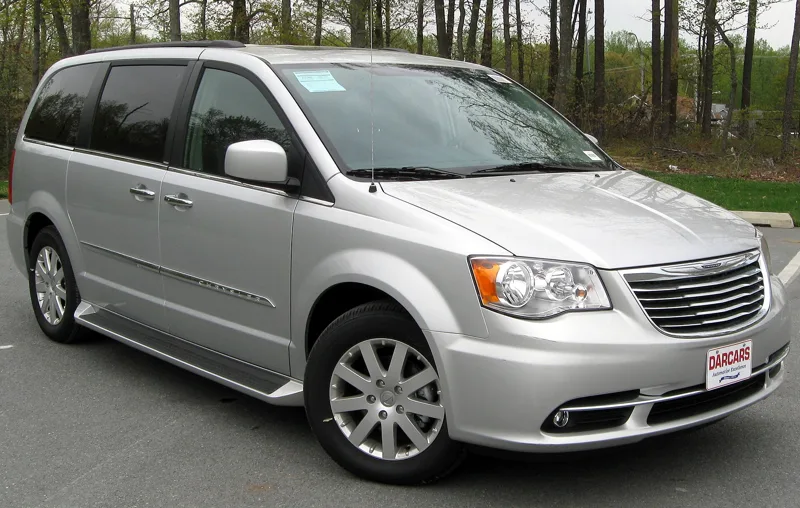
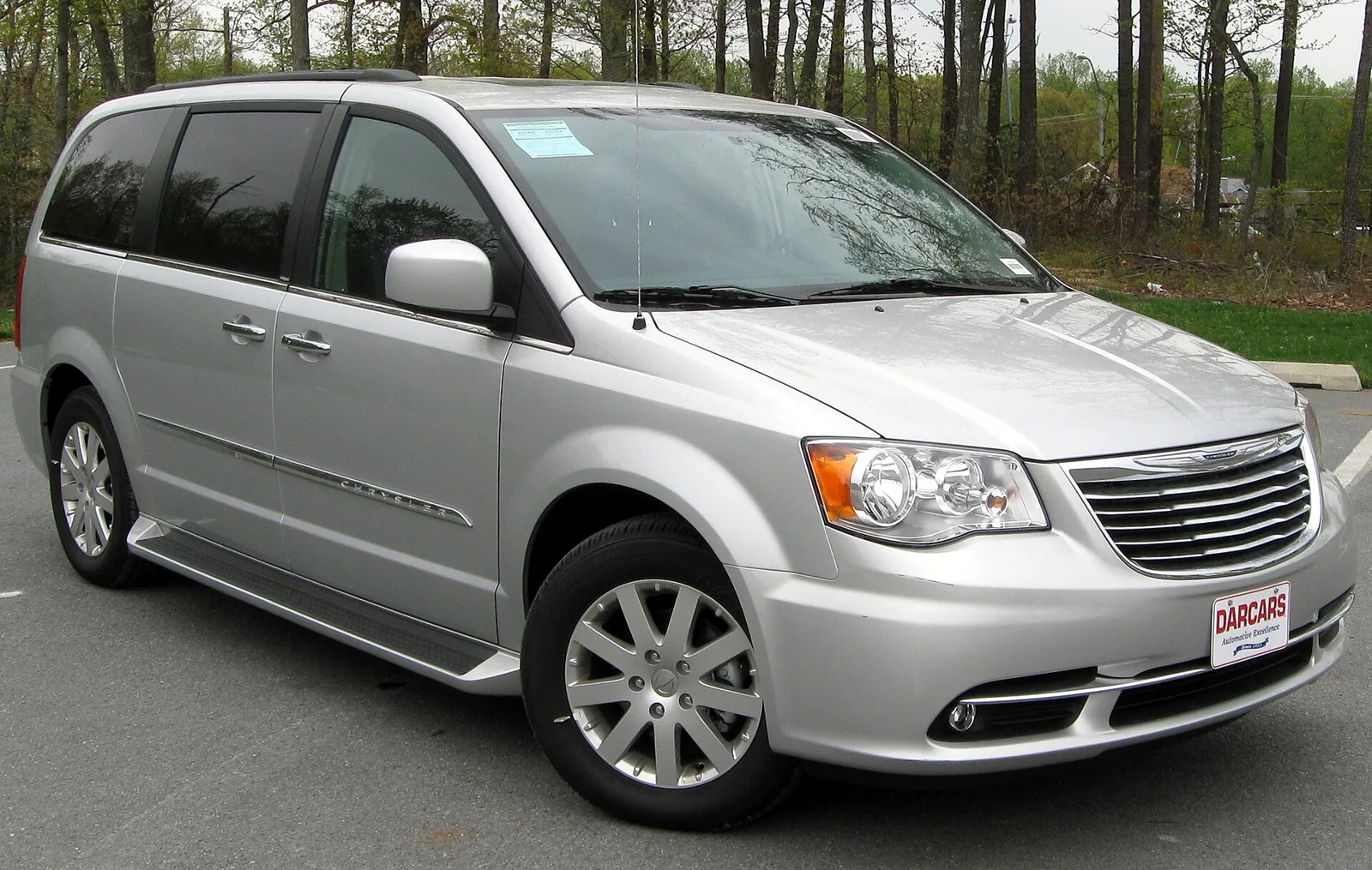
The Grand Caravan and the Town and Country from Chrysler were the most frequently converted models, partly because of cost and a long production run. They continue to be converted in the used and new market. The Pacifica, Chrysler's newer model, and the cheaper Voyager are expected to take over the conversion role from the Grand Caravan.
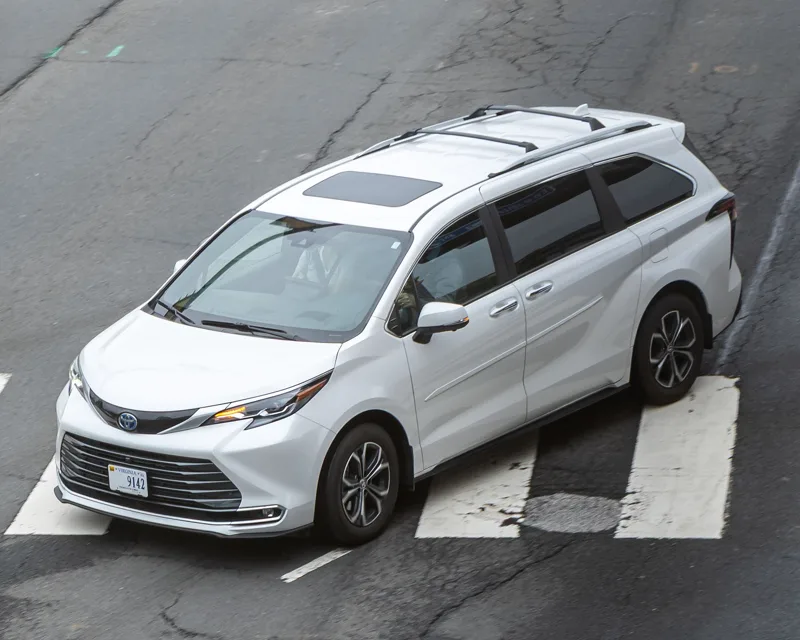
The Toyota Sienna is the second most converted chassis, and it is expected to keep its place with several conversion layouts. The Honda Odyssey is a distant third. Several converters offer it with side entry and an in-floor ramp, and some regard it as the most upmarket adapted option.
Among full-size vans, the Ram ProMaster leads, thanks to its interior volume, capacity, front-wheel drive and room for chairs of any size. Some manufacturers offer accessible versions of their own vehicles, as Luxgen did with its M7.
What are crane lifts and transfer seats?
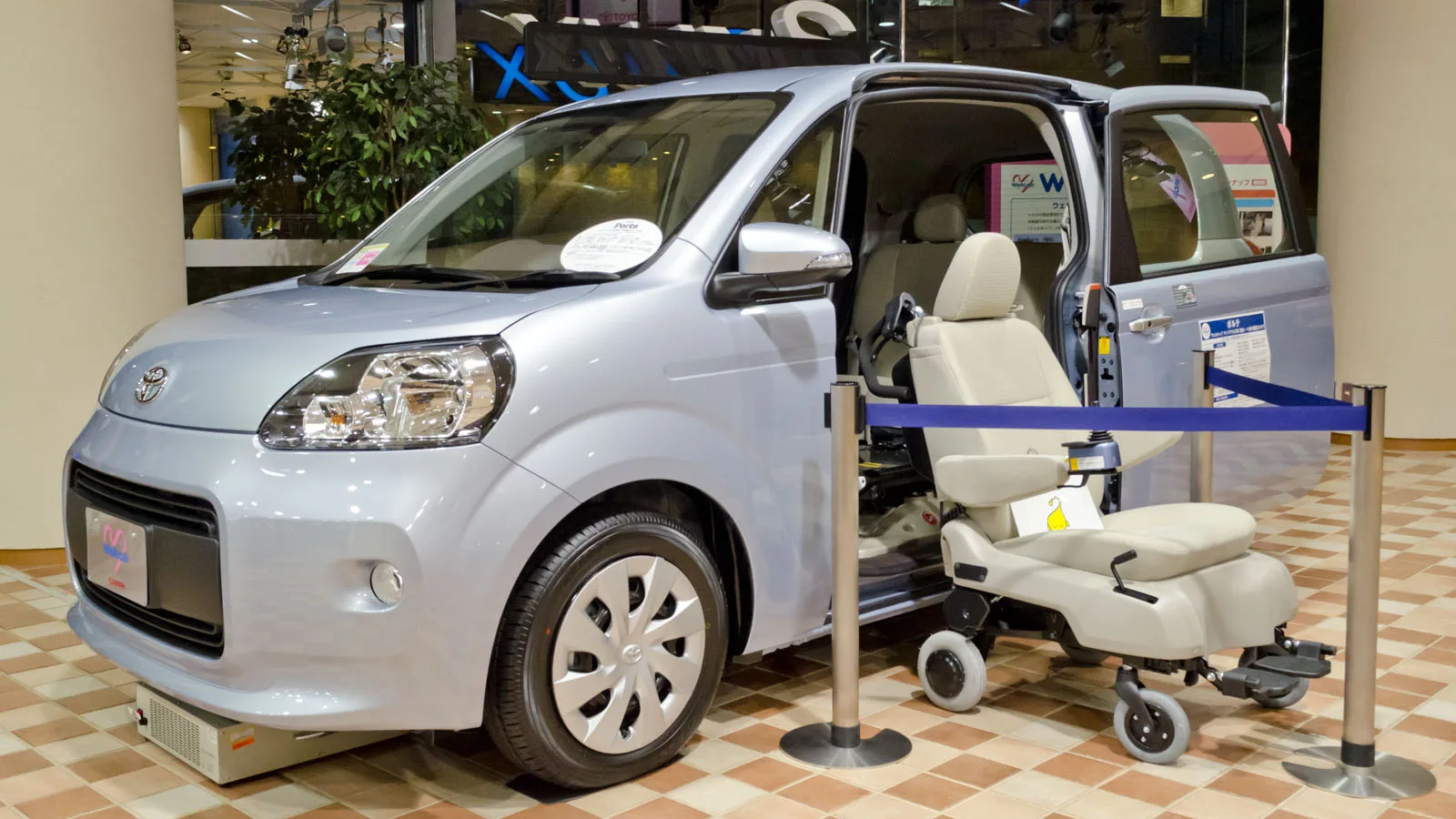
Crane lifts combine seats that turn and lower to the ground with the aim of giving wheelchair users access to certain vehicles. They are a specialist option rather than a mainstream one, and they depend on the seat mechanism working reliably.
Transfer seats are simpler. The driver's or passenger's front seat slides on a track back to the wheelchair position, so the user can move into the OEM seat and then slide it back into place. The conversion avoids the complicated engineering of a side-entry lift, which suits commercial and heavy-use fleets such as taxis, non-emergency ambulances, paratransit and dial-a-ride services. It also copes well in areas where road salt and chloride cause corrosion in winter.
How are wheelchair passengers secured?
Tie-down points are added to the floor, usually as L-track, which takes the tie-downs or a Q-Straint four-point system that clicks into it. Regular and independent users often fit a docking lock, where a pin on the wheelchair locks into a crash-tested receiver. Devices from EZLock and Q-Straint make loading and unloading much easier, and they are required for unattended wheelchair drivers.
Every wheelchair user must also be restrained by a seat belt while the vehicle is moving. Passenger conversions on buses or full-size vans add reinforced flooring, L-track and seating, with the tie-downs and any lift fitted at the side, rear or underneath.