How a car tells you a tyre is soft, why the Firestone recall pushed the United States to require the technology, and why the direct and indirect systems in use today work in very different ways.
A tyre pressure monitoring system warns the driver when a tyre is under-inflated. Direct systems use sensors in each wheel, while indirect systems infer pressure from wheel speed. Mandates followed the Firestone recall, and the US and EU now require TPMS on new passenger cars.
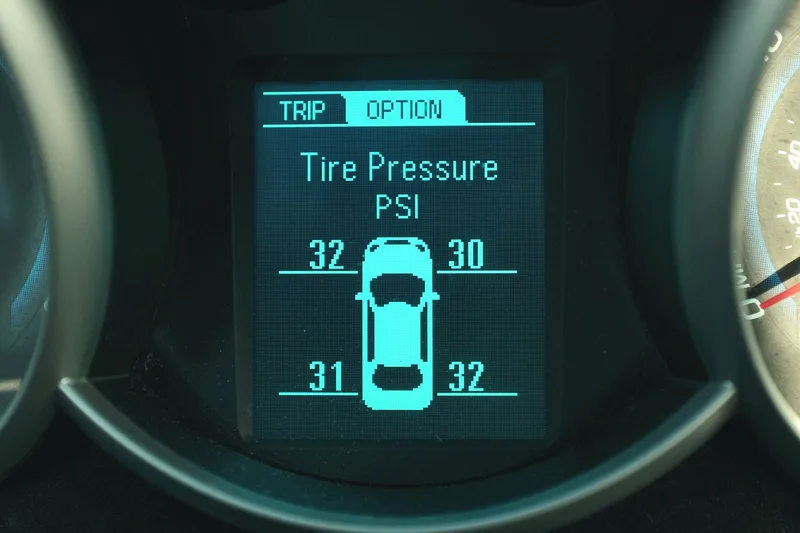
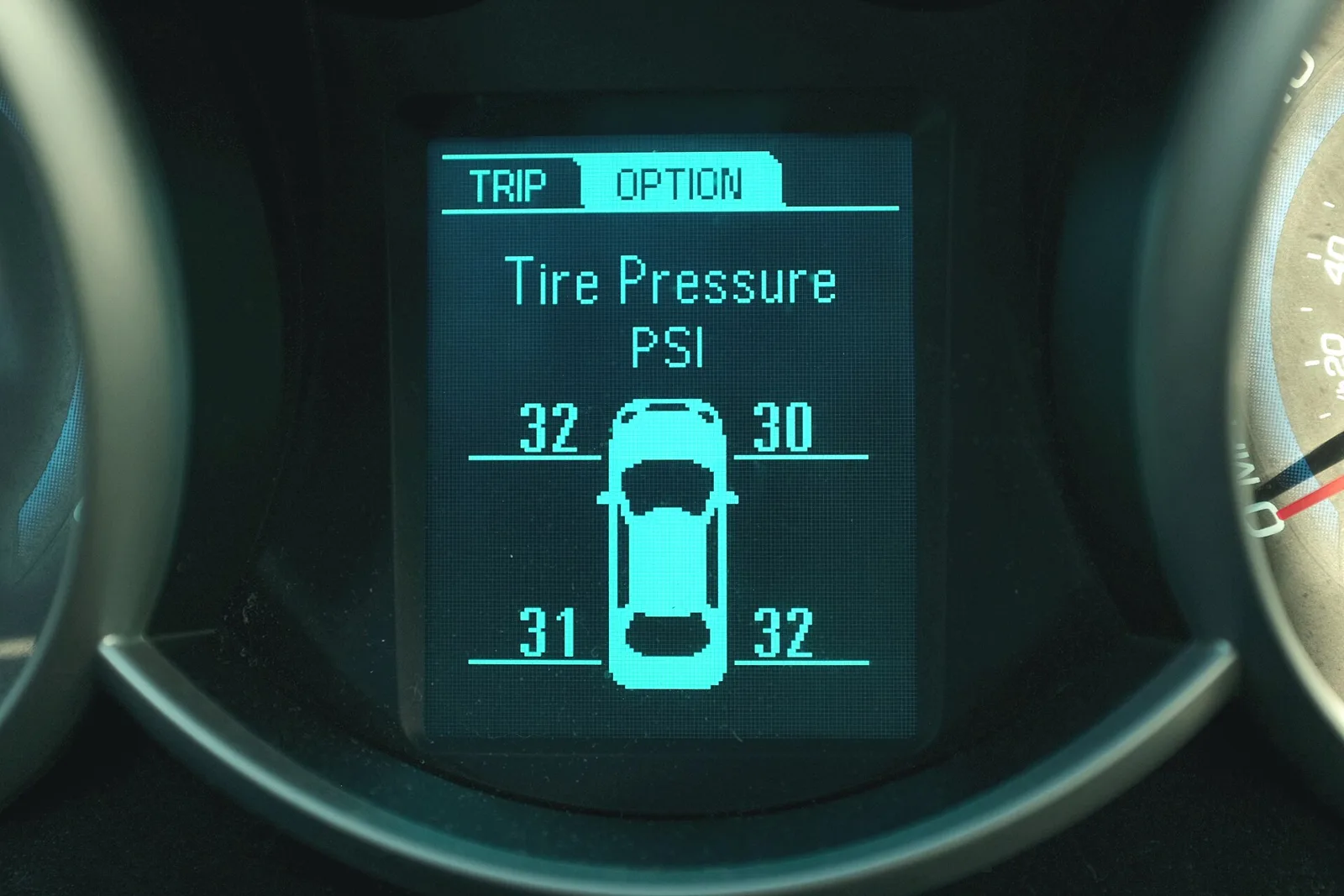
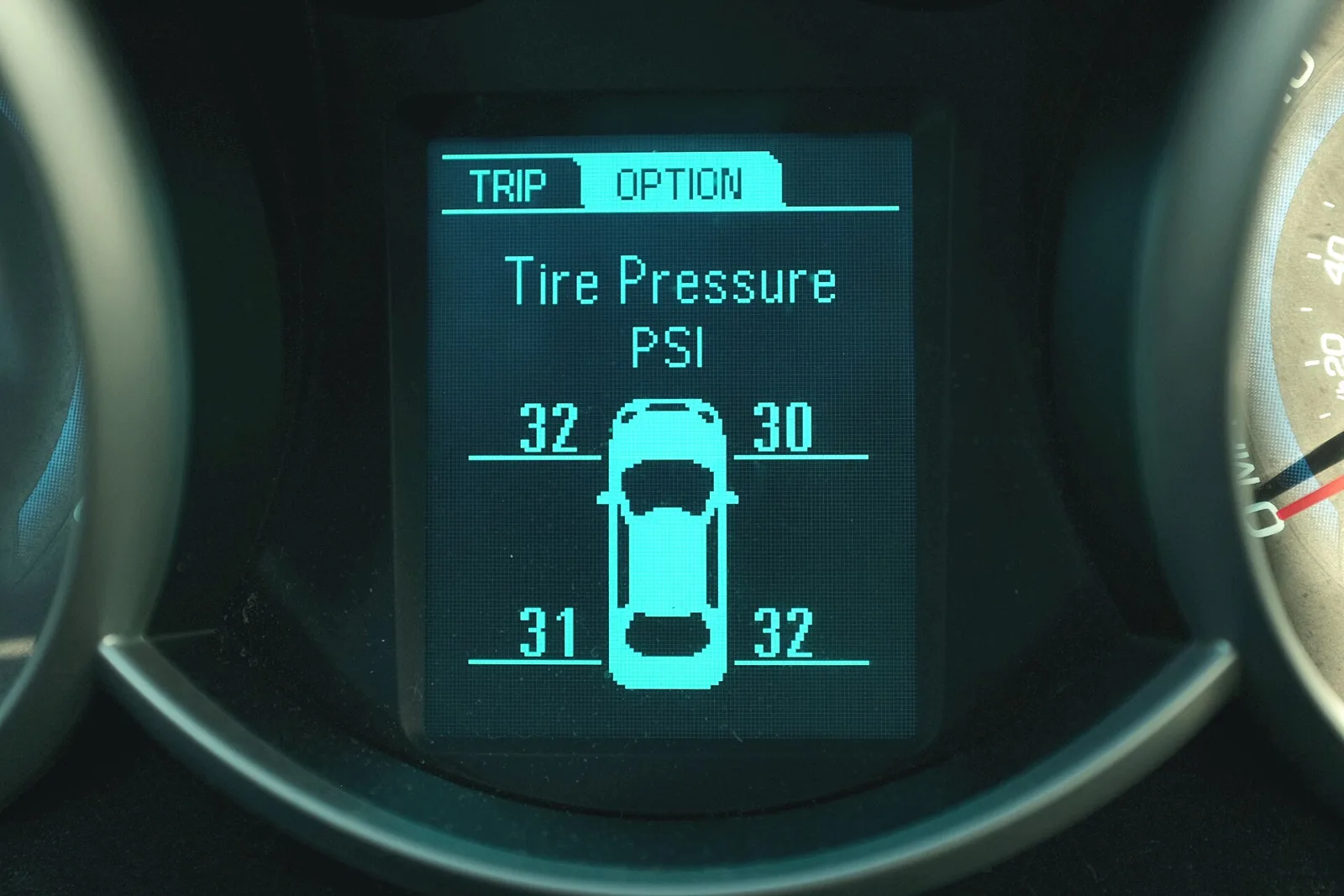
A tyre pressure monitoring system, or TPMS, watches the air pressure inside each pneumatic tyre on a vehicle and tells the driver when it falls too low. It reports through a gauge, a pictogram display or a simple warning light. Modern systems come in two main types, direct and indirect, and they exist largely because under-inflated tyres cause crashes, waste fuel and wear out early.
What is a tyre pressure monitoring system?
A TPMS is a form of vehicle telematics. It reports real-time tyre pressure information to the driver, either at the point of manufacture or as an aftermarket fitment. Within a wider intelligent transport system, its purpose is to recognise a hazardous tyre condition early, which helps avoid traffic accidents, poor fuel economy and rapid tyre wear caused by low pressure.
The system is divided into two types. Direct systems, abbreviated dTPMS, measure pressure with sensors in each wheel. Indirect systems, iTPMS, estimate pressure from signals the car already produces. Aftermarket valve-cap systems that work with a smartphone or portable display are also available for bicycles, cars and trailers.
Mandates kept spreading through the 21st century in Russia, the European Union, Japan, South Korea and many other Asian countries. A survey carried out between November 2016 and August 2017 found that 54 percent of passenger cars in Sweden, Germany and Spain had no TPMS, and the authors believed that figure understated the problem.
A small sensor that reports pressure, or infers it from wheel speed, so a soft tyre is caught before it fails.
When did tyre pressure monitoring begin?
Tyre pressure monitoring first appeared as an option on European luxury cars in the 1980s, because pressure has a strong effect on vehicle safety and efficiency. The first passenger car to adopt it was the Porsche 959 in 1986, which used a hollow spoke wheel system developed by PSK. Renault used the Michelin PAX system on its Scenic in 1996, and in 1999 Peugeot Citroen made TPM standard on the 607.
In 2000 Renault launched the Laguna II, the first high-volume mid-size passenger car to include TPM as standard. In the United States, General Motors introduced TPM for the 1991 model year on the Corvette, in conjunction with Goodyear run-flat tyres. The Corvette system uses wheel sensors and a driver display that shows pressure at any wheel, with warnings for high and low readings. It has been standard on Corvettes ever since.
Why did the United States make TPMS mandatory?
The Firestone recall of the late 1990s was linked to more than 100 deaths from rollovers after tyre tread separation. The disaster pushed the United States Congress to pass the TREAD Act in 2000. The Act required a suitable TPMS on all light motor vehicles under 10,000 lb (4,500 kg), to alert drivers to under-inflation. Manufacturers responded with battery-powered radio transmitter wheel modules.
The regulation was implemented in stages. Federal Motor Vehicle Safety Standard 138 required TPMS on new passenger cars, multipurpose vehicles, trucks and buses with a gross vehicle weight rating of 10,000 lb (4,536 kg) or less, with the exception of vehicles that carry dual wheels on an axle. Phase-in started in October 2005 at 20 percent, and the requirement applied to all models produced after September 2007.
| Market | Requirement | Date |
|---|---|---|
| United States | FMVSS 138 for light vehicles | Phase-in from October 2005; full from September 2007 |
| European Union | New passenger car models | From 1 November 2012 |
| European Union | All new passenger cars | From 1 November 2014 |
| South Korea | Vehicles up to 3.5 tonnes | New models from 2013, existing models from 2014 |
For N1 vehicles, which are trucks up to 3.5 tonnes in the European Union, a TPMS is not mandatory, but any fitted system must comply with the regulation. Japan generally follows European legislation roughly a year after it takes effect, and several other countries, including Russia, Indonesia, the Philippines, Israel, Malaysia and Turkey, have made TPMS mandatory.
Why do run-flat tyres need monitoring?
Run-flat tyres and emergency spares gave manufacturers a reason to require at least a basic TPMS. A driver on a run-flat may not notice that a tyre is going down, so run-flat warning systems were introduced. These are usually first-generation, roll-radius indirect systems that stop run-flat tyres being used beyond their limits, typically 80 km/h (50 mph) and 80 km (50 miles) of driving.
How does an indirect TPMS work?
An iTPMS has no physical pressure sensors in the wheels. Software combines wheel speeds, accelerometer readings and driveline data to estimate pressure. The first generation relies on the fact that an under-inflated tyre has a slightly smaller diameter and therefore a higher angular velocity than a correctly inflated one. Wheel speed sensors in the anti-lock braking and stability systems can detect that difference.
Second-generation iTPMS can also detect simultaneous under-inflation in up to all four tyres, using spectrum analysis of each wheel. Ford calls its version the Deflation Detection System, and Honda calls its the Deflation Warning System. Because iTPMS can only compare wheels with each other, it cannot show absolute pressure values, and the driver must reset it after the tyres are correctly inflated.
The reset is normally done with a button or a menu on the on-board computer, followed by a learning phase of typically 20 to 60 minutes of driving while the system stores its reference values. iTPMS need no extra hardware, batteries or service beyond the reset, which many owners find convenient. They are more sensitive than direct systems to tyre type, road surface and driving style, and ambient temperature changes can produce pressure shifts comparable to the legal detection thresholds.
How does a direct TPMS work?
A dTPMS measures pressure directly with a sensor in each wheel, most often mounted on the inside of the valve. A battery-driven sensor sends its reading to a central control unit, which passes the information to the vehicle's computer. Many systems also measure tyre temperature, and they can identify under-inflation for each tyre separately. Many products can show individual pressures whether the vehicle is moving or parked.
Each sensor module contains a pressure sensor, an analogue-to-digital converter, a microcontroller, a system controller, an oscillator, a radio transmitter, a low-frequency receiver and a voltage regulator for battery management. Most original-fit sensors sit inside the rim and have batteries that cannot be replaced, so a dead battery means the tyre has to be removed. To save energy, many sensors stop transmitting when the car is parked, which means a spare tyre is not monitored, or use a two-way link that can wake the sensor.
Direct systems face hard conditions. Sensors are exposed to heat, moisture and road debris. Some use a wireless power system similar to RFID tags, which removes the battery limit, raises the transmission rate to as much as 40 Hz and reduces weight, a benefit in motorsport. Sensors mounted on the outside of the wheel can be damaged or stolen, and sensors inside the rim must send their signal through the tyre, which uses more energy.
What problems do TPMS sensors face in service?
Early valve-stem sensors can suffer from corrosion. Metal valve caps can seize to the stem through galvanic corrosion, and removing a seized cap can snap the stem and destroy the sensor. Aftermarket brass valve cores fitted by mistake can cause similar trouble, since the original cores are specially coated. A seized stem complicates repair of a tyre leak and may mean replacing the sensor.
Tyre sealants are also contested. Some manufacturers say their sealants are compatible with in-tyre sensors, while others warn that the sealant can contact the sensor and make it temporarily inoperable until a tyre professional cleans and reinstalls it. Using a sealant may also void the sensor warranty.
How much does low tyre pressure actually cost?
Tyre pressure controls braking distance, lateral stability and rolling behaviour. Extreme under-inflation can cause overheating, which can destroy a tyre suddenly. Even without a puncture, tyres leak air naturally. Over a year a typical new, properly fitted tyre can lose 20 to 60 kPa (3 to 9 psi), roughly 10 percent of its initial pressure or more.
The claimed benefits fall into four groups. For fuel, a figure from GITI suggests that every 10 percent of under-inflation on each tyre costs about 1 percent of fuel economy, and the US Department of Transportation estimated that under-inflated tyres waste 2 billion US gallons (7,600,000 cubic metres) of fuel a year. For tyre life, under-inflation is the leading cause of tyre failure, causing heat build-up, ply separation and casing breakdown. Running even briefly on low pressure can break down a casing so that it cannot be retreaded.
For safety, under-inflated tyres lead to tread separation and failure, a figure of roughly 40,000 accidents, 33,000 injuries and more than 650 deaths a year is cited for such failures. France's Securite Routiere estimates that 9 percent of fatal road accidents involve tyre under-inflation, and Germany's DEKRA estimated that 41 percent of accidents with physical injuries are linked to tyre problems. For the environment, federal transport estimates put the surplus carbon monoxide from under-inflated tyres above 26 billion kilograms a year in the United States alone.
The European Union reports that an average under-inflation of 40 kPa raises fuel consumption by 2 percent and cuts tyre life by 25 percent. A 2018 field study by the UN Economic Commission for Europe covered 1,470 randomly selected vehicles in three EU countries, some with direct systems, some with indirect and some with none. It found that TPMS reliably prevents severe underinflation, that direct and indirect systems were equally effective, and that the reset function does not pose a safety risk.
Do tyre sensors raise privacy concerns?
Yes. Each direct sensor transmits a unique identifier, so vehicles can be tracked by roadside sensors that pick up those signals. Encrypting the radio link would address the problem, but the US safety regulator did not require such privacy protection. Heavy-duty vehicles above 26,000 lb are outside the main US rules, and most of these systems do not work well for them, so fleet operators rely on other systems and the SAE's recommended practices.
In commercial fleets, aftermarket TPMS feed a GPS tracking unit with real-time pressure and temperature data from each tyre. Fleet managers can monitor tyre health, receive under-inflation alerts and help prevent blowouts and excess fuel use.