A 60-degree V6 with an iron block and aluminium head, spanning 2.0 to 3.3 litres, that powered the 300ZX and Cedric and won IMSA races in its race-car form.
The Nissan VG engine was a V6 family built from 1983 to 2004 in displacements from 2.0 to 3.3 litres. It was Japan's first mass-produced V6 and powered the Gloria, Cedric, Leopard and 300ZX, and it was also used in Nissan race cars that won IMSA GT Championships.
The Nissan VG engine was a family of V6 petrol engines built between 1983 and 2004, and it was Japan's first mass-produced V6. It ranged from a 2.0-litre overhead-cam unit to a 3.3-litre version, and it sat in everything from family saloons to the 300ZX sports car. The twin-turbo VG30DETT remains the family's best-known performance variant.
What is the Nissan VG engine?
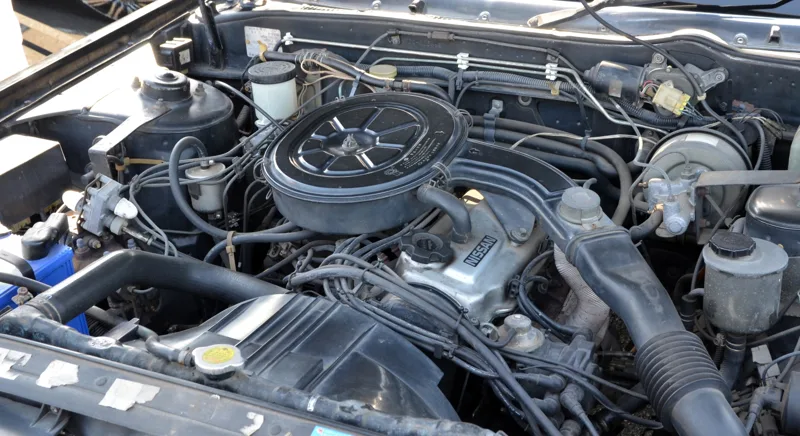
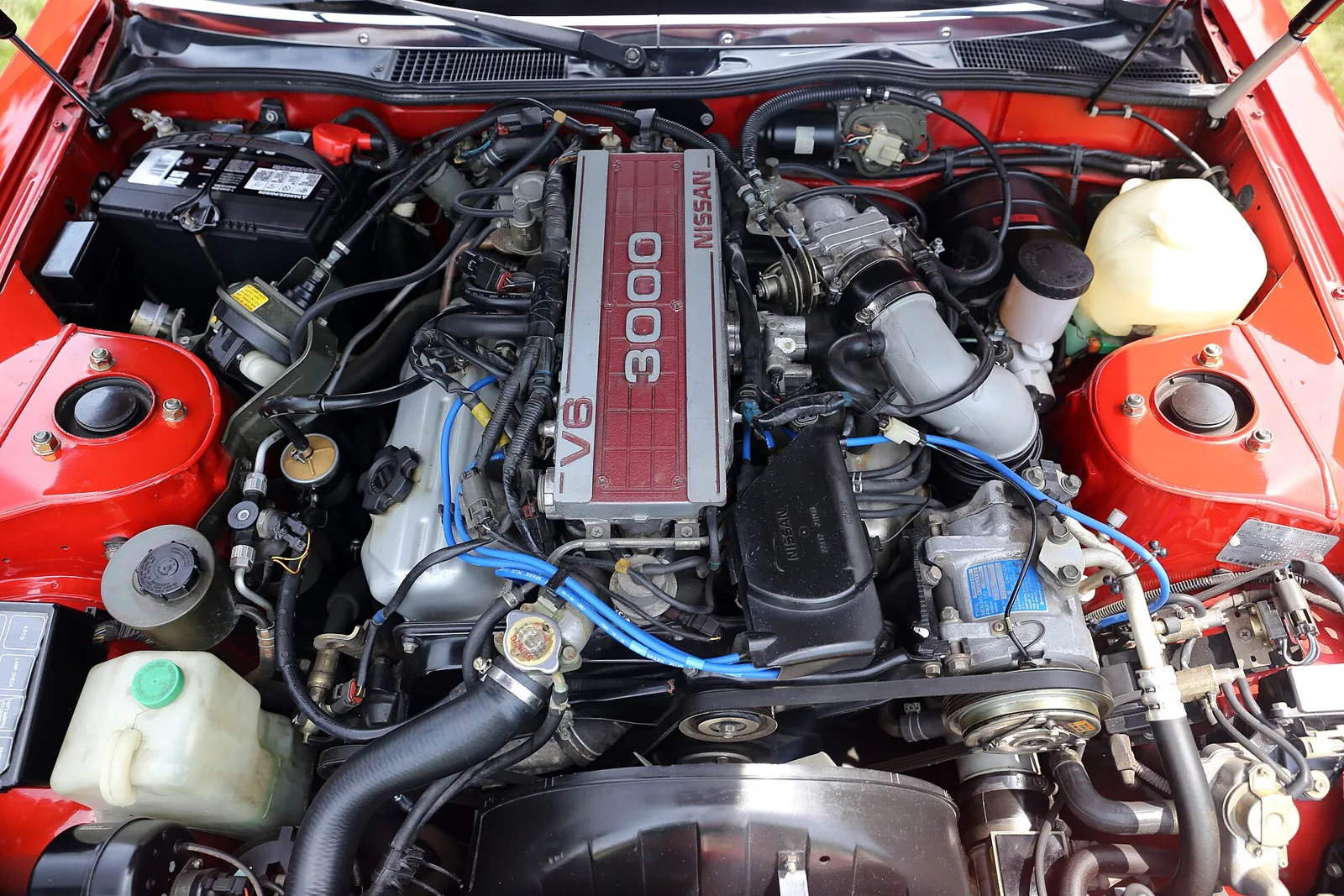
The VG is a 60-degree V6 with an iron block and an aluminium cylinder head. It came in capacities from 2.0 to 3.3 litres, and early versions used a single overhead camshaft with two valves per cylinder. Later versions moved to double overhead camshafts with four valves per cylinder, and both forms were used in cars and in race cars.
The Nissan GTP ZX-Turbo and NPT-90 race cars were built around the same blocks and heads, and together they took three straight IMSA GT titles. Its production blocks and heads were also the basis for several racing projects, so the VG has a dual identity as both a road engine and a competition unit.
A 60-degree V6 that shrank the front of the car, stiffened the chassis and carried Nissan from saloons to the Z32.
Where did the VG engine come from?
Development of the VG began in 1979 at Nissan Machinery, a former member of the Nissan group. The aim was to replace the inline-six L engine, which traced its roots back to the Mercedes-Benz M180 of 1951. Engineers wanted the new engine to be more powerful, more economical, more reliable and more refined, while also being lighter and more compact.
The VG was designed from scratch and shared little or nothing with the engines of other manufacturers. It was grouped under the PLASMA name, an acronym built from words such as powerful, economic, lightweight, accurate, silent, mighty and advanced. Extensive computer design techniques were used, which made the VG one of the most advanced engines of its day.
How did the VG engine's design work?
The VG used sequential multi-port fuel injection and Nissan's Electronic Concentrated Control System, known as ECCS. A microprocessor and an oxygen sensor let ECCS manage fuel delivery, ignition timing, exhaust gas recirculation and idle speed. That reduced emissions and improved economy, and it also helped the engine run better during cold starts and warm-up.
Every VG used a timing belt rather than a timing chain to synchronise the camshafts with the crankshaft. Later models gained N-VCT, Nissan's own form of variable valve timing, which gave smoother idling and more torque at low to medium engine speeds. The combination of computer control and improved valve timing helped the later engines stand out from their predecessors.
Why did Nissan choose a V6 over an inline six?
A V6 is shorter than an inline six, and its layout gave the VG greater torsional rigidity, which in turn supported higher performance. The shorter length also gave designers more room to play with the car, including more space in the frontal crush zone and the option of transverse mounting for front-wheel-drive cars.
Transverse mounting was the key advantage for Nissan's front-drive models. A V6 that fits sideways under the bonnet leaves room for a practical and safe body, which the longer inline six could not offer in the same packages.
What was the VG20E?
The VG20E was a 1,998 cc SOHC engine produced from 1983. Its net output ranged from 115 PS (85 kW; 113 hp) to 125 PS (92 kW; 123 hp), while early models using the older gross rating claimed 130 PS (96 kW; 128 hp). It was the entry point for the family and powered the Gloria and Cedric from the start.
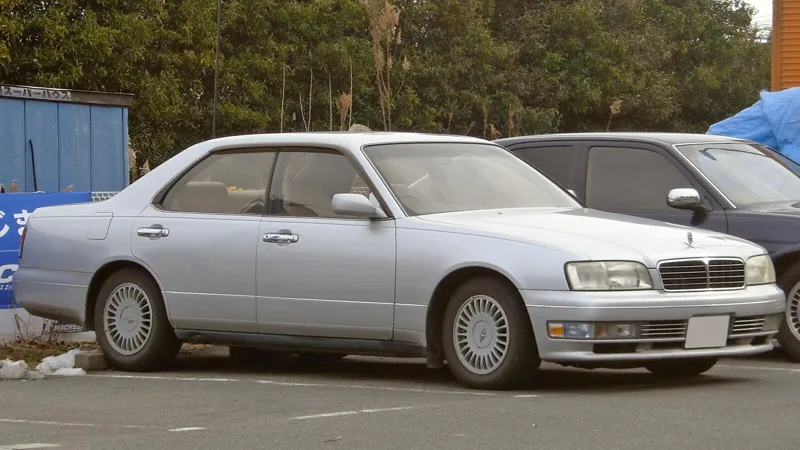
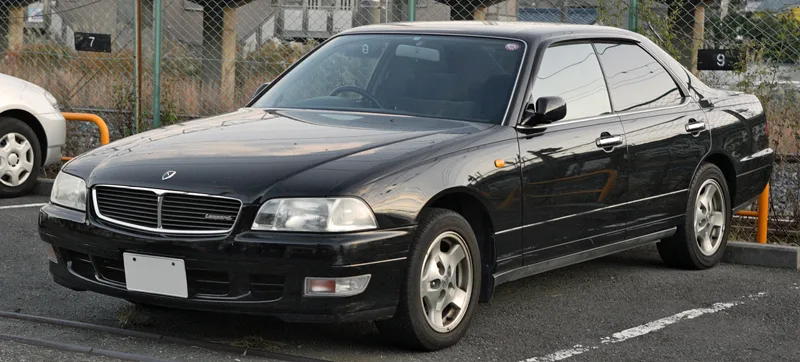
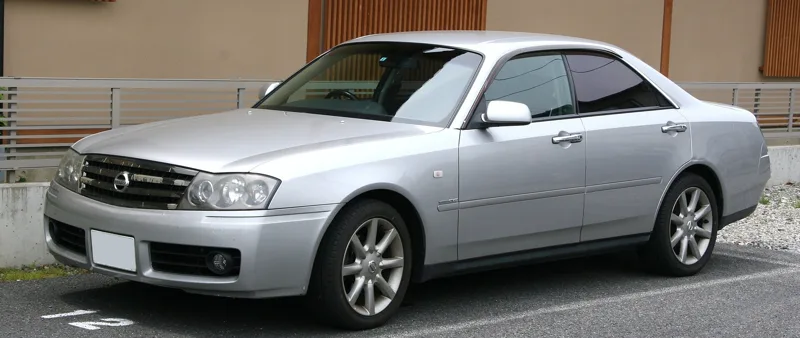
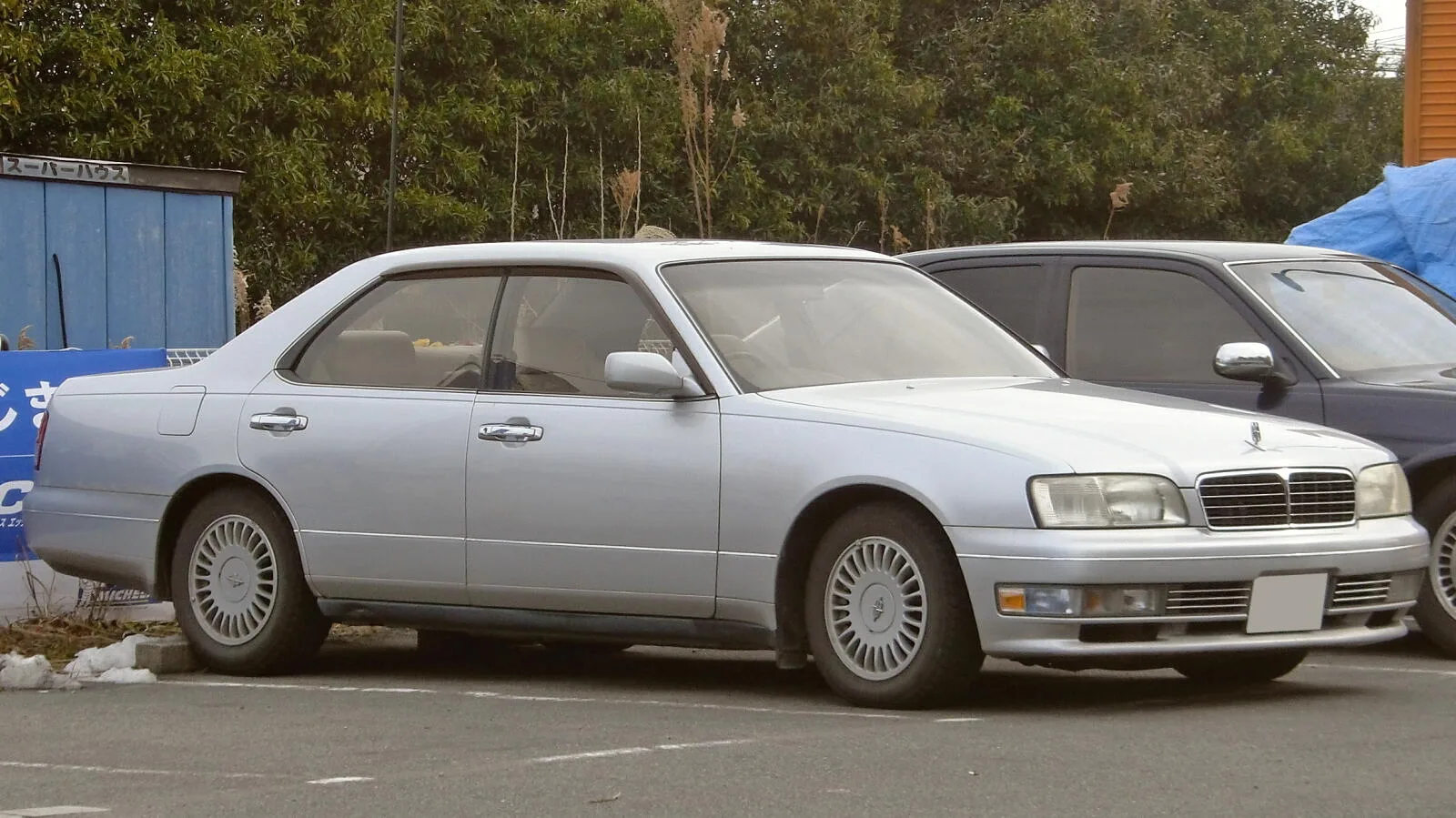
Applications for the VG20E were wide. They included the Y30 Gloria and Cedric from 1983 to 1987, the Bluebird Maxima U11, the Leopard F31, the Y31 and Y32 Cedric and Gloria, and the Y33 range that ran until 2002. A version was also sold as the Hongqi Century Star from 2000 to 2005, based on the Hongqi CA7180 and CA7202 Audi 100 platforms.
How did the VG20ET turbo work?
The VG20ET was based on the VG20E but added a variable-geometry turbocharger, and it arrived in 1984. It was known as the Jet Turbo and came in the F31 Leopard XS and XS-II Grand Selection from 1986. Output was quoted at 170 hp (127 kW), while models with an intercooler reached 155 PS (114 kW; 153 hp).
The turbo had two operating modes. At low speed the wastegate stayed closed to improve response, and at high speed the flap stayed open to reduce resistance and increase exhaust flow. At full flow the flap opened to an angle of 27 degrees, and the area ratio ranged from 0.21 to 0.77. The engine had a short stroke of 78 mm by 69.7 mm, which some observers thought would limit low-end torque.
Even so, the VG20ET was a clear step up from the naturally aspirated car. It appeared in the 200Z and 200ZG versions of the Z31, the Laurel Medallist and the Bluebird PU11, which gave the family a sporting character across several model lines.
What made the VG20DET and VG20P different?
The VG20DET used a DOHC layout with a ceramic turbocharger and an intercooler. It produced 210 PS (154 kW; 207 hp) and used Nissan's NVTCS valve timing system. Its bore and stroke matched the VG20ET at 78 mm by 69.7 mm, but it was the most powerful 2.0-litre member of the family and went into the Gloria and Cedric Y31 and the Leopard F31.
The VG20P was an autogas version that ran on liquefied petroleum gas. It produced 99 PS (73 kW; 98 hp) at 5,600 rpm and 149 N-m (110 lb-ft) at 2,400 rpm. Later versions from 2004 to 2005 produced 105 PS (77 kW; 104 hp) at 6,000 rpm. It was an overhead cam, twelve-valve engine and was fitted to the Cedric Y31 from 1987 to 2005.
How did the VG30 family grow?
The 3.0-litre VG30 arrived in several versions, each with a 2,960 cc capacity. The VG30S was a SOHC twelve-valve engine with an electronic carburettor that produced 148 PS (109 kW; 146 hp) at 4,800 rpm, and it was aimed at export markets with more lenient environmental rules, such as the Middle East and Africa. It appeared in the Cedric Y31 and the Laurel C32.
The VG30i was produced from 1986 to 1989 with throttle body fuel injection, and it made 140 PS (103 kW; 138 hp) at 4,800 rpm. It powered the D21 Hardbody truck and the Pathfinder and Terrano. The VG30E followed, with bore and stroke of 87 mm by 83 mm and 153 hp (114 kW), rising to 160 hp (119 kW) in the 300ZX. In April 1987 the W-series VG30 added 5 horsepower while leaving torque unchanged.
What were the VG30ET and VG30DE?
The VG30ET was an early turbocharged 3.0-litre fitted with a single Garrett T3 turbocharger at 6.8 psi and a compression ratio of 7.8:1. The US and Japanese versions produced 200 PS (147 kW; 197 hp), while European cars reached 230 hp (233 PS; 172 kW). The W-series arrived in April 1987 with 205 PS (151 kW; 202 hp), and the 1988 cars moved to a T25 turbo at 4.5 psi.
The VG30DE was a DOHC 24-valve version that produced between 190 and 222 hp (142 and 166 kW) and 198 lb-ft (268 N-m). It was first developed for the 1985 MID4 concept car and later used in the Japanese 300ZR and Leopard. Export versions arrived in 1989 with the Z32 300ZX, and the engine also featured N-VCT, an early form of variable valve timing.
How powerful was the VG30DETT?
The VG30DETT was a twin-turbo, twin-intercooler development first shown in the 1987 MID4-II concept. In the MID-4 it produced 330 PS (325 bhp; 243 kW), and it weighed 237 kg (523 lb) in that form. It was the last DOHC belt-driven four-valve turbo engine that Nissan put into production, following the CA18DET and RB20DET.
The production engine in the 1989 to 2000 300ZX Z32 produced 304 PS (300 bhp; 224 kW) with a five-speed manual and 284 PS (280 bhp; 209 kW) with a four-speed automatic. Japanese market cars were quoted at 280 PS because of a gentlemen's agreement among manufacturers that remained in effect until 2005. The turbochargers were developed exclusively for Nissan.
Did the VG engine race?
Yes. The VG was used in competition in several forms. The Nissan GTP ZX-Turbo race car used a heavily modified VG30ET, producing over 749 PS at 8,000 rpm and over 506 lb-ft at 5,500 rpm. The engine's blocks and heads supported the GTP ZX-Turbo and NPT-90 cars that won three consecutive IMSA GT Championships.
The NPT-90 and NPT-91 racers used the VG30DETT from 1990 to 1993. The engine also appeared in the BRM P301 in 1997, which was a non-production project. The VG30ET was used as a non-production racing engine in the R86V racecar in 1986.
What was the VG33?
The VG33E was a 3,275 cc SOHC version with a cast iron block and aluminium head, built between 1996 and 2004. It had sequential fuel injection, two valves per cylinder with hydraulic followers and forged steel connecting rods. The engine made between 170 and 180 hp (127 to 134 kW) at 4,800 rpm, the higher figure depending on the year and the vehicle, and its torque reached 202 lb-ft (274 N-m) at 2,800 rpm.
Production took place in Smyrna, Tennessee, and the engine went into sport utility vehicles, pickups and minivans. It also stayed in production as an option for the Chinese market in the Nissan Paladin, which was rebadged as the Dongfeng Oting, until 2015. A supercharged version, the VG33ER, was sold only in North America and produced 210 hp (157 kW) at 4,800 rpm in the Frontier SC and Xterra SC.
Why was the VG engine retired?
The VQ engine debuted in 1994, and the VG was slowly phased out of Nissan cars after that. By 2002 the VG was only fitted to the Frontier and Xterra, and it was retired in 2004, by which time all V6 Nissans used the VQ. The last known car to use a VG engine was the Y31 Cedric, which ran the VG20P for fleet use from 1987 to 2007.
Specifications at a glance
| Engine | Displacement | Layout | Output | Typical car |
|---|---|---|---|---|
| VG20E | 1,998 cc | SOHC | 115 to 125 PS (85 to 92 kW) net | Gloria and Cedric Y30 |
| VG20ET | 1,998 cc | SOHC turbo | 155 PS (114 kW; 153 hp) with intercooler | Leopard F31 XS |
| VG20DET | 1,998 cc | DOHC turbo | 210 PS (154 kW; 207 hp) | Cedric Y31 |
| VG30E | 2,960 cc | SOHC | 153 hp (114 kW) | 300ZX |
| VG30ET | 2,960 cc | SOHC turbo | 200 PS (147 kW; 197 hp) | 300ZX Turbo Z31 |
| VG30DE | 2,960 cc | DOHC 24-valve | 190 to 222 hp (142 to 166 kW) | 300ZX Z32 |
| VG30DET | 2,960 cc | DOHC turbo | 255 PS (188 kW; 252 hp) | Cedric Y32 |
| VG30DETT | 2,960 cc | DOHC twin turbo | 304 PS (300 bhp; 224 kW) | 300ZX Z32 |
| VG33E | 3,275 cc | SOHC | 170 or 180 hp (127 or 134 kW) | Pathfinder and Frontier |
| VG33ER | 3,275 cc | Supercharged | 210 hp (157 kW) | Frontier SC |