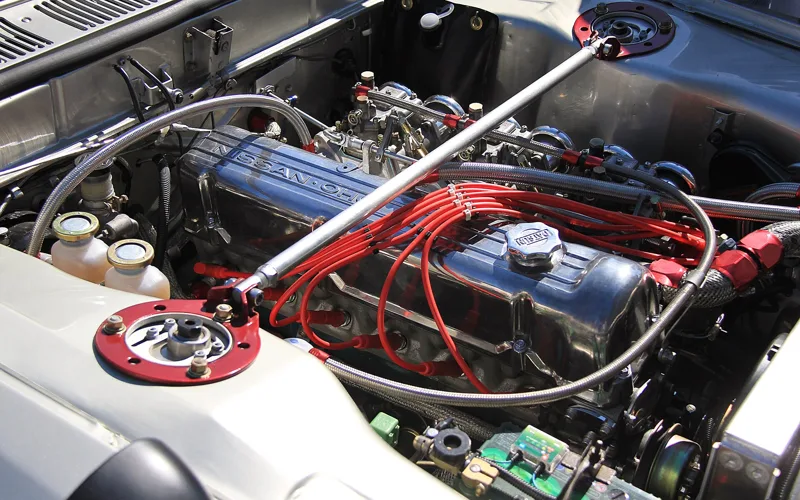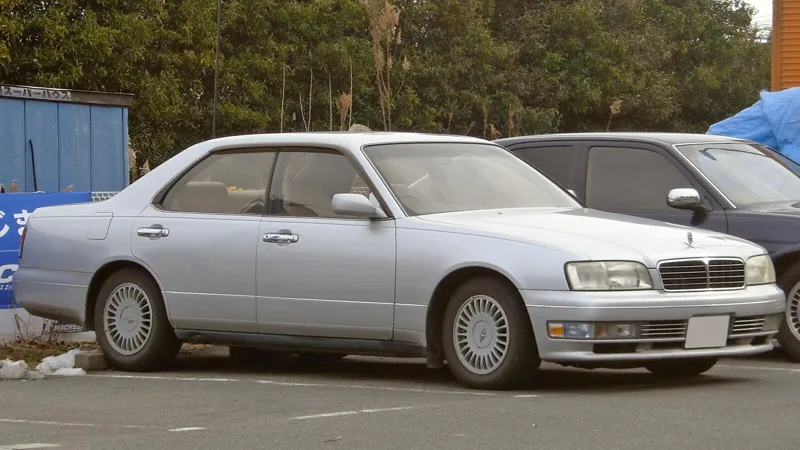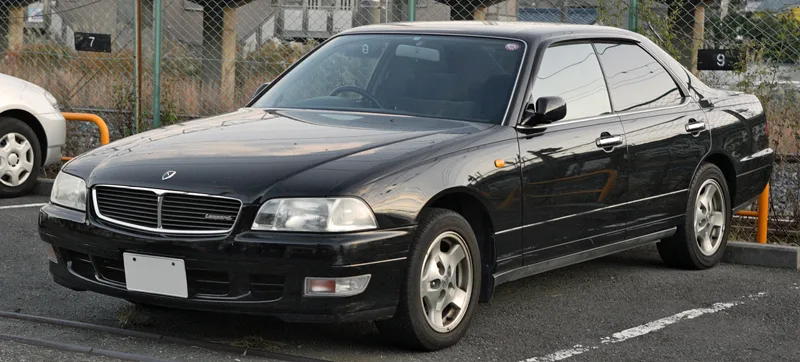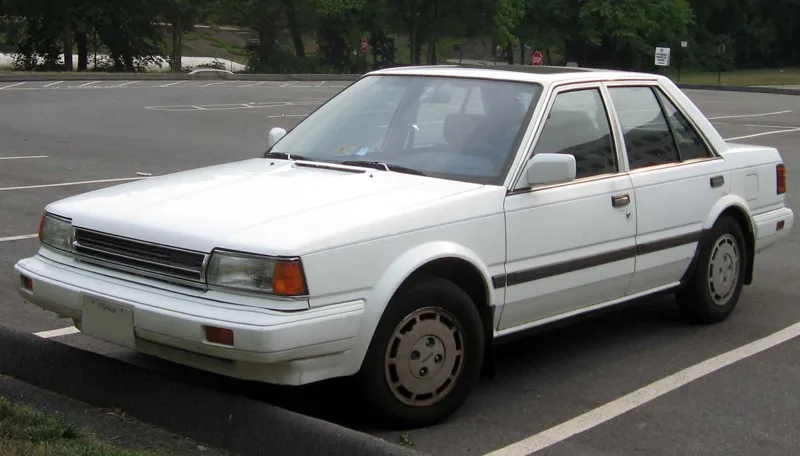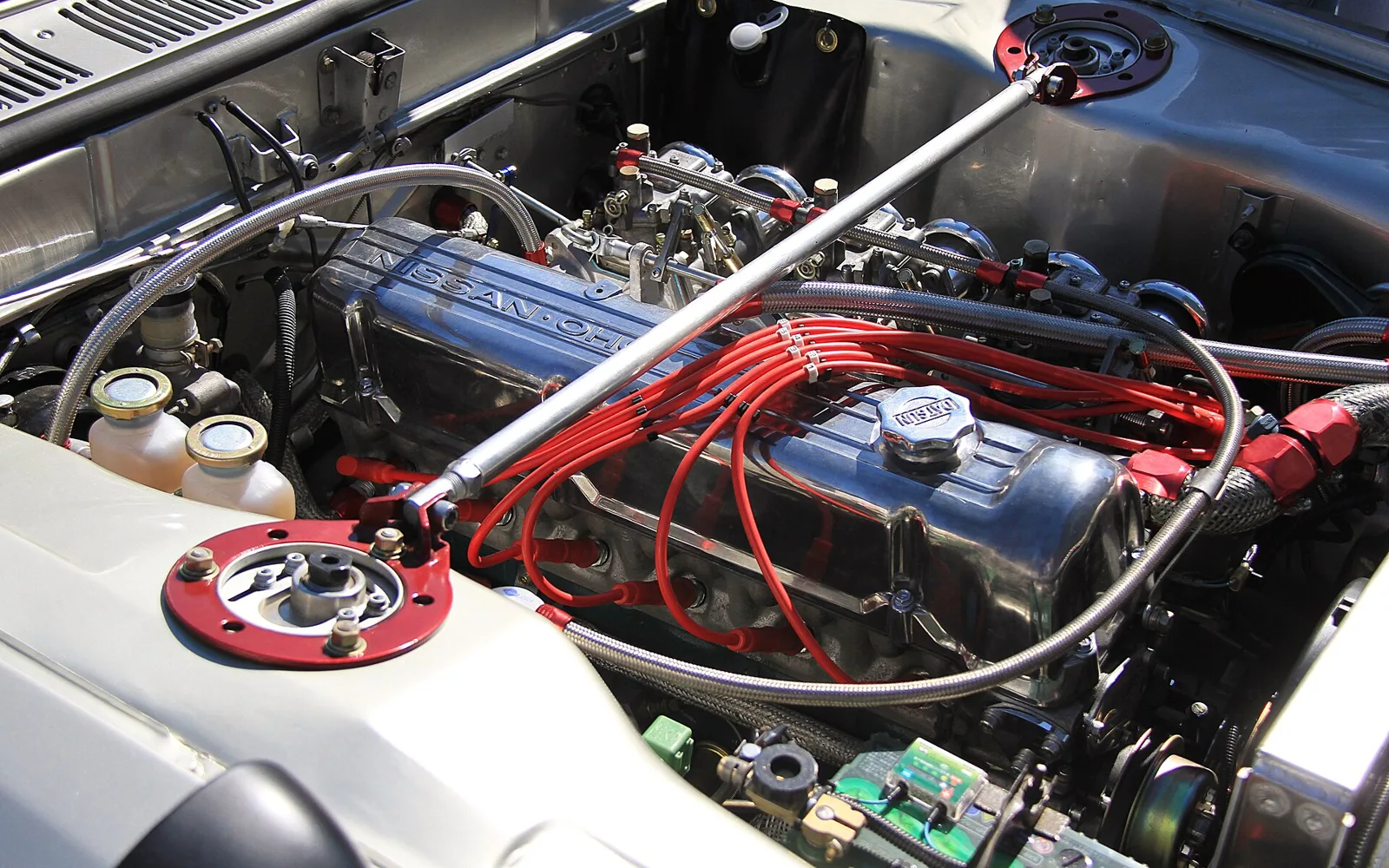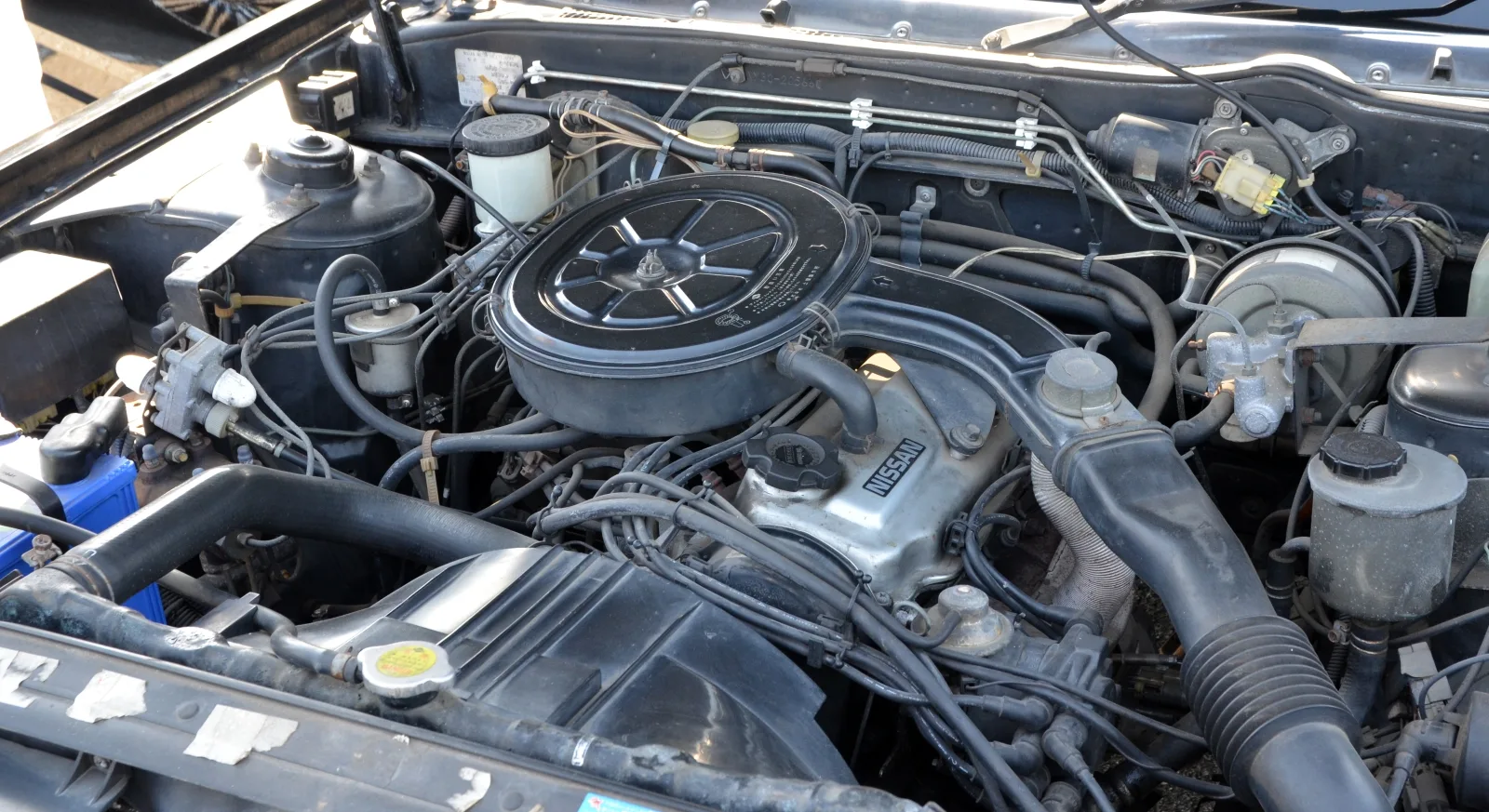
Nissan's CA family of inline-fours, built for small cars until 1994, with carburettor, fuel-injected, DOHC and turbocharged versions.
The Nissan CA was an inline-four family of 1.6 to 2.0 litre engines for smaller cars, built from the early 1980s until 1994. Its name comes from Clean Air, and its variants ran from carburettor units to the turbocharged CA18DET.
The Nissan CA engine was a family of inline-four petrol units that Nissan built for smaller cars from the early 1980s until 1994. It replaced the Z engine in many models and some smaller L series fours, and it came in carburettor, fuel-injected and turbocharged forms.
What was the CA engine?
The CA engine is a series of inline-four piston engines with displacements from 1.6 to 2.0 litres, designed for smaller Nissan vehicles. It took over from the Z engine and from some smaller L series four-cylinders, and the family ran until production ceased in 1994.
The range ran from carburettor units to fuel-injected and turbocharged versions. Engine codes followed a pattern: the first figures gave the displacement, and the letters showed the fuel system and cam layout, so a CA18DET is a 1.8 litre, double overhead cam, turbocharged engine.
Clean Air in name, a 1.6 to 2.0 litre four in practice, and a turbo that made the family's name for power.
Where does the name Clean Air come from?
CA stands for Clean Air, which refers to the emission-reducing technology Nissan installed, called NAPS-X. Some variants used two spark plugs per cylinder as part of that system, which was intended to improve combustion efficiency. The dual-plug arrangement appeared only in some variants, so not every CA carried it.
The name therefore describes the purpose of the emissions work rather than the engine's basic layout.
How was the CA block and head built?
The CA is a cast-iron block with an aluminium cylinder head. It was driven by a timing belt, which was cheaper to manufacture than the timing chain fitted to the Z and L engines. Earlier versions had a single overhead cam with eight valves.
The block was based on the E series design, scaled up, with ancillary drives such as the timing shaft taken out. The oil pump mounts straight onto the nose of the crank, and the distributor turns off the end of the camshaft.
Packaging was a strong point. The CA16 took up 52 US gal (43 imp gal; 195 litres) of space, compared with 74 US gal for the earlier Z16, and it weighed 23 percent less at 115 kg (254 lb).
Later DOHC versions had 16 valves for better high-speed efficiency and smoother power delivery. Their hydraulic lifters were interchangeable with those of the DOHC RB and VG series, apart from the solid-lifter examples.
Why did Nissan stop building the CA?
Nissan considered the cast-iron block too expensive to make, and the engine no longer met Japan's changing emission standards. The 1.8 and 2.0 litre versions were replaced in 1987 by the all-aluminium SR series, which used a chain drive and became the main four-cylinder engine.
The smaller 1.6 litre version was replaced in the same year by the GA series. European markets with low volumes, such as the 200SX, received engines drawn from surplus stock between Japanese and Australian production.
The CA also led to a diesel. The CD was developed from the CA and replaced the four-cylinder LD series. Production of the CA series itself ceased in 1994.
What were the CA16 engines?
The CA16 was a 1.6 litre (1,598 cc) unit built from 1985 to 1990, with a bore of 78 mm and a stroke of 83.6 mm. It came with carburettors or fuel injection, and its most significant version was the 16-valve CA16DE.
The carbureted CA16S delivered its torque of 123 Nm (91 lb ft) at 3200 rpm, while its power peaked at 5200 rpm with 81 PS (60 kW; 80 hp). It was used in the Bluebird T12 and T72, the Auster and the JDM Stanza Supreme.
The CA16DE was a 16-valve DOHC engine for front-wheel drive, built from 1987 to 1989 and fitted to the Pulsar NX and EXA. Its peak came at 6400 rpm, where output reached 122 hp (91 kW; 124 PS), and torque of 137 Nm (101 lb ft) arrived at 5200 rpm.
North American versions of the CA16DE used the Nissan Induction Control System, NICS, which opened the secondary intake ports through a butterfly valve in each port once the engine passed 3,900 rpm. Under heavy load the fuel injection also switched from sequential to simultaneous-pulse mode.
What were the naturally aspirated CA18 engines?
The CA18 came as a 1.8 litre (1,809 cc) unit whose cylinders measured 83 mm across, with an 83.6 mm stroke. The carburettor CA18S was sold in Japan, and the CA18(i) used throttle-body injection, which gave the engine its (i) suffix.
The CA18S was rated 66 kW (89 hp; 90 PS) with 149 Nm (110 lb ft) of torque. It was fitted to the 1984 Laurel, the 1984 Skyline R30 and the Bluebird U11 between 1985 and 1990.
The CA18(i) peaked at 5200 rpm with 91 hp (68 kW; 92 PS). It powered the Skyline R31 and R32 GXi, the Laurel C33 and the Auster T12 series in several trims.
The CA18E was a single-cam engine with multipoint injection, and it produced 115 PS (85 kW; 113 hp) at its peak of 5600 rpm. It was used in the Bluebird SSS-E and the 1983 to 1985 Skyline TI.
The DOHC CA18DE was built from 1985 until January 1991. It peaked at 6400 rpm with 131 hp (98 kW; 133 PS), and its torque reached 159 Nm (117 lb ft) at 5200 rpm. Some markets received a crank girdle, and Nissan's FAST parts system had to be consulted to confirm whether a given engine had one.
Which CA18 engines were turbocharged?
The CA18ET and CA18DET were the turbocharged members of the family, and both were built during the late 1980s and early 1990s. The CA18ET used a single Garrett T2 turbocharger with no intercooler, while the later CA18DET used a T25 with an intercooler to help prevent pre-ignition and detonation.
The CA18ET was built from 1984 to 1992. It produced 99 kW (135 PS; 133 hp), with 183 Nm (135 lb ft) of torque from a boost of 0.6 bar (8.7 psi). Its fuel and air were managed by ECCS multipoint injection, which was developed together with Hitachi.
The CA18DET was the last CA version, built from 1985 to 1994, and it reached 124 kW (169 PS; 166 hp). Its torque was 228 Nm (168 lb ft), and its injectors had a flow capacity of 370 cc.
The late Japanese CA18DET used eight-port heads with butterfly-actuated auxiliary ports. Below about 3800 rpm only the long, narrow ports were open, and above that point the ECCS switched to batch firing and opened the short, wide set.
In Europe, where displacement-based taxes and emissions testing costs weighed heavily, the S13 200SX was sold only with the CA18DET until the S14 arrived in 1994. Those Euro engines used a high-port head and revised ECCS parameters.
What about the 2.0 litre CA20?
The CA20 was an SOHC 2.0 litre (1,974 cc) engine built from 1982 to 1991, with an 84.5 mm bore and an 88 mm stroke. Its displacement sat at the top of the CA range. Its variants included the carburettor CA20S, the LPG-running CA20P and the fuel-injected CA20E.
The CA20P was a carbureted engine designed to run on LPG. It was rated at 90 PS (66 kW; 89 hp) gross at first, and when measured net the figure dropped to 82 PS (60 kW; 81 hp), and it went into professional cars such as the Cedric and Gloria before the NA20P replaced it in mid-1991.
The CA20S produced 102 PS (75 kW; 101 hp) and 160 Nm (118 lb ft) of torque, and it powered Stanza, Auster and Bluebird models. The CA20E added multipoint injection and dual spark plugs in some variants, giving 78 kW (106 PS; 105 hp).
There was never a factory twin-cam or turbocharged 2.0 litre CA. The CA18 DOHC head will fit the CA20 block, but the manifolds and timing pulleys differ, and several enthusiasts have still built CA20DET engines.
How were the CA engines tuned for more capacity?
Two Japanese tuners, Tomei and JUN, sold stroker kits that lifted the CA18 towards 2 litres. Norris Designs and Spool Imports offered CA20 stroker kits, and Norris also sold a complete CA20 engine. Both sets of kits came from specialist companies, not from the factory.
The kits were aimed at owners who wanted more capacity from the family. The block itself stayed the same cast-iron unit, so the work centred on the rotating assembly.
Which cars used the CA engines?
The CA went into both front-wheel and rear-wheel drive cars, depending on the variant. Front-wheel drive examples included the Pulsar NX SE in the United States and Canada, the EXA in Australia and Japan, and the Sunny and Bluebird in Europe.
Rear-wheel drive Skylines and Silvias used the CA18DE and CA18DET, including the 1985 to 1991 Skyline HR31 1800I in Japan and the 180SX variants. Yue Loong used the CA family in its Feeling 101 and 102 models, and the Reliant Scimitar SS1 1800Ti used the CA18ET from 1986 to 1990.
What were the main CA specifications?
| Engine | Displacement | Peak output | Torque |
|---|---|---|---|
| CA16S | 1.6 L, 1,598 cc | 5200 rpm, 81 PS (60 kW; 80 hp) | 123 Nm (91 lb ft) at 3200 rpm |
| CA16DE | 1.6 L, 16 valves | 6400 rpm, 122 hp (91 kW; 124 PS) | 137 Nm (101 lb ft) at 5200 rpm |
| CA18S | 1.8 L, 1,809 cc | 66 kW (89 hp; 90 PS) | 149 Nm (110 lb ft) |
| CA18(i) | 1.8 L, 1,809 cc | 5200 rpm, 91 hp (68 kW; 92 PS) | Not listed |
| CA18E | 1.8 L, single cam | 5600 rpm, 115 PS (85 kW; 113 hp) | 162 Nm (119 lb ft) at 2800 rpm |
| CA18DE | 1.8 L, DOHC | 6400 rpm, 131 hp (98 kW; 133 PS) | 159 Nm (117 lb ft) at 5200 rpm |
| CA18ET | 1.8 L, turbo | 99 kW (135 PS; 133 hp) | 183 Nm (135 lb ft) |
| CA18DET | 1.8 L, DOHC turbo | 124 kW (169 PS; 166 hp) | 228 Nm (168 lb ft) |
| CA20S | 2.0 L, 1,974 cc | 5200 rpm, 102 PS (75 kW; 101 hp) | 160 Nm (118 lb ft) at 3600 rpm |
| CA20E | 2.0 L, injected | 78 kW (106 PS; 105 hp) | 160 Nm (118 lb ft) |