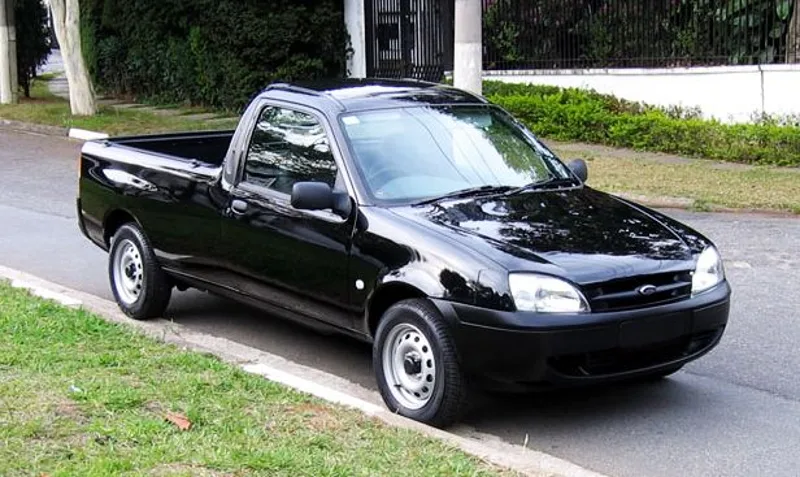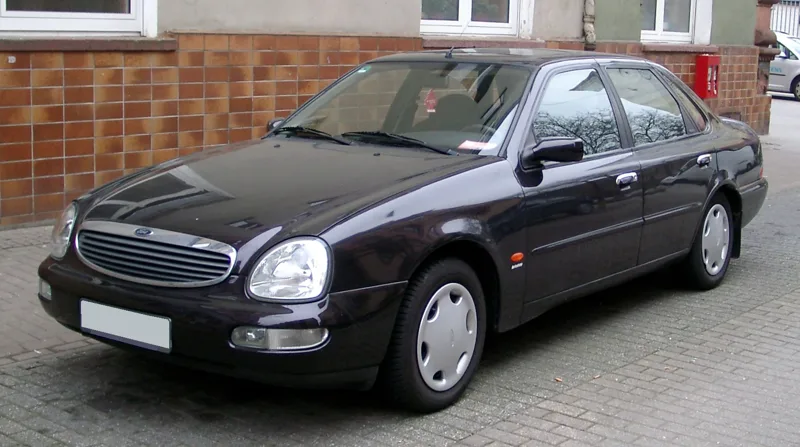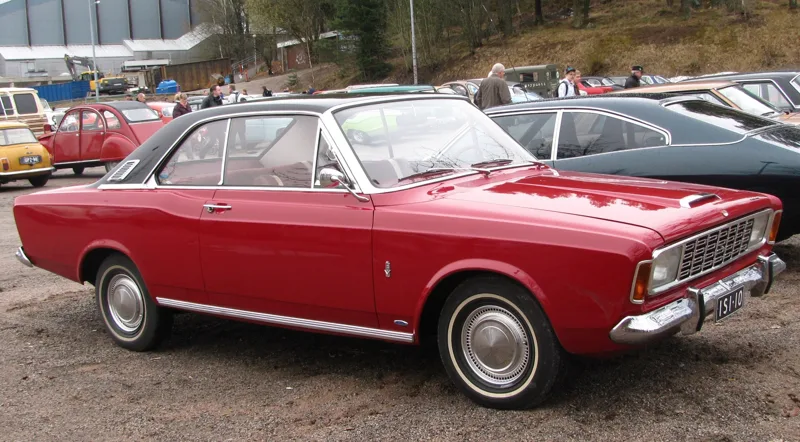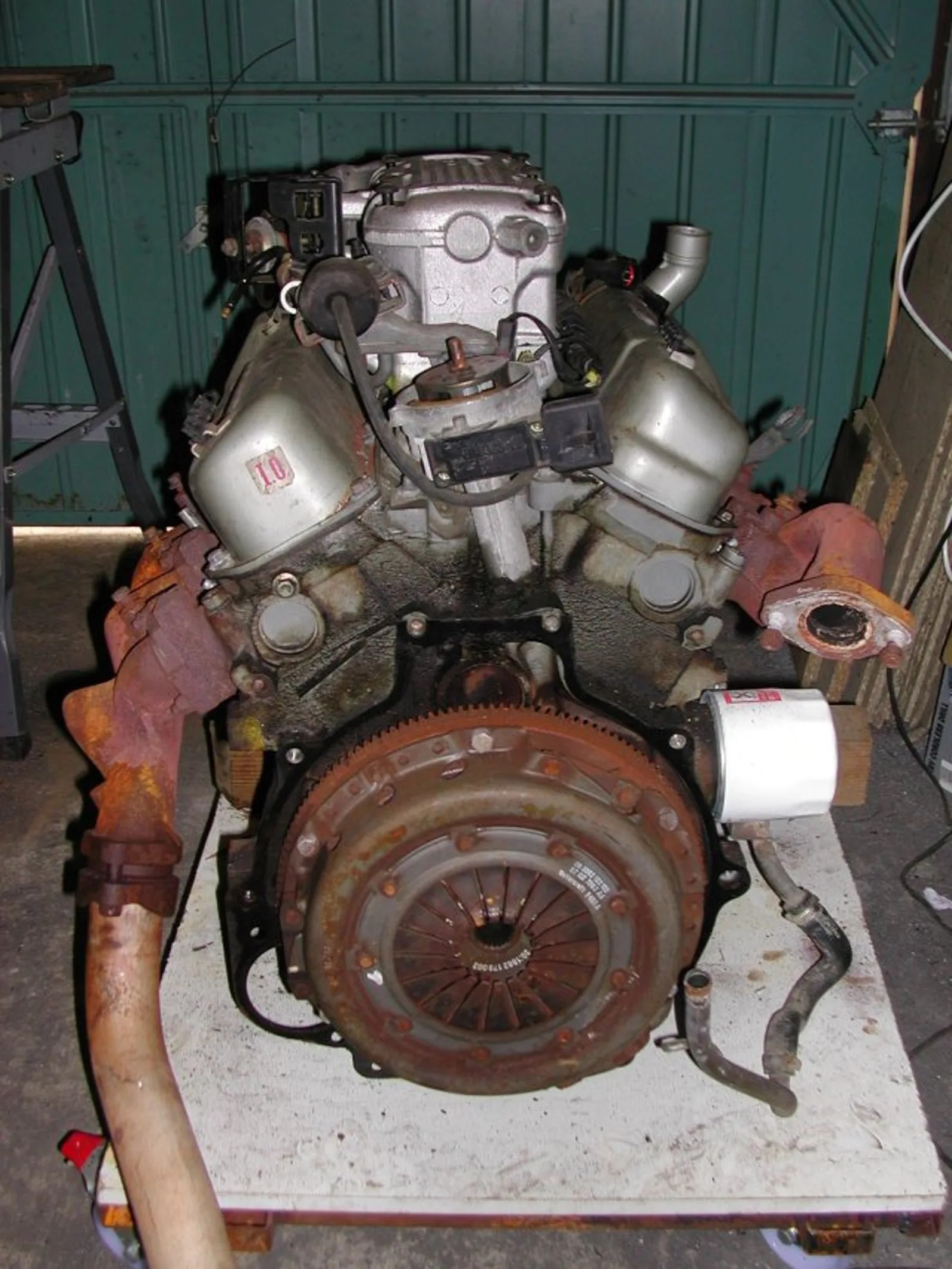
A 60 degree cast iron V6 built from 1962 to 2011, from the small Taunus engines to the Cosworth 24v and the troubled 4.0 SOHC.
From 1962 until 2011, Ford's Cologne family covered sizes from 1.8 to 4.0 litres, powering Taunus, Capri, Granada and Sierra models in Europe. Pushrod 4.0 units also went into US trucks and SUVs, while the family later included a Cosworth twin-cam 2.9 and the troubled SOHC 4.0.
The Ford Cologne V6 was a 60 degree cast iron V6 that Ford built from 1962 to 2011, in sizes from 1.8 to 4.0 litres. It was first fitted to cars sold in Germany and continental Europe, and it later appeared in British-market models and in North American compact trucks.
Where did the Cologne V6 come from?
The Cologne was designed to slot into the same installations as the Ford Taunus V4 it followed. It shared the transmission bolt pattern and engine mounts of that four-cylinder, which meant it could go into the same cars without major changes to the mounting.
Many cylinder heads used siamesed exhaust passages, which reduced the three exhaust outlets to two on each side. That helped the swap but cost performance. The 2.4, the US-market 2.8, the 2.9 and the 4.0 kept three exhaust ports, and those versions were the preferred choices for anyone chasing power.
The engine appeared in both carburetted and fuel-injected forms. The Essex V6 remained in British cars for a time, and the Cologne then largely took over British-market vehicles as well.
A cast iron 60 degree V6 that spanned four decades, from a 1.8 litre family car engine to a 195 PS Cosworth twin-cam.
How small was the first Cologne V6?
The smallest Cologne was the 1.8 L (1,812 cc), with an 80 mm x 60.14 mm bore and stroke. It made 82 PS (60 kW; 81 hp), and torque reached 135 Nm (100 lb ft). Its only application was the Ford 17M P7, built from 1968 to 1971.
The original 2.0 L (1,998 cc) was the displacement around which the family grew. Its 84 mm x 60.14 mm bore and stroke offered either 85 PS (63 kW; 84 hp) or 90 PS (66 kW; 89 hp), depending on the tune. The 2.0 went into the 1964 to 1967 Taunus 20M (P5), and it later powered the Capri I to III, which were not sold in the UK.
The 2.0 also served the Taunus TC, the Taunus II and III, and the Granada II. A 1982 Sierra took it too, though again not in UK models.
How did the 2.3 and 2.6 extend the range?
The first enlargement arrived in 1967 as the 2.3 L (2,293 cc). That 90 mm x 60.14 mm layout gave 108 or 114 PS (79 or 84 kW; 107 or 112 hp), depending on the valve cover, with 176 Nm (130 lb ft) of torque. A SuperHighCompression version reached 125 PS (92 kW; 123 hp) and 187 Nm (138 lb ft).
The 2.3 was used in the 20M P7, the 17M RS and the 20M P7b, along with the Capri I to III and the Cortina IV and V. Granada I and II and the Sierra I also used it. Two small-volume cars from 1968, the Siva Sirio and the LMX 2300 HCS GT, carried it as well.
The 2.4 L (2,394 cc) was sold only in Europe. It had fuel injection, Ford's EEC-IV engine management and a chain-driven camshaft. Its 84 mm x 72 mm bore and stroke gave a peak of 125 PS (92 kW; 123 hp) arriving at 5800 rpm, with 184 Nm (136 lb ft) of torque at 3500 rpm. It powered the Scorpio and the Granada III.
Introduced in 1969, the 2.6 L (2,550 cc) was the largest engine of the first generation. Its 90 mm x 66.8 mm bore and stroke set up 125 PS (92 kW; 123 hp), with 205 Nm (151 lb ft) of torque. It was fitted to the 20M RS, the 26M, the Capri and the Granada.
What was the 2.6 RS?
The 2.6 RS was a fuel-injected 2.6 L (2,637 cc) special and the only fuel-injected first-generation Cologne. Its 90 mm x 69 mm bore and stroke delivered 150 PS (110 kW; 148 hp) and 219.5 Nm (162 lb ft) of torque, a clear step above the standard 2.6.
Its sole application was the 1970 to 1973 Ford Capri RS 2600, and the RS 3100 later replaced it. Weslake built a racing version bored out to 96 mm, giving 3.0 L (2,995 cc). That racing engine produced more than 320 PS (235 kW; 316 hp).
How did the second-generation V6 differ?
The second-generation Cologne arrived in 1974 with a 2.8 L (2,792 cc) displacement, a 93.03 mm x 68.5 mm bore and stroke and a geared camshaft. It was based on the 2.6, but the larger bore needed a different block. The European version kept a siamesed two-port exhaust manifold, which made upgrading older V4 cars straightforward.
Outputs varied by market and fuel system. US versions were rated between 90 and 115 bhp, while European 2.8s ranged from 130 to 160 PS. A carburetted European 2.8 made 132 PS (97 kW; 130 bhp), a Bosch K-Jetronic version made 160 PS (118 kW; 158 bhp), and a Ford EEC-IV injected unit made 150 PS (110 kW; 148 bhp).
Tuning options were limited on the K-Jetronic cars. The siamesed inlet and exhaust ports responded best to forced induction or an overbore, and normal tuning yielded only small gains. Ford offered a limited run of about 150 Capri turbos with turbocharged 2.8 engines, which carried RS badging and used a productionised version of an aftermarket kit.
The 2.8 found homes in many vehicles. TVR's Tasmin and 280i used it with Bosch K-Jetronic injection, as did the early TVR S series. Other users included the Ford Ranger, Bronco II, Aerostar, Pinto, Mustang II, Granada, Capri III, Sierra XR4x4, Scorpio and the Reliant Scimitar from 1979.
What changed in the 2.9?
The 2.9 L (2,935 cc) shares its basic configuration and several dimensions with the 2.8, but it was a substantial redesign. The block is 30% more rigid without being heavier, and the new pistons carry much thinner rings to reduce friction. The crankshaft has six counterweights, and the camshaft is driven by chain.
Exhaust valves were rearranged to remove the hot spot found on the 2.8, and the new cylinder heads gave each cylinder its own exhaust port. Its combustion chamber uses high swirl, with the spark plug set in the centre.
In Europe the 2.9 was usually paired with Bosch L-Jetronic injection and Ford's EEC-IV management. It also used a split intake, with two pipes feeding a manifold that had two plenums connected only by a small crossover port. In the US the 2.9 made 140 hp (104 kW; 142 PS) at 4600 rpm in Ranger and Bronco II light trucks, and 144 hp in the Merkur Scorpio.
| Displacement | Headline output | Notable application |
|---|---|---|
| 1.8 L | 82 PS (60 kW; 81 hp) | Ford 17M P7 |
| 2.0 L | 85 PS (63 kW; 84 hp) or 90 PS (66 kW; 89 hp) | Taunus 20M (P5) |
| 2.3 L | 108 or 114 PS (79 or 84 kW; 107 or 112 hp) | 20M P7 and Capri I to III |
| 2.4 L | 125 PS (92 kW; 123 hp) at 5800 rpm | Scorpio and Granada III |
| 2.6 L | 125 PS (92 kW; 123 hp) | 20M RS and 26M |
| 2.6 RS | 150 PS (110 kW; 148 hp) | Capri RS 2600 |
| 2.8 L | 132 PS (97 kW; 130 bhp) carburetted | Capri III and Sierra XR4x4 |
| 2.9 L | 140 hp (104 kW; 142 PS) in US trucks | Ranger and Bronco II |
| 4.0 L | 160 hp (119 kW; 162 PS) | Explorer and Aerostar |
What was the 2.9 Cosworth?
The 2.9 Cosworth was a twin DOHC, or quad cam, version created by Cosworth Engineering in 1991. It shared the standard block, but Cosworth machined that block differently to improve its strength. Power reached 195 PS (143 kW; 192 hp), and torque rose to 275 Nm (203 lb ft) at 4500 rpm.
The engine, coded BOA, was fitted to the Ford Scorpio Cosworth 24V. It was paired only with an improved A4LDe automatic gearbox that had partial electronic shift control, and no manual was offered from the factory. A duplex hydraulically tensioned timing chain measuring 2.2 m (7 ft 3 in) drove the overhead cams.
An improved version, coded BOB, appeared in the restyled 1995 Ford Scorpio. It had two simplex chains, two hydraulic tensioners and a variable-length intake system called VIS. Output rose to 210 bhp (157 kW; 213 PS), and the engine was mated to a fully electronically controlled A4LDE automatic. The Cosworth unit later became a popular replacement for the Sierra XR4x4 and XR4i.
How did the 4.0 engines differ?
The 4.0 L (4,000 cc) was a pushrod engine with a 100.33 mm x 84.33 mm bore and stroke. It was built in Cologne but fitted only to American vehicles. Its 160 hp (119 kW; 162 PS) and 305 Nm (225 lb ft) suited the Explorer, Aerostar, Mazda B4000 and Ranger, and it was built until 2000.
The SOHC version arrived in 1997 in the Ford Explorer, alongside the pushrod unit. It had a variable-length intake manifold in its first year, producing 210 hp (157 kW; 213 PS) and 344 Nm (254 lb ft). Instead of a camshaft, it used a jackshaft to drive a timing chain to each cylinder head, and a balance shaft chain was added on 4WD Ranger and Explorer models.
Ford phased out the SOHC unit in favour of the Duratec 37. The pushrod 4.0 was produced in Cologne throughout this period, but it was never fitted to European cars. Its 4.0 OHV layout avoided the chain problems that followed the SOHC design.
What went wrong with the SOHC 4.0 timing chain?
The SOHC 4.0 was notorious for breaking timing guides and tensioners. The result was a timing chain rattle, often called the death rattle. The problem could appear as early as 45,000 mi (72,000 km), and when the engine ran for long periods in that condition it could jump timing and damage the heads and valves.
Repairs often required complete engine removal, because the front and rear timing chains were so closely linked. Updated cassettes and tensioners reduced the rattle in most vehicles after 2002, but it still affected the Mustang, Explorer and Ranger. The OHV version was not affected at all.
A further SOHC variant served the Land Rover Discovery 3 and LR3, with 216 hp (161 kW; 219 PS) and 339 Nm (250 lb ft) at 3,000 rpm. The Ford Courier version delivered 154 kW (209 PS; 207 hp), with 323 Nm (238 lb ft) of torque. The Land Rover version of the block had different motor mount castings and an oil temperature sensor boss.