A Paris-area coachbuilder whose 1929 flexible body patent, Bentley commissions and Hispano-Suiza partnership shaped luxury coachwork until 1950.
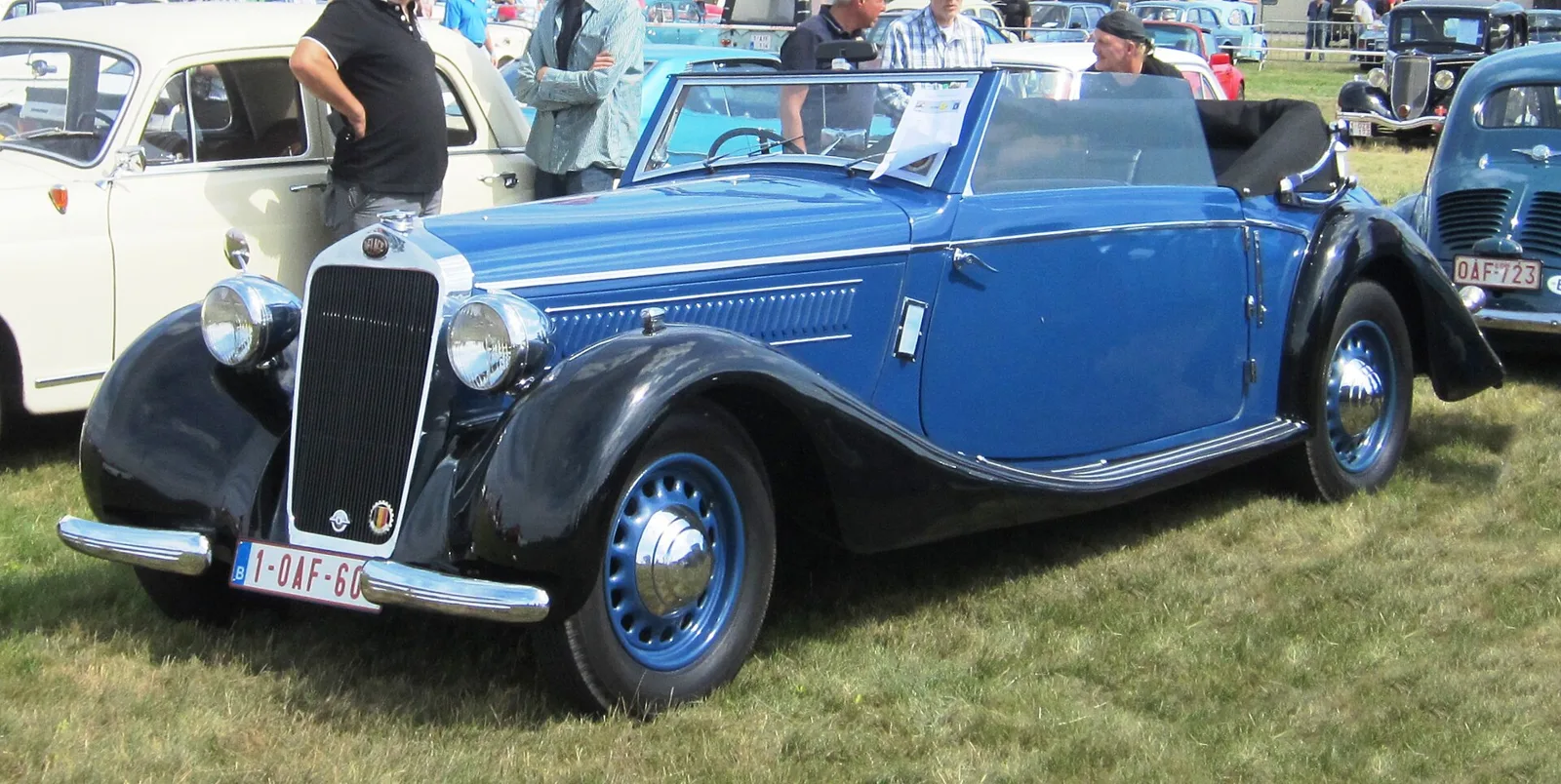
Carrosserie Vanvooren was a coachbuilder based at Courbevoie near Paris, active from 1888 to 1950. Its strongest years were the 1920s and 1930s, when it supplied bodies to Hispano-Suiza, Bugatti, Rolls-Royce and Bentley. Its 1929 flexible body patent was licensed to more than 40 European carriage builders.
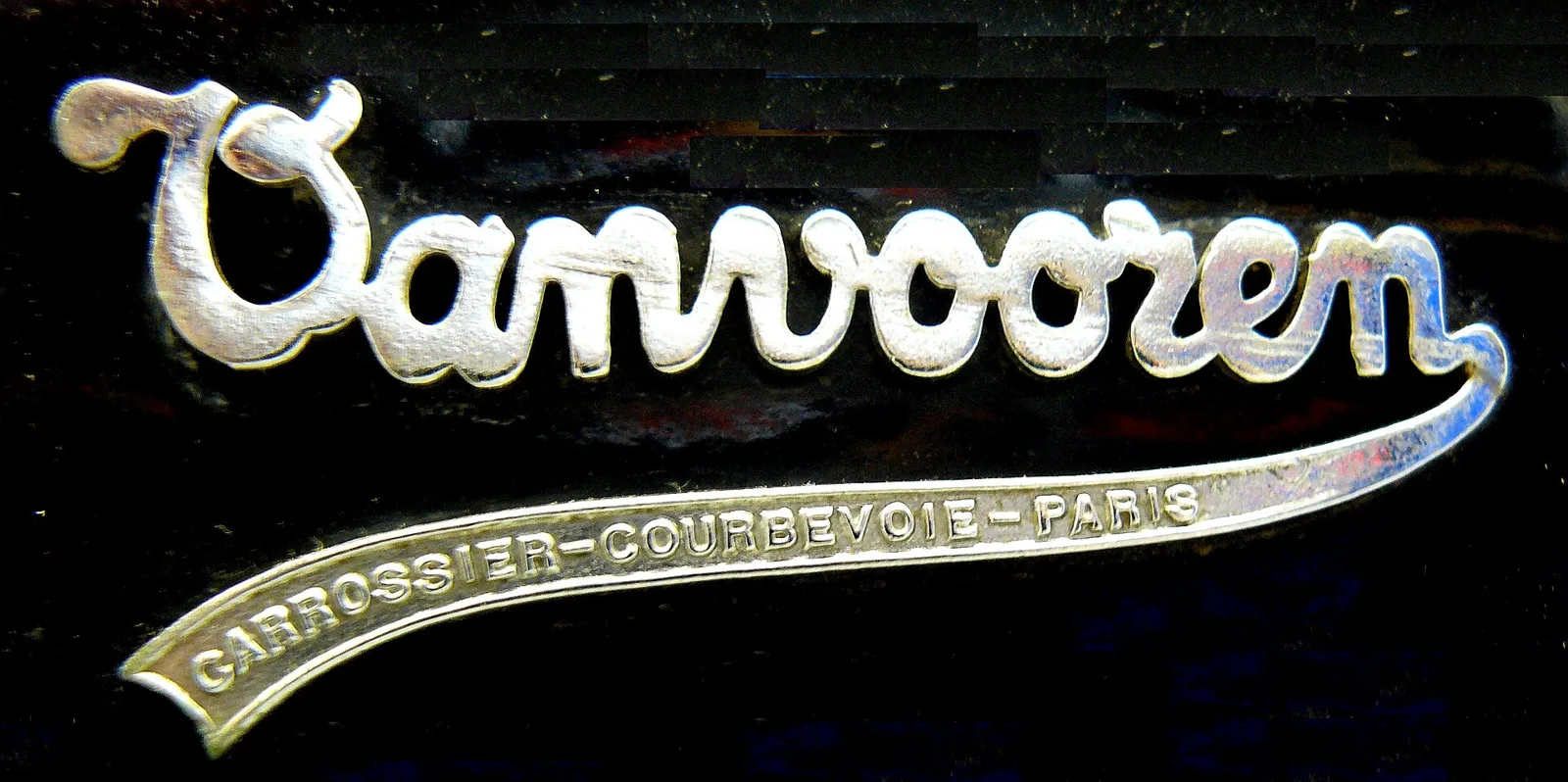
Carrosserie Vanvooren was a French coachbuilder working from Courbevoie, on the north-western edge of Paris, between 1888 and 1950. Its most productive years fell in the 1920s and 1930s, when Hispano-Suiza, Bugatti, Rolls-Royce and Bentley chassis carried its bodies.
The firm also ran a showroom at 33 Rue Marbeuf in the 8th arrondissement. It is remembered for a flexible body structure patented in 1929 and for coachwork on some of the most prestigious chassis of its era.
Where did Vanvooren begin?
Achille Vanvooren (1857-1928) founded the business in 1888 to make bodies for carriages and motor cars. Its reputation grew quickly, and the number of car bodies it produced rose each year. He passed the running of the firm to Marius Joseph Daste, its technical director, in 1921.
Car bodies became a growing share of the output. Two surviving cars from 1912 are a Panhard & Levassor Typ X14 20HP and a Hotchkiss 55HP roadster. The oldest surviving Vanvooren-bodied car is a 1911 Mercedes 38/70HP that went to Samuel Colt, a member of the arms-making family.
In 1923 Vanvooren obtained a licence from Carrossier Weymann to build light-weight car bodies. Charles Weymann was an aircraft pioneer, and his designs used timber frames and synthetic leather skins that clearly drew on the aircraft of the time. Vanvooren mounted Weymann-designed bodies on Hispano-Suiza H6 and Bugatti T43 and T44 chassis. In 1927 it bodied a Rolls-Royce New Phantom, chassis 27EF, for a British customer, the first of many Vanvooren Rolls-Royces.
A 1929 patent that let steel chassis and timber bodies work together without squeaks.
What was the Vanvooren patent of 1929?
In 1929 Daste and his partner Romee de Prandieres patented a flexible car-body structure reinforced with metal. Rubber Silentbloc mountings, made by a neighbouring firm, joined the heavy steel ladder chassis to the timber frames, so the squeaks and rattles of large coachbuilt cars were removed.
The system was shown at the 1930 Paris Motor Show, where it was seen as an important advance. More than 40 European carriage builders soon took licences under the Vanvooren-Daste patent. In Britain the rights were sold through a firm called Silent Travel, and most of the leading car makers bought licences.
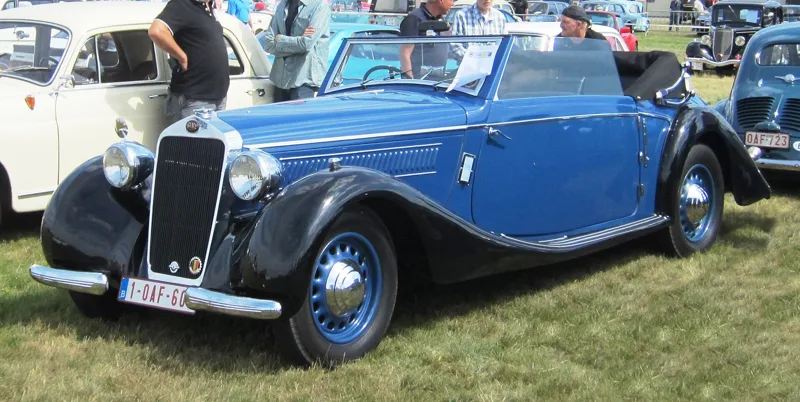
At the 1930 London Motor Show the British agent J. Smith & Co. displayed three bodies on Delage chassis. They were finished in silver and black, and they made a big impression.
How closely did Vanvooren work with Hispano-Suiza?
The partnership with Hispano-Suiza began early and grew into something close to the link between Rolls-Royce and Park Ward in England. From 1932 Vanvooren supplied bodies for more than a third of the HS26, K6 and J12 models that the Bois-Colombes factory produced.
The Bois-Colombes works sat only a few hundred metres from Vanvooren's own factory. In 1932 Daste left Vanvooren to become production director at Hispano-Suiza, which deepened the ties between the two firms.
Which Bugattis did Vanvooren body?
Vanvooren bodied Bugatti Types 43, 44, 46 and 49, as well as the 50, 55 and 57, and Romee de Prandieres built a close business relationship with the marque. The Type 46 arrived at the 1929 Paris Motor Show wearing a Vanvooren body, and Type 50s bodied by the firm were featured in the 1931 24 Hours of Le Mans.
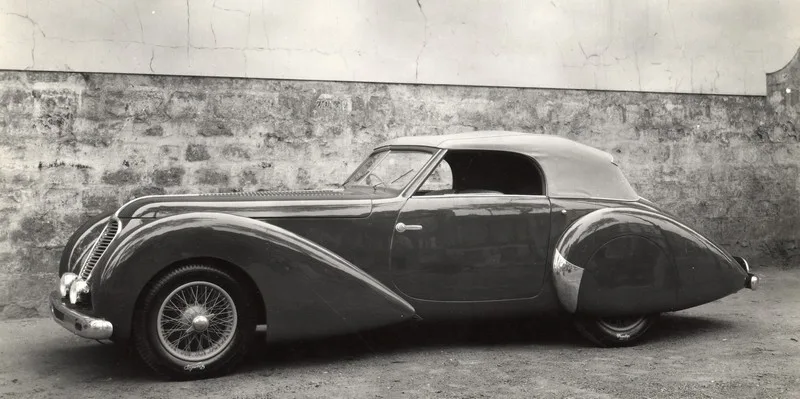
A friendship with the head of Bugatti's Paris agency also helped the relationship. Vanvooren bodied about 20 Type 57s, four of them cabriolet 57S models. In 1939 it built a unique Type 57 that the government ordered as a gift for the wedding of the future Shah of Iran. The recipient was Mohammad Reza Pahlavi.
The styling was by Figoni & Falaschi, and it was first intended for a Delahaye 165 chassis. The flamboyant result was far removed from the restraint that marked most of Vanvooren's work at the time.
Why were Rolls-Royce and Bentley so closely tied to Vanvooren?
Almost every Rolls-Royce and Bentley sold in France during the 1930s carried Vanvooren coachwork. The link was helped by Walter Sleator, who ran Franco-Britannic Autos, the Rolls-Royce importer, and had once been Vanvooren's sales director at the Rue Marbeuf showroom in the 1920s.
Rolls-Royce engineers admired the way Vanvooren approached design and production. They had a Bentley 3 1/2 Litre, chassis B187BL, fitted with a Vanvooren pillarless saloon. The body had no B-pillar, and with the rear door hinges set at the back edge, opening both doors gave access to the whole cabin. Rolls-Royce later offered the design to leading British coachbuilders so they could study it.
Vanvooren also worked with Park Ward, the British coachbuilder, to develop construction methods for light, durable steel car bodies. Rolls-Royce commissioned four bodies for its 20/25 model, and further orders covered a New Phantom, a Phantom II, three Phantom IIIs and seven Wraiths.
In total 69 Bentleys travelled to Paris to have bodies fitted: 16 cars of 3 1/2 Litre, 46 of 4 1/4 Litre and 7 Mark V cars.
What happened to the Bentley Mark V Corniche?
The Mark V Corniche was meant to succeed the 4 1/4 Litre in 1940, with Vanvooren building its standard bodies. Georges Paulin, a Paris dentist and part-time car designer, had developed the car. When France fell, seven chassis had reached Vanvooren's Paris factory, and four were already bodied.
The prototype, chassis 14-B-V, had its bodywork completed, and a second car, chassis B12AW, was also finished. The prototype was badly damaged in a test accident in France. While its body was repaired at Chateauroux, the chassis went back to Derby, and the repaired body was later sent on to Derby as well. A German air raid destroyed it on the Dieppe dockside.
Six more Mark V chassis were under construction at Derby. The plan had been to fit them with a newly developed straight-8 engine and enter the 1940 Le Mans 24 Hours. That plan never came to pass.
One-off commissions
Vanvooren also built one-off bodies for other makers. An Alfa Romeo 8C 2300 received a sporting body in 1933, and a Mercedes-Benz 500K sedan followed in 1934. An equivalent body is said to have followed on a Mercedes-Benz 540K in 1936. In 1935 the firm bodied a Cadillac V8 cabriolet and an Alvis Speed 20, which Alvis showed at the Paris Motor Show as its introduction to the French market.
Why did Vanvooren stop building bodies?
The company faced a changed market after the Second World War. Hispano-Suiza had turned to aircraft engines, and Rolls-Royce-Bentley had begun selling complete cars with steel bodies made in-house, with the Bentley Mark VI appearing in 1946. Bombing in 1943 damaged the Courbevoie factory and destroyed the written records. Work resumed in 1947 on a much smaller scale.
Government policy in the 1940s also worked against large engines. Taxation and a controlled allocation of steel discouraged engines above 2-litre, and the luxury trade shrank. Vanvooren was reduced to a handful of special orders, including a Bentley Mk VI coupe with chassis B332LEY, and rebuilds of pre-war cars. Operations at Courbevoie came to an end in 1950.
Career milestones at a glance
| Year | Milestone |
|---|---|
| 1888 | Achille Vanvooren founds the business |
| 1911 | Mercedes 38/70HP for Samuel Colt, the oldest surviving body |
| 1921 | Marius Joseph Daste takes control |
| 1923 | Licence from Carrossier Weymann for light-weight bodies |
| 1927 | Rolls-Royce New Phantom, chassis 27EF, for a British customer |
| 1929 | Flexible body structure patent with Romee de Prandieres |
| 1930 | Patent shown in Paris; more than 40 European licensees |
| 1932 | Daste joins Hispano-Suiza; Vanvooren bodies more than a third of HS26, K6 and J12 output |
| 1939 | Unique Type 57 wedding gift for the future Shah of Iran |
| 1943 | Bombing damages the Courbevoie factory and destroys records |
| 1947 | Work resumes on a much reduced scale |
| 1950 | Operations at Courbevoie end |