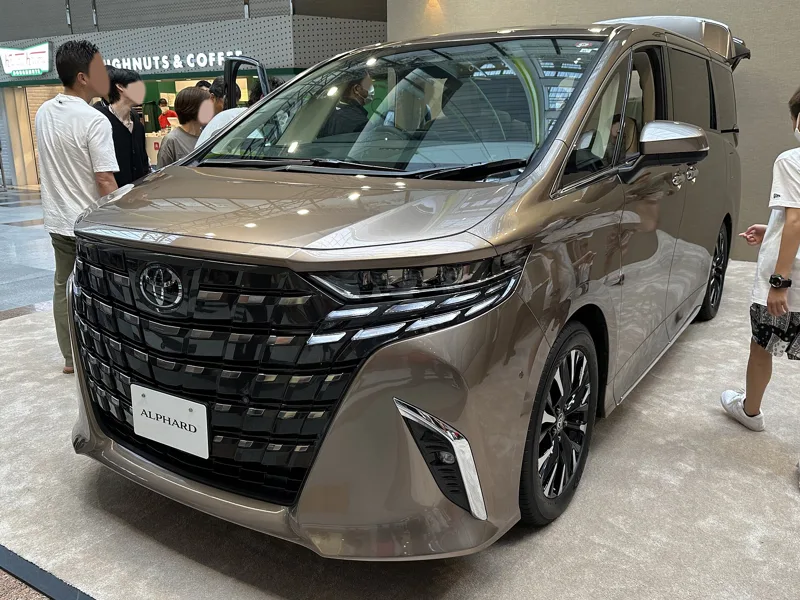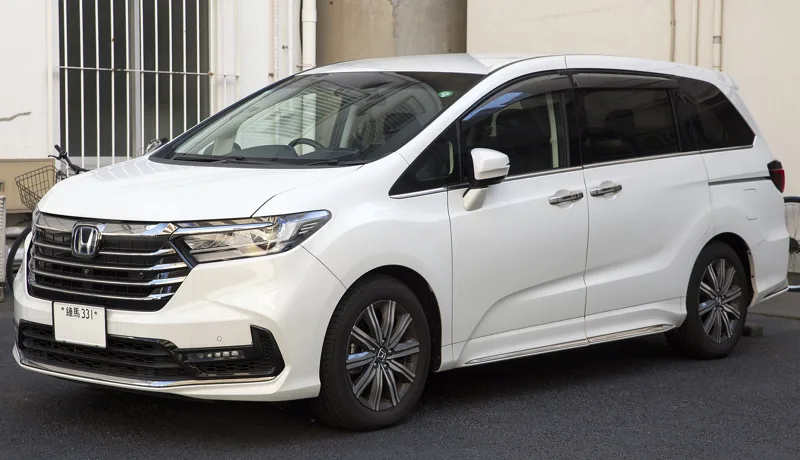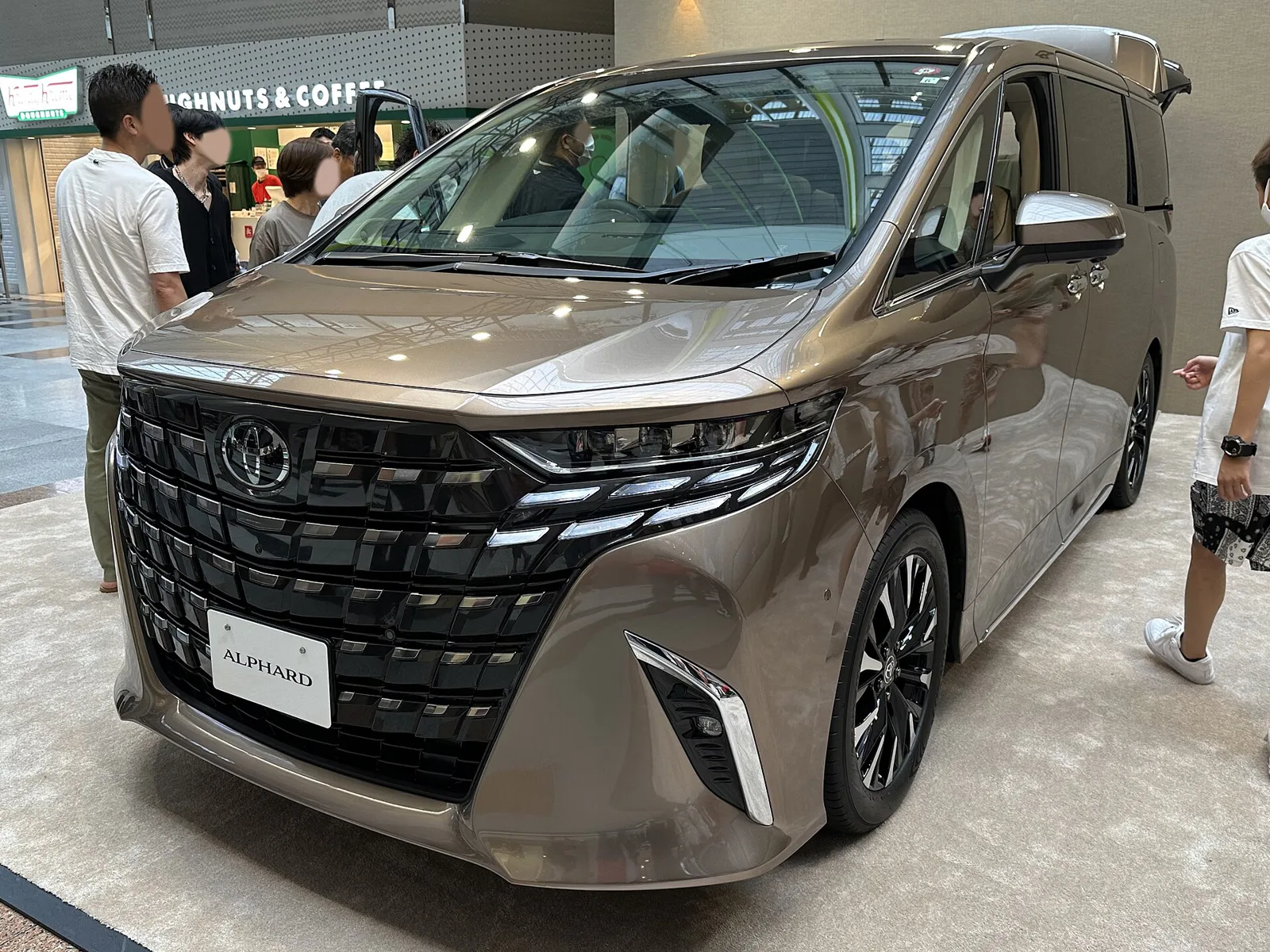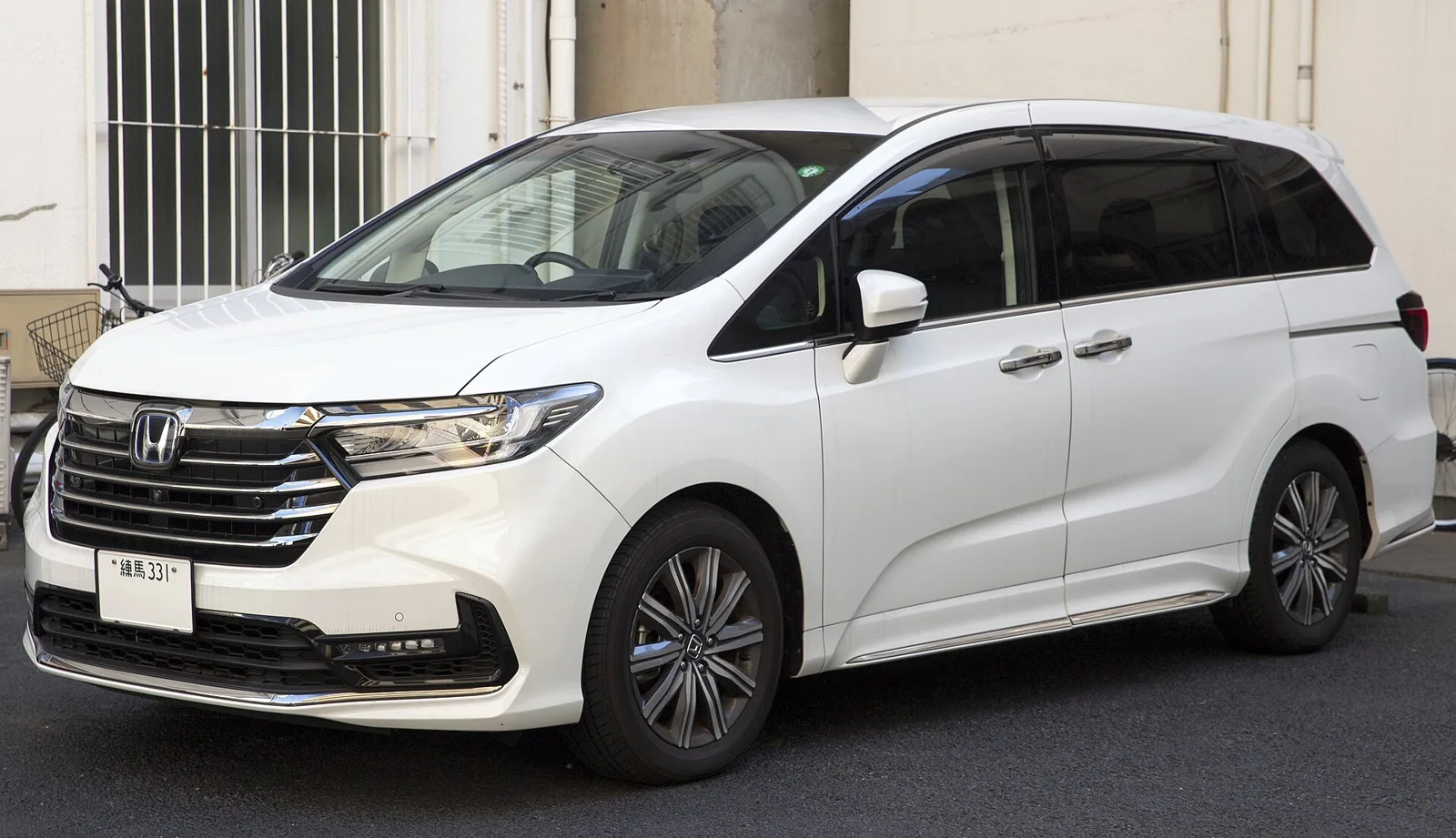
Honda's Odyssey began as a compact family minivan, while the Alphard was built from the start as Toyota's luxury people mover.
The Honda Odyssey is a minivan built by Honda since 1994 and now in its fifth generation. The Toyota Alphard is a large MPV produced by Toyota since 2002, offered as a seven- or eight-seater with petrol and hybrid engines, and it is Toyota's flagship MPV.
The Honda Odyssey and the Toyota Alphard are both Japanese large people movers, but they began with different goals. The Odyssey arrived in 1994 as a compact family minivan built on Accord underpinnings, while the Alphard was launched in May 2002 as Toyota's flagship MPV. Set side by side, the pair show how Honda started small and grew, while Toyota aimed high from the outset.
How did the Odyssey and Alphard begin?
The Odyssey was conceived in Japan during the 1990s slump, which pushed it toward a smaller and more economical size. It was based on the fifth-generation Accord sedan, and it was sold in Europe as the Honda Shuttle. Its later growth into a larger model was largely a North American story.
Toyota introduced the Alphard on 22 May 2002, building it on the second-generation Previa and Estima, which shared many components with the Camry. Chief engineer Hideyuki Iwata led the first generation, which was aimed at buyers in the 30 to 40 age range. Toyota president Fujio Cho acknowledged that it would compete with the Nissan Elgrand, which had been released a day earlier. The Alphard therefore started from a very different point than the Odyssey, whose compact origins were shaped by Japan's economic crisis.
A family minivan that grew up in Australia against a flagship Toyota people mover built to impress from its first day.
How did the two cars' layouts differ?
Both vehicles used front-wheel drive for their core designs, but the Alphard's approach was a conscious choice. Toyota removed the driveshaft that had been a drawback in the Granvia and Grand HiAce, which opened more room for passengers. The first-generation Alphard also considered a diesel engine but dropped it because of emissions and fuel rules.
The Odyssey took a different route. Its third generation was designed with multi-level parking in mind, which made the low roofline a key feature for Japanese buyers. Later Odysseys added four-wheel-drive options, and the fifth generation moved to MacPherson struts at the front and a torsion beam at the rear.
How did the Alphard's luxury setup take shape?
The first-generation Alphard was given curvaceous styling that made it look smaller. Its rear side windows could roll down, and an electric tailgate was optional. The Alphard V was sold at Netz Store outlets and the Alphard G at Toyopet Store dealers. A G-BOOK telematics subscription was also offered on Japanese models from the 2007 model year.
Toyota set monthly targets of 4,000 units for the V and 2,500 for the G, a total of 6,500 cars. A Royal Lounge arrived in 2006 as a more upmarket version with four seats, based on the G, and dealers could convert the rear into two luxury first-class seats with the help of Modellista. The 3.0-litre model moved to a five-speed automatic at the April 2005 refresh.
Where did the Alphard's names come from?
The Alphard takes its name from the brightest star in the constellation Hydra. The Vellfire name comes from velvet and fire, chosen to suggest smooth and passionate qualities. From the AH40 generation the Vellfire wore its own stylised V insignia to set it apart from its twin.
The Alphard is made mainly for Japan, but it is also sold across many Asian countries and in Belarus, Russia and the Middle East. In Southeast Asia many buyers see it as a premium vehicle, a reputation the Odyssey never built in those markets.
How did the Odyssey's engines compare with the Alphard's?
The Odyssey's first engine was a 2.2-litre producing 130 PS (96 kW; 128 hp), with a 2.3-litre engine offering 150 PS (110 kW; 148 hp) from August 1997. A 3.0-litre J30A V6 followed on the RA5 chassis, and a 200 PS (147 kW; 197 hp) version became an option in Japan in October 1997.
The Alphard's early line-up was built around petrol units. Its hybrid version arrived in May 2003 with a 2.4-litre 2AZ-FXE unit built on an Atkinson-cycle layout, rated at 133 PS (98 kW; 131 hp) with peak torque of 190 N-m (140 lb-ft). Toyota's hybrid system used by-wire brakes that worked alongside the E-Four all-wheel-drive setup.
What made the Alphard hybrid stand out?
The Alphard Hybrid could generate up to 1,500 watts and had 100-volt AC outlets to run laptops and emergency lights. In Japan it qualified as an Ultra-Low Emissions Vehicle, 75 percent cleaner than the year 2000 benchmark. Its engine was developed for Toyota's Hybrid Synergy Drive technology, although the high-expansion design brought piston ring wear and higher oil use.
Honda's hybrid arrived much later. Honda's first hybrid went on sale in Japan in February 2016, using a 2.0-litre petrol unit and the Sport Hybrid i-MMD system. Its power control unit shrank by 23 percent and lost 27 percent of its weight compared with the Accord Hybrid's.
Side-by-side specifications
| Specification | Honda Odyssey | Toyota Alphard |
|---|---|---|
| Launch | 1994, Japan and North America | 22 May 2002, Japan |
| Base | Accord sedan underpinnings | Second-generation Previa and Estima |
| Layout | Front-wheel drive; four-wheel-drive options in early versions | Front-wheel drive from the first generation |
| Engines | 2.2-litre, 2.3-litre and 3.0-litre V6 (J30A) in the first generation | Petrol engines; 2.4-litre hybrid from May 2003 |
| Peak output | 200 PS (147 kW; 197 hp) V6 option from October 1997 | 133 PS (98 kW; 131 hp) for the hybrid |
| Hybrid | Odyssey Hybrid, 2.0-litre petrol, from February 2016 | 2.4-litre hybrid from May 2003 |
| Seats | Six or seven seats in the first generation | Seven or eight seats |
| Body | Minivan with a sliding door on later versions | Large MPV; Vellfire twin from the second generation |
| Latest engine noted | 2.4-litre Earth Dreams, 175 PS (173 hp; 129 kW) in the fifth generation | 3.5-litre 2GR-FE V6 carried into the third generation |
| Sales milestone | Australia 3,543 in 2005, a best-ever year | Second generation reached the Philippines on 3 August 2010 |
| Successor or update | Fifth generation sold in Japan from 1 November 2013 | Third generation released 26 January 2015 |
What grades did the second-generation Alphard offer?
The base X grade, also sold as the Vellfire X, came with 2.4 or 3.5-litre petrol engines, seven or eight seats and a beige cloth interior. It usually had just one powered door, though many options were available. It was the simplest way into the range.
The middle S, sold as the Vellfire Z, had a more sporty look, with body side mouldings and deeper bumpers, plus powered doors on both sides. The top G, known as the Vellfire V, offered cruise control as standard, electric front seats with a driver's memory, and a powered tailgate as an option.
How did the Alphard's later generations develop?
The second-generation Alphard was previewed as the FT-MV in 2007 and went on sale in May 2008. It introduced the Vellfire twin, which had a split headlight and taillight design and was sold exclusively through Toyota's youth-oriented Netz Store chain until 2020, while the Alphard stayed with the Toyopet Store network. The range was offered with petrol and hybrid engines and both two- and four-wheel drive.
The third-generation Alphard arrived on 26 January 2015 with a redesigned exterior and two new 2.5-litre engines, one petrol and one petrol hybrid. The 3.5-litre V6 carried over with a six-speed automatic, and a new Executive Lounge grade topped both the Alphard and the Vellfire. Toyota framed the car as a luxury saloon with a large space, with ride comfort a priority. The car grew by 60 mm (2.4 in) in length and 20 mm (0.8 in) in width, while its height dropped by 10 mm (0.4 in), and its rear suspension changed to double wishbones.
How did the Odyssey's later generations develop?
The third generation reached Japanese showrooms in October 2003 and was the first full redesign since the car's launch. It gained a 2.4-litre K24A engine producing 160 PS (118 kW), with a 200 PS variant for the Absolute grade. The V6 was dropped completely, and the model became a strong seller in Australia.
The fourth generation began sales in Japan on 17 October 2008. It kept the 2.4-litre engine with more power and better fuel economy. Front-drive versions used a CVT with a torque converter, while four-wheel drive and the 206 hp Absolute grade used a five-speed automatic, and electronic stability control and curtain airbags reached all grades. The fifth generation arrived in late 2013 with dual power sliding doors and an Earth Dreams engine.
Which buyer suits each minivan?
The Odyssey suits a family buyer who wants a practical people mover with a strong record in Australia and, from 2016, a hybrid option. The Alphard suits a buyer who wants a flagship luxury MPV, with a wide choice of grades and special editions, from the standard S and G to the Royal Lounge.
The figures here do not settle which is better, so no verdict is given. Neither vehicle is a copy of the other, since one grew out of a compact family design and the other began as a luxury people mover. The Alphard's luxury focus is clear from its launch, while the Odyssey's growth from a compact family car gives it a different character.
What did each minivan leave behind?
The Odyssey left a strong sales record in Australia, where private buyers made it the top people mover, and it outsold the Toyota Tarago in 2005. Its later generations also raised the bar on safety, with systems fitted in every grade.
The Alphard left a line of Toyota flagship MPVs and a twin in the Vellfire, which kept its own identity and its own Netz Store network until 2020. Its shield-like grille, introduced with the AH30 generation in 2015, gave the family a strong visual identity. Since 2019 a more upscale version has been sold as the Lexus LM, which extended the family into the premium market.