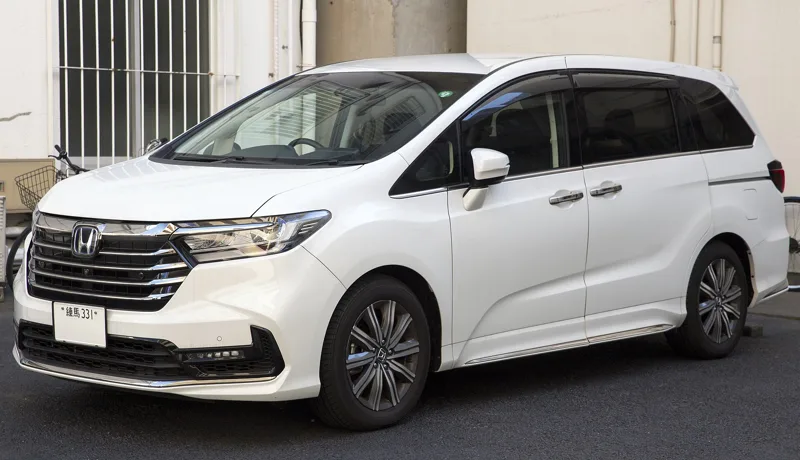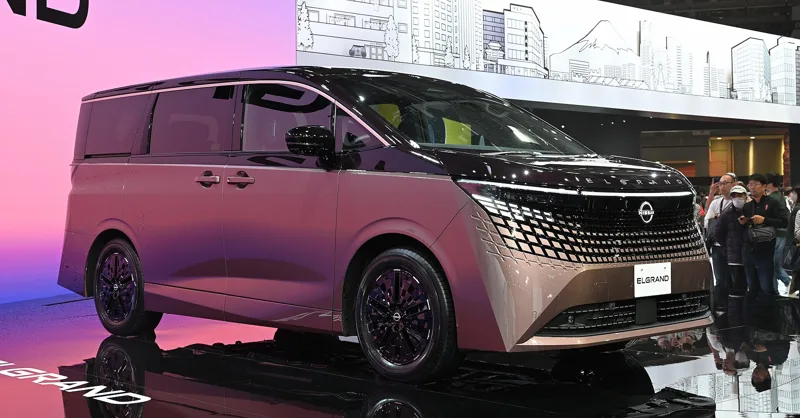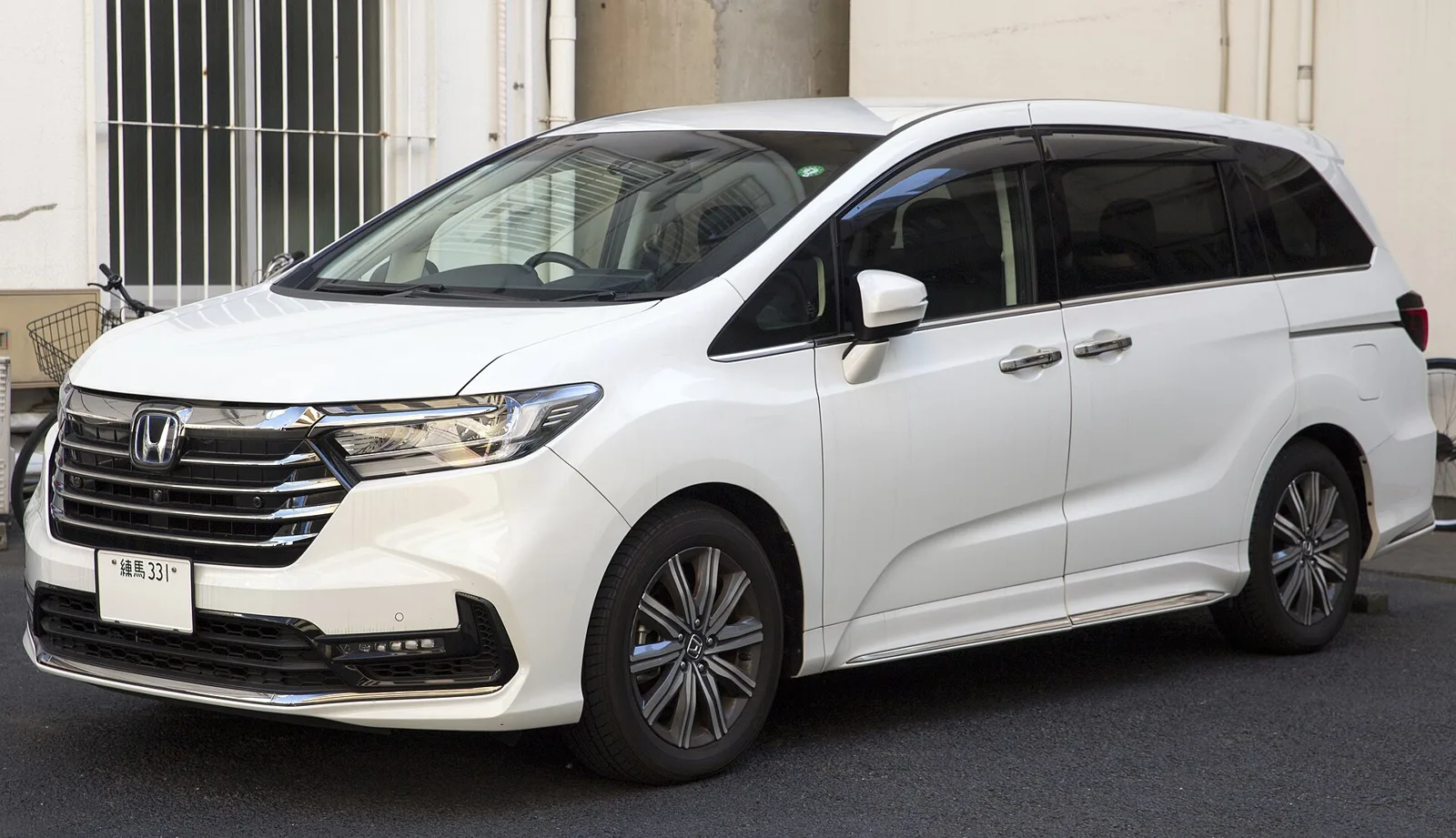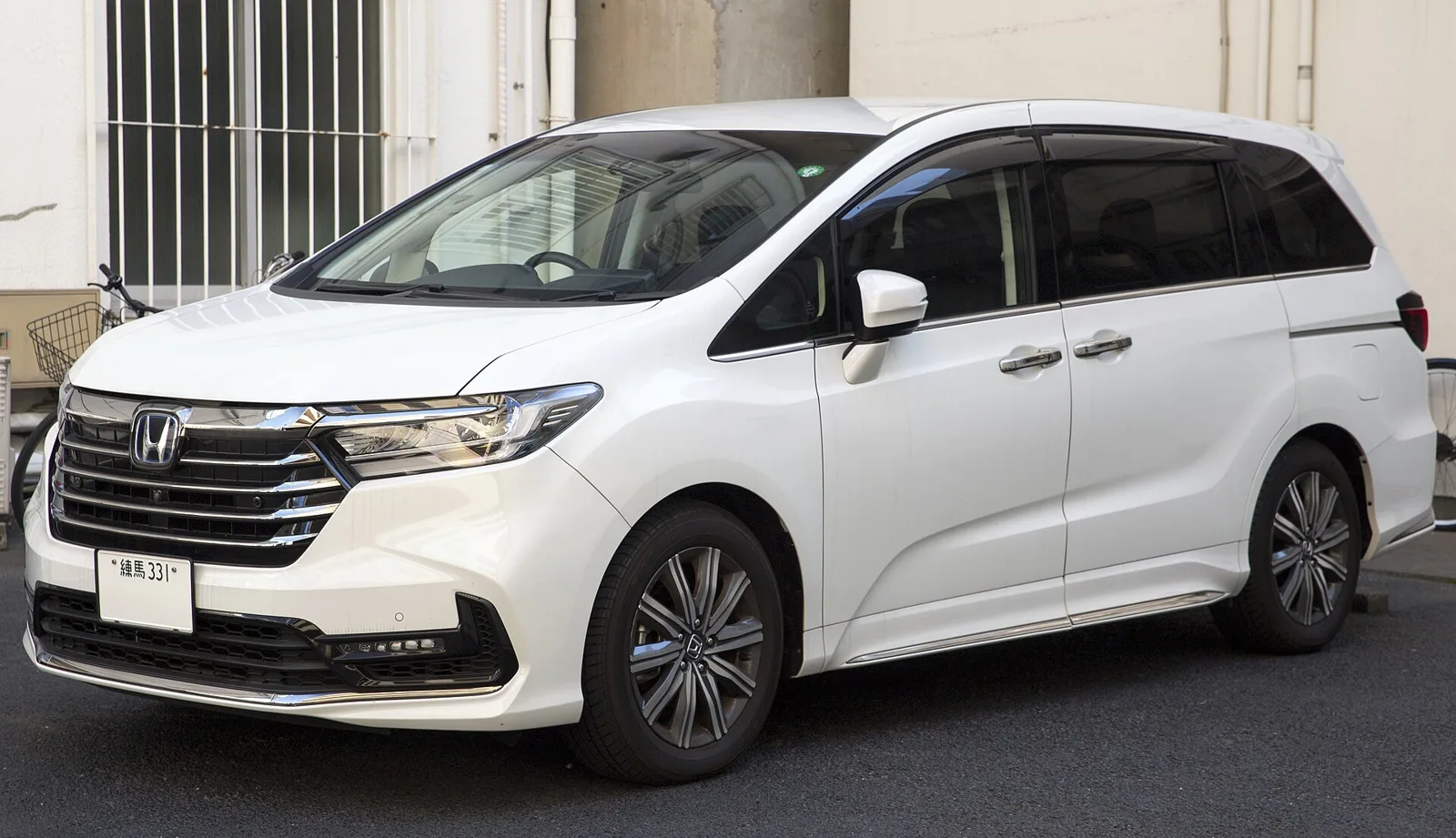
Honda's Odyssey and Nissan's Elgrand both began as Japanese family vehicles and later grew into full-size luxury people movers.
The Honda Odyssey is a minivan built by Honda since 1994 and now in its fifth generation. The Nissan Elgrand is a minivan built by Nissan Shatai since 1997, sold in four generations, and both grew into full-size luxury people movers in Japan.
The Honda Odyssey and the Nissan Elgrand were both Japanese minivans that started as family vehicles and grew into full-size luxury people movers. The Odyssey arrived in 1994 and was built on the Accord's underpinnings, while the Elgrand was launched by Nissan in May 1997. Set side by side, they show two makers responding to the same market with different sizes, engines and ideas about luxury.
How did the Odyssey and Elgrand begin?
The first Odyssey took shape in Japan during the 1990s slump, which pushed the design toward a smaller and cheaper vehicle. It was based on the fifth-generation Accord sedan and was built in an existing facility. It was well received in Japan but less so in North America, and it was sold in Europe as the Honda Shuttle.
The Elgrand was made by Nissan Shatai for Nissan. Its first generation, code E50, ran from May 1997 to May 2002, and it took over the passenger duties of the Caravan Coach with a luxury touch. The main rivals were the Toyota Alphard and Vellfire and the Honda Odyssey, and the Elgrand was sold through Nissan Store and Nissan Prince Store outlets in Japan.
Two Japanese minivans that grew from family transport into full-size luxury people movers, each with its own route to the top.
Which engines did each minivan use?
The original Odyssey had a 2.2-litre engine producing 130 PS (96 kW; 128 hp). A 2.3-litre engine followed in August 1997, rated at 150 PS (110 kW; 148 hp), and a 200 PS (147 kW; 197 hp) V6 became an option in Japan in October 1997. The 3.0-litre J30A V6 used the RA5 chassis, and it was front-wheel drive only.
The Elgrand's E50 offered petrol VG33E and VQ35DE engines and diesel QD32ETi and ZD30DDTi units, with a four-speed automatic and two- or four-wheel drive. The E51 that followed in 2002 used a 2.5-litre or larger VQ-series V6 with a five-speed automatic and Tiptronic shifting, which gave it a more modern feel.
How did the Odyssey change in its second and third generations?
The second-generation Odyssey arrived in December 1999 as a major upgrade rather than an entirely new design. The body gained 85 mm (3.3 in) in length and 10 mm (0.4 in) in width, and its V6 produced 210 PS (154 kW). The 2000 model became Honda's first with a five-speed automatic, which was available only with the 3.0-litre engine.
The third generation reached Japanese showrooms in October 2003 and gained a 2.4-litre K24A engine with 160 PS (118 kW). Its sportier Absolute version used a 200 PS variant of that engine, and the V6 was dropped completely. The lower roofline suited crowded multi-level car parks, a particular concern in Japan.
How did the Odyssey sell in Australia?
Australia gave the second-generation Odyssey an early boost, but sales slumped. In 2003 only 649 units were sold, about a third of the 2000 figure. The third generation changed that. Sales peaked in 2005, when 3,543 cars were sold and the Toyota Tarago was beaten for the first time.
By the fourth generation, private buyers in Australia had made it the top people mover. That generation also brought a five-speed automatic to many export markets, including Australia and Indonesia. Stability control and curtain airbags arrived as standard on every grade, one of the biggest changes of that generation.
How did the Elgrand's E51 change the formula?
The E51 Elgrand arrived in May 2002 as a clear step forward from the E50. It brought power sliding doors and 16- or 17-inch alloy wheels. In Japan it was sold only by Nissan dealers, with a small number exported to Hong Kong and Brunei. Abroad it became a popular grey import, notably in Australia, Britain, Canada and New Zealand.
Inside, the E51 had captain-style seats, eight speakers and an 8-inch LCD screen for the Carwings information system. Keyless-go and a reversing camera were part of its appeal, and the 2008 update added a four-view camera for an aerial view when reversing. Optional extras included heated front seats, power curtains and woodgrain trim, and the front captain seats could face the rear to form a dining setting.
How did the Odyssey's fifth generation change the formula?
The fifth generation was previewed online in late September 2013 and reached Japanese buyers on 1 November 2013. It was bigger than its predecessors and took over from the first-generation Elysion in Japan, where it faced the Toyota Alphard and Nissan Elgrand. Honda had earlier shown the idea as the Concept M at the Shanghai show that year.
The rear hinged side doors gave way to dual power sliding doors, and seven-seat variants got cradle seats with ottomans in row two. Power came from a 2.4-litre i-VTEC Earth Dreams unit rated at 175 PS (173 hp; 129 kW). The Absolute grade added direct injection and reached 190 PS (187 hp; 140 kW). A hybrid version came in 2016, with a 2.0-litre petrol engine.
Side-by-side specifications
| Specification | Honda Odyssey | Nissan Elgrand |
|---|---|---|
| Launch | 1994, Japan and North America | May 1997 (E50) |
| Base | Based on the fifth-generation Accord sedan | Made by Nissan Shatai for Nissan |
| First-generation engines | 2.2-litre (130 PS; 96 kW), 2.3-litre (150 PS; 110 kW), 3.0-litre V6 (200 PS; 147 kW) | VG33E and VQ35DE petrol; QD32ETi and ZD30DDTi diesel |
| Transmission | Five-speed automatic from 2000 on the 3.0-litre | Four-speed automatic |
| Second-generation engines | 2.3-litre four; 3.0-litre V6 producing 210 PS (154 kW) | E51: 2.5-litre or larger V6 (VQ series) |
| Fifth-generation engine | 2.4-litre Earth Dreams, 175 PS (173 hp; 129 kW); Absolute 190 PS (187 hp; 140 kW) | No figure given |
| Fuel economy | 14.0 km/L on the JC08 test cycle, fifth generation | No figure given |
| Hybrid | Odyssey Hybrid, 2.0-litre petrol, Japan from February 2016 | None listed |
| Sales | Australia 3,543 in 2005, a best-ever year | Japan sales reached 250,000 units since May 1997 |
| Special versions | Absolute and Prestige grades | XL, Rider, Autech VIP, Paramedic and Jumbo Taxi |
| Body | Six- or seven-seat versions, sliding doors from the fifth generation | Power sliding doors from the E51 |
How did the second Odyssey's interior change?
The second-generation interior was completely new. The automatic shifter now sat on the centre console instead of the column, and a touchscreen digital climate control replaced the manual controls, working with a new navigation system. Woodgrain trim came as standard on all models.
Higher V6 grades such as the VG and VZ had leather and velour seat and door materials over the basic cloth. The spare wheel moved beneath the third row, and the L and Absolute versions gained a third-row heater. The sunroof was no longer available, which made the cabin feel more deliberate.
How did the Elgrand's commercial versions develop?
The second-generation Paramedic ambulance arrived in May 1998 on the E50 chassis. The ambulance body from the B pillar back came from the Paramedic II, a high-roof version of the E24 Caravan, which gave more room in the back. A 2006 facelift refreshed the E50 Paramedic, which lasted until December 2017.
Isuzu also sold the E50 Paramedic as the Super Medic II until 2002. The Elgrand Jumbo Taxi was a commercial van with room for ten passengers, based on the E50 Paramedic and offered from 2000 to 2011, while the Fargo Filly rebadge of the E50 ran from 1997 to 2002 in Japan.
Which luxury versions set the two apart?
The Elgrand XL was the top of its range, with a full leather seven-seat interior, an eight-speaker sound system, keyless entry and heated front seats. It weighed 2.2 tons, which made it very heavy. The Rider was the lightest version, having been conceived as a sports model with some features removed.
The XL's full leather seating was its clearest luxury statement. Nissan also made commercial versions. The Paramedic ambulance appeared in May 1998 on the E50 chassis, the Elgrand Jumbo Taxi offered 10 passengers from 2000 to 2011, and Isuzu sold a rebadged E50 as the Fargo Filly in Japan. The Autech VIP brought an electric ottoman and rear-seat audio to the Elgrand's luxury range.
Which buyer suits each minivan?
The Odyssey suits a family buyer who wants a practical people mover, and it has offered hybrid power since 2016, which sets it apart in later years. The Elgrand suits a buyer who values a luxury interior, a wide choice of versions and a long range of special variants, including the Rider and the VIP.
The figures here do not settle which is better, so no verdict is given. Buyers who wanted the Japanese luxury people mover of the period could have looked at either, while the grey import popularity of the E51 shows the Elgrand's appeal abroad. Japan's car-parking limits shaped both cars, as the Odyssey's lower roofline shows.
How was the E50 Elgrand range arranged?
The E50 ranged from the V and VG at the base through X and XL, with Highway Star, Rider and S Edition versions as well. The Caravan Elgrand was sold through Nissan Store outlets, while the Homy Elgrand went to Nissan Prince Store dealers, and both nameplates were dropped in an August 1999 facelift.
The E50 received a facelift on 23 August 2000 with a slightly redesigned front. Its top packages included CarWings internet-enabled satellite navigation, which marked it out from earlier Nissan people movers.
What did each minivan leave behind?
The Odyssey left a record of sales success in Australia and a long line of generations. Its 1995 Car of the Year award in Japan showed that the early car was appreciated at home, and its move to a larger body in North America later on shaped the wider Odyssey family.
The Elgrand's legacy includes its commercial versions, built on the E50 chassis as the Fargo Filly and Jumbo Taxi, and the Nissan Forum concept of 2008, which was based on the E51 and was shown at a 2008 show in North America. The Forum design later passed to the North American Quest.