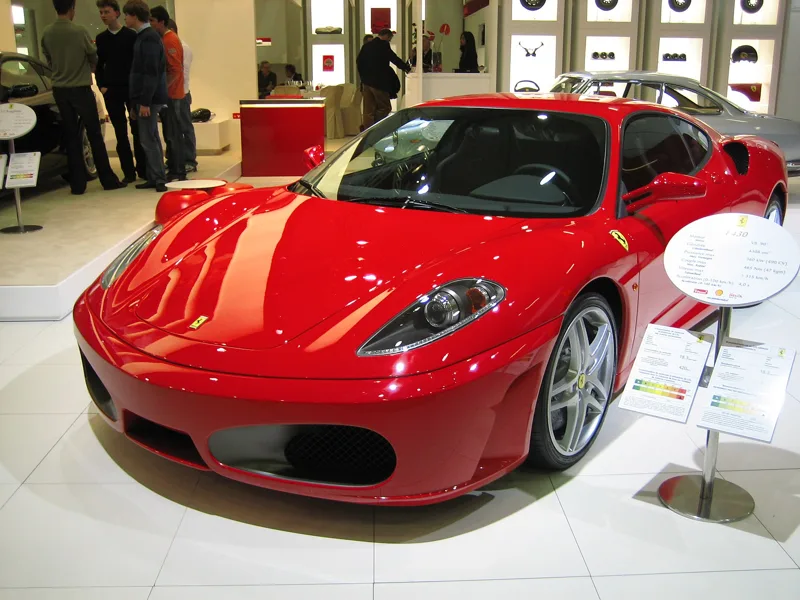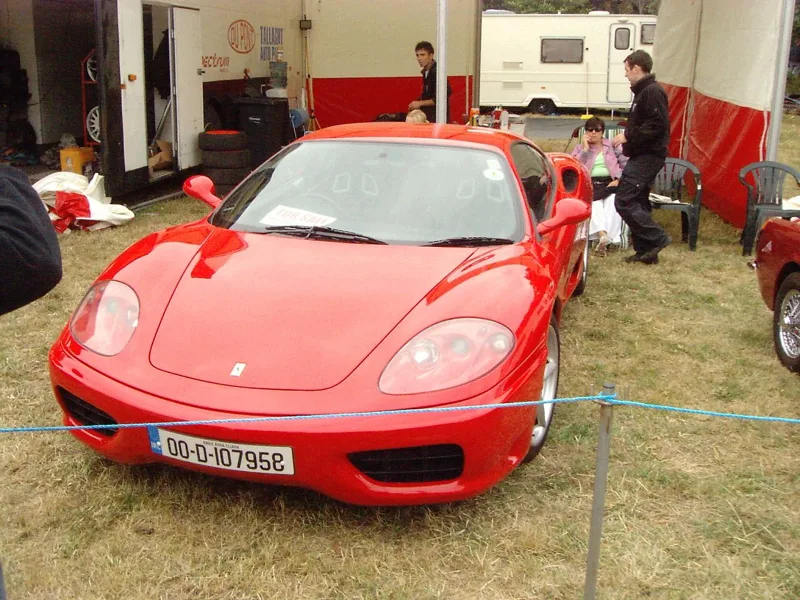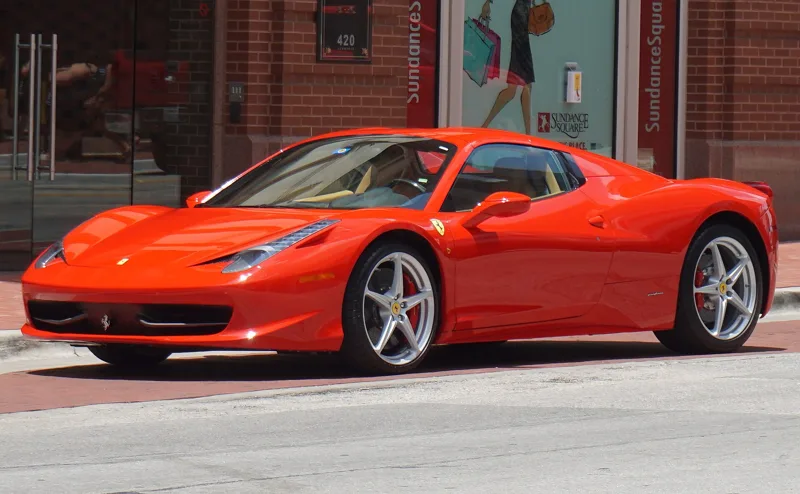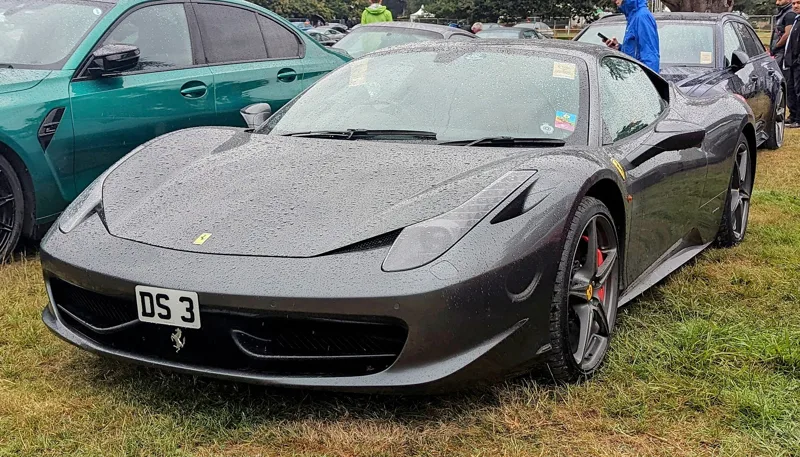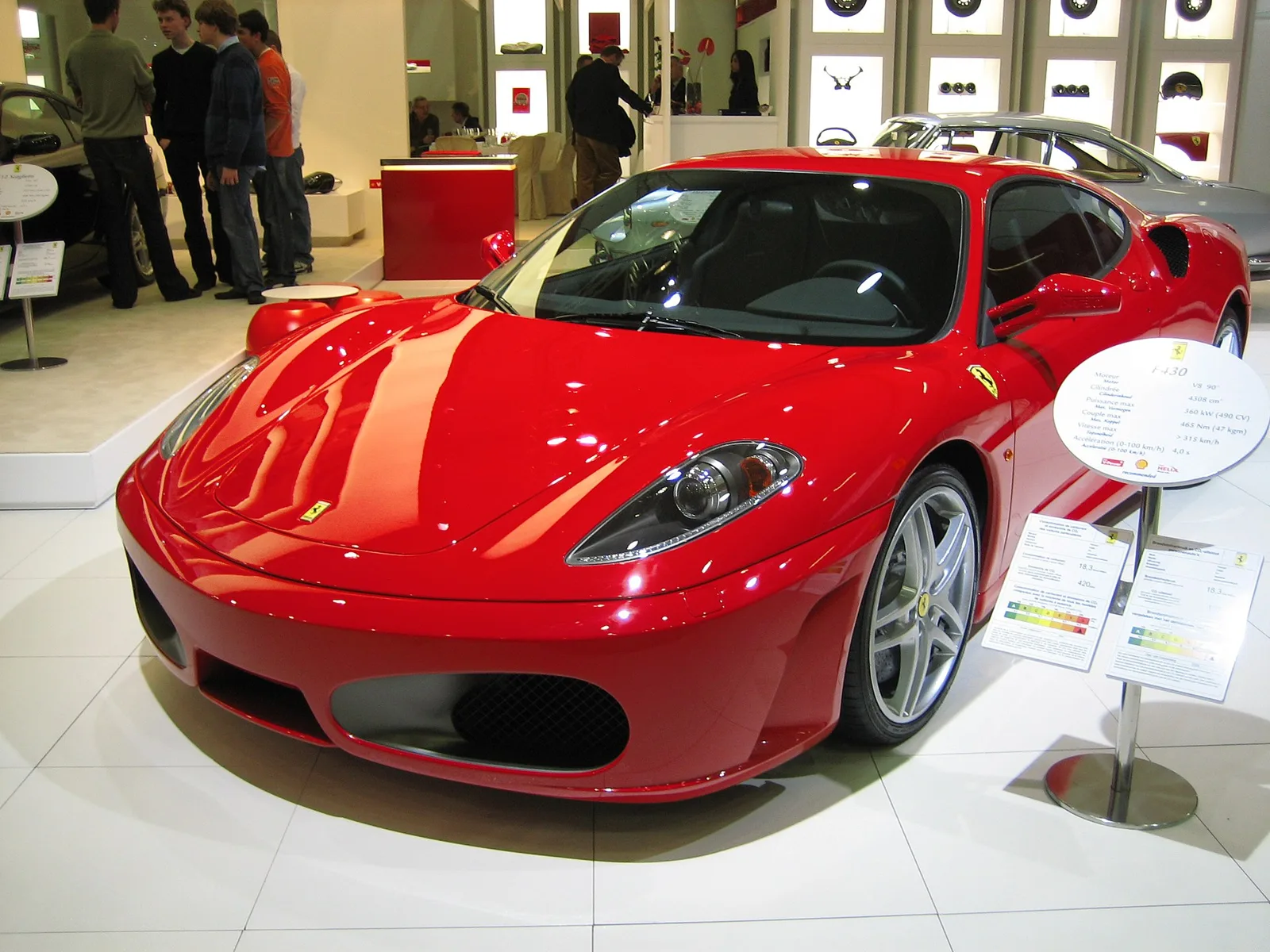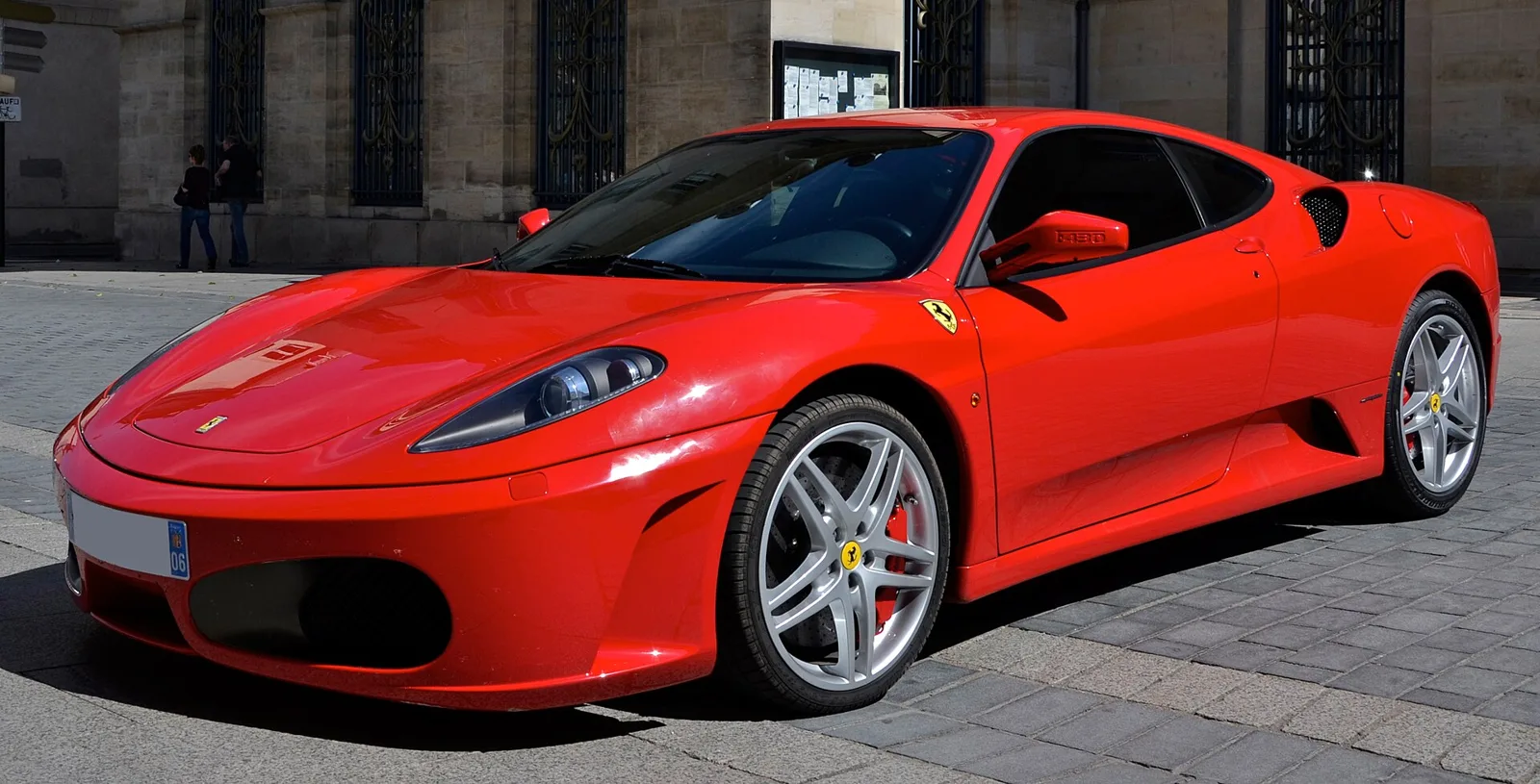
Two sports cars from the same mid-2000s showroom, with a naturally aspirated Ferrari V8 on one side and a Porsche 911 that grew its own turbo and GT line-up on the other.
The Ferrari F430 was a 2004 to 2009 V8 sports car with 490 PS and a 3.6-second 0 to 97 km/h time. The Porsche 911 (997), sold from 2004 to 2013, offered a flat-six in several forms, with the Turbo and GT2 bringing it to 480 PS and 530 PS.
The Ferrari F430 and the Porsche 911 (997) were both sports cars at the top of their makers' ranges in the mid-2000s, and both were sold to buyers who wanted to drive hard on the road and on track. The F430 was a V8 update of the 360, while the 997 was the sixth generation of the 911. Their rival chapters ran through road models, convertibles and racing versions that kept both brands in the public eye.
Why were the F430 and 997 compared?
Both cars were built for the same sort of buyer, the enthusiast who wanted a fast two-door with serious engineering and a racing pedigree. Each sold in large numbers in its era, and each spawned a line of track and special versions that defined what the badge meant.
The F430 was unveiled at the 2004 Paris Motor Show as the successor to the 360. The 997 went on sale for the 2005 model year, and its Carrera and Carrera S coupes began production in early 2004.
Two sports cars from the same era, one with a Formula 1 flavoured V8 and one with a flat-six that grew into a full family of track weapons.
Where did each car come from?
Ferrari's F430, codenamed Type F131, was an update of the 360 rather than an entirely new car. Its body was styled by Pininfarina with Frank Stephenson, and it kept the 360's Alcoa aluminium chassis, roofline, doors and glass, while its exterior picked up cues from the Enzo.
Porsche's 997 was an evolution of the 996, with new interior and exterior styling. Its most noticeable change was the return of the classic bug-eye headlamps in place of the 996's fried-egg units, and it was built on a wider rear body, 88 mm (3.5 in) wider than before.
The 997 family spread over time. The all-wheel drive Carrera 4 and Carrera 4S reached customers in November 2005, and the Turbo and GT3 arrived in late 2006 with the GT2 following in 2007. The 997 was sold until 2013, longer than the F430's production run of 2004 to 2009.
The 997 Targa offered a glass roof that dropped 25 mm and slid a metre back beneath the rear window, at any speed. It weighed 60 kg (132 lb) more than a hardtop, so its suspension was retuned, and a small glass deflector rose above the windscreen to keep the car stable when the roof was retracted.
Ferrari's F430 Spider was unveiled at the 2005 Geneva Motor Show as the company's 21st road-going convertible. Pininfarina designed it using aerodynamic simulation programmes developed for Formula 1 cars, and its roof folds away in two stages into a space above the engine bay.
How did the engines compare?
The F430 used a 4,308 cc (4.3 litre) V8 from Ferrari and Maserati's F136 family. Its peak was 490 PS (360 kW; 483 hp) at 8,500 rpm, with 465 N-m (343 lb-ft) of torque at 5,250 rpm and 80% of that torque available below 3,500 rpm.
The V8 was an entirely new engine for Ferrari, which had previously built its V8s from the Dino racing programme of the 1950s. Its 20% increase in displacement added only 4 kg (8.8 lb) of weight, and its 4-valve cylinder head and intake trumpets were carried over from Formula 1 engines.
The 997 Carrera used a 3.6-litre flat-six, while the Carrera S moved to a 3.8-litre with more power. The S added 29 PS (21 kW; 29 bhp) over the base car and came with sports suspension, sports exhaust and 19-inch wheels.
At the top of the range the 997 Turbo produced 480 PS (353 kW; 473 bhp), with 620 N-m (457 lb-ft) of torque that rose to 680 N-m (502 lb-ft) on overboost with the Sport Chrono package. Its twin BorgWarner variable geometry turbochargers were a first for a Porsche production car.
Specifications side by side
| Specification | Ferrari F430 | Porsche 911 (997) |
|---|---|---|
| Production | 2004 to 2009; about 16,750 built from 2005 | 2004 to 2013; sixth generation 911 |
| Engine | 4,308 cc V8 of the F136 family | 3.6-litre flat-six; 3.8 litre on the Carrera S; 3.6 litre twin-turbo on the Turbo |
| Power | 490 PS (360 kW; 483 hp) at 8,500 rpm | Carrera S base plus 29 PS; Turbo 480 PS (353 kW; 473 bhp); GT2 530 PS (390 kW; 523 bhp) |
| Torque | 465 N-m (343 lb-ft) at 5,250 rpm | Turbo 620 N-m (457 lb-ft); 680 N-m on overboost |
| 0 to 97 km/h | 3.6 seconds | Turbo 3.9 seconds manual, 3.7 seconds Tiptronic; GT2 3.4 seconds |
| Top speed | Over 315 km/h (196 mph) | Turbo 310 km/h (193 mph); GT2 330 km/h (205 mph) |
| Brakes | Brembo and Bosch cast-iron discs; optional carbon-ceramic package | Optional Porsche Ceramic Composite Brakes on the Turbo, 17 kg lighter |
| Drag coefficient | Not given | 0.28 Carrera; 0.29 Carrera S |
| Transmission | F1 automated manual by Graziano Trasmissioni | Five-speed Tiptronic S, six-speed manual; PDK from the 2009 refresh |
| Recall | About 2,000 Spiders in the US, February 2009 | Not given |
Which had the more advanced brakes and chassis?
Ferrari developed the F430's brakes with Brembo and Bosch, producing a new cast-iron disc alloy that included molybdenum for better heat dissipation. An optional carbon-fibre-reinforced silicon carbide package was also offered, and Ferrari claimed those ceramic brakes would not fade over 300 to 360 laps of its test track.
Porsche's optional ceramic brakes on the Turbo cut weight by 17 kg (37 lb) and offered consistent friction and corrosion resistance. The Turbo's front discs measured 380 mm and the rear 350 mm, and the car weighed about 1,569 kg (3,460 lb).
The F430 added the E-Diff, a computer-controlled electronic limited-slip differential that varied torque split by steering angle and lateral acceleration. Its manettino knob on the steering wheel offered five settings that changed stability control, the Skyhook suspension, shift behaviour, throttle response and the E-Diff together.
Porsche's 997 chassis relied on the Turbo's traction and stability systems, with torque managed by Porsche Traction Management. The 2009 refresh tuned the all-wheel drive further, adding torque vectoring as an option on the Turbo.
How did the Scuderia and GT2 variants stack up?
The 430 Scuderia, unveiled by Michael Schumacher at the 2007 Frankfurt Auto Show, was 100 kg (220 lb) lighter than the standard F430 and made 510 PS (375 kW; 503 hp) at 8,500 rpm. Its weight-to-power ratio fell from 2.96 kg/hp to 2.5 kg/hp, and it reached 97 km/h in 3.1 seconds on the way to a top speed of 319 km/h (198 mph).
The Scuderia also gained Superfast2 software that cut shift times to 60 milliseconds, and a new traction control system combined F1-Trac from the 599 GTB with the E-Diff. Ferrari aimed it at rivals such as the Porsche 911 GT2 and the Lamborghini Gallardo Superleggera.
Porsche's answer was the 997 GT2, which went on sale in November 2007. It produced 530 PS (390 kW; 523 bhp) and 680 N-m (502 lb-ft) from a twin-turbo flat-six, and it was rear-wheel drive with a six-speed manual as the only transmission.
Porsche announced the 911 Turbo Cabriolet on 7 May 2007 for sale that September, and it became one of the fastest convertible sports cars in production despite the usual penalties of a soft top.
The GT2 reached 97 km/h in 3.4 seconds and 161 km/h (100 mph) in 7.4 seconds, with a claimed top speed of 205 mph (330 km/h). It was the first 911 to pass the 200 mph barrier since the 1998 GT1 race version, and it was the first Porsche fitted with launch control.
How did the track versions compete?
The F430 Challenge was the track version for the Ferrari Challenge series, and its engine was left untouched while weight, transmission and suspension were changed. It was unveiled at the Los Angeles Auto Show in January 2005.
The F430 GTC was built from 2006 by Ferrari's customer racing department with Michelotto. Ferrari destroked the V8 to 4.0 litres to fit the 3.8 to 4.0 litre class of GT2 racing, giving 327 kW (445 PS; 439 hp) with a 1,100 kg minimum weight.
F430 GTCs won their class championships in the American Le Mans Series and the FIA GT Championship, and they scored class wins at the 2008 and 2009 24 Hours of Le Mans.
The F430 GT3, developed in 2006 by JMB Racing, made 558 PS (550 hp) from the 4.3-litre V8 but weighed 1,219 kg in race trim. The 430 GT3 Scuderia followed for the 2009 season, when Kessel Racing upgraded 54 chassis to Scuderia specification.
What special models did the two brands make?
The 997 GT3 made 415 PS (305 kW; 409 bhp) from a 3.6-litre engine with a new variable intake system and an 8,400 rpm redline, matching the Carrera GT. It was priced at US$106,000 and was built to homologate aerodynamic features for racing.
Porsche built 50 Club Coupes for the 50th anniversary of the Porsche Club of America, with an Azurro California colour scheme and commemorative badging. Its MSRP was US$99,911.
Ferrari's one-off SP1 was the first special from its Special Projects Programme. Its body was designed by Leonardo Fioravanti, a former Pininfarina designer, for a Japanese collector who had admired his 1998 F100 prototype.
The F430 Spider Bio Fuel ran on ethanol and produced 500 hp, shown at the 2008 Detroit Auto Show with 4% more torque than the standard Spider and 5% less carbon dioxide.
Did either car have reliability problems?
In February 2009 Ferrari recalled about 2,000 F430 Spiders sold in the US from 2005 to 2007. Heat from the engine could make the convertible top's hydraulic hoses fracture and leak flammable fluid, creating a fire risk.
Porsche's 2009 refresh made the 997 faster, lighter and more fuel efficient than the outgoing versions, and it replaced the Mezger engine with a direct-injection unit. The company also replaced the five-speed Tiptronic with its PDK dual-clutch gearbox.
How did reviewers judge the two cars?
The 997 earned mostly positive reviews from the motoring press. Car and Driver estimated that the 2009-era Turbo with PDK could reach 60 mph in about three seconds, and Jeremy Clarkson, a known critic of Porsche, praised the 997's feel and its effect on the driver.
The F430 earned praise for its V8 and its driving feel, which the manettino knob and E-Diff made easier to tune. Its F1-derived gearbox and Pininfarina body gave the car a racing-bred character that buyers could relate to on the road.
Which car suits which buyer?
On the figures, the F430 suits a buyer who wants a naturally aspirated V8 with a high redline, an F1-derived gearbox and a Ferrari badge. The 997 suits a buyer who wants a flat-six with a wide range of variants, a long 911 lineage and a choice of coupe, cabriolet or Targa.
The Turbo and GT2 give the 997 the outright acceleration and top speed on the published figures, with the GT2 quicker than any F430 variant on the figures given. The F430 Scuderia counters with a lower weight and a higher power output than the standard F430.
Neither car wins on every measure. The F430 offers the more characterful engine and the manettino system, while the 997 offers the wider line-up and the GT2's record pace. The right choice depends on whether a buyer values a V8 or a flat-six and how much track capability they want.