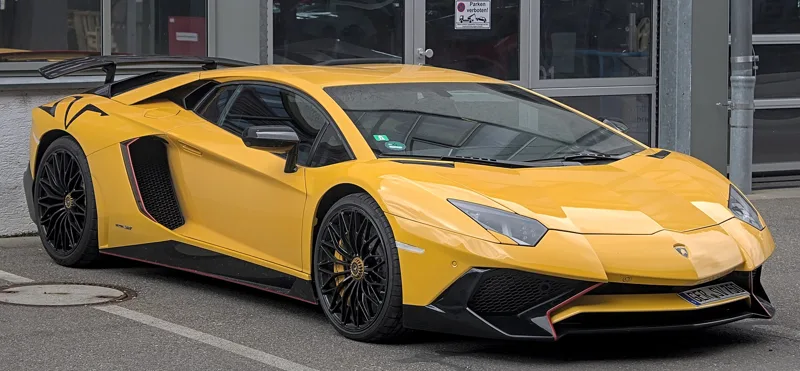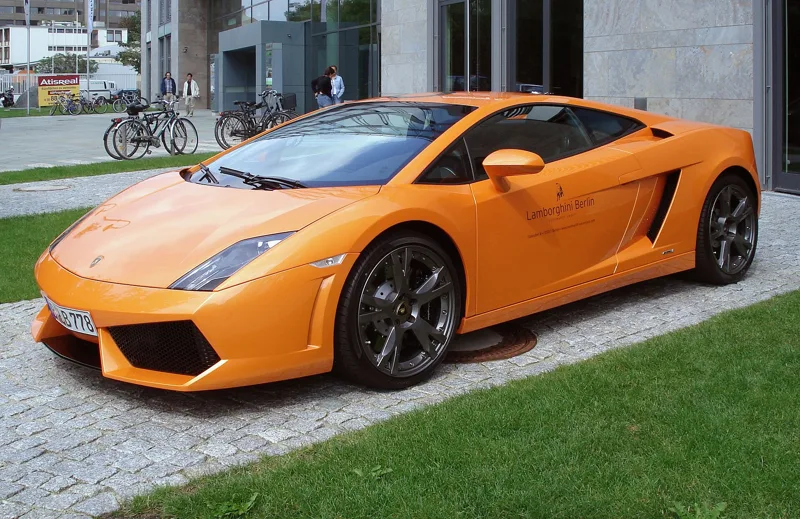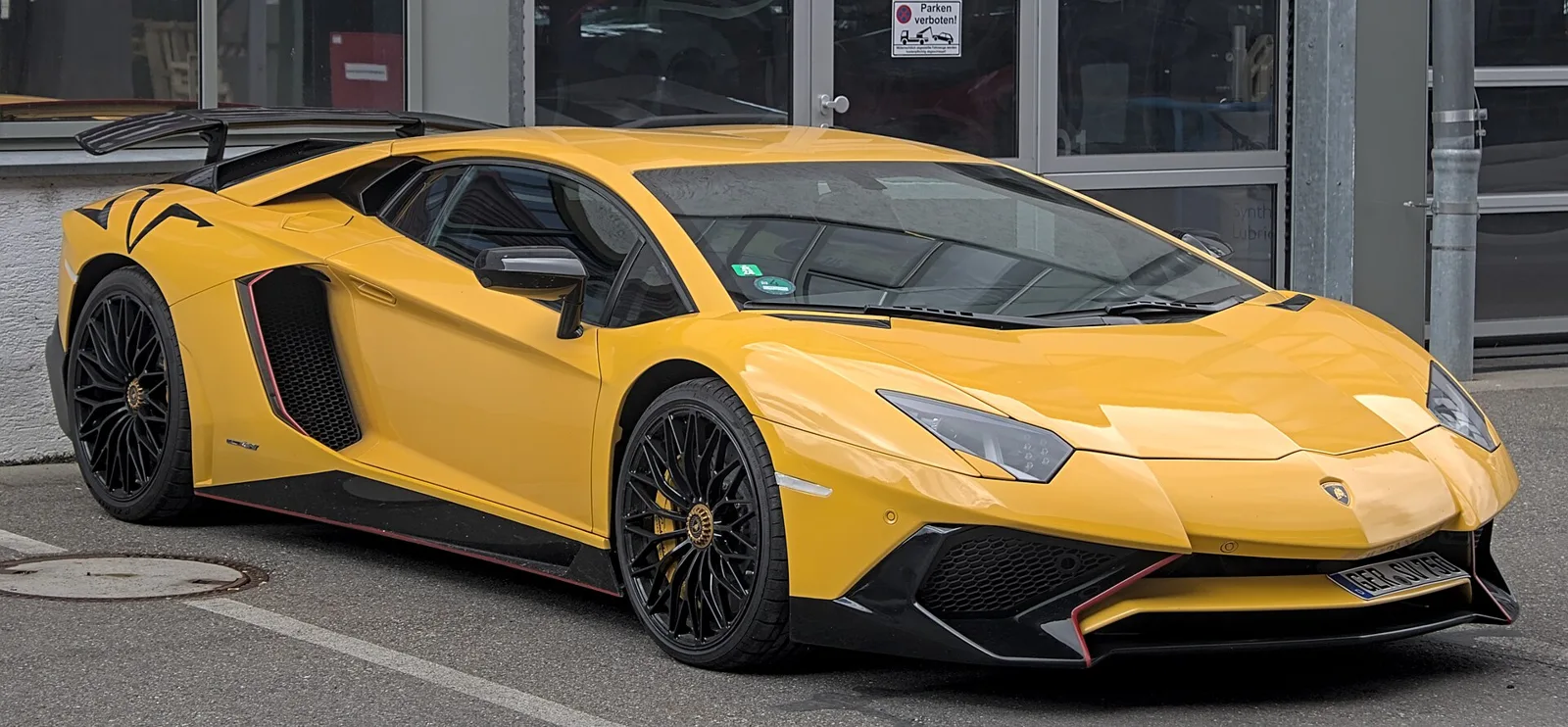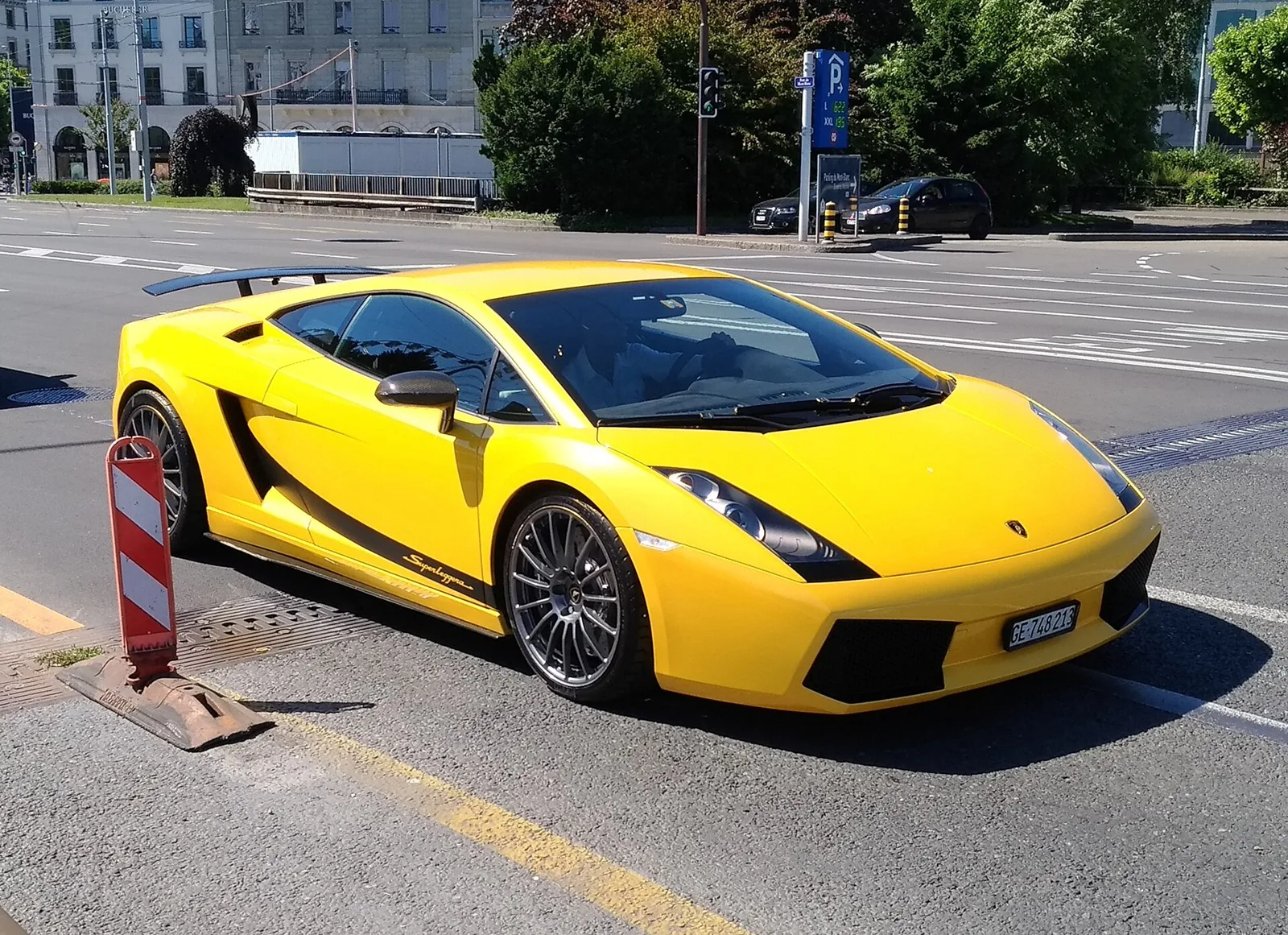
Carbon parts, 530 PS and a name borrowed from a 1937 coachbuilding method, on a Gallardo that still weighed 1,528 kg on the road.
The Lamborghini Gallardo Superleggera was a 2007 track-focused Gallardo with a V10 making 530 PS and carbon-fibre body parts. Its name recalled a 1937 coachbuilding method, yet the car weighed 1,528 kg once fuelled, far from light.
Lamborghini's Superleggera, launched in 2007, pushed the Gallardo toward the track with carbon-fibre body parts and a V10 tuned to 530 PS. Its name came from a 1937 coachbuilding method, but on a magazine's scales it proved only relatively super-light.
Where did the Superleggera name come from?
The name dates from 1937, when Carrozzeria Touring developed a patented way of building car structures that laid the first foundations for tubular chassis. Its inventor, Felice Bianchi Anderloni, called the method superleggera, or super-light, in his native Italian. The concept gave comfort and finish that were unusual for sports cars of the period.
Other carmakers took their work to Touring. Aston Martin had the firm design its DB4, presented in 1958. In 1963 Ferruccio Lamborghini commissioned Touring to clothe his debut car, the 350 GT, and opinion was divided on its styling when it appeared at Turin. A modified version of the 350 GT was then shown at the Geneva show.
That first Lamborghini was one of the last things Touring built. Production costs were high because the work needed very skilled labour, and the methods were poorly suited to series production. The firm was placed under judicial administration in 1964, and it closed its doors three years later.
The name then disappeared for almost forty years. Lamborghini brought it back for this evolution of the Gallardo, a car that kept its four-wheel drive but took a harder line on weight and performance.
The Superleggera was never super-light in practice: the magazine measured 1,528 kg once it was fuelled and filled.
How much weight did Lamborghini actually save?
The programme cut 100 kg from the Gallardo. Lamborghini said 47% of that saving came from the cabin, 17% from the body, 17% from the running gear and 12% from the engine bay. The announced dry weight of 1,330 kg rose to 1,528 kg once the magazine Sport Auto had topped up the fuel and lubricants.
Most of the first changes were made to the body. The engine bonnet, rear diffuser, external mirrors, transmission tunnel, optional rear spoiler and underbody fairing all moved to carbon fibre. The glass of the engine bonnet, which showed the mechanics, gave way to a polycarbonate panel, and the side windows became Lexan.
Lamborghini also kept the all-wheel drive, although it is a real source of weight. Replacing it with a simple rear-wheel-drive layout can save a great deal, and Porsche, for example, saved more than 50 kg on its 911 GT2 compared with the Turbo it was derived from. The Superleggera did not take that route, so its four-wheel drive stayed in place.
The running gear was lightened too. The Superleggera wore new 19-inch wheels named Scorpius, made by OZ Racing, forged in magnesium and fitted with titanium wheel nuts. The exhaust system was reworked as well.
The cabin used carbon fibre in the bucket seat shells, the handbrake, the steering wheel, the door panels and the centre console. Alcantara, a synthetic fabric lighter than leather, covered the dashboard, the seats and the steering wheel rim.
That balance was the car's central problem. Lamborghini had to strip the vehicle to meet a pure sports brief, yet a buyer paying around 190,000 euros expected a full specification. The option list reflected the contradiction: a complete audio system, a multimedia GPS and a reversing camera could all be added to a car meant to be spare.
Brakes showed the same tension. Cast steel discs were standard, and a carbon/ceramic system was an option. The ceramic discs were no more effective than the steel ones, but they had about half the density of steel, which counts for a lot because it is unsprung and rotating mass.
What changed in the V10 engine?
The V10 kept its displacement, but a revised engine mapping added ten horsepower, taking output to 530 PS (390 kW; 523 hp). That is only 2% more than the SE version, yet it works out at more than 106 PS per litre, a high figure for an atmospheric engine, and it shows most at high revs. The mapping is the programming of the electronic unit that controls the injection of petrol into the cylinders.
The brake hardware is specified precisely. The ventilated, drilled cast steel discs measure 365 mm at the front and 335 mm at the rear, with 8-piston aluminium calipers at the front and 4-piston calipers at the rear. The carbon/ceramic option uses 380 mm discs at both ends.
The engineers also reworked the supporting parts. New exhaust manifolds were combined with silencers that reduced back-pressure losses, and the variable intake was retuned to fill the combustion chambers better. Each change was small, but together they were meant to optimise the efficiency of the engine.
The E-Gear robotised gearbox was standard on the Superleggera, although it was an option on other Gallardos. Buyers could ask for a traditional manual gear lever at no extra cost as a negative option. The E-Gear was improved for sporty use, but in Sport mode it became brutal, with jolts and slight losses of traction.
Four-wheel drive remained. A central viscous coupling sent 60% of the torque to the rear wheels in normal grip conditions, so the car's behaviour stayed close to that of a rear-wheel-drive machine.
Did it meet its sporting brief?
Lamborghini's changes aimed to turn the Gallardo, a grand tourer, into a pure sports car. The Italian maker had to make choices between sportiness and ease of use.
The car followed a fashion of its time, when sports models from rival makers were offered in lightened versions. Yet despite many modifications, the Superleggera differed relatively little from the normal Gallardo, since most of its specifics were detail items. The most visible difference was the paint, with four colours available: Midas Yellow, Borealis Orange, Telesto Grey and Noctis Black.
The silhouette and the structure of the Gallardo stayed the same. Its identity came mostly from parts swapped for carbon fibre, such as the mirrors, the rear diffuser and the optional spoiler, rather than from any new shape.
How fast was the Superleggera on the road?
The measured top speed was 315 km/h (196 mph), in line with the maker's announced figure. At that speed the needle of the rev counter reached the last graduation on the dial, 340 km/h (211 mph). The 0 to 100 km/h sprint took 4.0 seconds, two tenths of a second more than Lamborghini had announced.
The 160 and 200 km/h marks fell after 8.9 and 13.6 seconds. Those are high values, and they are fully in keeping with 530 PS, which is 50 more than the output of a Ferrari F40. The shove of the V10 was the car's real character, and one journalist said it explodes and pushes you back in the bucket seat, and the presenter of the programme Turbo called its acceleration a kick up the backside.
Once the car was at speed, Sport Auto found it stable, with a heading it called imperturbable, while the ride stayed acceptable. The magazine said that the car reached its top speed with astonishing ease.
On a circuit the four-wheel drive gave the Superleggera unassailable grip at corner entry and a phenomenal level of grip through the bend. The Sport Auto test driver was surprised by the cornering speeds it allowed. The journalist Anthony Beltoise thought that a driver needed solid skills to get the best from it, and the handling was described as precise to the point of scalpel-like.
Pick-up figures back up the sense of muscle. From 80 to 120 km/h took 3.7 seconds in fourth gear, 5.3 seconds in fifth and 7.5 seconds in sixth.
The chassis is a space frame in cast or extruded aluminium, with body panels in carbon fibre, aluminium and transparent polycarbonate. Suspension at both ends uses double aluminium wishbones with combined spring and damper units and an anti-roll bar. The power-assisted rack-and-pinion steering takes 2.75 turns from lock to lock, and the hydraulic brakes are fitted with an anti-lock system.
How did it compare with the Ferrari 430 Scuderia and Porsche 911 GT3 RS?
On paper the Lamborghini led both rivals. Its 530 PS and 52.0 mkg beat the Ferrari's 510 PS and 47.9 mkg, and the Porsche's 415 PS and 41.3 mkg. It was heavier, though: 1,528 kg, against 1,424 kg for the Porsche and a claimed 1,350 kg for the Ferrari.
The Gallardo Superleggera shared its architecture and silhouette with the 430 Scuderia, both being wide and low with a rear-mid engine. Against the 911 the Lamborghini was the more spectacular car inside, with its carbon trim, very low seating position, small glass area and steeply raked windscreen. The Ferrari, however, looked far more like a sports car, its stripped cabin giving the air of a car born for the track.
Against the Porsche 911 GT3 RS, the Lamborghini was easier to drive quickly, because of its high grip and faultless traction. The Porsche was the more radical of the two, demanding more finesse and provoking a few drops of sweat at the limit. The Superleggera also stood out for its atmosphere and sensations.
The 430 Scuderia was another matter. The Ferrari surpassed all its rivals in mechanical feel, thanks to the perfect harmony between its reworked V8 and its refined gearbox. Its robotised F1 gearbox, adjustable suspension and adjustable electronic differential made it more extreme, and the Superleggera felt less exciting and less rewarding to drive, despite its four-wheel drive.
Did the Superleggera have a successor?
The success of the Superleggera prompted Lamborghini to give it a descendant. The LP560-4 evolution of the Gallardo range gave birth to the more radical Gallardo LP570-4 Superleggera. That car kept its predecessor's qualities in behaviour and gained power and performance, helped by a more energetic engine and much-improved E-Gear management.
Set against the 458 Italia, the Ferrari that succeeded the 430 Scuderia, the LP570-4 offered similar raw performance. It reached 100 km/h in 3.4 seconds and topped out at 325 km/h, and it took the lead in road behaviour, with chassis settings judged sharper than the Ferrari's and easier to use thanks to its four-wheel drive.
Technical figures at a glance
| Item | Figure |
|---|---|
| Power | 530 PS (390 kW; 523 hp), V10 |
| Top speed | 315 km/h (196 mph), announced and measured |
| 0 to 100 km/h | 4.0 s |
| Front brakes | 365 mm cast steel discs, 8-piston calipers |
| Rear brakes | 335 mm cast steel discs, 4-piston calipers |
| Carbon/ceramic option | 380 mm front and rear |
| Turning circle | 11.50 metres |
| Drag coefficient | 0.31 |