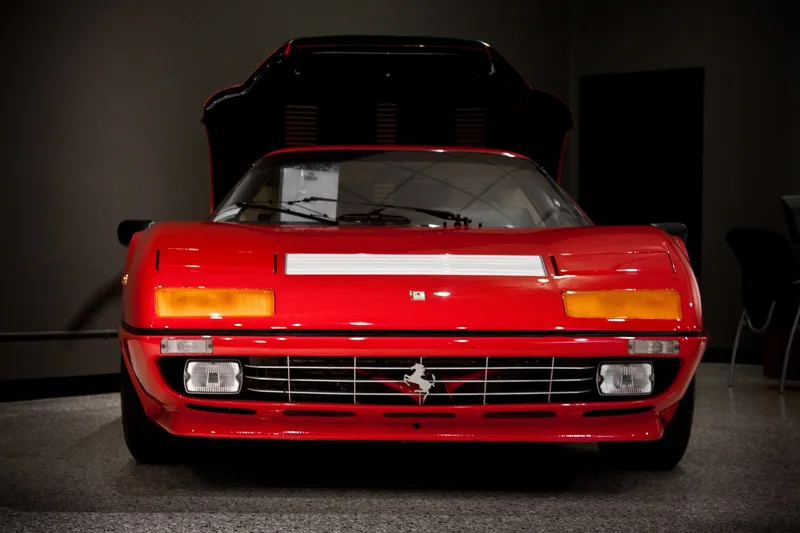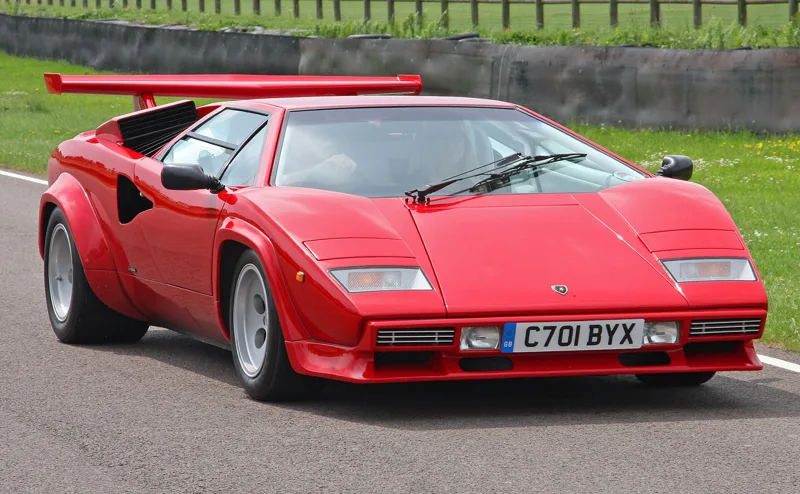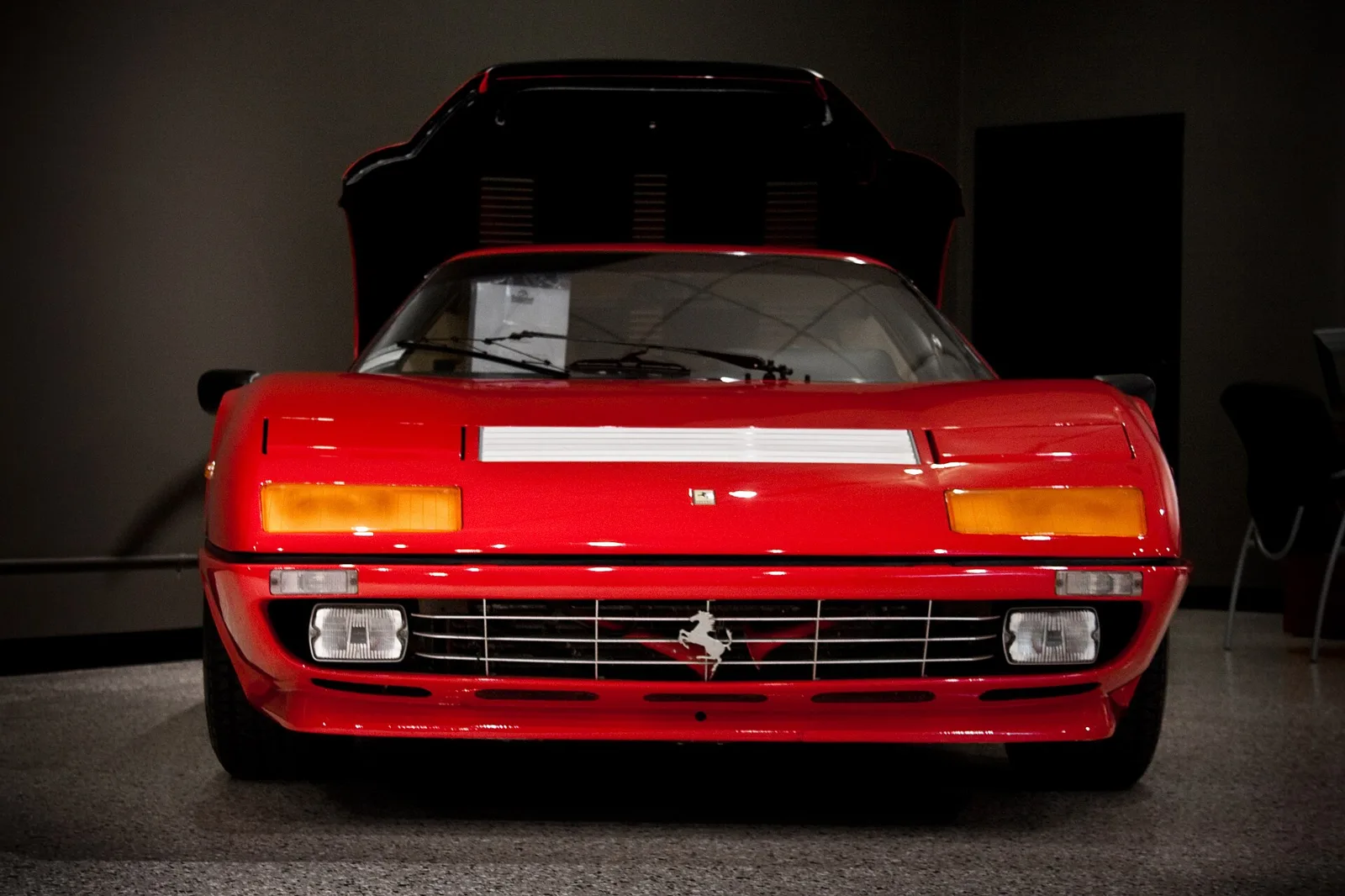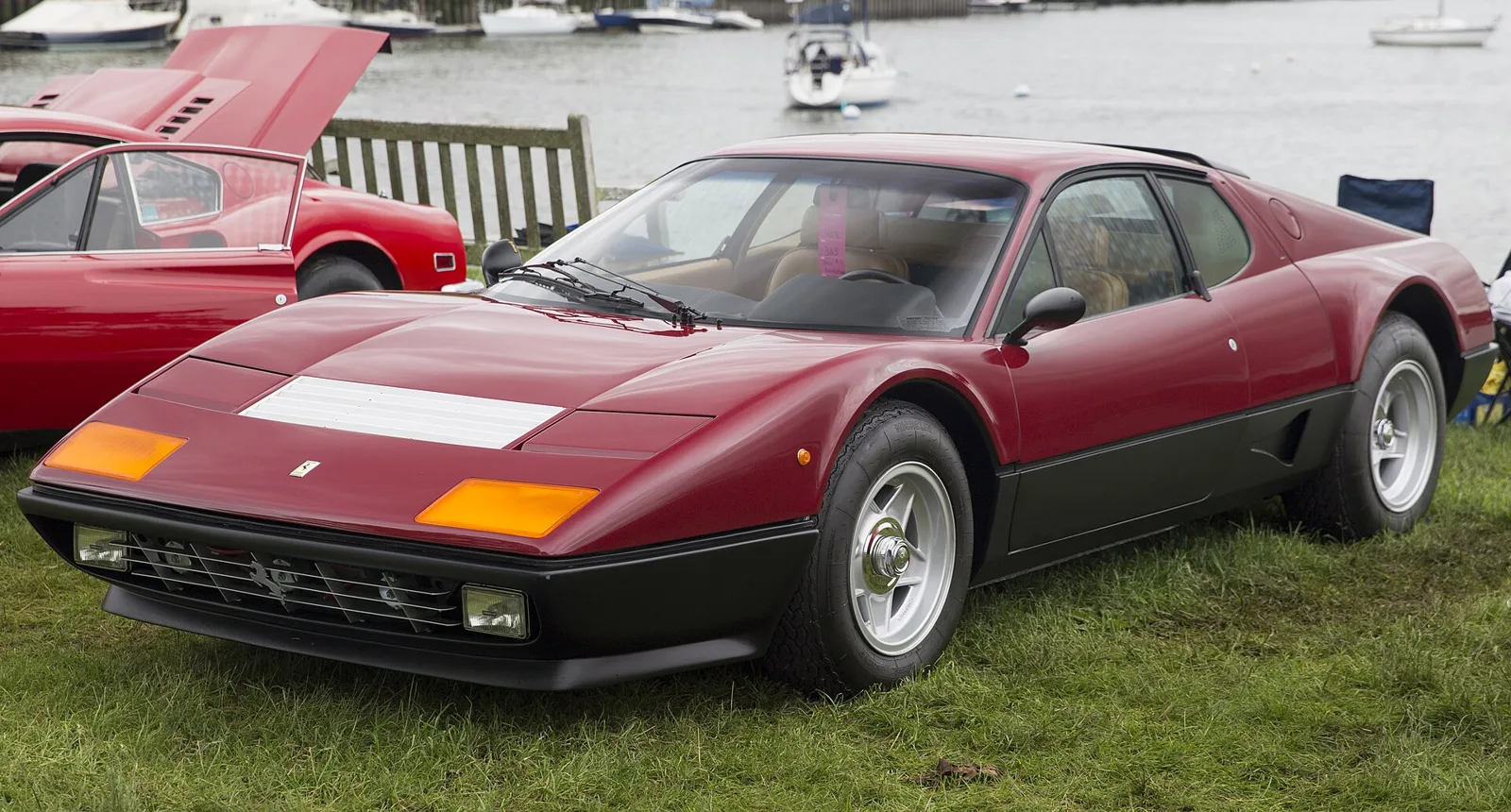
Pininfarina's flat-12 Ferrari and Bertone's wedge-shaped Lamborghini took the mid-engined layout from racing into the road cars of the 1970s.
The Ferrari Berlinetta Boxer was a mid-engined flat-12 road car built from 1973 to 1984 with designs by Pininfarina. The Lamborghini Countach was a rear mid-engined V12 supercar built from 1974 to 1990 with styling by Bertone's Marcello Gandini.
The Ferrari Berlinetta Boxer and the Lamborghini Countach arrived within a year of each other, and both took the mid-engined layout from racing into road cars. One was a flat-12 designed at Pininfarina, the other a wedge-shaped V12 styled at Bertone. Set side by side, they show how two Italian makers tackled the same problem in very different ways.
When did the Berlinetta Boxer and the Countach arrive?
The 365 GT4 BB was shown in production form at the 1973 Paris Motor Show and went on sale that year. The Countach followed in 1974, when the LP400 production car debuted after a prototype had been shown at the 1971 Geneva show.
Ferrari had been slow to adopt the mid-engined layout for its road cars. The Dino 206 GT and 246 GT were the first road-going mid-engined Ferraris, sold under the lower-cost Dino marque, and the Berlinetta Boxer became the first mid-engined 12-cylinder Ferrari road car.
Lamborghini began the Countach in 1970 as a successor to the Miura, which had begun to show its age by then. The project was known as LP112, and chief engineer Paolo Stanzani led the team that built its mechanical package.
The Berlinetta Boxer was succeeded by the BB 512 in 1976 and the BB 512i in 1981, before the Testarossa replaced the line in 1984. The Countach ran for 19 years, and its basic shape barely changed across that time.
A Ferrari flat-12 with a Pininfarina body against a Lamborghini V12 wrapped in a Bertone wedge, two mid-engined answers from the same decade.
What engines did the two cars use?
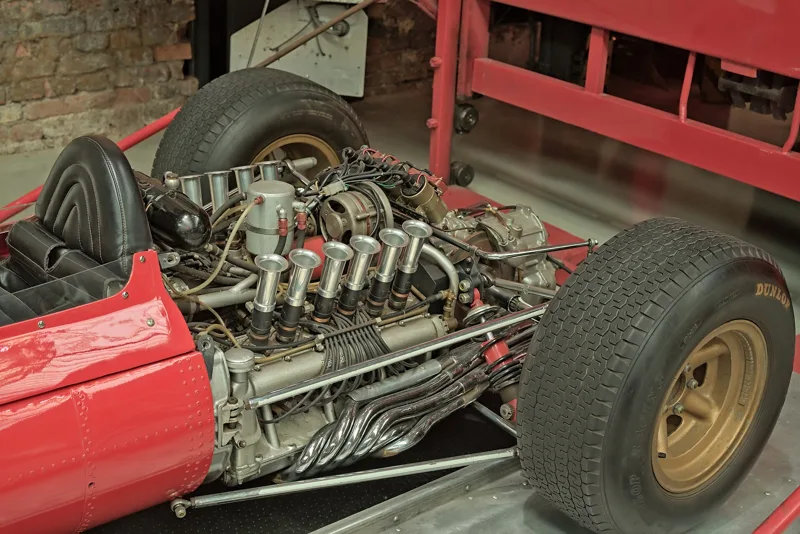
The first Berlinetta Boxer used the Tipo F102A flat-12, a flat-12 derived from the 312B Formula One car. Its four camshafts were driven by two timing belts, and it breathed through four triple-barrel Weber carburettors.
The engine was not a true boxer, since each pair of opposing pistons shares a crank pin and moves in the same direction. Forghieri's view was that it should be called a flat-12, which describes the heads at a 180 degree vee angle. The production version was rated at 360 bhp.
The BB 512 enlarged the engine to 4,943 cc. Ferrari first claimed 360 bhp for it, and later figures revised that to 340 bhp, with peak power reached at a lower 6,200 rpm than the earlier car's 7,000 rpm.
The Countach used a V12 mounted longitudinally in the rear, driving the rear wheels. Lamborghini's engineers addressed the Miura's transverse-engine problems, including limited maintenance access and uneven weight distribution, when they designed the new car around its engine bay.
How did the two cars look?
The Berlinetta Boxer was styled at Pininfarina under Leonardo Fioravanti, with a low wedge-shaped nose, hidden headlamps and a steeply raked windscreen. Its 1971 prototype wore a two-tone paint scheme with a satin black lower body, which visually lowered the car.
The Countach was styled by Marcello Gandini at Bertone, and its scissor doors first appeared on his 1968 Alfa Romeo Carabo. They lifted and tilted forward on gas struts, which was a styling gesture and an aid to entry, although they made escape difficult after a rollover.
The Countach prototype LP500 was 185 cm wide and 401 cm long, with headlights in retractable housings and no bumpers. The production LP400 grew to 189 cm wide and 414 cm long, and its nose was made shallower to reduce front-end downforce that had unsettled the prototype under braking.
How did the two cars perform?
Road & Track tested a 365 GT4 BB in June 1975 and recorded 0 to 60 mph in 7.2 seconds, 0 to 100 mph in 14.8 seconds and a top speed of 175 mph. That made the Berlinetta Boxer the fastest road car the magazine had tested at that time.
Car and Driver's 1976 test of a later car recorded 0 to 60 mph in 6.1 seconds and 0 to 100 mph in 14.1 seconds. Autocar tested a BB 512 in May 1978 and recorded 0 to 60 mph in 6.2 seconds and a speed of 163 mph (262 km/h).
Countach performance figures are not given, so a direct acceleration comparison is not possible. The Berlinetta Boxer's test results are the only concrete figures in the pair, and they were strong for the period.
Pininfarina's wind tunnel work added a spoiler behind and above the passenger compartment, intended to reduce drag, improve stability and direct air into the engine intakes. Development was rapid because the engineers already knew the layout and the engine well.
The BB 512's larger engine helped Ferrari meet tighter pollution and noise regulations without losing performance, which showed the flexibility of the flat-12 design.
How do the two cars compare side by side?
| Feature | Ferrari Berlinetta Boxer | Lamborghini Countach |
|---|---|---|
| Production years | 1973 to 1984 | 1974 to 1990 |
| Layout | Mid-mounted flat-12, longitudinal | Rear mid-mounted V12, longitudinal, rear-wheel drive |
| First production model | 365 GT4 BB, 1973 | LP400, 1974 |
| Engine, first car | Flat-12, about 360 bhp | Engine designated 400 for 3.9-litre units |
| Units built | 387 of the 365 GT4 BB, 1973 to 1976 | Not given |
| Styling house | Pininfarina, led by Leonardo Fioravanti | Bertone, led by Marcello Gandini |
| Signature details | Two-tone Boxer paint, clamshell covers | Scissor doors and a periscope mirror |
| Dimensions | Not given | 189 cm wide, 107 cm tall, 414 cm long (LP400) |
How did the Berlinetta Boxer's chassis and suspension work?
The 365 GT4 BB chassis was built from steel tubing, as was standard Ferrari practice at the time. The central bodywork formed a semi-monocoque with the frame, while the front and rear bodywork was unstressed and carried on light subframes.
Crash safety was improved by two large diameter tubes that ran diagonally from the engine cradle to the roof, adding strength in a rollover. The front bodywork was designed to deform and absorb energy in a collision, which was a notable step for a road car of its period.
All four wheels had double wishbone suspension, with dual anti-roll bars, unassisted rack-and-pinion steering and four-wheel disc brakes. The early cars used Michelin tyres of equal size at the front and rear, and later models used wider rear tyres.
How did the Countach's name and interior details come about?
The name came from the Piedmontese word contacc, an exclamation of astonishment, and it was coined as a joke during late-night work on the early prototypes. Gandini later credited a co-worker with the idea, which he said settled the name.
The Countach's dashboard carried aircraft-inspired warning lights on the steering column, and one of them signalled when a set speed was exceeded. That feature anticipated the role of a modern cruise control warning.
Poor rearward visibility led Lamborghini to fit a periscope mirror in the roof, which came from Donnelly Mirrors. The car's low seating and wide sills gave the feeling of sitting in a race car cockpit.
How did the Berlinetta Boxer's production and price develop?
The production 365 GT4 BB was introduced at the 1973 Paris Motor Show, and its start coincided with the oil crisis, so demand was low at first. Ferrari initially planned only 25 cars, but demand rose and later cars were built at about one a day.
Of the 387 cars built between 1973 and 1976, 88 were right-hand drive, with 58 of those intended for the British market. Air conditioning was an option, and the two-tone Boxer paint was the alternative to a single colour.
The factory list price was 18,290,000 lire in 1973, which rose to 24,375,000 lire by 1976. In the United Kingdom the car listed at 17,487 pounds sterling in 1975.
How did the Countach's later career unfold?
The production LP400 was refined over three years after the LP500 prototype, with extensive changes to the body for cooling, stability and safety. Vents, NACA ducts and a shallower nose were among the most visible results of that work.
The LP5000 Quattrovalvole of 1985 brought a 5.2-litre engine and a new designation, and the 25th Anniversary edition of 1988 dropped the LP name entirely. Those changes kept the model fresh through its long run.
The Countach's basic shape barely changed across its 19 years, which gave it an unusual identity among production supercars. Its exaggerated wedge became a symbol of 1980s excess, and many enthusiasts remember it more for its look than for its lap times. Its later additions, such as flared arches and spoilers, altered the body without changing the car's silhouette.
Which buyer suits each car?
On the facts given, the Berlinetta Boxer suits a buyer who wanted a mid-engined Ferrari V12 with a Pininfarina body and a long run of updates. The Countach suits a buyer who wanted a dramatic wedge with a Lamborghini V12 and an iconic name.
Buyers of the 365 GT4 BB faced a list price that rose from 18,290,000 lire in 1973 to 24,375,000 lire by 1976, roughly US$30,000 in the later year. Extras were modest, and many buyers ordered air conditioning.
Countach buyers got a car whose basic shape remained virtually unchanged across its 19-year life, and whose name came from a Piedmontese exclamation of astonishment. Later detail changes softened some of the early harshness without touching the silhouette.
The BB's flat-12 gave it a low centre of gravity compared with front-engined Ferraris, while the Countach's wide, low stance matched the performance its layout promised. Lamborghini's team had been allowed to push boundaries because the company recognised the commercial value of an uncompromising sports car.
Neither car is shown to be better overall, and the Countach's production figures are not given. The choice depends on whether a buyer prefers Ferrari's flat-12 pedigree or Lamborghini's radical wedge.