From DAF's P900 drawing board in 1970 to the last white 340 in 1991, the rear-drive small Volvo built a loyal following in Britain and beyond.
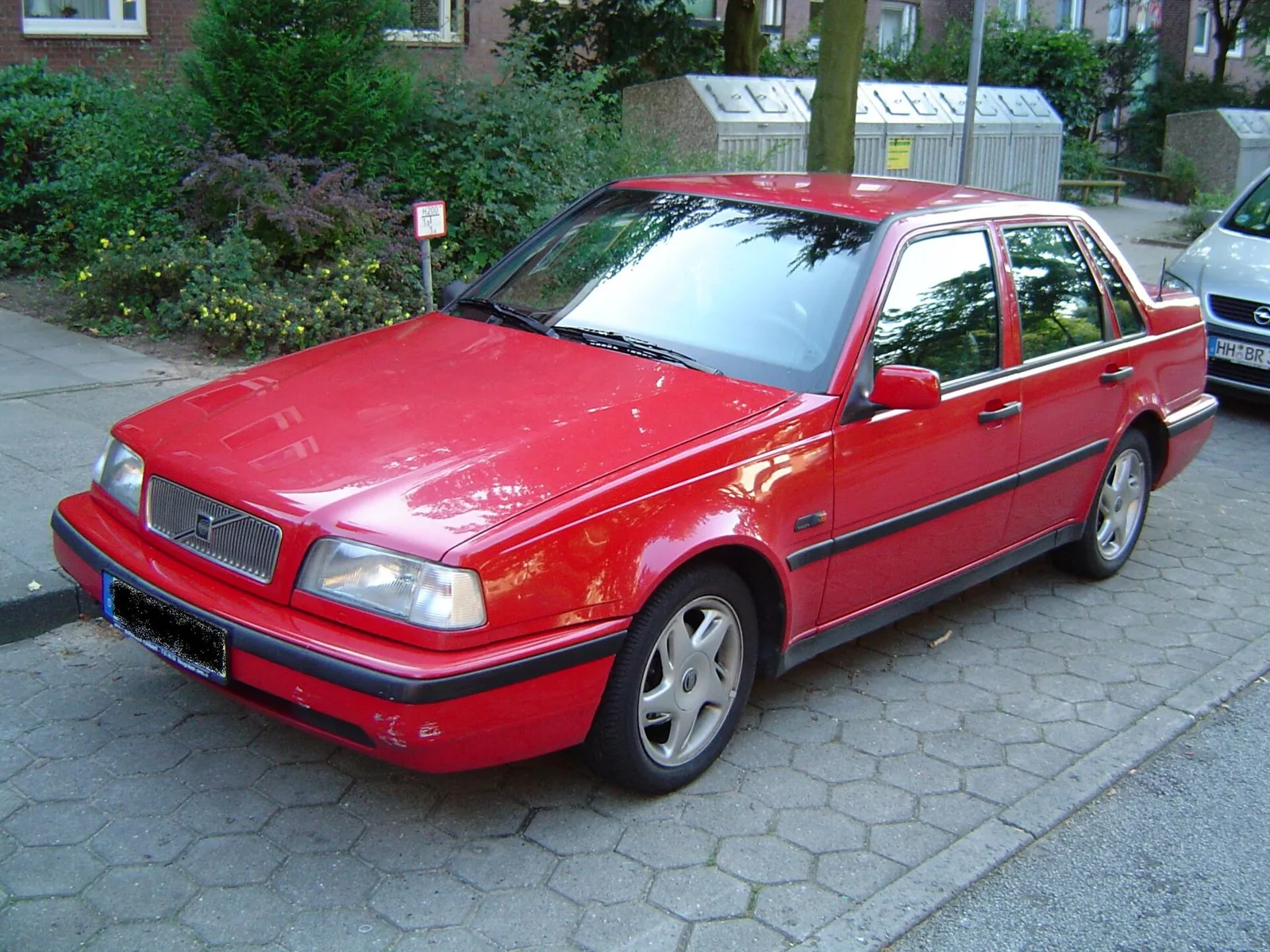
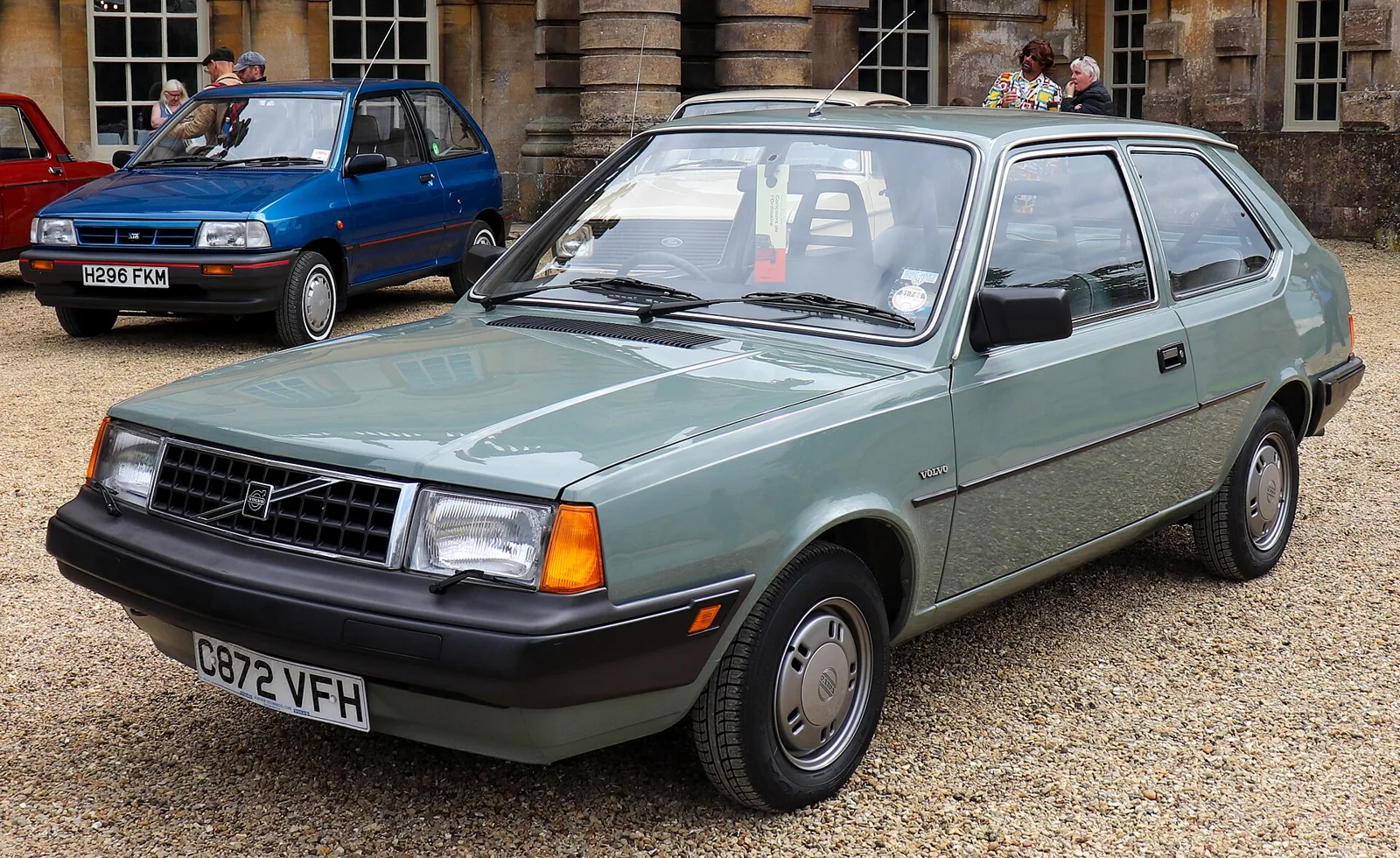
The Volvo 300 Series was a rear-drive small family car built from 1976 to 1991, with more than a million examples produced. Its origins lay in DAF's P900 project, and it came as a hatchback and, from 1984, a notchback saloon.
The Volvo 300 Series was a rear-wheel-drive small family car that Volvo built from 1976 to 1991. Hatchback bodies were joined by a notchback saloon from 1984. Its roots lay in a Dutch project that DAF had started under the P900 name, and the Volvo badge arrived only after the Swedish company bought into the Dutch maker.
Sales started slowly and then climbed. Production passed 100,000 in December 1983 and reached 1.14 million by the end of the run, an average of 76,000 cars a year.
How did the 300 Series begin at DAF?
DAF began work on a larger car in 1970 under the P900 name, intended to replace the DAF 66. It approached several manufacturers, including Audi, BMW and Volvo. Volvo was at first uninterested because of the cost, but DAF's supply of Renault engines eventually changed its mind.
Volvo bought a one-third share of DAF in 1973 and raised its stake to three-quarters in 1975. That year the company was renamed Volvo Car BV. The commercial arm, DAF Trucks, has since operated under Paccar ownership, which it has held since 1996.
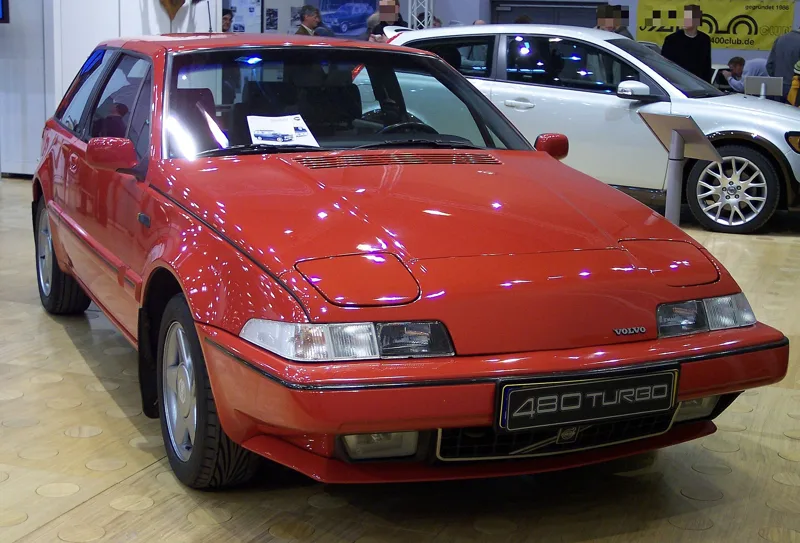
Design work came first. In 1971 four proposals were shown to staff anonymously, from Bertone, Michelotti and two in-house DAF studios. The winning entry came from John de Vries, whose later Volvo 480 design also won a contest. After the 1975 takeover the car was gradually adapted to Volvo standards, although quality concerns persisted.
Building the car in the Netherlands also gave Volvo a route into the European Community, which Sweden had not yet joined. A compact model built in Swedish plants would have been too expensive to sell at a lower price, because labour costs were high there.
A Dutch-born rear-drive small car that Volvo turned into a million-seller through the 1980s.
How was the 300 Series engineered?
The 300 Series used a rear-mounted gearbox bolted to a De Dion tube rear axle, which helped weight distribution but produced a large transmission tunnel. The 2.0-litre cars enclosed the driveshaft in a torque tube, and the fuel tank sat ahead of the rear axle, straddling the transmission.
Against front-drive rivals like the Ford Escort and the Vauxhall Astra, that tunnel was a clear disadvantage. Critics called the car heavy and often underpowered, yet reliable and safe for its time. The 360 GLT won over keener drivers, because the rear gearbox gave good weight distribution, balance and traction. The tank position also kept handling consistent whether the tank was full or empty.
The launch car carried DAF's Variomatic continuously variable transmission, mounted in the rear. To broaden its appeal, Volvo adapted the M45 manual from the 200 Series and sold it alongside the CVT from 1979. The interior was reworked too, with a higher-quality dashboard and seats borrowed from the larger 200 Series.
Which engines powered the Volvo 300?
The 1.4-litre B14 was a Renault C-series pushrod engine rated 72 PS (53 kW; 71 hp). The 360 used the 2.0-litre B200, taken from the Volvo 240, and its output ran between 71 and 88 kW (95 to 118 bhp). A Renault F-series 1.7-litre arrived in the 340 in 1985.
The launch engine was an enlarged version of the DAF 55 and 66 units. The 1.7-litre B172 made 82 PS (60 kW; 81 hp), and a catalysed B172K was rated 75 PS (55 kW; 74 hp). A naturally aspirated 1.6-litre diesel, the D16, produced 54 PS (40 kW) and was sold in selected export markets from 1984. The UK never received the diesel, although Ireland sold right-hand-drive examples. A 360 diesel with the same mechanics followed in 1985. Diesel models were dropped in 1989, when a 1.3-litre tax special appeared for Finland, Italy and Belgium.
The 1985 facelift replaced the older redblock engines in the 360 with the low-friction B200 unit. The carburettor version was called the B200K, and the Bosch LE-Jet injected version the B200E. Volvo had also tried LPG tanks on the 343 and 345 in 1979, but limited LPG availability kept sales negligible.
| Engine | Output | Type |
|---|---|---|
| B14 1.4-litre | 72 PS (53 kW; 71 hp) | Pushrod unit, C-series |
| B172 1.7-litre | 82 PS (60 kW; 81 hp) | Renault F-series |
| B172K 1.7-litre | 75 PS (55 kW; 74 hp) | Catalysed |
| B200 2.0-litre | 71 to 88 kW (95 to 118 bhp) | From the Volvo 240 |
| D16 1.6-litre diesel | 54 PS (40 kW) | Naturally aspirated |
How did the model range change from 1976?
The 343 went on sale on 19 February 1976 with a 70 PS 1.4-litre engine and the Variomatic. The five-door 345 arrived in August 1979, pitched at the 1980 model year, and its extra doors added 30 kg (66 lb). A Volvo-designed B19 engine followed in 1981, offered only in GLS form with a manual gearbox.
The 1982 facelift brought a revised bonnet, grille and lamps, a new dashboard and an overall length of 4,300 mm (169 in). From the 1983 model year the third door digit disappeared from the names, and the more powerful 360 arrived with 2.0-litre engine choices. It was offered as a five-door and a three-door hatchback.
The 360 GLT sat 1.5 cm (1 in) lower than the standard car and had a rear spoiler. Notchback saloons joined the 360 range in 1984. The 1985 facelift added wraparound bumpers with integrated turn signals and redesigned tail lamps, and the instruments changed from Smiths to VDO.
Which trims and special editions did buyers get?
The 300 Series came in many trims. Phase 2 and 3 cars were offered as the 340, 340DL, 340GL, 340GLE, 340DLS and 340GLS, alongside Blueline and Redline versions. The 360 range ran from the plain 360 through GL, DLS, GLS and GLE to the GLT, and no single market received every model.
The Millionaire edition of 1988 marked the one-millionth car. Every option was fitted to the 340 GLE and 360 GLE/T, so buyers got air conditioning, powered front windows and mirrors, alloy wheels and leather upholstery. Phase 1 cars, by contrast, came in DL, GL, DLS and GLS trims.
How well did the 300 Series sell?
Sales started slowly. Early cars suffered from quality problems and the absence of a manual gearbox. The cumulative count passed 100,000 on 12 December 1983 and reached 102,000 before the year ended. The one-millionth 300 was built in 1988, twelve years after the car's introduction.
Once a manual option and a five-door body were added, and the initial quality issues were tackled through an interior and dashboard redesign, demand rose steadily. A white car marked the 100,000th milestone and went to the Dutch Red Cross, while the one-millionth went to a DAF museum in Eindhoven.
Quality remained the recurring complaint. The first model year, 1976, suffered teething troubles, and unsubstantiated claims said Volvo had ordered dealers to scrap early trade-ins. Few 1976 and 1977 cars survived as a result, and build quality never quite matched the larger Volvos.
Which markets bought the 300 Series?
Until 1982 the 300 Series was sold almost entirely in Western Europe. Exports then widened, reaching 4% of total sales in 1984. Volvo shipped CKD kits of the 340 GL to Indonesia in 1985, and 360 GLE kits went to Malaysia for local assembly.
Australia and New Zealand took the 360GLT from 1984 and kept it on sale until 1988. The 300 Series was never offered in North America.
Was the 300 Series popular in Britain?
In Britain the car built a strong following among middle-class buyers, frequently as a second car. It regularly placed in the top 20 of British sales tables through the 1980s, and it topped the import chart at several points in the early 1980s.
Sweden was a different story. Sales of the Variomatic 340 there fell to 200 a year in the late 1980s, and a 2.0-litre 360 was priced above the base Volvo 240 at home. The poor showing at home reflected the car's reputation as much as its price.
How did the 300 Series end?
From 1987 the car received steady improvements to features and emissions control. Power steering derived from the 480 model became an optional extra for 1988, and more galvanised steel improved rust protection. Those were the last significant updates before the end of production.
Production of the 360 ended in 1990, and the 340 followed in 1991 even though Volvo had supposedly replaced it with the 440 in 1987. The final car was a white 340, completed on 13 March 1991. The 400 Series had launched three years earlier, in 1988.
What is it like to own a 300 Series today?
Owners and enthusiasts describe the 300 Series as robust and mechanically simple, which keeps maintenance straightforward. Variomatic transmissions are reliable when they are properly maintained, and the engines proved durable. Rust protection, though, was poorer than on other Volvos of the period.
By February 2016 some 627 examples were still running on British roads. Enthusiasts still remember the 360 GLT best, since it was the version keener drivers rated most highly.
Volvo's advertising of the period was not shy either. In one ad, a crash test dummy came to life, climbed behind the wheel of a 340 and drove it out of a factory window on the second floor, nosediving onto the concrete below.
Did the 300 Series race?
The 300 Series had a modest motorsport record. Per-Inge Walfridsson drove a heavily modified car to the 1980 European Rallycross title. Its engine was a cross-flow unit derived from Alpine and Gordini designs and bored out to 1770 cc. Rally homologation in Sweden's Standard-B class followed in the spring of 1977.
A 360 GLT was used to introduce the model in Australia in 1984, when it ran a 24-hour record at Surfers Paradise in Queensland. That car was later converted for rallying and competed in Australian events, still running in 2009. Closer to home, several 360 GLT models were seen on British road-rally events.
Volvo also built the 363 CS of 1977 as a competition prototype. It used the 2.7-litre V6 from the 260 series and a five-speed Alfa Romeo gearbox, with flared arches and orange alloy wheels.
Which special editions and variants were built?
The 1981 R-Sport was a sporty 343 with peel-on decals, an extra gauge, spoilers front and back, and power raised from 95 to 122 PS. Only 100 were built. Its B19A engine gained twin Solex carburettors to make the extra output.
The 1979 Oettinger 343 was modified by a Volkswagen Group tuning firm, which enlarged the 1397 cc engine to 1596 cc. In all, 125 cars were produced. A van based on the 340 served the Dutch Postal Services with a 1,200-litre load area and no rear seats, and it was first shown in Amsterdam in February 1982.
Volvo's prototypes never reached production. A 340 estate and a convertible were designed for study, and the convertible survives only as a clay model. The 1979 Tundra concept, presented by Bertone at Geneva, carried styling by Marcello Gandini.