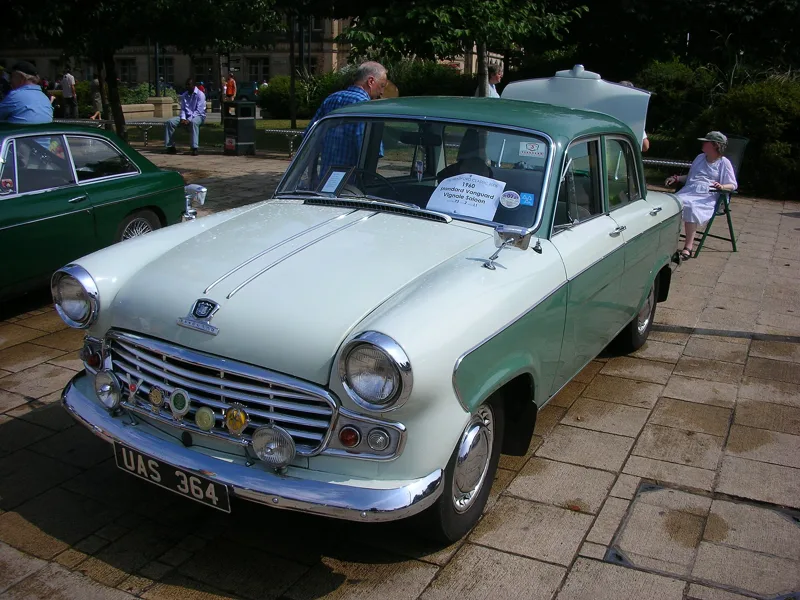
A mid-size saloon with a 2,088 cc four-cylinder engine, a pontoon body styled after American cars and a resemblance to a Soviet car that led to plagiarism claims.
A British mid-size saloon from the Coventry firm Standard, built between 1947 and 1953 with pontoon styling and a 2,088 cc four-cylinder. Some 185,000 Phase I and IA examples left the factories before the Phase II took over.
Standard moved into the mid-size market in 1947 with the Vanguard Phase I, a saloon whose pontoon body was among the most modern British shapes of its time. Its 2,088 cc four-cylinder engine drove the rear wheels. Roughly 185,000 Phase I and IA cars were built before the range moved on to the Phase II in 1953.
Where did the Standard Vanguard come from?
The Vanguard was born out of a plan to reshape the Standard Motor Company. Old Standard models ended in 1947, and the new car took over the middle of the market.
Through the 1930s Standard had done well with lower-middle-class cars such as the Eight, Nine and Ten. Late in that decade the company added the Flying Standards, larger models with semi-aerodynamic bodies. With the Vanguard, Standard switched to a one-model policy.
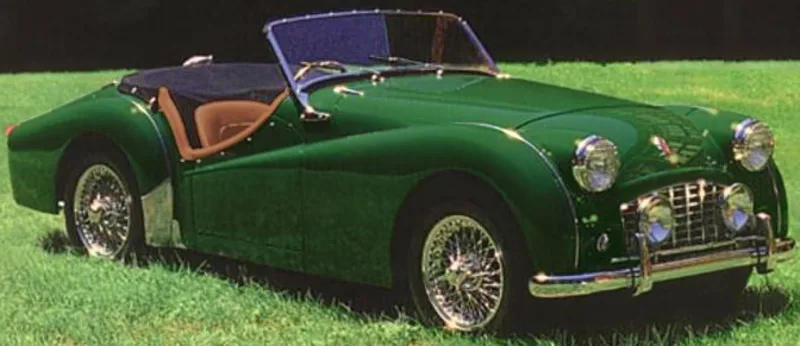
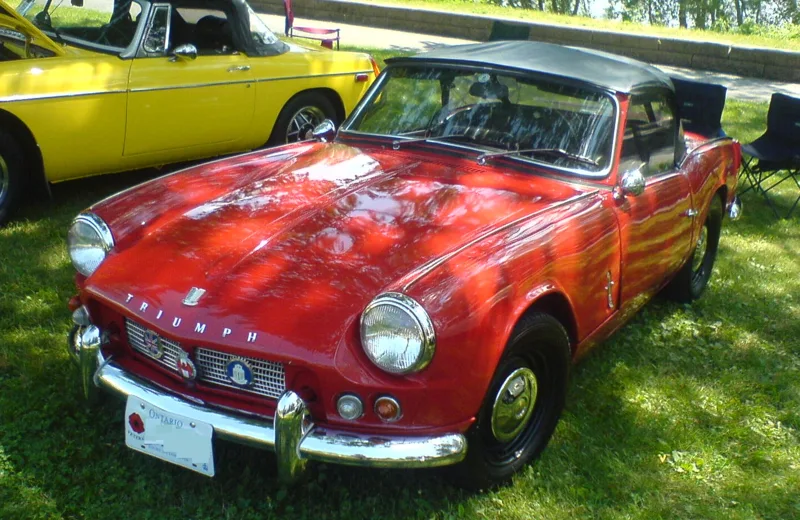
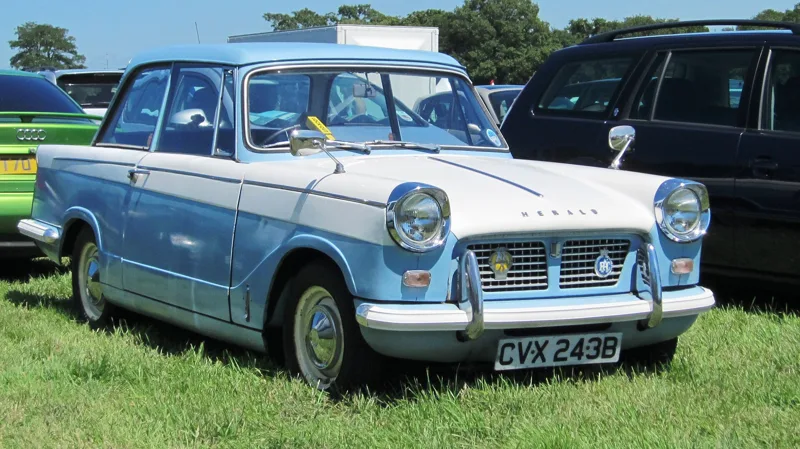
Triumph, part of the group since 1945, offered a roadster and the 1800 Town & Country, Renown and Mayflower saloons. Their design was deliberately conservative, while their engineering was adapted step by step to match the Vanguard.
A pontoon body and a 2,088 cc engine put Standard into the mid-size market.
Why was the Vanguard named after a battleship?
The name came from the British battleship HMS Vanguard, which entered service in 1944 amid strong public attention. Standard hoped the name would appeal to people who had taken an active part in the war, just after the Second World War ended.
The car was also the first with the new Standard badge, a griffin's wing in heavy ornament.
How did the body take shape?
Standard designer Walter Belgrove drew the body at the request of company head John Black, who wanted it modelled on contemporary American cars. Belgrove sketched American vehicles near the US embassy in London, and a 1941 Plymouth he had seen at Grosvenor Square helped shape the rear.
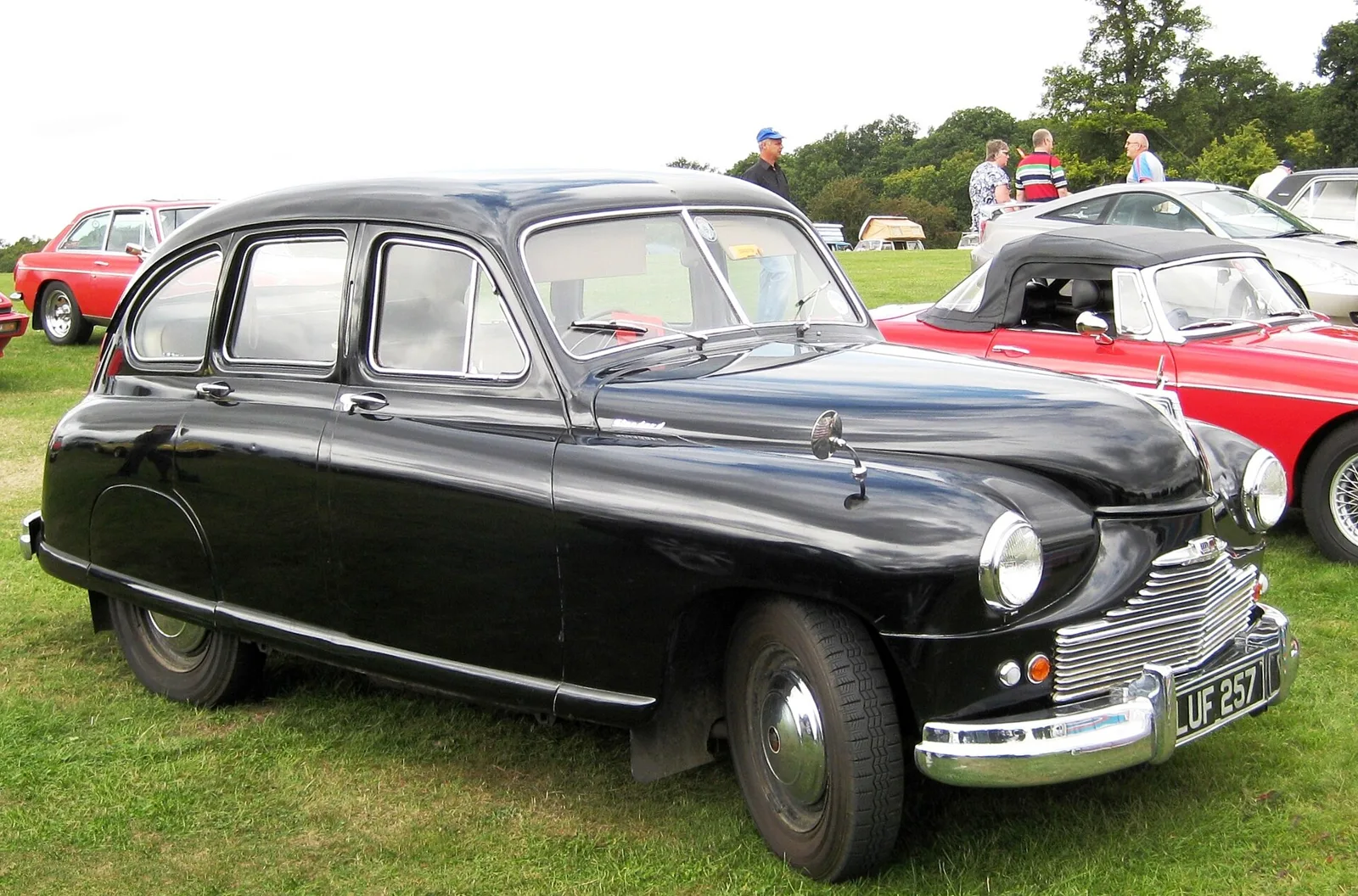
The body was a pontoon design, a single shell with no protruding wings. Since the war the Soviet Pobeda and the American Crosley had brought that form to production cars, and the Standard was the first such British model.
Early cars were four-door saloons with a bumpback rear, which English usage calls Beetle Back. The first prototype had suicide doors, but production cars hinged all four doors at the front. Each front wing held a round headlamp, with parking lights and indicators beneath it.
The Phase I radiator opening was covered by 14 horizontal chrome bars that became shorter toward the top. In the lower part those bars covered almost the whole width of the opening.
An estate joined the saloon from September 1948. Its roof ran straight at the rear, and its tailgate opened on two side-hinged doors with upper windows. A two-door van with windowless sides was built on the same basis. Fisher and Ludlow of Birmingham made the saloon bodies, while Mulliners of Birmingham assembled estate and van bodies from sheet metal that Fisher and Ludlow supplied.
What engine and chassis did the Vanguard use?
The Vanguard had a separate steel box frame with cross bracing, designed new for the car. Its front wheels sat on double wishbones with coil springs, and the rear used a live axle on semi-elliptical leaf springs. All four wheels had hydraulically operated drum brakes with 228 mm (8.98 in) drums.
The engine was a newly designed four-cylinder inline unit. Standard had also used a modified version in a tractor it built on contract for another maker, and some later variants went into Triumph and Morgan cars. Only a few parts were interchangeable, but the common design let both engines be produced with the same tools.
A 1.8-litre version was first planned, but before production the displacement was raised, reaching 2,088 cc (127.4 cu in). The bore was 85 mm and the stroke 92 mm. A single carburettor supplied the mixture, the valves sat overhead, and the compression ratio was 6.7:1.
Output was 68 bhp (50 kW), reached at 4,200 rpm. Power travelled to the rear axle via a fully synchronised three-speed box with a column-mounted lever. An optional overdrive, made by Laycock de Normanville, arrived for an extra charge from 1950, cutting fuel use and engine noise at speed.
Vanguard Phase I specifications
| Item | Phase I and IA |
|---|---|
| Built | 1947 to 1953 |
| Engine | Four-cylinder inline, 2,088 cc (127.4 cu in) |
| Bore and stroke | 85 mm and 92 mm |
| Compression ratio | 6.7:1 |
| Power | 68 bhp (50 kW), 4,200 rpm |
| Gearbox | Fully synchronised three-speed, steering-column shift |
| Front suspension | Double wishbones, coil springs |
| Rear suspension | Live axle, semi-elliptical leaf springs |
| Brakes | Hydraulic drums, 228 mm (8.98 in) |
| Overdrive | Laycock de Normanville, optional from 1950 |
| Total built | About 185,000 |
How did the Vanguard change in 1952?
In 1952 Standard refreshed the styling, and the resulting Phase IA stayed in the range until summer 1953. The radiator opening gained a surrounding chrome frame, the bonnet became flatter, and the saloon's rear window grew. Mechanically nothing changed.
A broad horizontal cross bar ran across the middle of the grille, and three bumper-overrider horns were added to the centre of the front bumper. The larger rear window gave the driver a better view to the rear.
Which special versions of the Vanguard were built?
Two versions went beyond the saloon and estate. Australian Motor Industries, based in Port Melbourne, built a pick-up from 1950 known locally as the ute, while the Belgian firm Automobiles Imperia produced a two-seat convertible that Standard itself did not offer.
AMI had been completing Vanguards since 1949 for Australia and New Zealand, among other markets. The ute had two doors, a bench seat behind which the cabin ended upright, and an open load bed. Its engineering matched the British saloons and estates.
Many of the utes sold in Britain went to the Royal Air Force. On the private market they stayed outsiders, because British buyers preferred vehicles with more payload.
The Imperia convertible had a notchback rear and a more rounded boot than the saloon. Its rear wheel cut-outs were also distinctive, and it had no full cover over the rear wheels. The car was shown in Brussels in January 1950, and 43 had been built by 1953.
How fast was the Vanguard?
The British magazine The Motor tested a Phase I in 1949. Its top speed came to 126.6 km/h (78.7 mph), and it needed 21.5 seconds to reach 100 km/h from rest. Fuel use measured 12.3 l/100 km (23.0 mpg-imp; 19.1 mpg-US).
The tested car cost GBP 671 including VAT.
How many Vanguards were built, and where?
Roughly 185,000 Phase I and IA cars were produced. In summer 1948 the Coventry factory reached between 1,000 and 2,000 vehicles a week, but early output went abroad because Britain urgently needed foreign currency. Production took place in eleven countries.
Some markets had Vanguards put together locally. India and Canada assembled vehicles that arrived in parts, while the AMAG group in Switzerland took over manufacture. In Belgium the former carmaker Imperia built them at Nessonvaux.
Was the Vanguard copied from the Soviet Pobeda?
The Soviet press accused Standard of plagiarism after the Vanguard was shown in Brussels in February 1948. The GAZ-M20 Pobeda prototype had been finished in October 1944, three and a half years ahead of the British car's public launch.
The two bodies share a pontoon shape, flat flanks, doors hinged at the front and a bumpback rear, and their radiator trim looks alike. The Pobeda, however, is 40 cm (15.7 in) longer, has a lower top edge on its front wings and a broad C-pillar where the Vanguard has a third side window.
Decades after production ended the resemblance was still being debated, and some commentators claimed the Vanguard was the only Western car styled after a Soviet model. Other studies consider the similarities coincidental. The Pobeda's bumpback is also said to have been influenced by Pininfarina's 1937 Lancia Aprilia.
Why did the Vanguard matter in Britain?
The Vanguard marked Standard's move into the mid-size segment and the start of its one-model policy. Its pontoon styling was among the most modern British designs of its time, and it introduced that shape to Britain as a production car.
The Phase II replaced the Phase I in 1953 and was built for only three years. It was technically largely identical to its predecessor but had independent styling.
Leyland Motors took over Standard in 1960 and let the Standard marque lapse in 1963, continuing car production under Triumph alone. Triumph's roadster and saloons had been brought closer to the Vanguard's engineering in several stages.