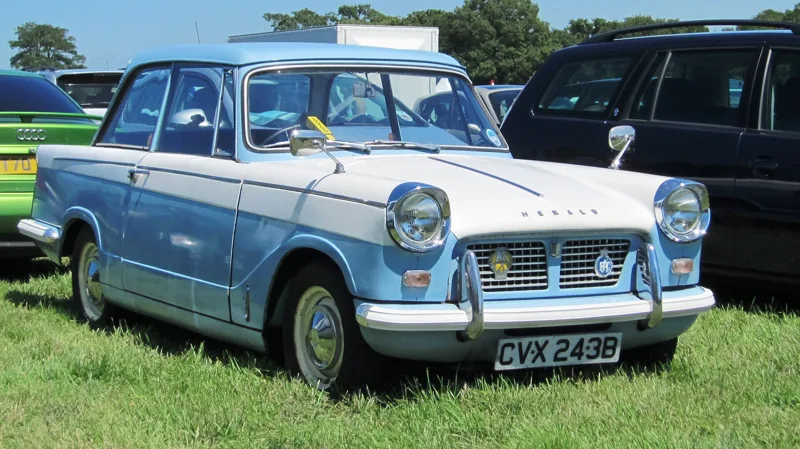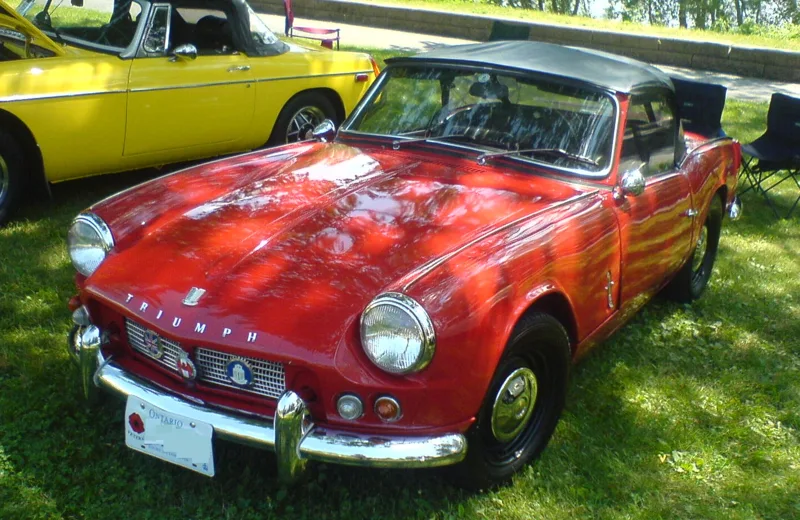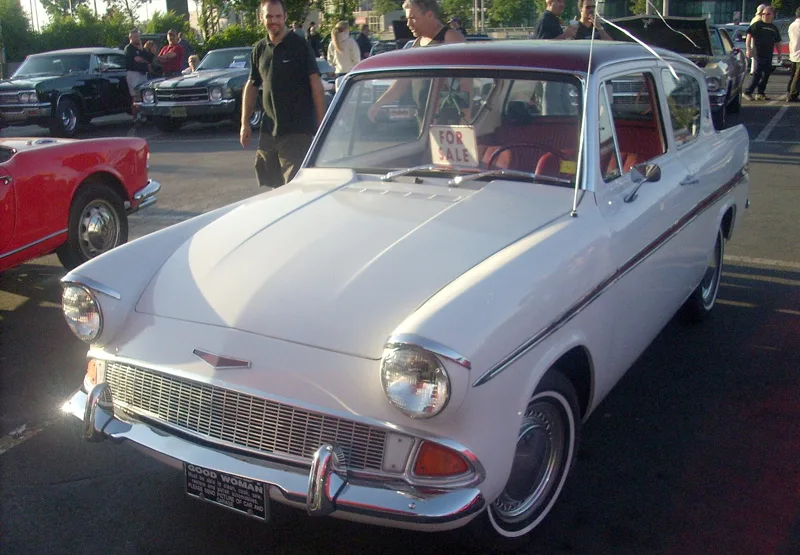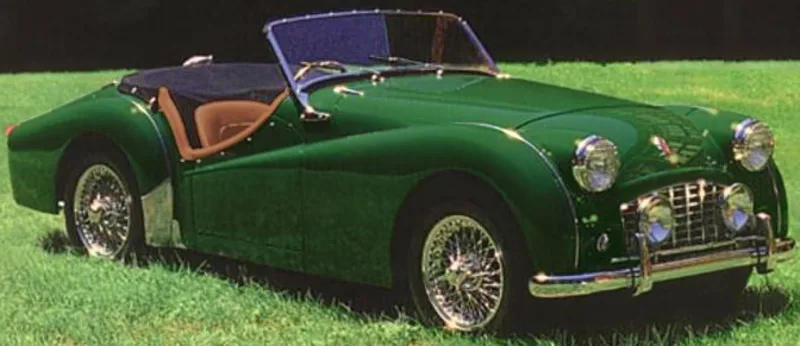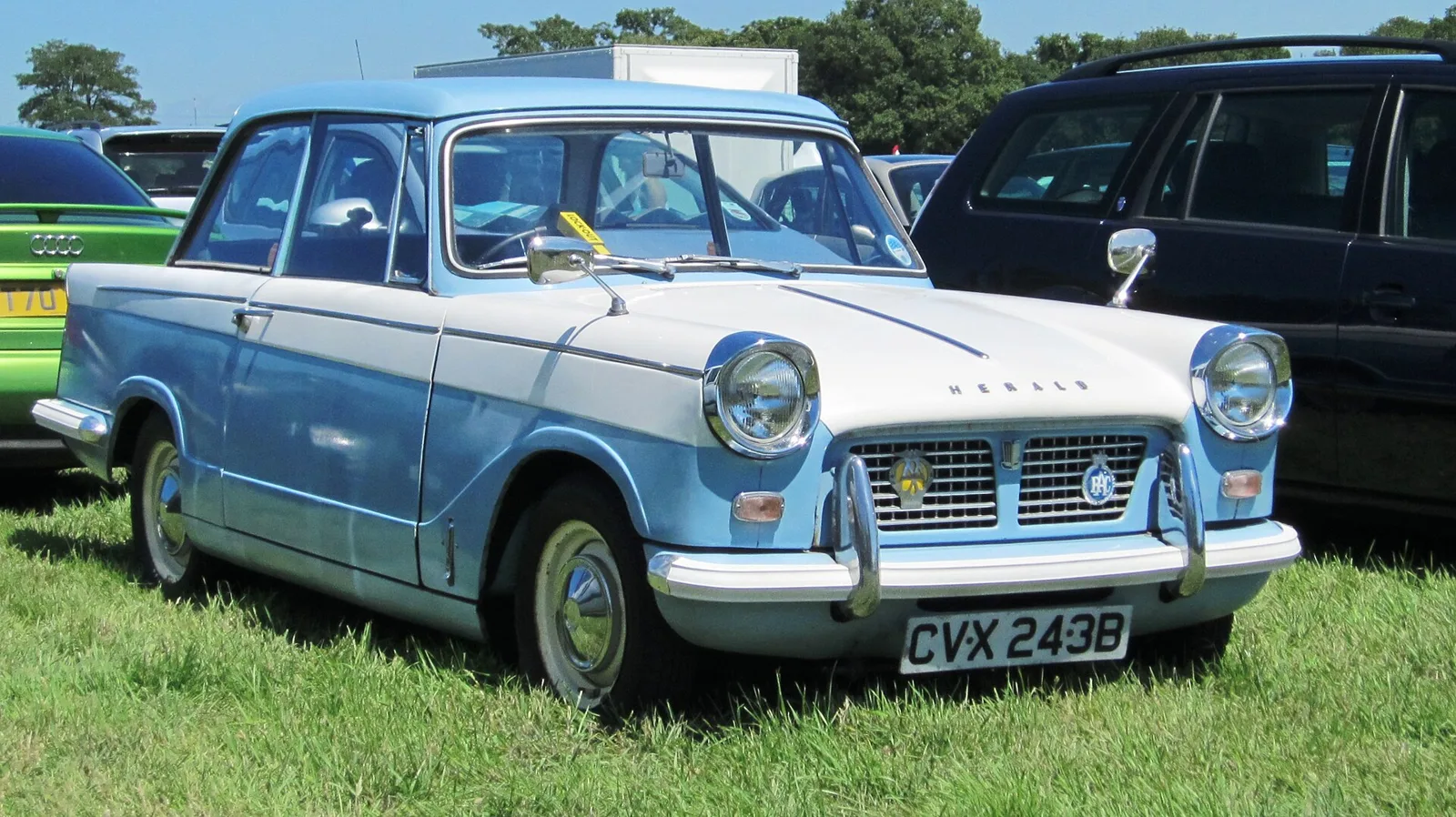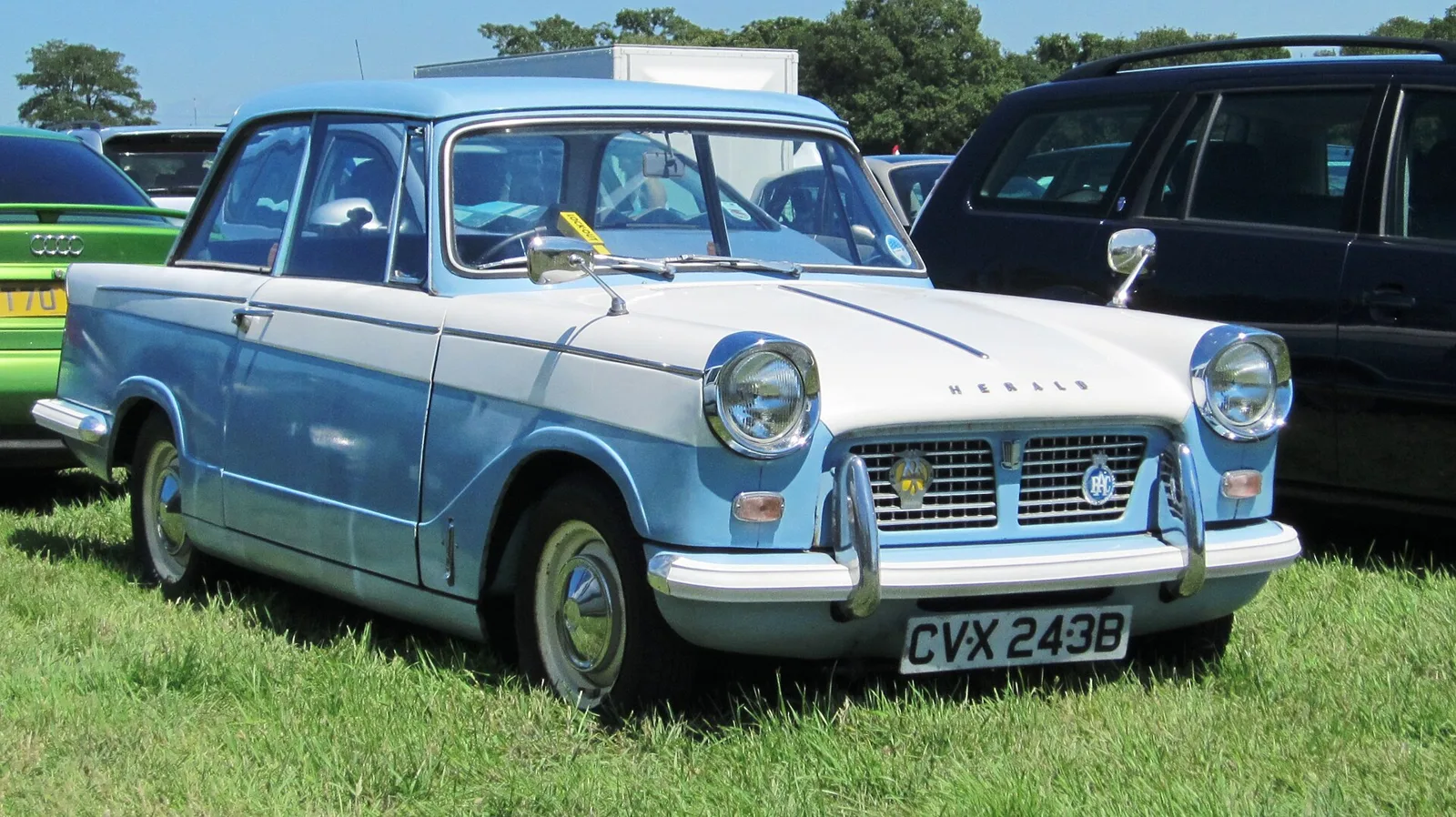
Both cars reached British showrooms in 1959 and both were sold to families, but the Herald's chassis and styling set it apart from an Anglia name that stretched back to 1939.
The Triumph Herald and Ford Anglia both launched in 1959 and competed for British family buyers. The Anglia 105E posted the better road-test figures, while the Herald offered a distinctive chassis, a Michelotti design and an open-top option for buyers who wanted more character.
The Triumph Herald and the Ford Anglia both reached British showrooms in 1959, and both were pitched at families who wanted a small, affordable car. The Herald came from Standard-Triumph in Coventry, while the Anglia 105E came from Ford of Britain, a company that had been building Anglias since 1939. Their backgrounds could hardly differ, yet on the road they fought for the same customers.
Were the Herald and Anglia rivals?
They were. The Herald's later sales were squeezed by the growing appeal of the Mini and the Ford Anglia, which had become one of the most familiar cars on British roads. The two were compared in the same showrooms, by the same buyers, on the same streets.
The Herald was the newer design, but the Anglia had the longer history. Both makers relied on their small cars for volume, so every sale mattered to them.
Two 1959 small cars, one with a bolt-together chassis and the other with an Anglia name that stretched back to 1939.
How did the Herald come about?
Standard-Triumph began work on a new small car in the late 1950s, when its Standard Eight and Standard Ten saloons needed a fresh small engine and its two-seater sports cars were ready for an update. The name Herald was first chosen with the Standard range in mind, but the Triumph badge was judged to carry more brand value by 1959.
The company's board turned to Giovanni Michelotti for the styling, and the chief engineer, Harry Webster, backed the idea. Michelotti produced a two-door design with a large glass area, and its saloon version offered 93 per cent all-round visibility.
The Herald was unveiled at the Royal Albert Hall in London in April 1959. Sales were slow at first, partly because its price came close to 700 pounds once 45 per cent purchase tax was added.
How did the Anglia come about?
The first Anglia, the E04A, appeared at the end of October 1939 at the bottom of Ford's British line-up. It replaced the Ford 7Y, and it was a plain, affordable car with few features. The war interrupted production, and the E04A was finally withdrawn in 1948 after 55,807 had been made.
The 100E followed in 1953 as an entirely new car with a modern three-box shape. It remained in production until 1959, and 345,841 were built in that time. Its unitary body and MacPherson strut front suspension set the template that the 105E would build on.
The 105E arrived in 1959 with styling borrowed from American cars of the period, including a sweeping nose and a backward-slanting rear window. That window idea had been borrowed from a 1958 Lincoln, where it was an accident of a design brief for an opening rear window.
Specifications side by side
| Specification | Triumph Herald | Ford Anglia |
|---|---|---|
| Launch | 22 April 1959, Royal Albert Hall | 1959 for the 105E |
| Body styles | Saloon, convertible, coupe, estate and van (Courier) | Saloon; estate added in September 1961 |
| Engine at launch | 948 cc OHV Standard SC, 34.5 bhp (26 kW) | 997 cc Kent OHV, 39 bhp (29 kW) |
| Top speed | 70.9 mph (114.1 km/h) in The Motor's 1959 test | 73.8 mph (118.8 km/h) in the 1959 road test |
| 0-60 mph | 31.1 seconds | 26.9 seconds |
| Fuel economy | 34.5 miles per imperial gallon | 41.2 miles per imperial gallon |
| Construction | Separate chassis with bolt-on body panels | Unitary construction on the 100E |
| Output | Well over half a million Heralds sold | 191,752 cars built at Dagenham in 1960 |
Which car was quicker?
The Anglia 105E had the better test figures. Its top speed of 73.8 mph (118.8 km/h) beat the Herald's 70.9 mph (114.1 km/h), and it reached 60 mph in 26.9 seconds against the Herald's 31.1.
The Herald's 948 cc car was only average in its single-carburettor form, and its 34.5 bhp put a ceiling on what it could do. The Anglia's acceleration from rest was still modest, but it had improved a great deal on the earlier cars.
How did the engines work?
The Herald's 948 cc engine was an overhead-valve unit borrowed largely from the Standard Eight and Ten, and it drove the rear wheels through a four-speed manual. Synchromesh covered the top three gears.
The Anglia's Kent engine was a 997 cc overhead-valve straight four with an oversquare bore, producing 39 bhp (29 kW). Ford's new four-speed manual had synchromesh on the top three forward gears, and an all-synchromesh box followed in September 1962 on the 1198 cc cars.
The Herald 1200 used an 1147 cc engine from 1961, rated at 39 bhp. The 12/50 added a tuned version with 51 bhp from 1963 to 1967, and the 13/60 of October 1967 used a 1296 cc unit with 61 bhp (45 kW).
How did the two cars handle?
The Herald's rack-and-pinion steering gave it a tight turning circle of 25 feet (7.6 m). Its coil and double-wishbone front suspension was later copied by other makers, but its rear suspension was the weak point, with limited independent springing that handled badly at the limit.
The Anglia 100E used MacPherson struts at the front, and its steering needed two turns between locks. On dry roads it understeered, while on wet roads the tail could be made to slide out.
The Herald was considered easy to drive, with good vision, light steering and simple repairs. Those were the qualities that many owners valued most.
How did the Herald's variants develop?
Standard-Triumph struggled financially at the start of the 1960s, and Leyland Motors took it over in 1961. The Herald was relaunched that April as the Herald 1200, with an 1147 cc engine, rubber-covered bumpers and tighter quality control.
The Herald S arrived in 1961 with less equipment and less chrome, but only as a saloon. The coupe was dropped in late 1964, when it competed too closely with the Triumph Spitfire.
In October 1967 the 13/60 brought a restyled front end, a revised interior and a 1296 cc engine. The saloon ran until December 1970 and the convertible and estate until May 1971, when the design was clearly dated.
How did the Herald's Courier van and estate work?
The Triumph Courier was a van version of the Herald estate, with side panels where the rear windows had been. It was produced from 1962 until 1966, powered by the 1147 cc engine, but it was discontinued after poor sales. Production in England ended in mid-1964, while CKD assembly by MCA in Malta continued until late 1965 at least.
The Herald estate itself was a three-door car, first with the 1200 engine from 1961 and later with the 13/60 unit. Its estate versions were built alongside the saloon, the convertible and the coupe, and all of them shared the same separate chassis.
How did the Anglia's variants develop?
The 105E gained an estate car in September 1961. The Anglia Super arrived in September 1962 for the 1963 model year, using the longer-stroke 1198 cc Kent engine and a painted contrast side stripe.
From late 1962 buyers could also choose the 1.2-litre engine as an option on the Anglia Deluxe. That option was withdrawn in September 1965, leaving the 1198 cc car to carry the range into its last years.
Production moved to Ford's new Halewood plant in October 1963, alongside the Corsair. The Anglia name was used between 1939 and 1967, and 1,594,486 Anglias were built before the Ford Escort took over.
How did the two cars prove themselves?
The Anglia 105E proved its durability in a demanding record attempt. In October 1962 the Brookes twins and a group of friends took one to the Montlhery Autodrome near Paris, fitted with a Ford Performance Kit, and set six International Class G world records averaging 83.47 mph (134 km/h).
The Herald's proving work was less dramatic. Prototypes made a long run from Cape Town to Tangiers in late 1958, and the account of that trip was embellished by publicists at the time. Only minor changes were needed before the production car arrived.
What did the early Anglias look like?
The E04A used the 933 cc side-valve straight four that had powered its predecessors since 1933 on the home market. Export cars could take the 1172 cc engine from the Ford Ten, and that version reached North America from the 1948 model year.
The early Anglia had running boards and mechanical brakes, and its front and rear suspensions both used transverse leaf springs. Its vacuum-powered wiper slowed down or stopped above about 40 mph (64 km/h), a weakness Ford eased with a vacuum reservoir.
How did the 100E's estates and extras work?
From 1955 the 100E gained two estate versions, the basic Escort and the better-appointed Squire, which had wood trim down its sides. The estate needed the fuel tank moved, and the Squire's woodwork became a feature that later Ford estates kept.
The 100E also had a rare Newtondrive clutchless gear change, offered only in 1957 and 1958. Its electrics moved to 12 volts, and a facelift in October 1957 brought a mesh radiator grille and chrome bumpers.
How did the cars sell overseas?
The Herald was assembled in many countries from complete knock-down kits, and Australian Motor Industries built it from 1959 to 1966, reaching 14,975 units. That run included a 12/50 model in both saloon and coupe styles, a body pairing the British car never offered.
India built the Herald as the Standard Herald, with a four-door saloon and a five-door estate developed for the Indian market. The Anglia also had its own Australian and Italian variants, which followed separate paths from the British cars.
How did the Herald appear in popular culture?
Tony Franciosa drove a Herald convertible in the 1966 film A Man Could Get Killed, and David Niven drove a battered Herald convertible to escape terrorists in the 1975 film Paper Tiger. A Herald also took part in the parade of cars around the stadium at the 2012 London Olympic closing ceremony.
On television, the character Dr Kate Rowan used a cactus green Herald across Heartbeat's first five series, and Edie drove a red convertible in Last of the Summer Wine. James May sailed and drove a Herald converted into a boat on Top Gear in 2006 and 2007.
Which car suits which buyer?
A buyer who wants a small Triumph with a distinctive chassis, several body styles and an open-top version will look at the Herald. Sales of well over half a million suggest the design found plenty of buyers.
A buyer who wants the better test figures, a more modern engine and a longer production history behind the name will look at the Anglia 105E. Its family total of 1,594,486 is the stronger sales story.
Neither car is better across the board, and the choice depends on whether a buyer values chassis character or road-test pace. The Herald offers the lighter steering and the Michelotti styling, while the Anglia offers the better road-test figures and the bigger family sales record.