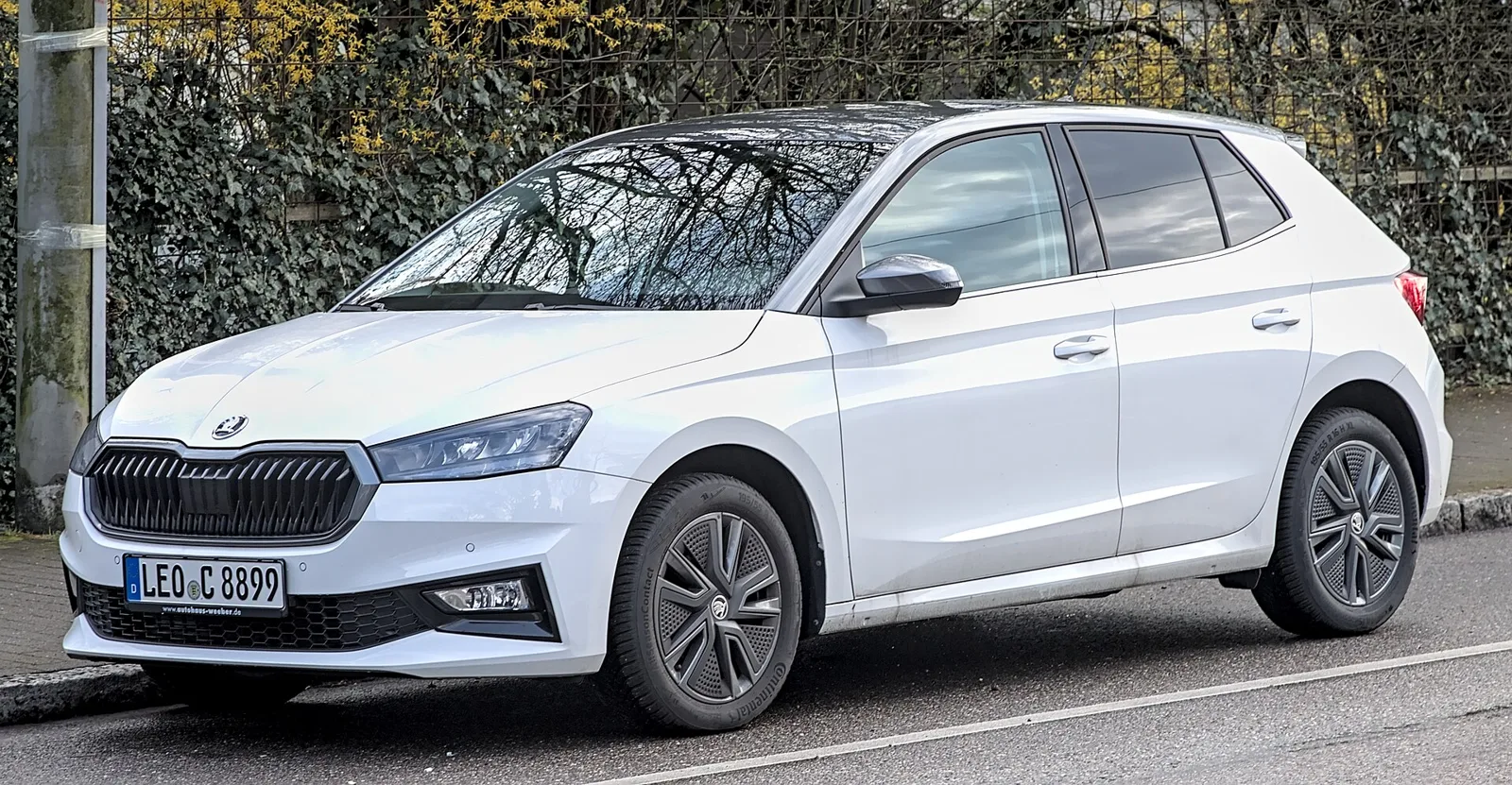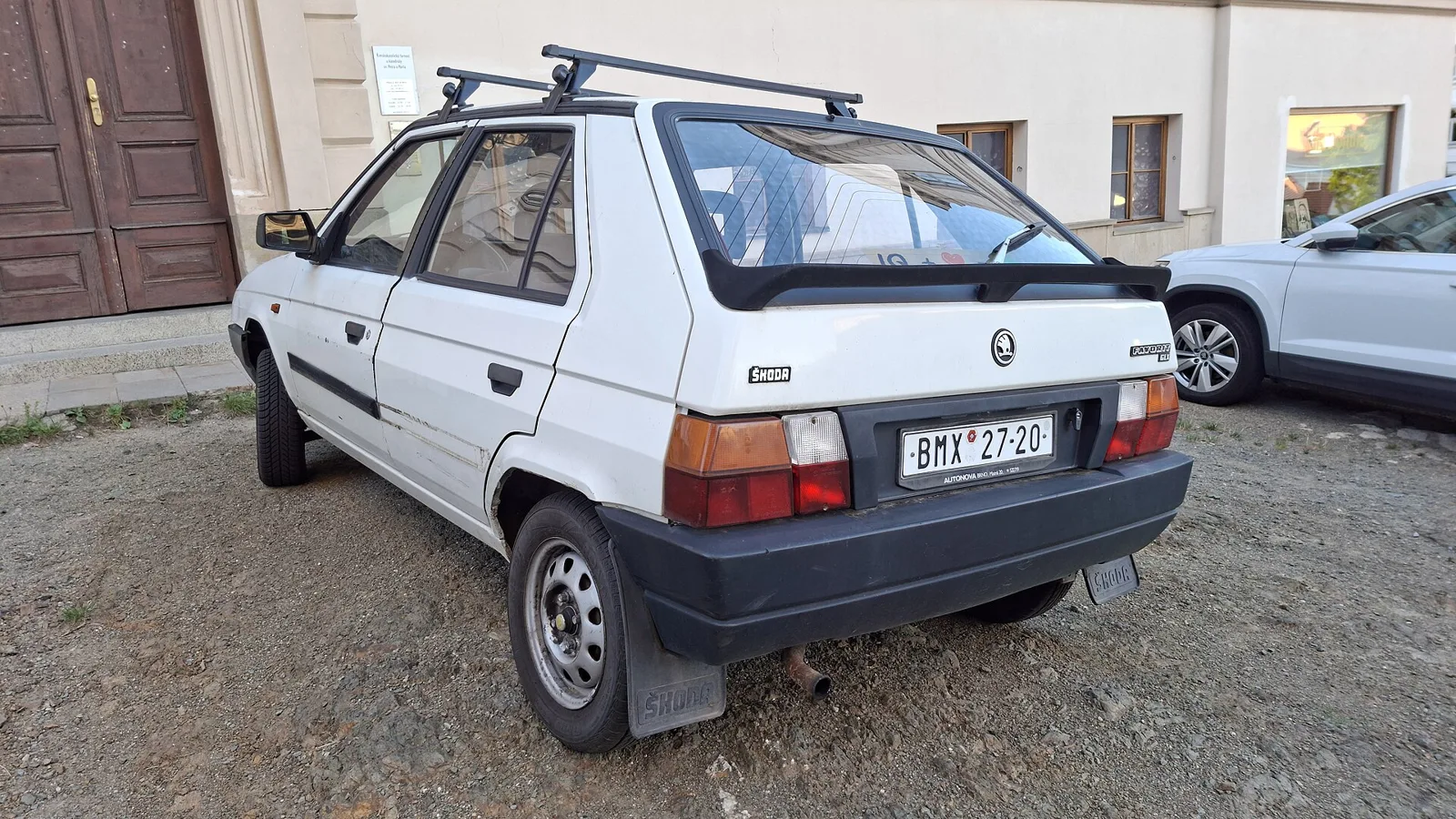
A Bertone-styled supermini from Czechoslovakia that sold in large numbers in Britain and later won its class in the 1994 World Rally Championship.
The Favorit was a Skoda supermini built from 1987 to 1995, sold as a hatchback and later as an estate and pick-up. It was the brand's first front-wheel-drive car and went on to win its class in the 1994 World Rally Championship.
The Skoda Favorit was a supermini that Skoda's Type 781 made from 1987 to 1995. It was the first Skoda with a transverse front engine and front-wheel drive, and its hatchback body was styled by Bertone. The car became one of Central Europe's most popular models and later won its class in the 1994 World Rally Championship.
What is the Skoda Favorit?
The Favorit, Type 781, was a supermini made by Skoda Auto from 1987 to 1995. It started as a five-door hatchback before estate and pick-up versions followed in 1990 and 1991, and it marked Skoda's first step into front-wheel drive.
The name had been used before. Skoda's Type 904 and 923 models, produced from 1936 to 1941, carried the Favorit badge, so the name came with some history behind it.
A front-wheel-drive supermini that sold by the tens of thousands in Britain and then beat rally rivals with a 1.3-litre engine.
Where did the Favorit come from?
The Favorit succeeded the ageing rear-engined, rear-wheel-drive Skoda 105/120 Estelle. Its Bertone-designed hatchback body and front-wheel drive moved Skoda towards the modern mainstream. It was premiered in July 1987 at the Brno Engineering Fair in Czechoslovakia.
Development was slow. The Czechoslovak government approved the front-wheel-drive car in 1982, development began in 1983, and the design was not finished until mid-1985. Full production started in 1987 after a long dispute with the styling studio.
Two further body designs were fully engineered but never built: a four-door saloon and a two-door hatchback coupe.
After the 1991 Volkswagen takeover, new developments came quickly. Fuel-injected catalytic versions were marketed as the Li, GLi and GLXi, and cosmetic changes included improved door hinges and Volkswagen seats, dashboards and instrumentation. In 1993 a further round of modernisation added engine upgrades, a bodywork facelift and bigger bumpers.
How popular was the Favorit?
The Favorit became one of Central Europe's most popular cars and was exported to countries including Argentina, Chile, China, Israel, Poland, Russia and Turkey. Some 50,000 were sold in the UK from 1989 to 1995.
Its successor, the Felicia, arrived in 1994 and was developed with the Volkswagen Group, which had taken over Skoda in 1991. Parts for the Favorit were very universal with other Eastern European cars, and simple knobs and buttons did not call for expensive replacements.
How did the Favorit compare with the Volkswagen Polo?
The Favorit has been compared with the Volkswagen Polo, largely because of its large engine compartment, which made repairs easier to carry out. Fuel-injected Favorits used the Bosch Mono-Motronic 1.2.3 system, a unit also found in the Polo Mk2 and Golf Mk3.
That practical layout was part of the car's appeal. Its general design and mechanical simplicity were easy to live with, especially for owners who might otherwise face costly parts or maintenance for basic components.
What engine did the Favorit use?
The Favorit used a 1,289 cc inline-four petrol engine with overhead valves, rated at 46 kW (63 PS; 62 bhp) at 5,000 rpm when new. Early models used Pierburg carburettors, single or dual barrel, and the rated output later rose to 50 kW.
Ricardo Consulting Engineers in the UK redesigned the combustion chambers, and Porsche helped engineer the engine mountings. Emissions equipment grew over time, with two types of catalytic converter and Bosch Mono-Motronic single-point injection.
Emissions and fuelling changes had only minor effects on the rated power and torque, which later stood at 50 kW. The cam chain was due for changing every 60,000 km, although the engine could last beyond 200,000 km. The chain is relatively short but has no tensioner, and cases of engines running 400,000 km without a chain change are known.
A smaller 1,137 cc engine, rated at 38 kW (52 hp), was offered in some countries. It was not more economical than the 1,289 cc engines, but it could still reach 140 km/h.
The only transmission was a five-speed manual of transaxle design, which carried the differential and final drive, and drive went to the front wheels. The same engine family later powered the Felicia, and derivatives appeared in the Fabia, Arosa and Lupo.
What body styles did the Favorit come in?
The Favorit began as a five-door hatchback and gained a five-door estate, the Forman, in 1990. A two-door pick-up, the Skoda Pick-up, followed in 1991, and the estate was sold in the UK as the Favorit Estate from June 1991.
The Forman name comes from the Czech word for a wagoneer, someone who transports goods by wagon. A common misconception links it to the filmmaker Milos Forman, but that connection is not real.
Luggage space in the hatchback measured 251 litres with the rear seats upright, rising to 1,038 litres with them folded. For more room the back seat could be removed completely.
Which special editions did the Favorit get?
Black Line, Silver Line and Solitaire were the main limited specifications. Black Line used all-black paint with factory 13-inch Ronal F-Series alloys, while Solitaire was very rare and added a rear spoiler, factory alarm and power front windows.
Black Line also had a pop-up sunroof, Hella lights and a Blaupunkt stereo. Silver Line was similar but finished in metallic silver. MTX also produced a roadster version, the MTX Roadster.
Did the Favorit win rallies?
Yes. The Skoda Motorsport car took the 2-litre Manufacturers Championship category of the 1994 World Rally Championship with 43 points, despite having a 1.3-litre engine. Two Favorits had earlier finished first and second in the under-1300 cc class at the 1993 Monte Carlo Rally.
Rivals beaten included Ford, Citroen AX Sport, Peugeot 205, Fiat Cinquecento, Lada Riva, Rover Mini Cooper, Suzuki Swift GTI and the Trabant P 601. The 1993 Monte Carlo pair finished 18th and 23rd overall.
Pavel Sibera took the Favorit into the overall top ten on two occasions. His team-mate Emil Triner matched that feat with a best of 9th at the Acropolis Rally and 8th at the Rallye de Espana.
Why is one Favorit famous in Liverpool?
A 1993-registered blue Favorit drove from Anfield in Liverpool to Madrid for the 2019 UEFA Champions League Final, then made the return journey to Anfield. The outbound trip was filmed by Simon Wilson, a British YouTuber and Liverpool fan.
The car cost 40 pounds sterling in total and had three MOT failures before the faults were rectified. After the repairs it passed its retest with five advisories.
Only 232 Favorits were still on the road by December 2016, a sharp fall from the roughly 50,000 sold in the UK in the 1990s.
What are the Skoda Favorit specifications?
| Specification | Detail |
|---|---|
| Type | Type 781 supermini, 1987 to 1995 |
| Engine | 1,289 cc inline-four petrol, overhead valve |
| Initial output | 46 kW (63 PS; 62 bhp) at 5,000 rpm |
| Later output | 50 kW |
| Smaller engine | 1,137 cc, 38 kW (52 hp); 140 km/h top speed |
| Transmission | Five-speed manual, transaxle, front-wheel drive |
| Luggage | 251 litres upright; 1,038 litres with seats folded |
| Cam chain | Change every 60,000 km |
| 1994 rally result | 2-litre Manufacturers Championship, 43 points, on a 1.3-litre engine |