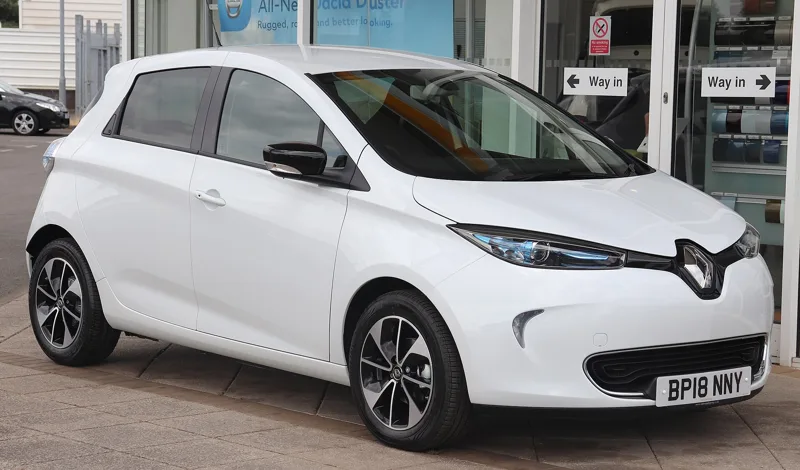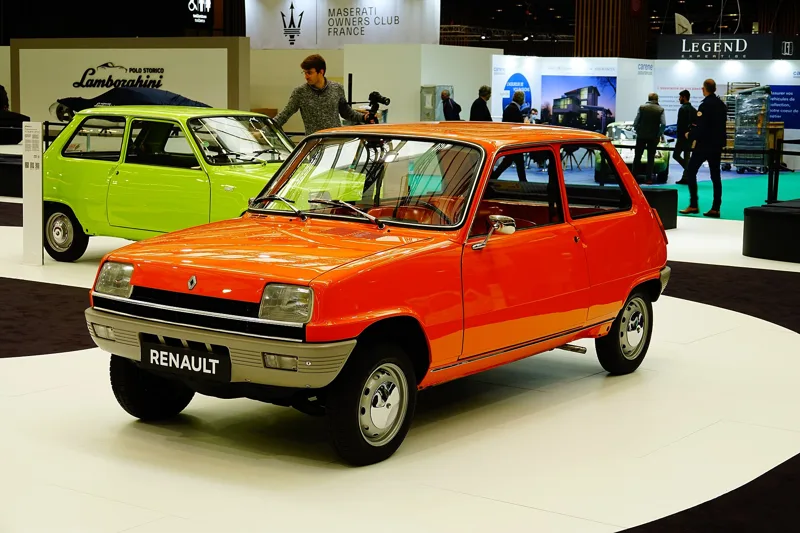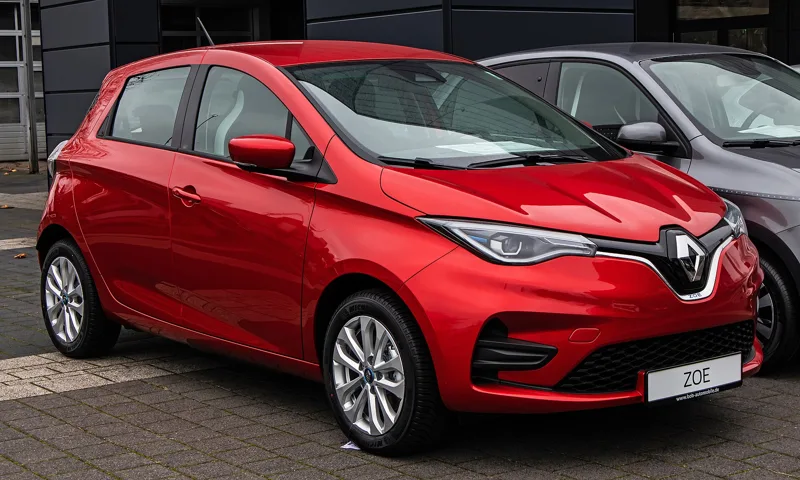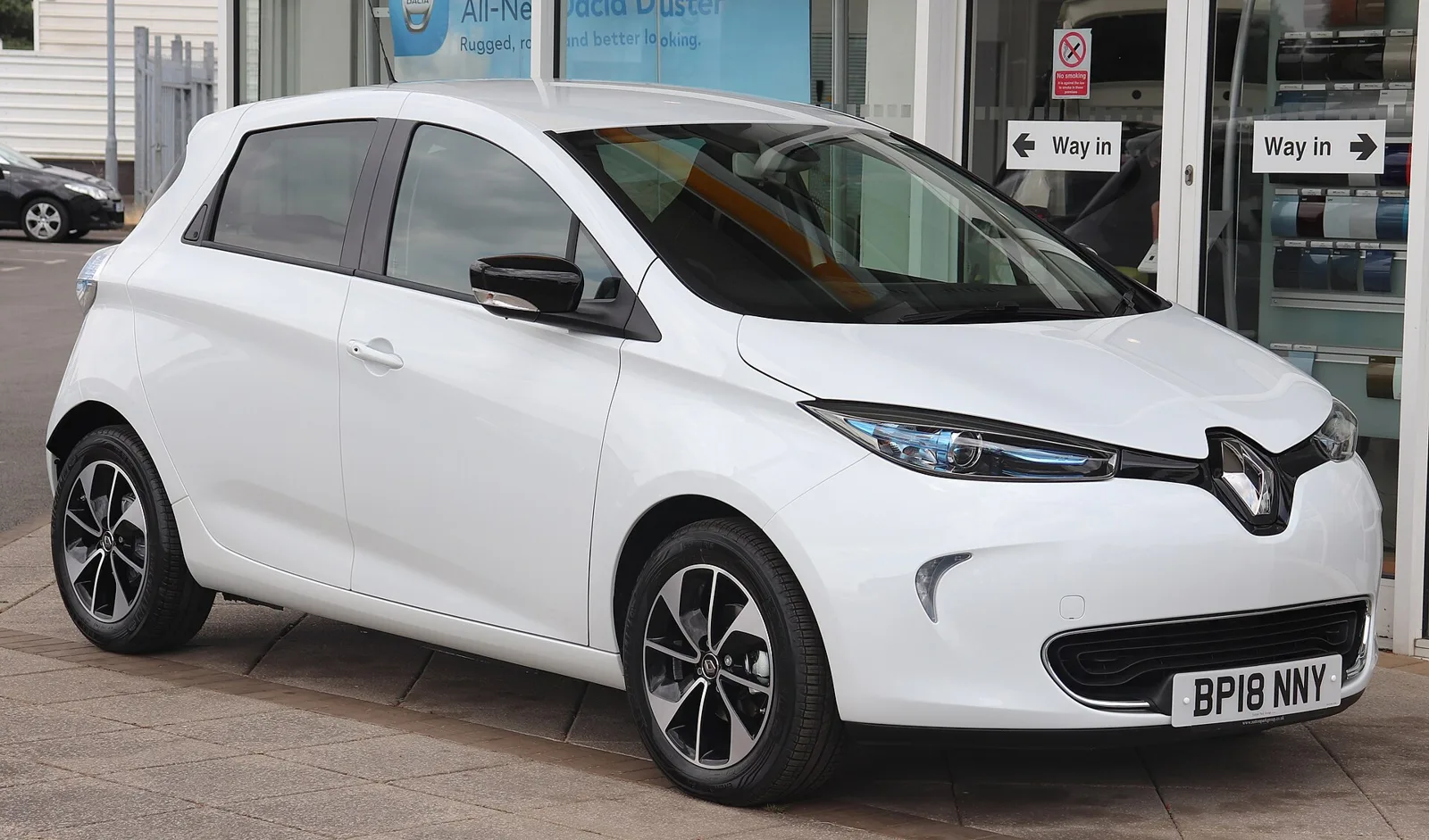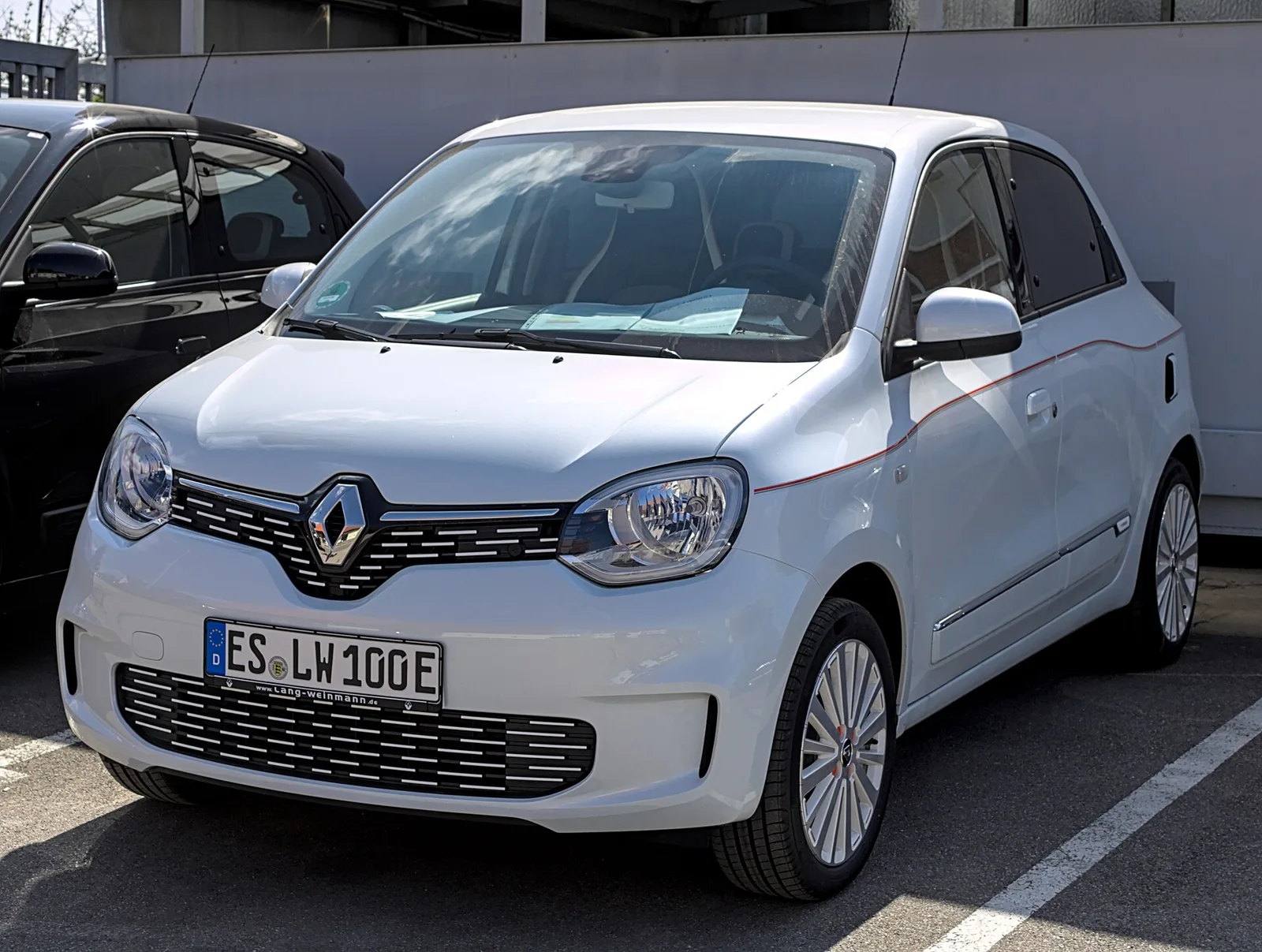
From a 1992 front-engined hatchback to a rear-engined electric city car, the Twingo changed shape three times before its electric chapter.
The Renault Twingo Electric is the all-electric version of Renault's small city car, sold as Twingo Z.E. and in France as the E-Tech Electrique. It was announced at the 2020 Geneva Motor Show with a 22 kW-hr battery, a rear 60 kW motor and a WLTP range of 180 or 250 km.
The Renault Twingo Electric is the battery-powered version of a city car that Renault built from 1992 to 2024 across three generations. It was announced in February 2020 and turned the rear-engined third-generation car into a battery-powered model. Renault later followed it with a fourth generation, the Twingo E-Tech.
The name, the design and the engineering all shaped the electric car. It inherited a rear-engined layout from the third generation, a platform developed with Daimler, and a small body built to handle city streets. The story below follows each stage in turn, from the first car at the Paris Motor Show to the electric model and its successor.
Where did the Twingo name come from?
Some accounts say the name blends twist, swing and tango. An official Renault press release later denied that derivation, so the origin of the name is not confirmed by the company. The car was a city car from the start, and the name went on a small model that Renault sold across Europe and in several other markets.
The name appeared on all three petrol generations and then on the electric version, so it carried through each change of platform and power source.
From a smile-fronted hatchback to a battery-powered city car, the Twingo changed shape three times in its life.
How did the first-generation Twingo begin?
The first Twingo debuted at the Paris Motor Show on 5 October 1992 and reached continental European showrooms from April 1993. Its concept came from the W60 project, which aimed to replace the Renault 4 with a minivan, and Renault's team stretched the prototype and gave it a smile-shaped nose.
Renault's chief designer at the time led the production version, and the team mounted the interior equipment on a central console to free up space. The project had earlier roots: Renault had taken part in the 1981 to 1984 ECO 2000 Mono-Box project with PSA Peugeot Citroen and the French government.
Inside, the electronic instrument panel sat centrally, with a speedometer, fuel gauge, clock, odometer and trip recorder controlled by a stalk-mounted button. The rear seat slid so that the owner could choose between more boot space and more rear legroom, and the boot parcel shelf lifted with the tailgate.
At launch the car had only one engine, a 1239 cc OHC four-cylinder taken from the Renault 5, rated at 60 hp (44 kW) at 5300 rpm. A new 1149 cc engine from the Clio arrived in July 1996 with 58 hp (43 kW) at 5250 rpm, and the same year brought the Twingo Matic with a three-speed automatic gearbox.
Where was the first Twingo built?
The first generation was built at the Flins Renault Factory from its launch until 28 June 2007. Production also took place in Taiwan, Spain, Colombia and Uruguay from 1999 to 2002, and the Colombian line kept running until 8 June 2012, serving the domestic market there.
By 30 June 2007 French production had reached 2,478,648 cars. In total the first generation accounted for about 2.6 million units manufactured.
The first car went on sale in April 1993 in a single trim level, with four body colours to choose from. It retailed at 55,000FF, approximately 8,400 euros, and the early years brought a steady stream of editions, restylings and minor interior changes.
What changed in the second generation?
The second Twingo, launched in the summer of 2007, used the floorpan of the Clio II and offered improved crash protection. Renault debuted the production car at the 2007 Geneva Motor Show, and production started in France before moving to the Revoz plant in Novo Mesto, Slovenia.
Renault added the Twingo Renaultsport 133 in January 2008 at the Geneva show, with a 1,598 cc engine producing 133 PS (98 kW; 131 hp). Ordering and production of that hot model ended in August 2013, and the range was refreshed in July 2011 at the Frankfurt Motor Show with a design language later used across the whole Renault line.
Top Gear gave the car a memorable road test. On series 14, episode four, Jeremy Clarkson drove the Twingo 133 through Belfast streets and rolled it upside down through a sewage tunnel. He then raced to catch a departing ferry, and the attempt ended with a landing in the ocean.
The Twingo also won awards in its own right. On 16 March 2011 it took the best city car award in the Parkers New Car Awards, and the UK editions of the car added names such as Gordini, Bizu, Pzaz, Silverstone GP and Red Bull RB7 to the lineup.
Why did the third generation put the engine at the back?
The third Twingo debuted at the Geneva Motor Show in March 2014 as a five-door, rear mid-engined, rear-wheel-drive car. It was co-developed with Daimler and built on a shared platform used by the third-generation Smart Fortwo and the second-generation Smart Forfour.
Project Edison was announced in March 2010 as a collaboration to create a shared platform for small city cars. The platform was designed from the start to take either an internal combustion engine or an electric motor, and both companies invested equally in research and development, with Renault focusing on engines and Daimler on transmissions.
Moving the engine to the rear allowed the cabin to extend forwards. The design also gave a 45 degree steering angle and a turning circle of 8.6 m, which made tight turns in city streets practical. The third car was about 10 mm shorter than the second, although its boot capacity fell as a result of the rear layout.
The petrol engines were three-cylinder units: a 0.9-litre turbocharged version and a 1-litre atmospheric version. Both were mounted low, at a 49 degree angle, to help preserve boot space. The TCe 110 arrived in November 2016 for the sporty GT model, which added a more powerful option to the range.
How did critics rate the third-generation Twingo?
Critics were broadly positive, and the car won several UK prizes in 2014, including City Car of the Year at the TopGear Magazine Awards and the UK Car of the Year Awards. Top Gear's Paul Horrell scored it seven out of 10, while Auto Express and CarBuyer gave it four stars out of five.
Auto Express and CarBuyer praised the car's manoeuvrability, design and rear passenger space, but they criticised its wind noise and high price against rivals. What Car? gave three out of five stars and described the car as cheeky and retro in style, but less refined than the best city cars.
Advertising for the car was handled by Publicis, and the visual campaign by the French artists duo Kuntzel+Deygas used the theme Go Anywhere, Go Everywhere. A 2015 music video, All new Twingo: Show me a car, reached about 300,000 views in four weeks in the United Kingdom.
Why did Renault build an electric Twingo?
Renault confirmed plans for an electric Twingo in September 2019 and unveiled the Twingo Electric at the Geneva Motor Show in February 2020. It was the second electric car from Renault after the Zoe, and its drive train was based on the Smart EQ Forfour with a larger battery.
The car was marketed as the Twingo Z.E. and, in France, as the Twingo E-Tech Electrique. Renault CEO Luca de Meo confirmed in 2021 that the entire Twingo range would end after the third generation, driven partly by the Euro 7 emissions standard due in 2025.
The A-segment Twingo was expected to be replaced by the larger B-segment Renault 5 EV, but the electric Twingo still reached buyers. Its starting price, announced in September 2020, was 21,350 euros, which was high against a petrol Twingo before any subsidy was counted.
What were the range and performance figures?
The Twingo Electric had a WLTP range of 180 or 250 km (110 or 160 mi), with the full cycle giving the lower figure and the city cycle the higher. Its rear R80 motor produced 60 kW (80 hp) and 160 Nm (118 lb ft), and the car could reach 100 km/h from rest in 12.6 seconds.
The lithium-ion battery held 22 kW-hr and weighed 165 kg (364 lb), sitting beneath the front seats. It drew on lessons from the Renault Zoe, and the on-board charger, branded Cameleon, accepted AC supply up to 22 kW. The car had no DC fast-charge port and could only use AC charging points.
The kerb weight was 1,112 kg (2,452 lb), and the top speed was 135 km/h (84 mph). Mode D mimicked a petrol car with moderate engine braking when the driver lifted off, while mode B offered stronger and adjustable regeneration. Even mode B could not give one-pedal driving at its highest setting.
Drivers liked the lack of vibration and the strong low-end torque in city traffic, which were the qualities most often praised in the car's driving character.
Which trims could buyers choose?
In 2022 the electric Twingo was offered in Life, Zen, Intens and Urban Night trims, priced from 21,550 euros for the Life to 26,650 euros for the Urban Night. The Life trim was criticised for lacking a radio and air conditioning, although the lack of vibration and abundant low-end torque were appreciated.
The Vibes limited edition was announced in July 2020 on the Intens trim. It came in the special Valencia Orange colour, but Vibes could be specified in any production colour, and it was later offered on the petrol Twingo as well.
French buyers could claim a government electric car subsidy of up to 7,000 euros or 27% of the price, which made the electric version comparable in cost to the petrol model. Without that support, the suggested retail price stood high against the petrol Twingo.
How did the electric Twingo compare with rivals?
The Twingo Electric competed with low-cost city cars including the base Fiat New 500, the Volkswagen e-up!, the SEAT Mii electric and the Skoda Citigo-e iV. Against the Dacia Spring it offered a smaller driving range, so buyers weighed range against price.
The car was never marketed in the United Kingdom. Renault withdrew the Twingo range from the UK after the 2019 facelift, and UK sales had already fallen to just 877 cars in 2018, which led Renault UK to stop marketing the right-hand drive model.
What is the Twingo E-Tech?
The E-Tech is the fourth Twingo generation, a retro-styled electric city car that Renault announced in November 2023 with a target price under 20,000 euros. The production-spec car was revealed in the final quarter of 2025, and production began in 2026 at the same Slovenian factory used for earlier generations.
Luca De Meo said at the Capital Markets Day press conference that development would begin at once, matching the speed of Chinese manufacturers. A prototype with retro styling recalled the first-generation car, in line with Renault's wider retro approach to its electric models such as the Renault 4 E-Tech and Renault 5 E-Tech.
Renault quoted an efficiency figure of 10 kWh/100 km for the new car. The production model arrived about two years after the concept car was shown.
Did the Twingo race?
A one-make series called the Renault Twin Cup has run in France since 2011 for first-generation cars. Renault also sold the Twingo Renaultsport 133 for road use, and its 1,598 cc engine gave the second generation a hot-hatch identity.
The Twin'Run concept, unveiled in May 2013, went much further. It used a mid-mounted V6 with 320 hp (235 kW), a twin-clutch six-speed sequential gearbox and a tubular steel frame inspired by the Megane Trophy and the Renault 5 Turbo Maxi from WRC. Renault developed it with help from Tork Engineering and Poclain Vehicules.
Which special editions were built?
First-generation cars came in several co-branded limited editions with Perrier, Benetton, L'Oreal, Kenzo and Elite Model Management, plus artistic references such as Metropolis, Grease and Tintin. The Lecoq special was built by Carrosserie Lecoq in fewer than 50 units.
A French company in Normandy, Lormauto, presented a retrofit kit at the 2022 and 2024 Paris Motor Shows to turn a first-generation Twingo into a fully electric car. The approved model is available from the rental company UCAR.
What are the Twingo Electric specifications?
| Specification | Detail |
|---|---|
| Generations built | Three petrol generations, 1992 to 2024 |
| Electric starting price | 21,350 euros at launch in 2020 |
| Battery | 22 kW-hr lithium-ion, 165 kg (364 lb), under the front seats |
| Motor | 60 kW (80 hp) and 160 Nm (118 lb ft), rear R80 unit |
| WLTP range | 180 km (110 mi) full cycle; 250 km (160 mi) city cycle |
| Charging | AC up to 22 kW; no DC fast charge |
| Kerb weight | 1,112 kg (2,452 lb) |
| Top speed | 135 km/h (84 mph) |
| 0-100 km/h | 12.6 seconds |
| Fourth generation target | Under 20,000 euros; 10 kWh/100 km efficiency |