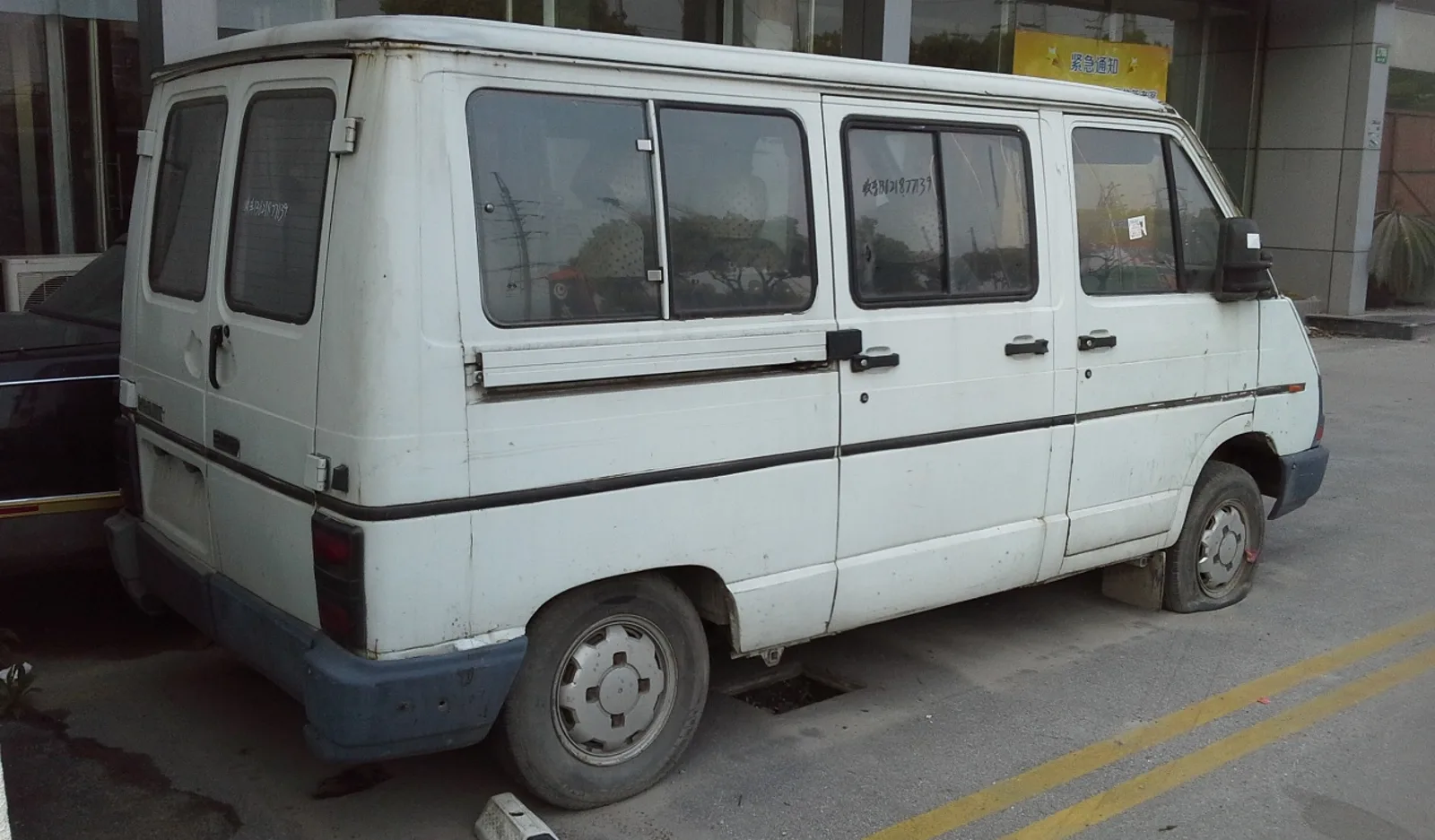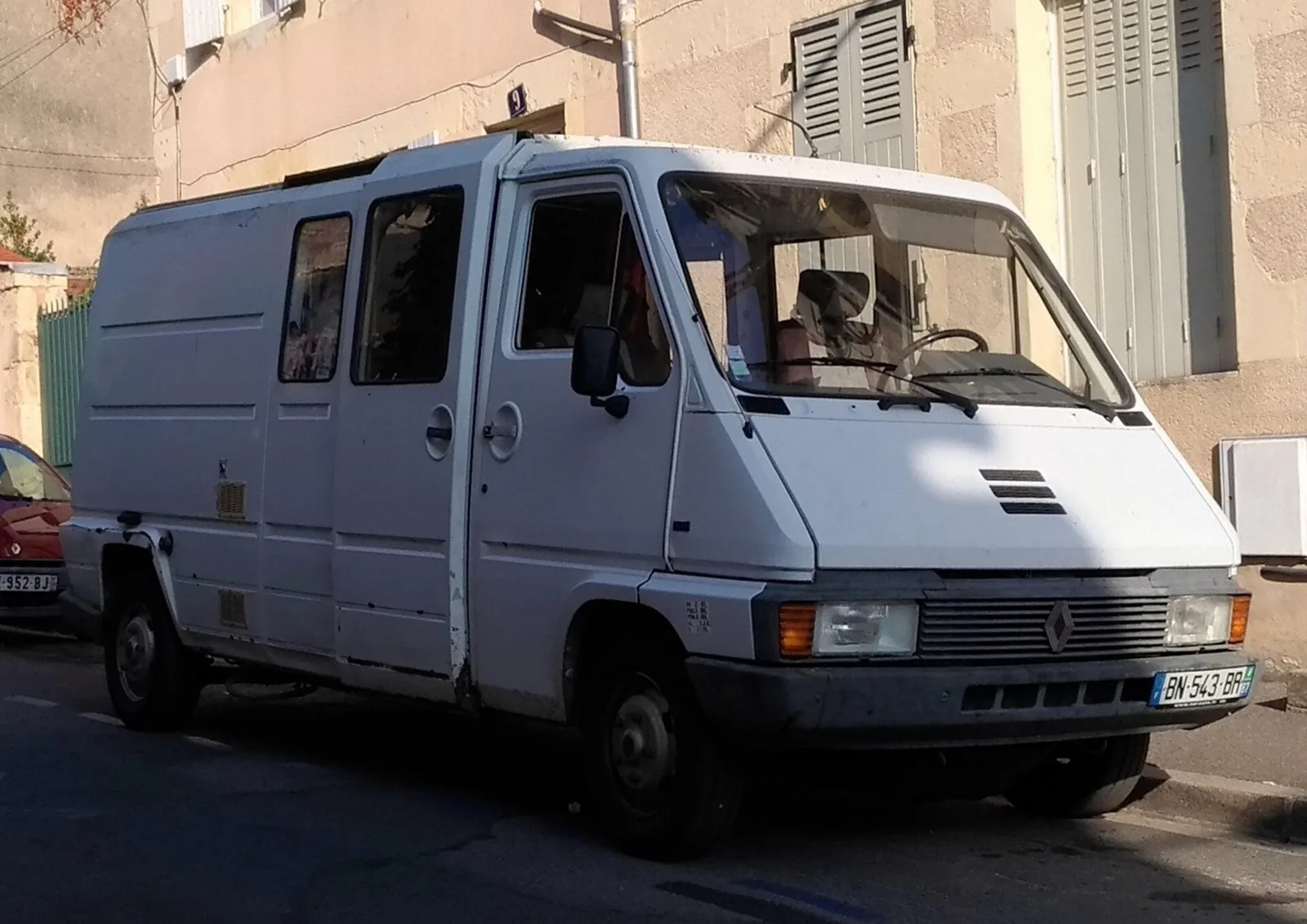
A French light van from 1980 to 1997, sold as a panel van, glazed van, minibus base and chassis-cab, with four-cylinder petrol and diesel engines.
The Renault Master I was a light van from the French maker, produced from July 1980 to mid-October 1997. It was sold as a panel van, glazed van and chassis-cab, with four-cylinder petrol and diesel engines.
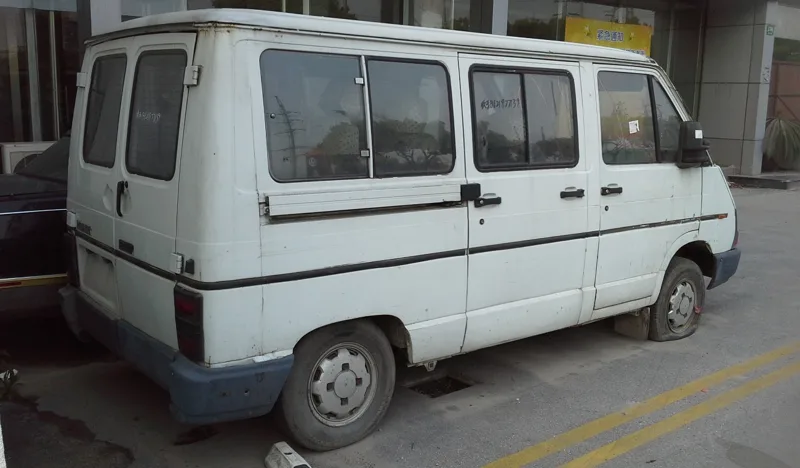
The Renault Master I was a French light commercial vehicle that Renault sold from 1980 until 1997. Its cuboid body and sliding side doors were its most noticeable features, and the whole vehicle was assembled at the Batilly works.
Renault introduced it alongside the Trafic I, and it took over from the Super Goelette.
Where did the Renault Master I come from?
Engineers started on two vans in 1973, the Trafic and the Master, to take over from the Estafette and the Super Goelette. The Master came from the Renault Vehicules industriels division, which had grown out of the former Saviem teams, while the Trafic was prepared in Renault's own design offices.
Developing the pair together let Renault offer a complete range of commercial vehicles able to carry payloads of 800 to 1,800 kg between them. Styling went to the Italian designer Marcello Gandini, whose record included the Lancia Stratos, the Lamborghini Countach and the Bugatti EB110.
In December 1973 Gandini made clay models at Carrozzeria Bertone that foreshadowed the Master's design.
Sliding side doors, a cuboid body and a 17-year run made the Master I a working van.
When did production and sales start?
Production started in July 1980, the van was officially shown that September, and it went on sale in early 1981. Output officially ended in mid-October 1997, when the Master II succeeded it.
Small details changed as the years passed. The grille diamond and rear monograms grew in June 1981, and a rectangular Renault badge joined the bonnet in July 1982. The wheels were redesigned in July 1985, the bonnet badge was dropped in January 1989, and the rear monograms went chrome in December 1992.
A facelift called phase 2 came in mid-April 1993, bringing a slimmer grille with an angled Renault logo and white front indicators for a fresher look. The first generation had a 17-year career.
What engines did the Master I use?
Each Master I engine had four cylinders, and buyers chose between petrol and diesel. Because every unit had four cylinders, the range shared a common layout even as outputs differed. The petrol options were a 2.0-litre (122 cu in) carburettor unit making 80 to 82 PS (79 to 81 hp; 59 to 60 kW), and a fuel-injected 2.2-litre (134 cu in) rated at 90 to 97 PS (89 to 96 hp; 66 to 71 kW).
The diesel options included the J8S, a 2.1-litre (128 cu in) using indirect injection and making 66 PS (65 hp; 49 kW). A 2.1-litre rated at 61 PS (60 hp; 45 kW) existed only for the T30D. Sofim's type 8140 appeared as a 2.4-litre (146 cu in) with 72 and 76 PS, and a 2.5-litre (153 cu in) covered 71 to 76 PS (70 to 75 hp; 52 to 56 kW) on the T30D and T35D.
The T35TD carried the range's top diesel, a turbocharged 2.5-litre (153 cu in) Sofim 8140 rated at 88 and 94 PS (87 and 93 hp; 65 and 69 kW). Every version used the same 4 DS 8 gearbox, a manual with four or five synchronised ratios, and only the gear ratios differed by engine.
How were the six versions named?
The first letter showed the drive: T for traction, meaning front-wheel drive, and P for propulsion, meaning rear-wheel drive. The number that followed gave the maximum gross vehicle weight, 3.0 or 3.5 tonnes, and a D meant diesel. Those rules produced six versions: T30, T30D, T35, T35D, P35 and P35D.
Engines changed across the range. The T30 and T35 kept the J5R until 1995, then adopted the J7T, while the T30D diesel gave way to the J8S between 1984 and 1995. The T35D gained the S8Ut in 1990, and the P35 and P35D were offered with the J5R petrol and S8U diesel until 1990. Each code therefore tells a buyer the drive, the weight class and the fuel in a few characters.
What are the Renault Master I specifications?
| Specification | Detail |
|---|---|
| Built | July 1980 to mid-October 1997 (presented September 1980) |
| Factory | Batilly plant, Meurthe-et-Moselle, France |
| Wheelbases | 2,810 mm (110.6 in), 3,230 mm (127.2 in), 3,700 mm (145.7 in) |
| Roof heights | 2,050 mm (80.7 in) and 2,415 mm (95.1 in) |
| Payload (Trafic and Master range) | 800 to 1,800 kg (1,764 to 3,968 lb) |
| Gross weight | 3.0 or 3.5 tonnes |
| Petrol | 2.0-litre (122 cu in) J5R; 2.2-litre (134 cu in) fuel-injected |
| Diesel | 61 to 94 PS (60 to 93 hp; 45 to 69 kW) from 2.1-, 2.4- and 2.5-litre units |
| Gearbox | 4 DS 8 manual |
What do the published dimensions leave out?
The overall dimension figures describe the main body of the van. Mirrors, aerials and other items that sit outside the body are not included, so the numbers should be read as body measurements.
How did the panel van and chassis-cab differ?
The panelled van had a closed body with no side windows, while the glazed version had windows along each side. The chassis-cab offered only a bare chassis with the occupant cab, so the buyer could fit a body suited to their own work.
Glazed vans appealed to delivery firms and passenger services that needed a clear view from inside. Bodies for refrigerated trucks, ambulances, livestock trucks, food trucks and motorhomes were all mounted on the chassis-cab.
What was the Heuliez GX 17 minibus?
The GX 17 was a minibus developed by RVI with Heuliez, using the Renault Master as its base. It took over from the Coyote, a Citroen C35 derivative, and carried 17 people besides the driver: 12 seated and five standing.
Between 1982 and 1990, 103 examples were built. Many towns, large and small, bought one, often in small batches, for transporting people with reduced mobility or running taxi-bus services.
Power came from a 2.2-litre (134 cu in) Douvrin J7T petrol engine, rated at 95 PS (94 hp; 70 kW), or from a 2.8-litre (171 cu in) Renault DCI diesel with fuel injection.
How was the Master I styled?
Gandini's styling mixed the unusual with the typical. Sharp corners, ribs and hollow mouldings gave the body an overall cuboid look, and that styling is counted among the reasons for the van's success.
The sliding side doors were the centrepiece. They ran out to the sides and climbed onto the roof, easing loads in and maximising the space available inside.
Some touches were borrowed from an earlier Gandini project. The outer door handles carried a circular bulge that echoed the Fiat Ritmo, which the designer had created before the Master.
The first generation was offered in 20 colours across its 17 years on sale.
Which accessories could buyers add to the Master?
Buyers could add seat covers, a roof rack, a towbar, a window-blanking kit, mud flaps and an anti-theft fuel cap. The Trafic I and the Express shared some of these extras.
The seat covers came in Feu d'artifice or Passion patterns, in grey or beige, and were meant to personalise the cabin while protecting the seats. The towbar suited traction, rear-drive and chassis-cab versions.
A micro-line kit closed off the windows from outside, adding privacy and load security. PVC mud flaps guarded the bodywork against spray. The accessories were available while the van was on sale.
Did the Master I have a truck version?
Yes. Launched in 1982, the Gamme B was a truck with rear-wheel drive. Its cab came from the Master I and sat on a ladder chassis with twin rear wheels, so the truck kept the van's cab but swapped its body for a chassis. A Gamme B 4x4 based on the Master I continued until 1999.
What happened to the Master after 1997?
Production of the Master I officially ended in mid-October 1997, and the Master II replaced it. Batilly also turned out the Master II and Master III, so the plant linked all three generations.