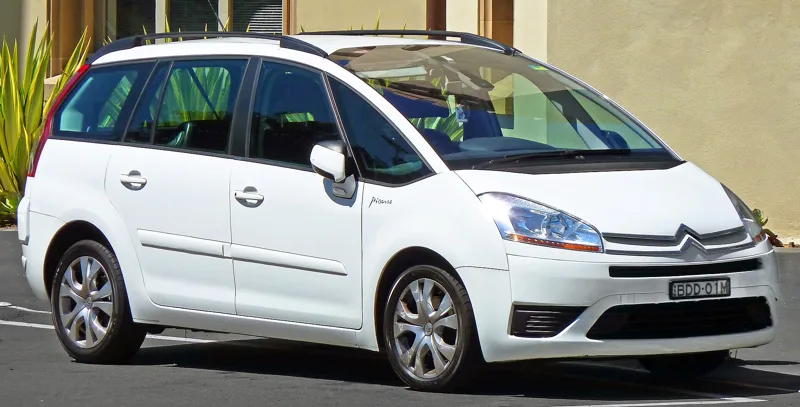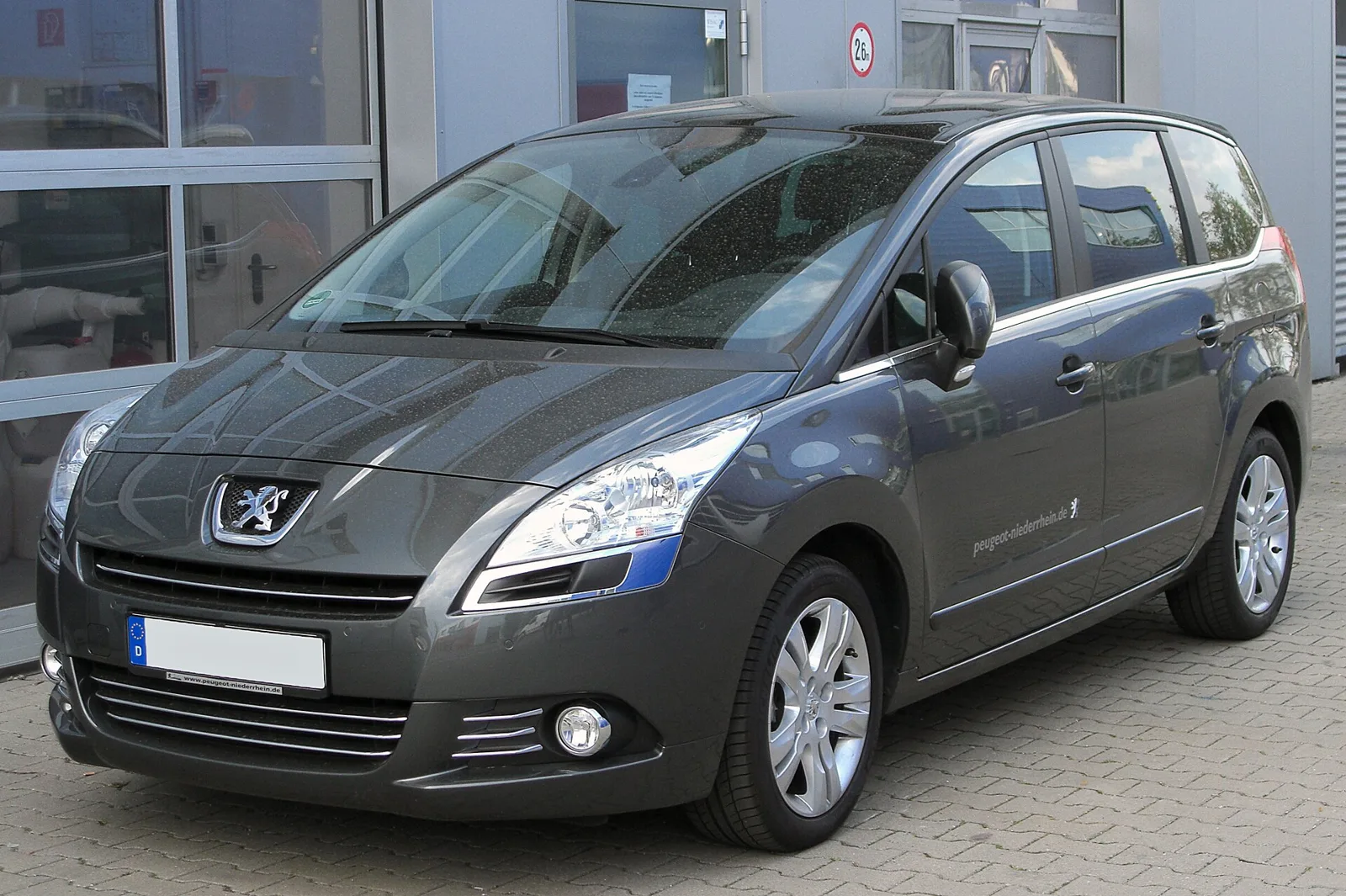
A Frankfurt 2009 mid-size MPV from Peugeot, five seats or seven with options, with a 0.29 drag figure, launch engines from 109 PS to 163 PS and a run that ended at the close of 2016.
Built from 2009 to 2016, the 5008 I was a five-seat people carrier, with seven seats on option, and had a 0.29 drag figure for its class. Its launch petrol and diesel engines ran from 109 PS to 163 PS.
The first Peugeot 5008 was a mid-size MPV built from 2009 until the end of 2016. It was the first MPV in history to reach a drag coefficient of 0.29, a figure that stood out in its class.
Peugeot used the car to enter the mid-size people-carrier market, and the range grew over the years with new engines, trims and a facelift. Production ran until the end of 2016, when the second generation was due.
Why did the 5008 arrive as a surprise?
The 5008 debuted at the Frankfurt motor show in autumn 2009 in an almost unexpected way. Until a few months earlier, magazines had concentrated on the 3008 crossover SUV, a car that shares much of its mechanical base with the 5008.
The launch followed in November 2009.
A mid-size MPV that set a record for drag and left the price lists at the close of 2016.
Why did the 5008 matter for Peugeot?
With the 5008 Peugeot entered the mid-size MPV sector, competing with the Opel Zafira, the Renault Scenic and the Volkswagen Touran. The new model sat one step below the larger 807 in the range.
How slippery was the 5008?
The 5008 reached a drag coefficient of 0.29, a record for the class, and the car also offers a spacious cabin. Careful aerodynamic work was carried out partly to reduce fuel consumption, and the result was the first MPV in history at that figure.
The styling followed the new Peugeot direction and echoed the 3008. The large bumper mouth found on many models since the 206 was dropped, and the front mouth became more discreet. Its triangular light units share a design language with the 3008. The grille is a thin slot under a big lion badge, and the windscreen is steeply raked.
The side view shows a high belt line that climbs sharply at the tail, where it houses boomerang-shaped rear lights. Those lights resemble the ones on the 207 SW and 307 SW, and they look even closer to those of the Citroen C6 flagship. The flanks and tail were slimmed with black pillars rather than body-coloured ones.
How much could the 5008 carry?
With the second-row seats folded or fully lowered, the 5008 offered a maximum load capacity of 2,506 litres. With two rows in use, the boot ranged from 579 to 678 litres, depending on how far the adjustable second row was moved.
The basic model seated five, and two single seats could be added as options in the third row for seven in total. The dashboard came from the 3008, but it had more storage compartments.
Practicality and modularity are among the main strengths of an MPV. The second row slides longitudinally, so the space behind it can be set to suit the load, and the seats can be folded or lowered to make room for bulky items.
What was the 5008 built on?
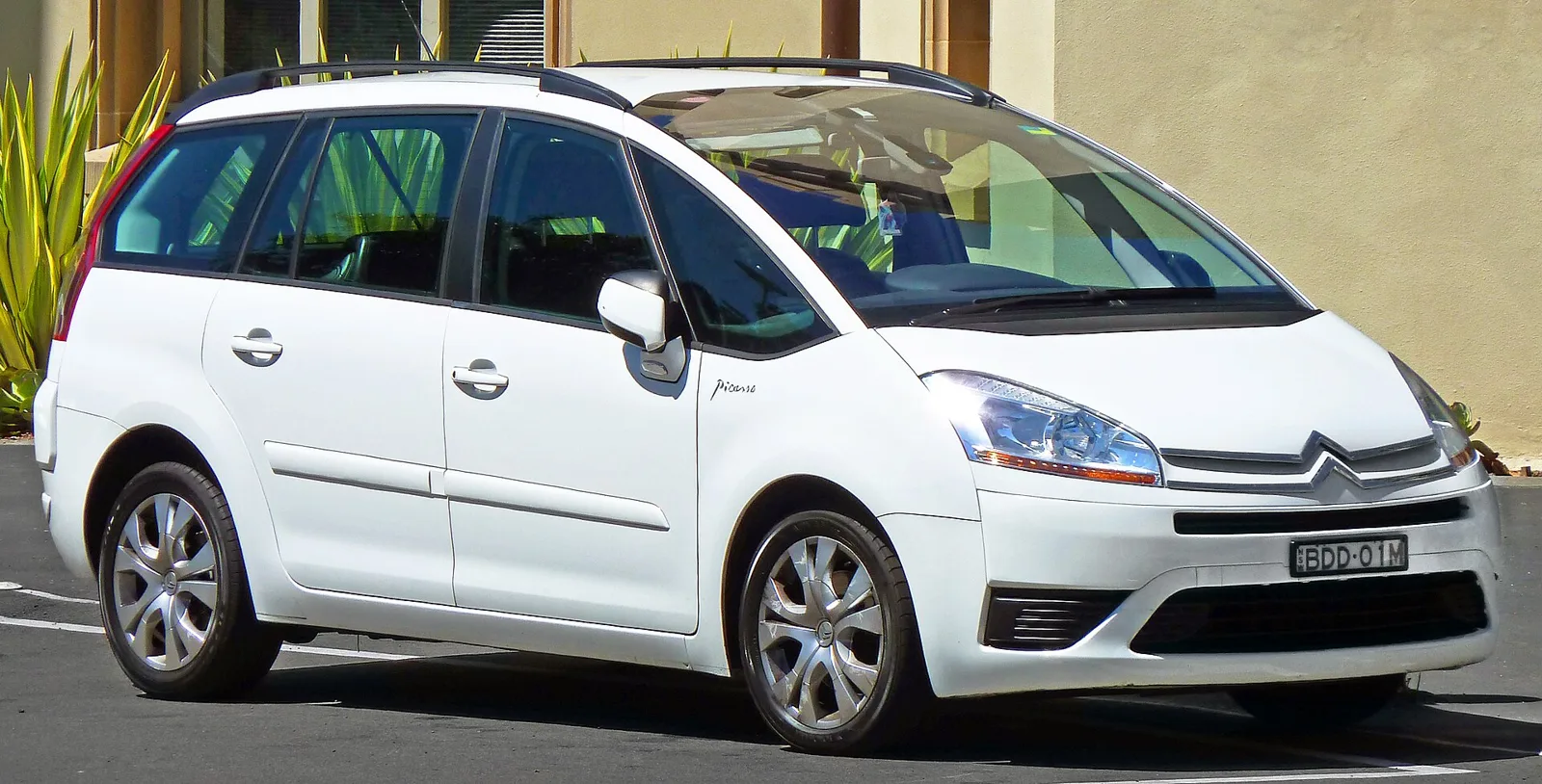
Although the basic structure of the 5008 derives mainly from the Citroen C4 Picasso, it carried some technical changes. Its high-strength steel shell was revised to absorb more energy in a frontal impact, and the platform is shared by all the PSA Group's segment C cars and their derivatives.
Boge components from the 3008 protect the shell at medium-speed impacts. Within certain limits the primary structure can come out of an accident undamaged, which saves on repair costs. The same elements shorten the front overhang and help dissipate heavier frontal hits.
The suspension geometry was only partly revised, keeping MacPherson struts at the front and interconnected wheels at the rear. The rear dampers were placed almost horizontally so that they did not intrude on the load floor. Steering is rack-and-pinion with electro-hydraulic assistance.
What engines did the 5008 offer?
The 5008 was planned with two petrol engines and three diesels. The 1.6 VTi was naturally aspirated, while the 1.6 THP used a twin-scroll turbocharger to reach its higher output. Of the diesels, the 1.6 HDi was later raised in output, while the 2.0 HDi kept its two power levels.
| Engine | Displacement | Maximum power | Layout |
|---|---|---|---|
| 1.6 VTi | 1,598 cc (97.5 cu in) | 120 PS (118 hp) | Prince petrol, variable valve timing |
| 1.6 THP | 1,598 cc (97.5 cu in) | 156 PS (154 hp) | Prince petrol, twin-scroll turbo |
| 1.6 HDi | 1,560 cc (95.2 cu in) | 109 PS (108 hp) | DV6 common-rail diesel |
| 2.0 HDi | 1,997 cc (121.9 cu in) | 150 or 163 PS (148 or 161 hp) | DW10 common-rail diesel |
What was the 2.0 HDi?
The 2.0 HDi was the largest diesel in the range, a DW10 common-rail unit of 1,997 cc (121.9 cu in) offered in two power levels, 150 PS (148 hp) and 163 PS (161 hp).
The 163 PS version was the one fitted with a six-speed automatic sequential gearbox. Its more powerful setting made it the top diesel in the range.
How were the gearboxes arranged?
Most versions had a six-speed manual gearbox. The naturally aspirated 1.6 petrol had five speeds, and the other manual versions used six.
A six-speed robotised gearbox became available on request from March 2010, although only for some versions.
What trims could buyers choose?
The 5008 launched in three trims. Premium was reserved for the 1.6 VTi and 1.6 HDi, Tecno was offered with every engine, and Feline came with every engine except the 1.6 VTi. Feline was the most complete trim, and Premium the simplest.
Two airbags, air conditioning, stability and traction control, and emergency hazard lights that switch on under braking were standard across the range. Tecno and Feline added cruise control, alloy wheels and fog lamps. Feline also had a glass panoramic roof and a package with a head-up display, a distance radar and a tyre pressure sensor.
The options list differed by trim. Premium could have 16-inch alloy wheels for an extra charge, while Tecno could add the head-up display package and the panoramic roof. Feline could take one of two multimedia systems, with navigation, Bluetooth, an integrated phone, a USB socket and a CD/DVD player.
What changed in 2010 and 2011?
In 2010 a robotised gearbox arrived, limited to the 1.6 HDi with Tecno or Feline trim. The same year a Business trim was added between Tecno and Feline for the diesels, and the 1.6 HDi rose from 109 to 114 PS (112 hp) to meet Euro 5 rules.
In 2011 the 1.6 e-HDi joined the range. It used micro-hybrid technology built around the 1.6 HDi of 112 PS (110 hp), with a new-generation Stop and Start system, and it came with a six-speed robotised gearbox.
What did the 2013 facelift change?
The mid-cycle facelift debuted at the Frankfurt show in 2013, with the lower parts of the front lights redrawn and given LED technology. The grille was slightly revised, and wheels from 16 to 18 inches became available at the customer's choice.
The engine line-up stayed the same, and the updated car reached the market in early 2014. Spring 2015 brought more changes, including the 1.2 turbo of 131 PS (129 hp), which replaced the 120 PS 1.6 VTi, and the 1.6 BlueHDi of 120 PS (118 hp), intended to sit alongside and later replace the 114 PS 1.6 HDi.
How did the 5008 end its first run?
The 1.6 THP was raised to 165 PS (163 hp) in 2015 for some markets only. It was removed in summer 2016, leaving two diesels and the 1.2 petrol on the list.
The first 5008 then left Peugeot's price lists at the end of 2016.
What did the second generation change?
The second generation was previewed and set for sale at the end of 2016. It abandoned the classic MPV layout and looked much more like a crossover SUV.
In January, the lion brand's websites began to show the newer car, which took the place of the 5008 MPV in the lineup.