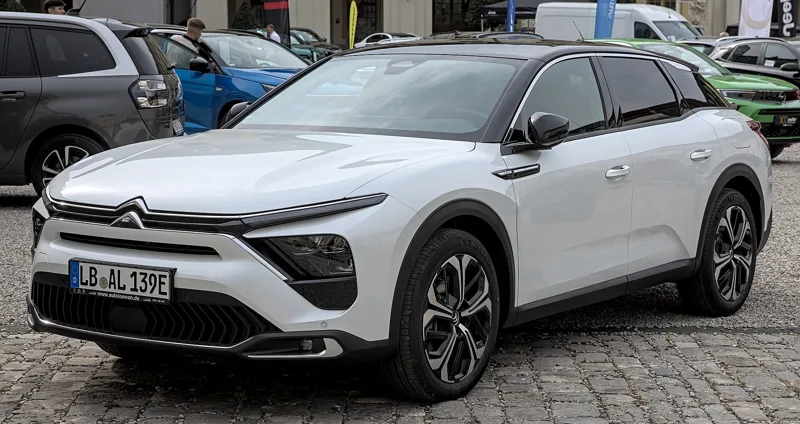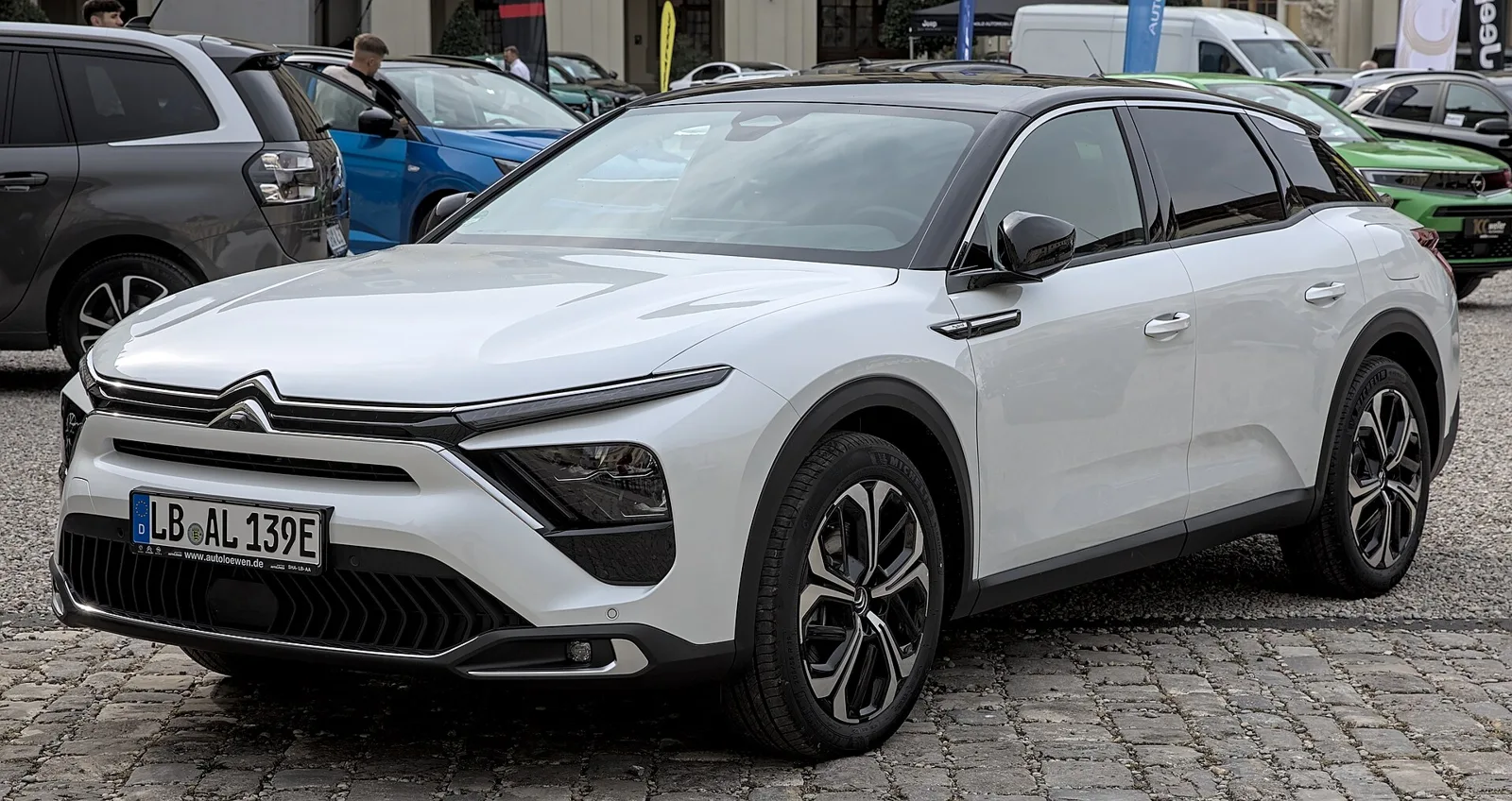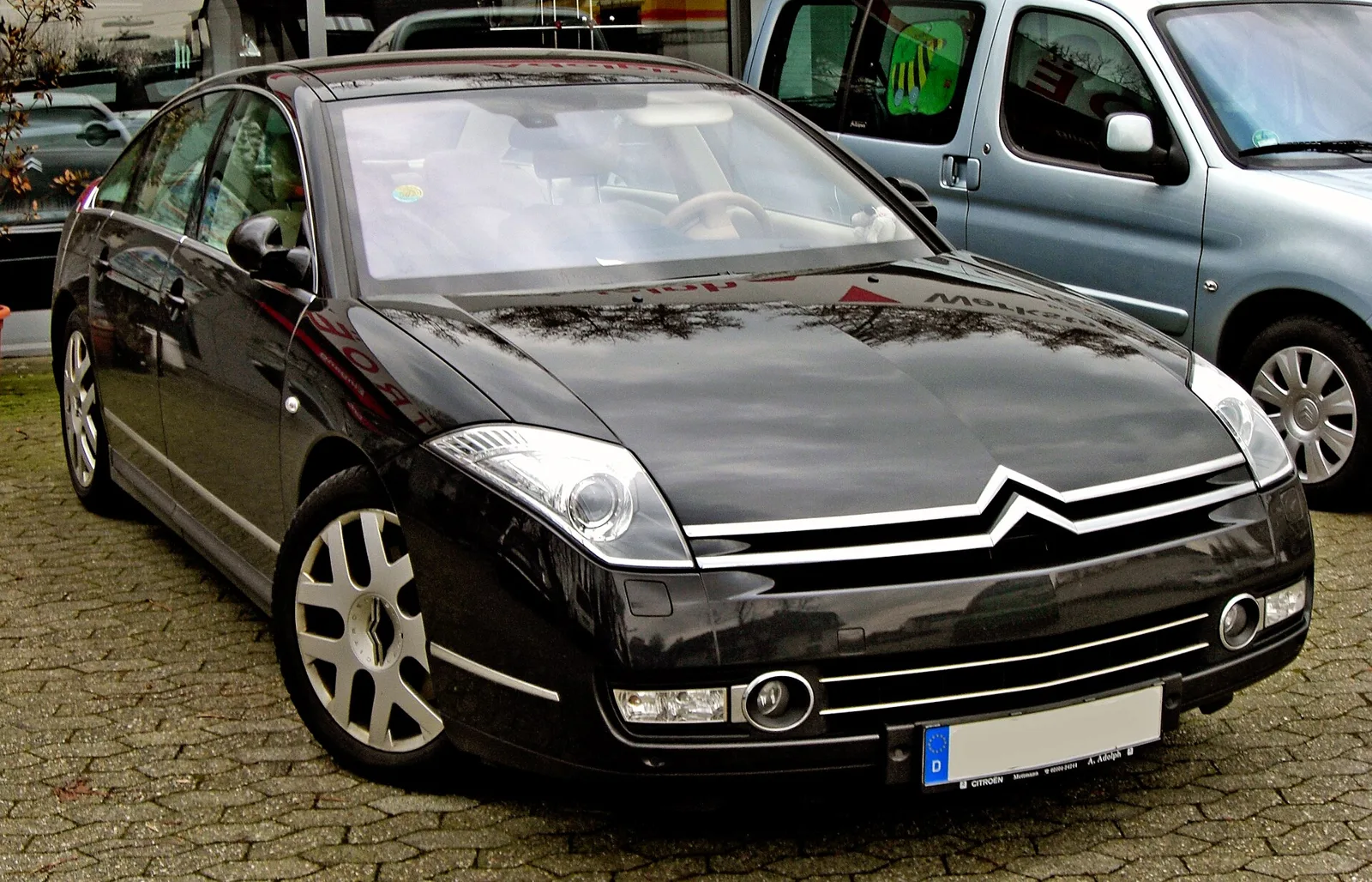
A fastback executive saloon with Hydractive suspension, a four-star pedestrian rating and a second life as a China-market model.
The Citroen C6 was an executive saloon built by Citroen from 2005 to 2012, inspired by the Lignage concept and intended to replace the XM. Production ended in December 2012 after 23,384 units, and a separate China-market C6 was built from 2016 to 2023.
Few executive cars of the 2000s looked as unconventional as the C6. Citroen hoped its innovative technology would set the car apart from the BMW 5 Series and the Audi A6, and the result was a fastback saloon that divided opinion.
Where did the Citroen C6 come from?
The C6 was inspired by the Citroen C6 Lignage prototype, first shown at the Geneva Motor Show in spring 1999. The concept's fastback shape carried into production, although the production car dropped the concept's rear-hinged doors.
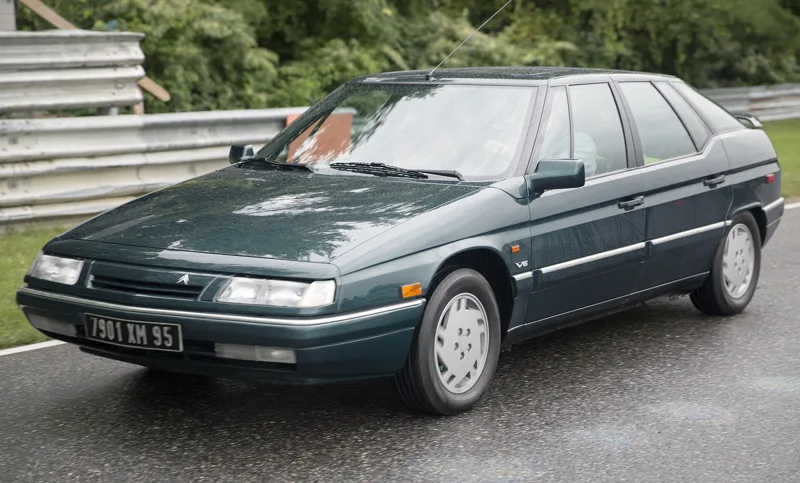
The C6 was meant to replace the XM, which was first produced in May 1989. Citroen aimed to launch the new car before the end of 2000, but the XM ceased production in June 2000 and the C6 was delayed.
The production car finally launched in November 2005, five years later than originally planned. The XM was a hatchback, while the C6 was a conventional saloon with a traditional trunk, which marked a clear break from its predecessor.
A fastback executive saloon that carried a Lignage concept into production, with Hydractive suspension and a pedestrian-friendly bonnet.
How was the C6 styled?
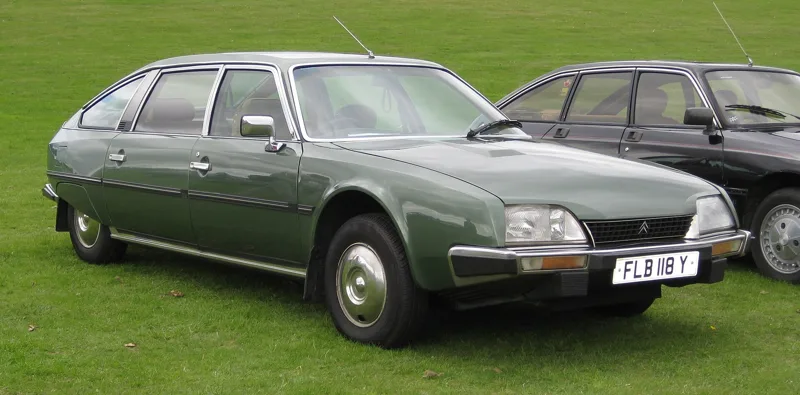
The C6 has a fastback saloon profile, which owes much to a concave rear window that resembles the Citroen CX. Unlike the XM, it is a conventional saloon with a traditional trunk rather than a hatchback. Its shape stood apart from the German saloons it was aimed at.
Reviewers were quick to describe the car in colourful terms. They called it a spaceship that rides on air, charmingly idiosyncratic and refreshingly different, which suggested that the design was more memorable than conventional.
The C6 was aimed as a stylish alternative to executive cars such as the BMW 5 Series and the Audi A6. Citroen put its innovation at the centre of the pitch, so the car's features mattered as much as its looks to the people who sold it.
What technology did the C6 offer?
The C6 offered a heads-up display, a lane departure warning system, xenon directional headlamps and Hydractive 3+ suspension with electronically controlled springing and damping. A rear spoiler adjusted itself automatically to speed and braking. Those features were the core of Citroen's hope for the car's selling point.
The xenon headlamps were also used on the C4 and C5, so that feature was not unique to the C6 range. The heads-up display and the lane warning system were more distinctive, and they gave the car a technology profile of its own.
Each feature reinforced the car's identity as a technology showcase. The C6 was judged as much on its equipment as on its appearance.
What engines did the C6 use?
The C6 used a 3.0 L ES9 V6 producing 211 PS (155 kW; 208 hp) and a 2.7 L V6 HDi diesel with 204 PS (150 kW; 201 hp). In October 2006 a 2.2 L HDi with 170 PS (125 kW; 168 hp) was added to the line-up.
The 2.2 HDi was a four-cylinder engine, and the same DW12 unit was used by Land Rover in the Freelander 2 and Range Rover Evoque, where it produced 150-190 PS.
In June 2009 the 2.7 HDi gave way to a new 3.0 L V6 HDi with 240 PS (177 kW; 237 hp). The diesels were paired with six-speed automatic gearboxes.
The 3.0 V6 petrol was discontinued in February 2009, which left the diesels as the main choice for buyers. That change marked the end of the petrol option in the European line-up.
How safe was the C6 for pedestrians?
The C6 was the first car to obtain four stars in the Euro NCAP pedestrian test. Its bonnet popped up by 65 mm using a pyrotechnic mechanism when a person or animal was struck, which opened a bigger space between the bonnet skin and the non-deformable engine parts below.
The bonnet mechanism was an unusual piece of engineering for an executive car. It showed that the C6 was designed to combine comfort with protection for people struck outside the vehicle, rather than only for its own occupants.
Euro NCAP's pedestrian test is separate from the occupant crash rating, so the four stars refer to protection for people outside the car. The C6 earned that result because of the design of its bonnet and the space beneath it.
How did the C6 ride and handle?
Car magazine tested a 2.7 L V6 in July 2007 and praised its waftability and comfortable interior, but it felt like a car the driver needed time to adjust to. Acceleration was described as effortless, though it was not up to the standards of similarly priced rivals such as the BMW 5 Series of the era.
The car's ride became the subject of one of the era's better-known television tests. On an episode of Top Gear, Jeremy Clarkson mounted a camera on the C6 and drove it across the infield of Towcester Racecourse.
Despite the bumps and potholes, the C6 kept the camera steady at 60 kilometres per hour (37 mph). A BMW 5 Series with the M Sport package could not keep its camera upright in the same test, which was a striking result for the Citroen's Hydractive system.
Who used the Citroen C6 officially?
The C6 became a prominent vehicle in the Elysee Palace fleet. Former presidents Jacques Chirac and Nicolas Sarkozy chose it as their official car, and Chirac used a pre-series car before the model was introduced to the public.
Francois Hollande, who succeeded Sarkozy, used a C6 for some official duties. That use showed that the car could fill a formal role as well as a technology showcase.
The state fleet connection gave the model a public profile beyond its showroom sales.
How many Citroen C6s were built?
Production ended in December 2012 after 23,384 units had been built. Citroen had expected sales of 20,000 per year across the model's lifespan, and the C6 never came close to that figure. Its volume lagged far behind expectations from the start.
Several model changes marked the later years. In July 2008 black was removed from the UK Exclusive configurator, and by October 2008 the manual transmission and the Lignage specification had been dropped.
Polar white replaced Deep Red in the colour range, and the NaviDrive system was renamed Concert Pack in October 2008. The 3.0 V6 petrol was discontinued in February 2009, and by 2010 only the 3.0 HDi (240) Exclusive remained in some markets, including the UK.
Right-hand drive production stopped in May 2012, and the car's replacement was named as the DS 9. The C6 ended its European career in December 2012, with the DS 9 taking over the flagship role.
What are the Citroen C6 specifications?
| Specification | Detail |
|---|---|
| Type | Executive car, fastback saloon |
| Years | 2005 to 2012 (Europe); 2016 to 2023 (China) |
| Inspiration | Citroen C6 Lignage concept, Geneva 1999 |
| Petrol | 3.0 L ES9 V6, 211 PS (155 kW; 208 hp) |
| Diesel | 2.7 L V6 HDi, 204 PS (150 kW; 201 hp); 2.2 L HDi, 170 PS (125 kW; 168 hp); 3.0 L V6 HDi, 240 PS (177 kW; 237 hp) |
| Gearbox | Six-speed automatic on the diesels |
| Pedestrian protection | Bonnet rises 65 mm; four Euro NCAP stars |
| Production | 23,384 units |
| Expected sales | 20,000 per year |
| China platform | PSA PF3; prices from 189,900 to 279,900 yuan |
| Replacement | DS 9 |