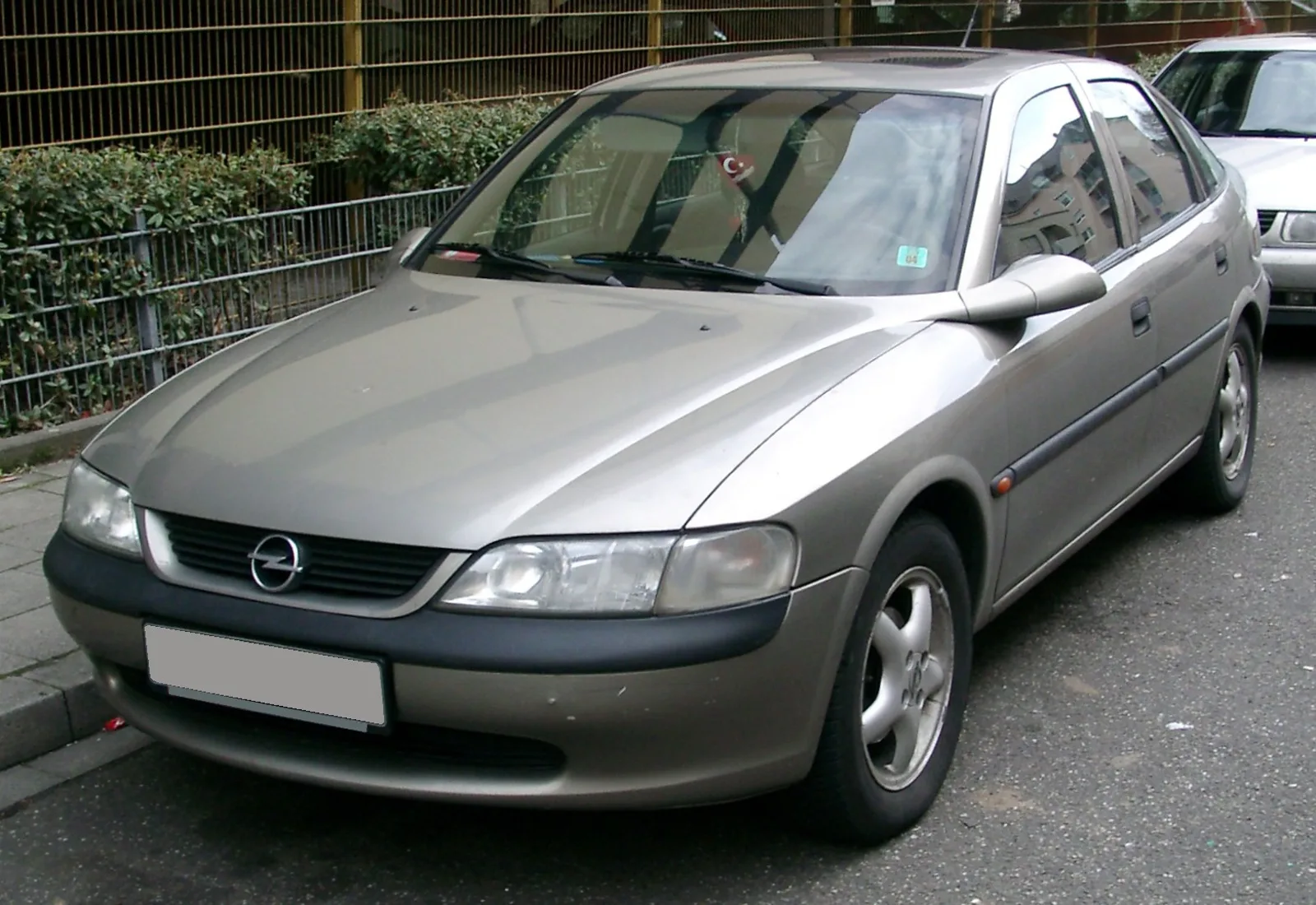
A mid-size Opel with streamlined mirror housings, a Caravan estate, a 1999 facelift and Irmscher-tuned i500 and i30 specials, sold from 1995 to 2002.
The Opel Vectra B was a mid-size Opel from October 1995 until the Vectra C arrived in April 2002. It came as a notchback, hatchback and Caravan estate, with petrol and diesel engines and tuned i500 and i30 specials.
Opel introduced the Vectra B in October 1995 as the successor to the Vectra A, and the Vectra C took over in April 2002. Notchback and hatchback bodies came first, and a Caravan estate arrived about a year later, the first Opel mid-size estate since 1975. Its streamlined exterior mirror housings are one of its most recognisable details.
When did the Vectra B reach showrooms?
In October 1995 the car reached showrooms in notchback saloon and hatchback forms. Over two decades after the Ascona A, which had been Opel's only mid-size estate until then, a Caravan returned in September 1996. Opel gave the car a comprehensive facelift in February 1999, and the revised version was sold from March that year.
A mid-size Opel that sold well for years but never took first place in its segment.
Which equipment lines were offered?
Between 1995 and 1999 the Vectra was sold in a series of equipment lines. The plain Vectra name covered versions such as BelAir, Beauty, Komfort and Hattrick. Above them came the CD, the CD Sport, the Sport, and the CD Exklusiv, also called CDX. The CD Sport ran from October 1995 to January 1997 and was available with the 1.8 16V engine, as was the Sport and the CDX.
What did the base Vectra come with?
The base car had the 1.6-litre 8V X16SZR engine, rated 55 kW (75 PS; 74 hp). Standard fittings were 14-inch hubcapped steel wheels, plain unpainted door handles and manual windows. A driver information display also came as standard, reporting the clock, calendar, outside temperature and radio station.
An optional multi-information display offered a stopwatch, both long-term and momentary fuel readings, a trip odometer and a range readout in kilometres. The on-board computer could also warn of low coolant or low engine oil, and a CHECK warning lamp sat at the bottom right.
How did the CD and Sport trims differ?
The CD came with higher-grade interior upholstery in grey or anthracite, the Twinkle cloth, and leather in black or cognac was available for an extra charge. The CD Sport built on the CD from the factory, adding a CFC-free air conditioner, 15-inch Pentaline alloy wheels and tinted indicators and reversing lights as standard. Its chassis was the CD's, with an anthracite sport upholstery trimmed in red and blue stripes, called Lightning.
From 1997 the Sport became a separate version, and some of its tuning came from components of the in-house tuner Irmscher. Those cars rolled on 205/55 R 16 tyres, fitted to twin-spoke alloys measuring 7J x 16, and a sport chassis sat 30 mm lower than the other lines.
What changed in the Sport from 1998?
From the 1998 model year the Sport had Recaro sport seats as standard, with Metropolis upholstery before the facelift and Dakar after it. The cockpit gained a titanium-look finish, and the speedometer needles were coloured orange. Two sport chassis were fitted, depending on build date: the Irmscher unit, 30 mm lower with red springs, from January 1997 to February 1998, and the original Opel sport chassis, 20 mm lower with black springs, from March 1998 to April 2002.
From spring 1999 the Sport was fitted with a compact three-spoke wheel, whereas the other lines kept the four-spoke unit, trimmed in leather from the CD upward. Starting with model year 2001, the sport car arrived with wider-styled bumpers at both ends, part-leather sports seats and 17-inch alloy wheels, developed with the finisher Zender.
What did the CD Exklusiv offer?
The CD Exklusiv was the top equipment line. Automatic climate control, high-quality upholstery and seat heating came as standard, which gave it the highest comfort of any version. It rode on 15-inch five-spoke alloys measuring 6J x 15 with 195/65 R 15 tyres. For an extra charge, buyers could order the 16-inch twin-spoke wheels from the Sport instead.
Every car from the Sport upward carried carbon-look film on its B- and C-pillars when new. The basic lines had body-coloured pillars and white indicator and reversing lights until the facelift, when tinted lamps became standard across the range.
What did the 1999 facelift change?
Opel revised about 3,000 parts in the 1999 update. The most visible changes were these:
- New front and rear sections, with clear-lens headlights and body-coloured bumpers
- Xenon headlights with automatic levelling, available for an extra charge
- New paint colours, larger exterior mirrors and body-coloured side mouldings
- A new instrument cluster, switch unit and chrome door handles inside
- Rear lights with a curved edge in the glass, fitted to the hatchback and notchback only
- New base tyres of 195/65 R 15 on five-hole wheel hubs
The equipment names changed too. The Vectra CD became the Comfort, and the former CD Exklusiv became the Elegance.
Which petrol engines were fitted?
The 1.8 16V X18XE, producing 85 kW (116 PS; 114 hp), borrowed its design from the bigger 2.0 16V. It was replaced, for example, by the X18XE1. The 2.0 16V X20XEV, rated 100 kW (136 PS; 134 hp), was driven by a toothed belt, and from August 2000 it gave way to the chain-driven 2.2 16V Z22SE at 108 kW (147 PS; 145 hp).
Other revisions included the diesel range, which gained new units such as the 2.2 DTI 16V. Model year 2001 also brought partial revisions, replacements and improvements to the remaining engines.
How did the diesel engines perform?
The direct-injection diesels all used a maintenance-free timing chain, so no costly belt change was needed. Their fuel figures beat those of the TDI engines from the Volkswagen group, although at first they gave less torque and power. Early problems were reported with turbochargers and oil use, and repeatedly with the air mass meters and the VP44 injection pumps from Bosch. The engines themselves are regarded as robust and long-lived.
The 1.7 TD was supplied by the Japanese maker Isuzu. Both the 2.0 and the 2.2-litre direct-injection units were homegrown designs built in Kaiserslautern, and buyers could add side airbags from July 1997 and xenon headlights from August 1999.
How did the i500, i30 and iS3 compare?
| Model | Engine | Power | Notes |
|---|---|---|---|
| Vectra i500 | 2.5-litre V6 (X25XEI) | 143 kW (195 PS; 192 hp) | Built April 1998 to August 2000 |
| Vectra i30 | 3.0-litre V6 (X30XEI) | 162 kW (220 PS; 217 hp) | Only 23 estates built |
| iS3 | 3.0-litre V6 | 162 kW (220 PS; 217 hp) | Shown at the Essen Motor Show |
Irmscher reworked the i500 with skirts front and rear, side sills and a rear spoiler, styled after the STW championship of the day. Its interior had titanium-coloured console trims and an Irmscher sport steering wheel. A sport chassis lowered the body by 20 mm, and the car was offered as a saloon or an estate.
The i30 was a limited special for the 30th anniversary of Irmscher. Planners had intended 30 cars, yet just 23 estates were built and sold. New, it cost roughly 90,000 Deutsche Mark (DM), with the figure varying by specification. Two saloons were also built, the first, from 1996, served as the test car for the i500 and later for the i30.
The iS3, a revised model in Star Silver, was shown at the Essen Motor Show. Apart from the radiator grille and 18-inch wheels it looked like the i500, and its interior could be personalised with leather trims in several colours. In Britain the Vectra SRi followed the i500 idea, and it had 17-inch alloy wheels with six spokes in place of the BBS rims.
Which other markets sold the Vectra?
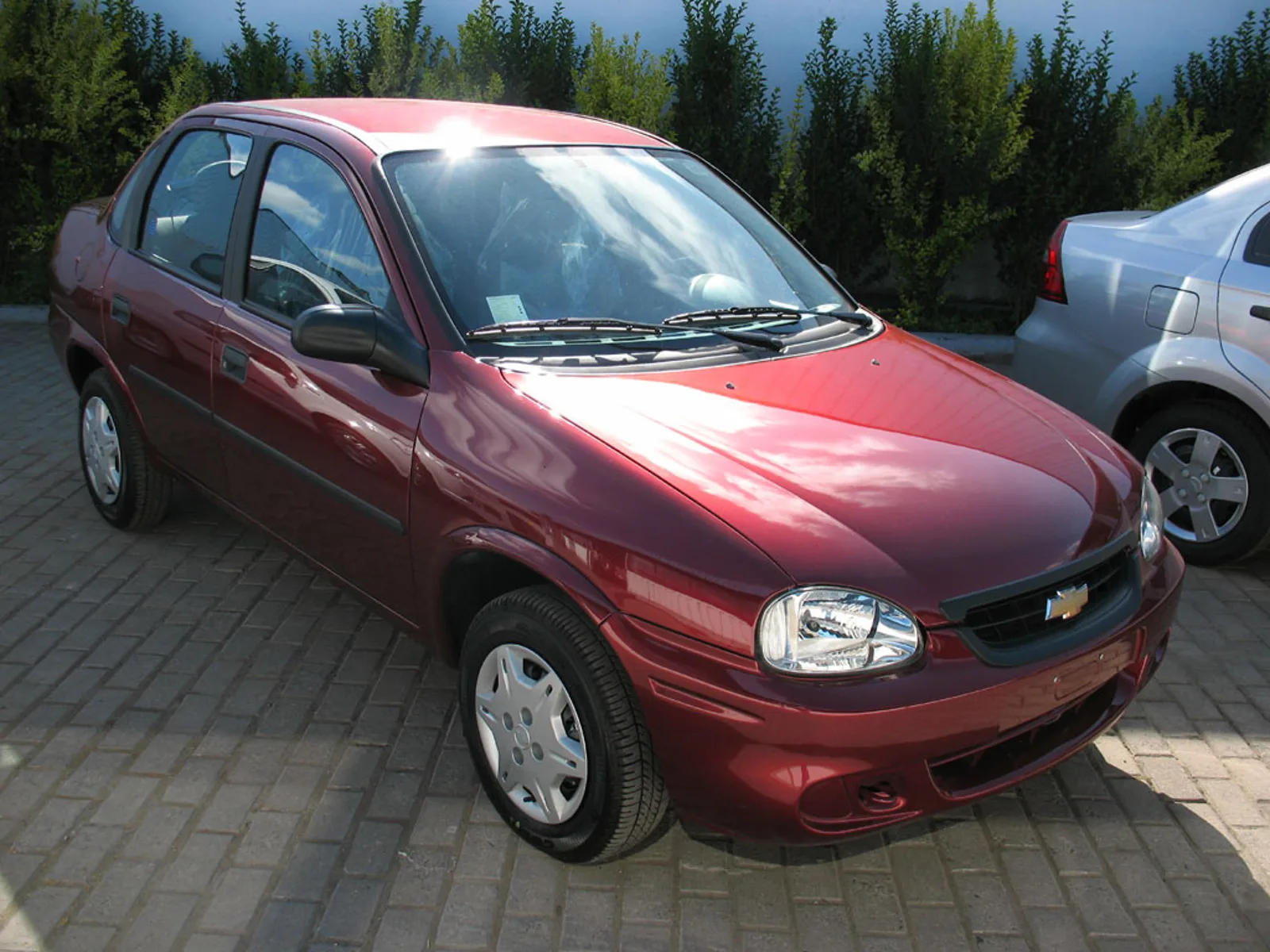
The Saturn L-Series, built for North American buyers, came from the Vectra B design in both four-door saloon and five-door estate forms. Australian buyers knew it as the Holden Vectra, British buyers as the Vauxhall Vectra, and Brazilian buyers as the Chevrolet Vectra. Grilles and badges were the main differences, although a few details also varied, such as clear-lens rear lights on the Chevrolet.
How well did the Vectra B sell?
Its best year was 1997, when 140,964 units were sold. In 2001, the last full year of sales, the total was 47,171. For a long time the Vectra B stayed in the top ten of German registration figures, although like its predecessor it never reached first place in the mid-size segment.