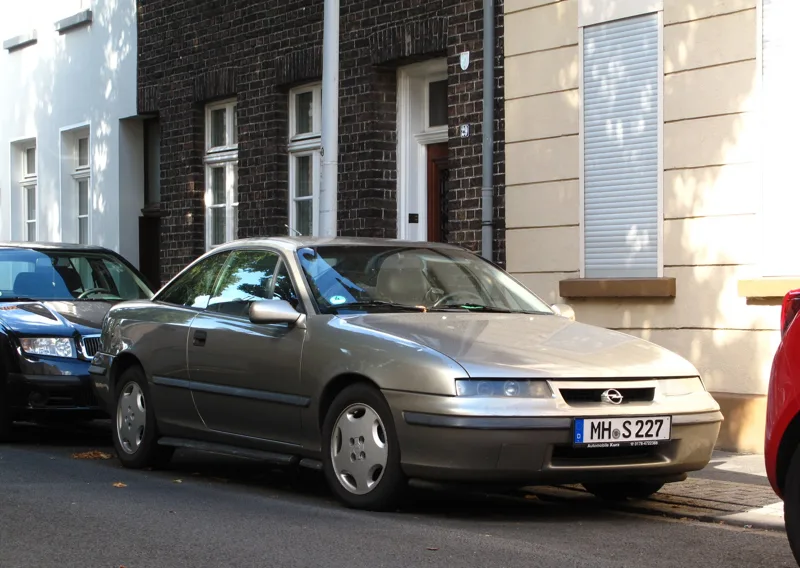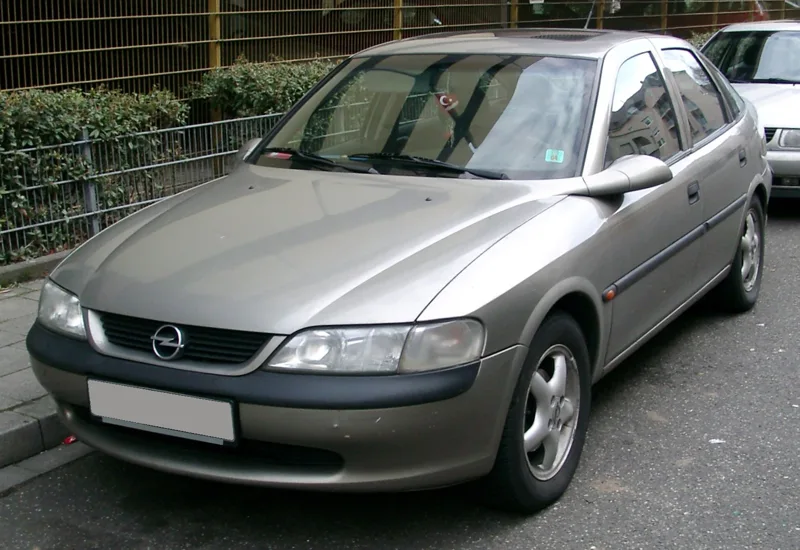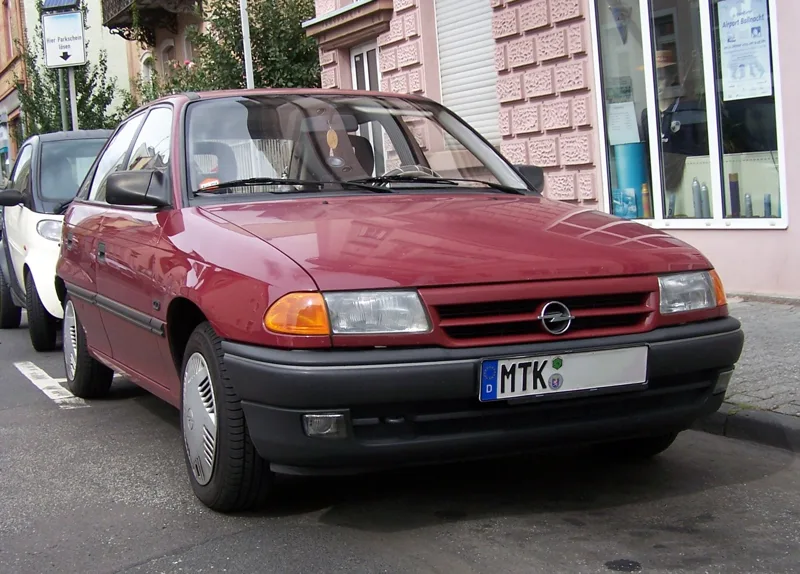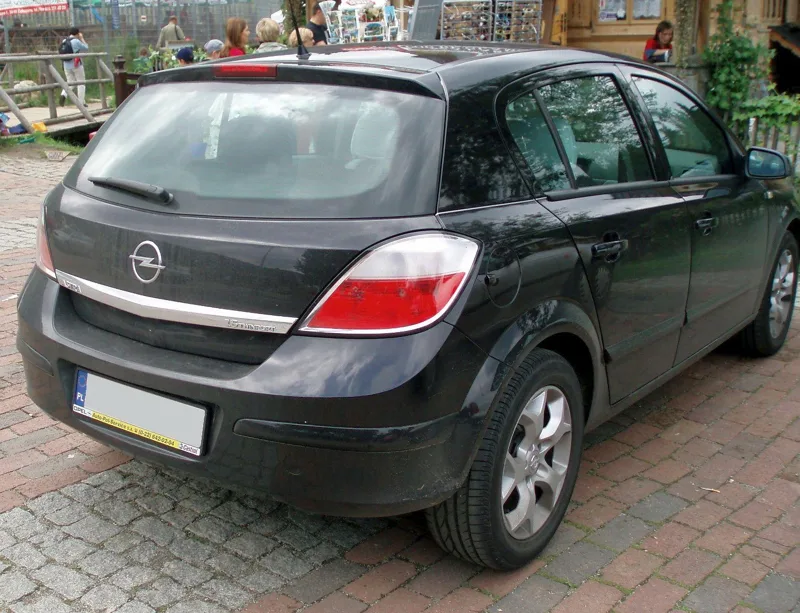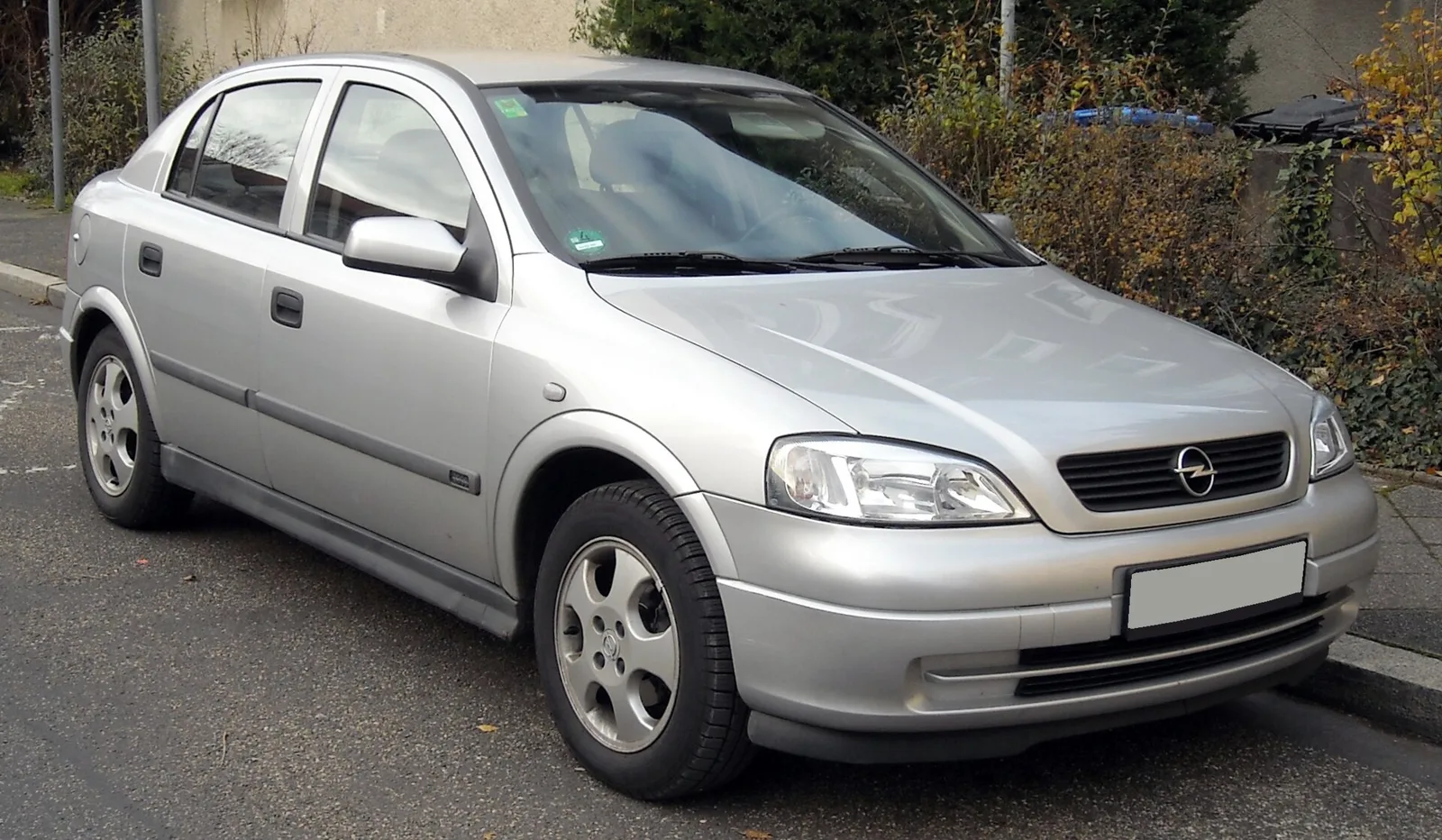
Built in Germany from 1998 to 2004, the Astra G spawned a Bertone coupe and convertible, a run of special editions and the OPC performance models.
The Opel Astra G was a compact-class Opel built in Germany from March 1998 to December 2004, succeeded by the Astra H. It was also sold as the Holden Astra TS and the Vauxhall Astra Mk4, while its coupe and convertible came from the Italian coachbuilder Bertone.
The Opel Astra G was a compact car that Opel built in Germany for almost seven years, and it spread far beyond Europe under other badges. Its family included a Bertone-built coupe, an open-top version and a line of sporty OPC models.
Where did the Astra G come from?
The Astra G followed the Astra F in Opel's compact range. Production in Germany ran from March 1998 to December 2004, and the Astra H followed from 2004. Abroad the same car was sold under other names. The Holden Astra TS in Australia and the Vauxhall Astra Mk4 in Great Britain shared its design between 1998 and 2004.
Buyers in a number of Arab countries could pick a hatchback, a notchback or an estate. The Arab-market estate had raised ground clearance, and in the Philippines only the notchback was offered.
In Egypt the notchback was the only body style on offer, built from 2002 to 2009 by General Motors Egypt. Several countries of Central and Eastern Europe received a cheaper alternative from October 2003, the Astra Classic II, which came as hatchback, notchback and estate. Gleiwitz in Poland built the Classic II until August 2009.
General Motors sold a revised Astra G in Argentina, Brazil and Uruguay under the Chevrolet Astra name. In Russia a partly modified notchback was built as the Chevrolet Viva by GM-AvtoVAZ in Toljatti from September 2004. That work stopped in March 2008, because the sales figures were too weak to keep it going.
The Opel-badged cars built in continental Europe, including the roughly 250,000 Classic II examples built in Poland, reached 3.95 million by July 2008. Licence-built cars in Great Britain and outside Europe add to the total, but nobody can state that figure precisely.
A compact Astra with Bertone coupe and convertible versions, and OPC models carrying the sporting badge.
Which body styles did the Astra G come in?
The Astra G came as a three- and five-door hatchback, a four-door notchback, a five-door estate, a two-door coupe, a two-door convertible and a van. Each body had its own production window, from March 1998 for the hatchback and estate to December 2005 for the convertible.
Regional tastes split sharply. The notchback never sold well in Germany or Western Europe and is correspondingly rare there, while it was far more common in Eastern Europe and in several countries outside Europe.
The van was never officially offered in Germany, although some examples serve with public authorities. It was based on the Caravan estate, but from the B-pillar back there were neither doors nor windows. Dutch-market vans came with a raised roof.
What was the Astra G coupe like?
The coupe was built from March 2000 at Grugliasco, near Turin, by Bertone, and Opel described it as the successor to the Kadett C Coupe. It was often seen as an unofficial replacement for the Calibra, but Opel's own position was the Kadett link.
Bertone's name appeared on the side panels and on the sill trims as standard. From November 2000 the rear badge no longer read Astra Coupe but simply Coupe.
The coupe line-up combined four petrol engines with one diesel. The 1.6-litre, which arrived only in 2004, produced 76 kW (103 PS; 102 hp). The 1.8-litre came with 85 or 92 kW (116 or 125 PS; 114 or 123 hp), the 2.2-litre gave 108 kW (147 PS; 145 hp), and the 2.0-litre turbo reached between 190 and 200 PS, or 188 to 197 hp, depending on tune.
The diesel option was a 2.2-litre making 92 kW (125 PS; 123 hp), available from July 2002. Every coupe engine came with five-hole wheel fixings, which set the coupe apart from other body styles. The five-speed manual was standard, and a four-speed automatic was optional on the 2.2-litre petrol.
The 2.2-litre petrol engine was newly developed by GM. Designated Z22SE/L61, it also went into the convertible and the Opel Speedster, and it was the first engine of the successful L850 family.
The 2.0-litre turbo came only with 17-inch five-spoke alloy wheels and received a larger front brake as standard. Air conditioning was fitted as standard but could be deleted, and automatic climate control arrived with model year 2002.
Only four colours were offered in every model year: Carbon Black, Europa Blue, Magma Red and Chianti Red. The rest of the palette, from Star Silver to Sunrise Orange, came and went.
What trim lines and special editions were offered?
The everyday trim levels were Base, Comfort, NJoy, Sportive (later Sport) and Eco for the 1.2, with Eco 4 for the 1.7 DTI (1.7 CDTI after the facelift), plus Selection, Elegance and, from 2002, Fresh. As standard, the car had power steering, four airbags (none or only two on export cars), ABS (partly absent on export cars) and an immobiliser.
Some versions had it as standard and others as an extra: air conditioning, electric front windows, electrically adjusted mirrors, a radio, central locking with remote control, xenon lights and a multi-information display. A surcharge bought automatic climate control, a navigation system, traction control, xenon headlamps or an electronic four-speed automatic.
The coupe and convertible had their own trim lines. Linea Blu and Linea Rossa added coloured leather and special lettering, and Daytona and Silverstone followed from October 2003.
Several special editions appeared along the way. The FC Bayern Muenchen Edition was limited to 500 cars from February 2000. Sportsline cars were based on the Sportive and tuned at the factory by the firm Irmscher. The Edition Bild marked the 50th birthday of the Bild newspaper from 2002, and a Eurosport version went on sale in Austria in model year 2002.
Linea Blu ran from July 2001 to June 2004. Its part-leather seats combined black leather with blue Alcantara, and it added blue belts, blue-edged footwell mats and Linea Blu lettering on the sill trims. It was not available with the 1.6-litre engine.
Linea Rossa followed from July 2002 to November 2004, with signal-red and black leather seats, front seat heating and a sport leather steering wheel with a red insert. Its exterior colours were limited to Magma Red, Chianti Red, Light Silver, Star Silver and Carbon Black.
Daytona, named after the Daytona International Speedway in Florida, and Silverstone, named after the circuit in the United Kingdom, both ran from October 2003 to November 2004. Each had 18-inch wheels with 11 spokes and partial leather seats, and neither could be had with the 2.2-litre diesel.
The 90 Jahre Bertone edition, marking the company's anniversary, ran from December 2002 to March 2003. It had cashmere-beige leather, BBS wheels and an exclusive China Blue paint. The DTM Edition added a body kit with Irmscher-style alloys, a twin-outlet sports exhaust and wheel-arch extensions.
What was the convertible like?
The convertible was a four-seater with a fabric roof, built from March 2001 to a design by Bertone. The roof folded into a fixed well, so the boot was smaller than the coupe's, and the car opened or closed in about 25 seconds with the vehicle stationary and the handbrake applied.
Four petrol engines were offered, from a 1.6-litre with 74/76 kW (101/103 PS; 99/102 hp) up to a 2.0-litre turbo with 141/147 kW (192/200 PS; 189/197 hp). The diesel was the same 2.2-litre with 92 kW (125 PS; 123 hp).
The electric roof was standard on the 2.2-litre and 2.0-litre turbo models and could be ordered as an extra elsewhere. It could be operated remotely through the key-based central locking, and a single switch opened or closed all four side windows together.
Opel advertised the Linea Rossa convertible as haute couture for elegant drivers. Its Daytona sibling was introduced with the slogan Open for new legends, and the Silverstone as a homage to a myth.
How did the OPC performance cars work?
OPC, which stood for Opel Performance Center, replaced the GSi badge for the time being in 1999. The first Astra OPC, the OPC 1, was a homologation special limited to 3,000 cars, with suspension and engine components from motorsport, and an engine output 18 kW (24 PS) above the standard unit.
The OPC 1 got a 16-inch brake system with brake cooling, changed front wishbones and more direct power steering. Its rear axle was a different unit, with track settings matched to the front axle for a single driver seated front left.
Opel's motorsport department reworked the 2.0-litre 16V engine. It rose from 100 kW to 118 kW, or from 136 PS to 160 PS. A branched exhaust manifold, forged pistons, camshafts with revised timing, larger ports and new software were all part of the job, along with an oil cooler and a coolant thermostat that opened at 82 degrees C.
The outside changed less at first. A large rear wing gave zero rear-axle lift at a drag coefficient of 0.30, the same figure as the Porsche 911 GT3. The OPC 1 also had a revised front lip, end silencers, 17-inch BBS wheels and OPC mirrors. The body sat 20 mm lower.
Inside, the choice was between Recaro sports seats with no side airbag and height-adjustable Opel sports seats that did have side airbags, plus a lumbar support. Blue belts, Skyline Blue seat covers and numbered badges on the centre console marked the car out.
Germany offered two versions. The Touring, with a theft alarm, electric windows, air conditioning, an adjustable steering column, remote central locking and a radio, cost 46,450 DM (23,749.51 euros). The Sport lacked that equipment, weighed 50 kg less and cost 42,900 DM (21,934.42 euros). Both had the short-ratio F23 gearbox and traction control.
How did the OPC 2 and the facelift change the car?
From September 2002 the facelift brought a second OPC, the OPC 2, which had no production limit. It had new front and rear aprons, side sills, a sports grille and darkened headlights, and the body shape set it apart from the standard car.
The darkened headlights also appeared on the more ordinary Astra variants, so the change was not limited to the performance models.
What was the OPC X-treme?
The Astra OPC X-treme was a road supercar that Opel Performance Center built on the basis of its DTM race car. It stayed a one-off, and it never went into series production. No second example was made.
Opel Astra G specifications
| Specification | Detail |
|---|---|
| Built | March 1998 to December 2004 |
| Successor | Opel Astra H, from 2004 |
| Coupe 1.6-litre | 76 kW (103 PS; 102 hp), 2004 only |
| Coupe 1.8-litre | 85 or 92 kW (116 or 125 PS; 114 or 123 hp) |
| Coupe 2.2-litre petrol | 108 kW (147 PS; 145 hp) |
| Coupe 2.0-litre turbo | 190, 192 or 200 PS (140, 141 or 147 kW) |
| Coupe diesel, 2.2-litre | 92 kW (125 PS; 123 hp), from July 2002 |
| OPC 1 engine gain | 18 kW (24 PS) |
| OPC 1 production | 3,000 units, limited |
| Rust-through warranty | 12 years |
| Continental European output | 3.95 million by July 2008 |