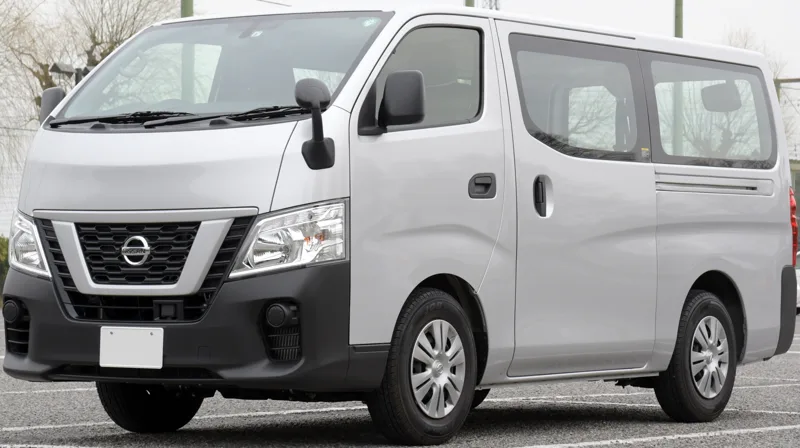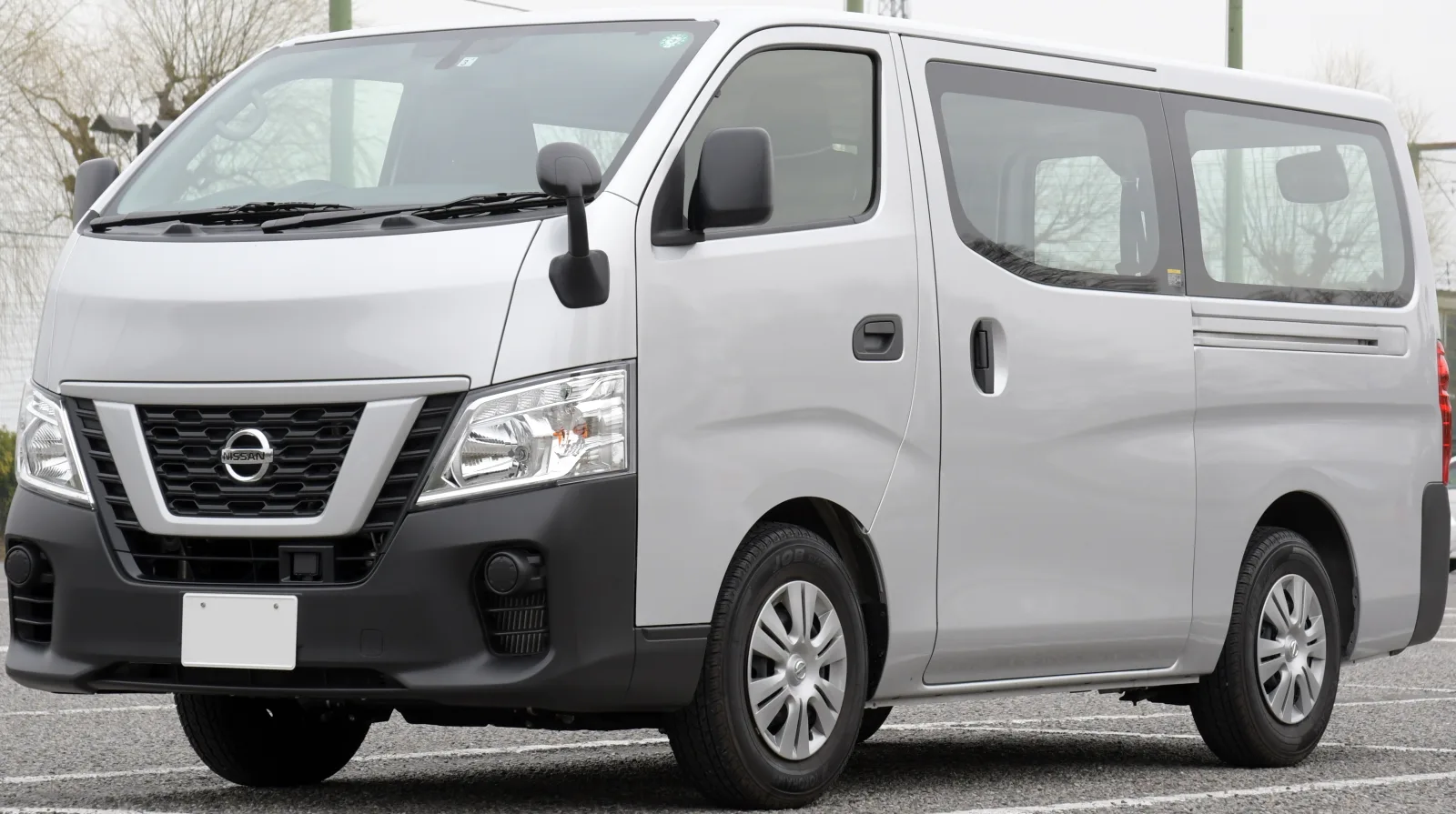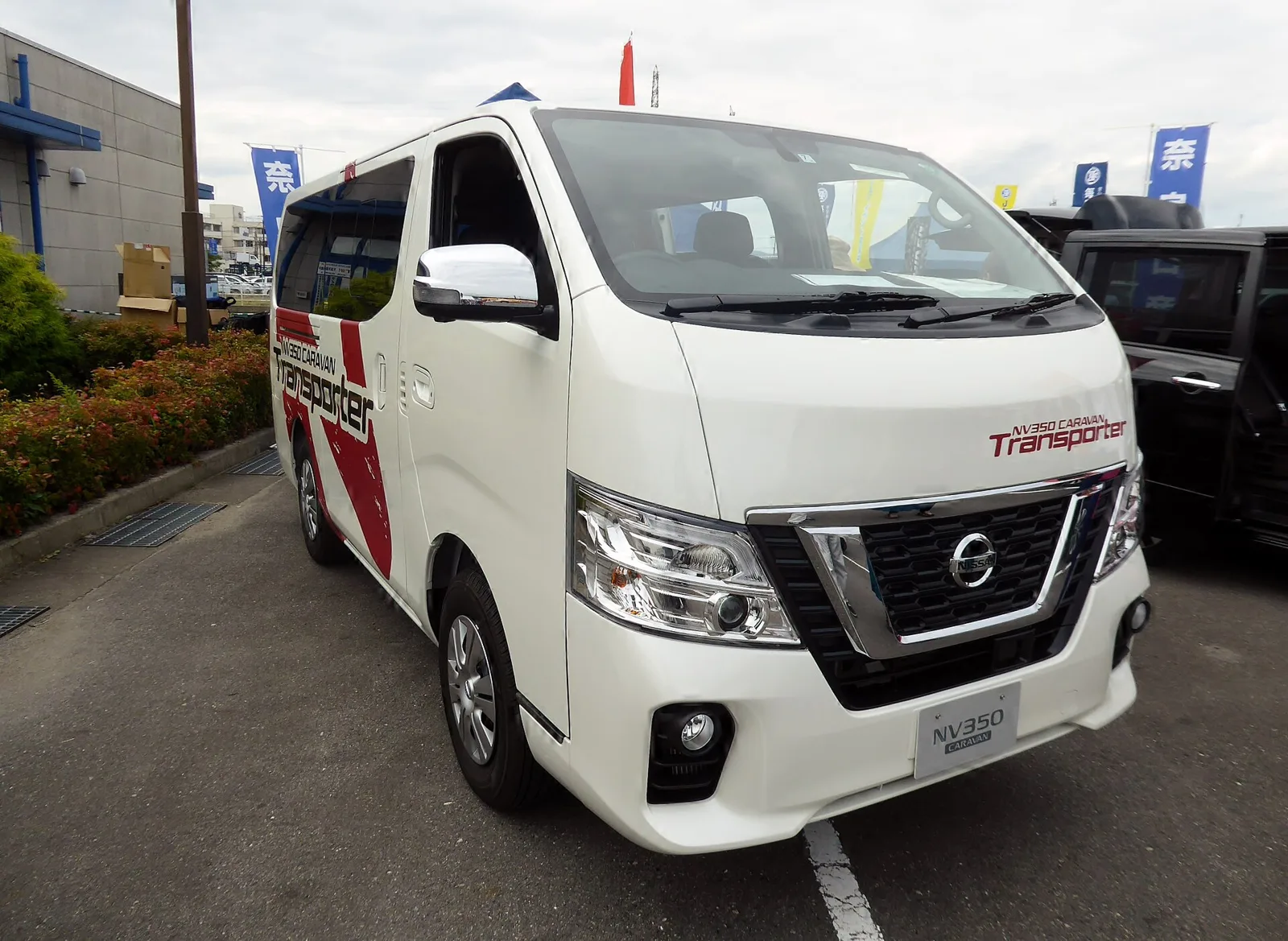
Nissan's fifth-generation Caravan arrived in 2012 as the NV350, aimed squarely at the Toyota HiAce, then returned to the Caravan name in 2021 and 2022.
The NV350 Caravan was Nissan's fifth-generation commercial van, launched in June 2012 and aimed at the Toyota HiAce. It had a diesel with a NOx trap, a wide-body version and a 14-seat minibus, and it returned to the Caravan name in 2021.
The NV350 Caravan was Nissan Motor's commercial van from 2012, the fifth generation of the Caravan series. Its developers were told to beat the Toyota HiAce in every respect, and it went through several mid-cycle changes before the name returned to plain Caravan in 2021 and 2022.
Why did Nissan renew the Caravan in 2012?
Nissan announced a full model change on 15 June 2012, the first in 11 years, and sold the new van from the same day. Petrol long-body, standard-roof vans came first, while the diesel and super-long, high-roof versions followed on 13 July. The change also renamed the model NV350 Caravan, the third NV-prefixed name in Japan after the NV200 and NV100.
The chief operating officer, Toshiyuki Shiga, told the developers to outdo the Toyota HiAce in every respect. The HiAce led the class and had been a long-standing rival, and Nissan set out to become the top brand in small commercial vehicles with a 40% share of the segment.
A van built to beat the Toyota HiAce on every front, with a diesel carrying a lean NOx trap catalyst.
What was new about the diesel?
The diesel used an improved YD25DDTi engine, sold under Nissan's clean diesel technology banner. Changes to the turbocharger let it build boost from low revs, which gave ample torque at the bottom of the range. Emissions were handled by an EGR cooler with a bypass and by a lean NOx trap catalyst, the first of its kind in a commercial vehicle.
A parallel-port cylinder head improved diesel economy. Nissan also fitted the diesel to the PURE DRIVE line, Nissan's engine-evolution eco-car series, making the van the eighth model in that range and the first commercial vehicle to join it. A PURE DRIVE emblem sits at the lower right of the rear.
How much did the petrol engines improve?
The petrol versions kept the QR20DE and QR25DE engines of the late-model previous generation. Economy rose through alternator regeneration control, reduced friction and a low idle setting. Almost every van, with the exception of some 5-speed manual models, reached the 2015 fuel economy standard.
The basic transmission was a 5-speed automatic. The 2WD DX and VX vans could also be specified with a 5-speed manual, and four-wheel-drive models were never offered with one.
What comfort and convenience features came with the top vans?
Both the Premium GX van and the GX wagon came with a smart key and push-button starting. For a cab-over commercial vehicle that was a first, and the parking brake was redesigned with ease of use and sideways movement in mind. It is operated by a foot pedal on AT models and by a stick on MT models.
Every version gained a vehicle information display. It shows average fuel economy and remaining range, and on the Premium GX van and GX wagon it is a colour screen. Four-wheel-drive versions never offered a manual gearbox from the start.
Where was the van built?
Production moved to Nissan Shatai Kyushu in 2012, a decision aimed at keeping cost increases down under a strong yen. The plant suited the parts routes, including imports. About half of the parts by share came from suppliers in Kyushu, and about 40% from neighbouring countries, of which roughly 20% of the total came from South Korea.
Autech Japan also produced a custom model, the Rider, with its own front styling, in van and wagon form. The Rider Premium GX van offered an interior package with genuine-leather steering and waterproof seat fabric.
What did the wide-body version add?
A wide-body version was added on 7 December 2012. Based on the existing super-long body, the van offered 8,400 litres of cargo space with three people on board. The same body also served as a 14-seat minibus, which needs a medium or large vehicle licence to drive.
The wide-body van had one grade, the DX, with four doors, six seats, a 5-speed automatic and a low floor. The minibus came in DX and GX grades, and both types were offered with a 2.5-litre (153 cu in) petrol engine and with diesel. The van DX wide body was offered with 2WD only in petrol form.
The Chrome Gear package went on sale on 23 January 2013 on the Premium GX and the wide-body DX. It added 15-inch aluminium wheels, power-folding chrome door mirrors, waterproof seat fabric and a genuine-leather three-spoke steering wheel.
Which special editions and Autech versions followed?
A Premium GX Chrome Gear Package Version Black went on sale on 25 November 2013. It kept the Chrome Gear equipment, blacked out the grille and back door finisher, and added bi-xenon headlamps with LED position lamps and automatic levelling, all at a price set to make it easier to buy.
Autech Japan announced the Rider Black Line and the Enchante transport-type minibus GX on 5 December 2014. The Rider Black Line used dark chrome parts, with LED daytime running lights fitted as standard. The Enchante minibus added seats for 14 people to a line that had been a 10-seat wagon, with auto steps, orange grab handles and an automatic sliding door.
Later specials included the Transporter in May 2015, based on the Premium GX, with vinyl flooring as standard. The Premium GX Urban Chrome arrived on 21 August 2019 with dedicated dark chrome, 15-inch alloy wheels and LED headlamps. The Premium GX BLACK GEAR came on 10 November 2020 with a black interior for the first time.
What did the 2014 child-care vehicle receive?
In November 2014 Nissan revised the child-care vehicle built on the coach DX and the super-long, high-roof van DX. The changes followed the guidelines on the safety of vehicles carrying young children. The seatback was made taller, cushioning was added to its rear face, and the driver's guard bar and grab handles were reshaped with protective pads.
The seat cushion fabric was changed to match the Nakayoshi Animal Band pattern used on the seatback. Owners of cars already on the road could buy a cushioned seat half-cover and a guard bar with protective pads, which Nissan announced at the same time. The updated vehicle went on sale on 27 January 2015.
How did the safety kit grow in 2016 and 2017?
On 26 January 2016 Nissan announced an Emergency Brake Package for the 2WD, long-body, low-floor AT vans. It combined collision damage mitigation braking, a first in the small-goods 4-number van class, with VDC and hill start assist. The third-generation NV100 Clipper, built as an OEM version of the Suzuki Every, had already adopted the same system.
The change on 25 November 2016 made the emergency brake and VDC standard on those vans. The wagon and minibus gained VDC across the range, and the 5-speed automatic cars received night illumination for the shift indicator.
The 13 July 2017 mid-cycle change went further. The Intelligent Emergency Brake, VDC with traction control and hill start assist all became standard on every van. An Intelligent Around View Monitor with moving-object detection was offered as a manufacturer's option, the first such system in the 4-number van class. The Premium GX van and the wagon and minibus also gained a back door auto-closer and automatic air conditioning with a rear cooler.
Who else sold the van?
Nissan supplied the van to other makers. Isuzu began OEM supply of the second-generation Como on 10 July 2012, though the Como lacked some equipment, such as the intelligent key and full wheel covers. Supply stopped in September 2017 during the model change and resumed in July 2018 once the Como had been upgraded.
On 3 October 2014 Nissan signed a formal OEM contract with Mitsubishi Fuso Truck and Bus. The overseas NV350 URVAN was to be sold to Mitsubishi Fuso for the Middle East as the Canter Van, a model made only for overseas markets.
How did the name return to Caravan?
On 20 October 2021 the petrol vans received a mid-cycle change, and the model name returned to Caravan. That was about 9 years and 4 months after the full model change, and it left the van range with diesel models only. The wagon and minibus moved fully to the Caravan name.
On 28 February 2022 production of the diesel vans stopped, in step with the announcement of a diesel mid-cycle change. That finished the move back to Caravan, roughly nine years and eight months after the fifth-generation full model change.
NV350 Caravan milestones
| Date | Change |
|---|---|
| 15 June 2012 | Full model change and renaming to NV350 Caravan; petrol vans on sale first |
| 13 July 2012 | Diesel and super-long, high-roof versions on sale |
| 7 December 2012 | Wide-body van and 14-seat minibus added |
| 25 November 2013 | Premium GX Chrome Gear Package Version Black |
| 26 January 2016 | Emergency Brake Package for 2WD AT vans |
| 13 July 2017 | Mid-cycle change; Intelligent Around View Monitor option |
| 26 November 2018 | Super-long wide body becomes base for the Paramedic ambulance |
| 24 September 2020 | Wagon engine upgrade for WLTC economy and emissions; Multi Bed added |
| 20 October 2021 | Petrol vans return to the Caravan name |
| 28 February 2022 | Diesel van production ends |
What changed in colours and trim in 2017?
The 2017 mid-cycle change reshaped the colour range. Tiger Eye Brown Pearl Metallic, Blade Silver Metallic and Super Black were dropped, while Imperial Amber Pearl, Maroon Red Multiflex Pearl Metallic, Phantom Black Pearl and Dark Metal Grey Metallic were added. The range came to eight colours, with some of the new shades offered only as options.
Inside the top van and the GX wagon and minibus, the steering wheel gained silver trim (except on the minibus GX), and the seat fabric moved to black with white lines in a random pattern. The DX van also received UV-protective tinted glass for the sliding door, rear sides and back door, second-row sliding windows on both sides, and chrome trim on the back door. A new VX grade, sitting between the DX and the Premium GX, was offered in standard width with six seats.
Did the Caravan reach police fleets?
Some of the Chiba Prefectural Police's mobile police boxes were built by converting this vehicle and are used in that role.