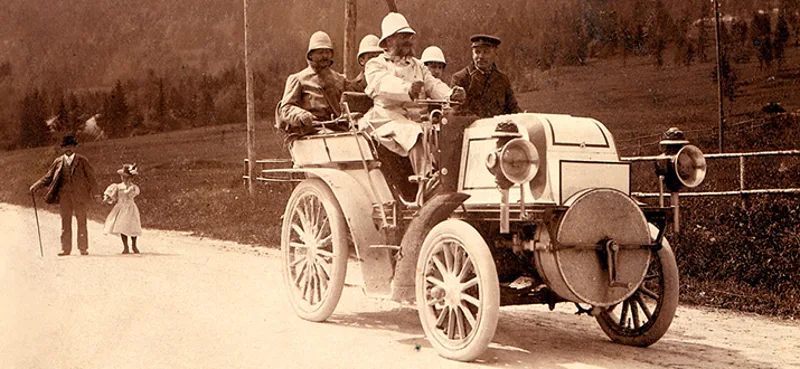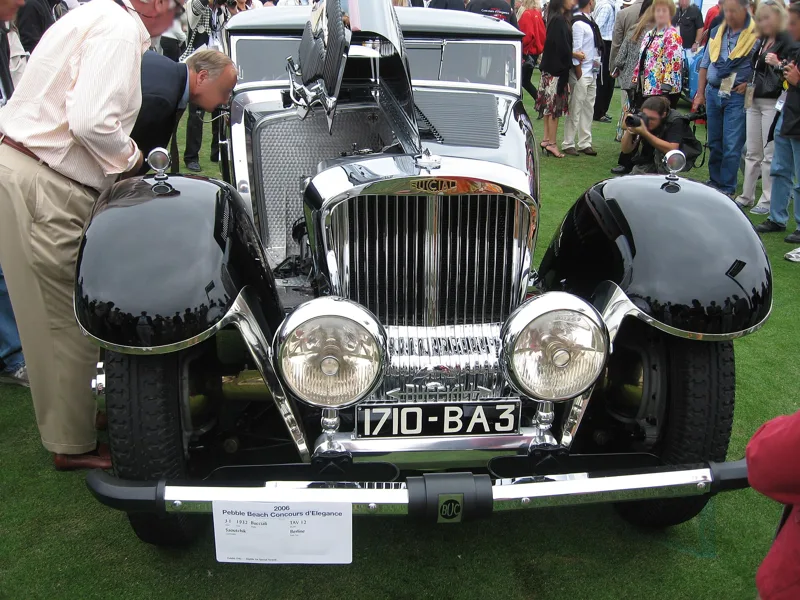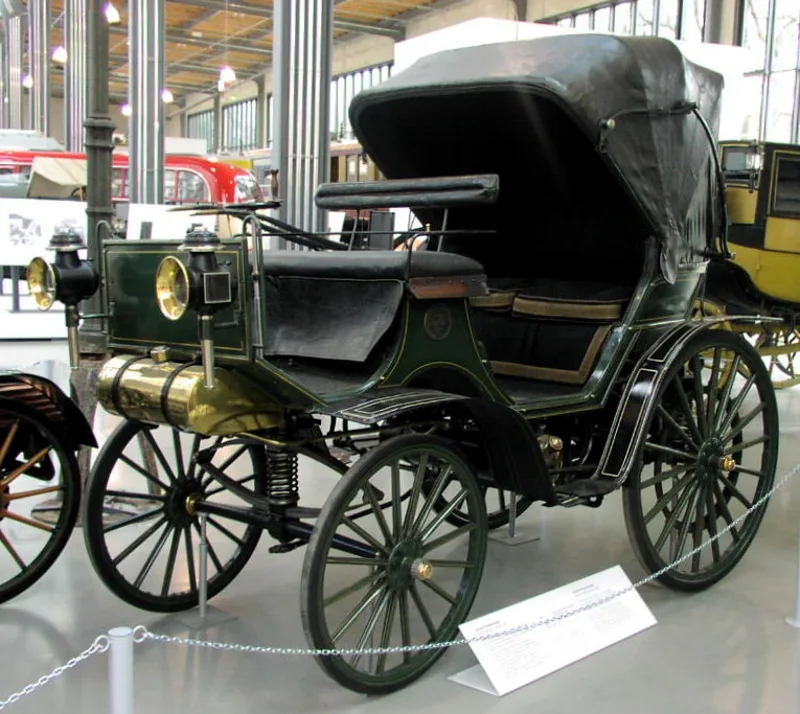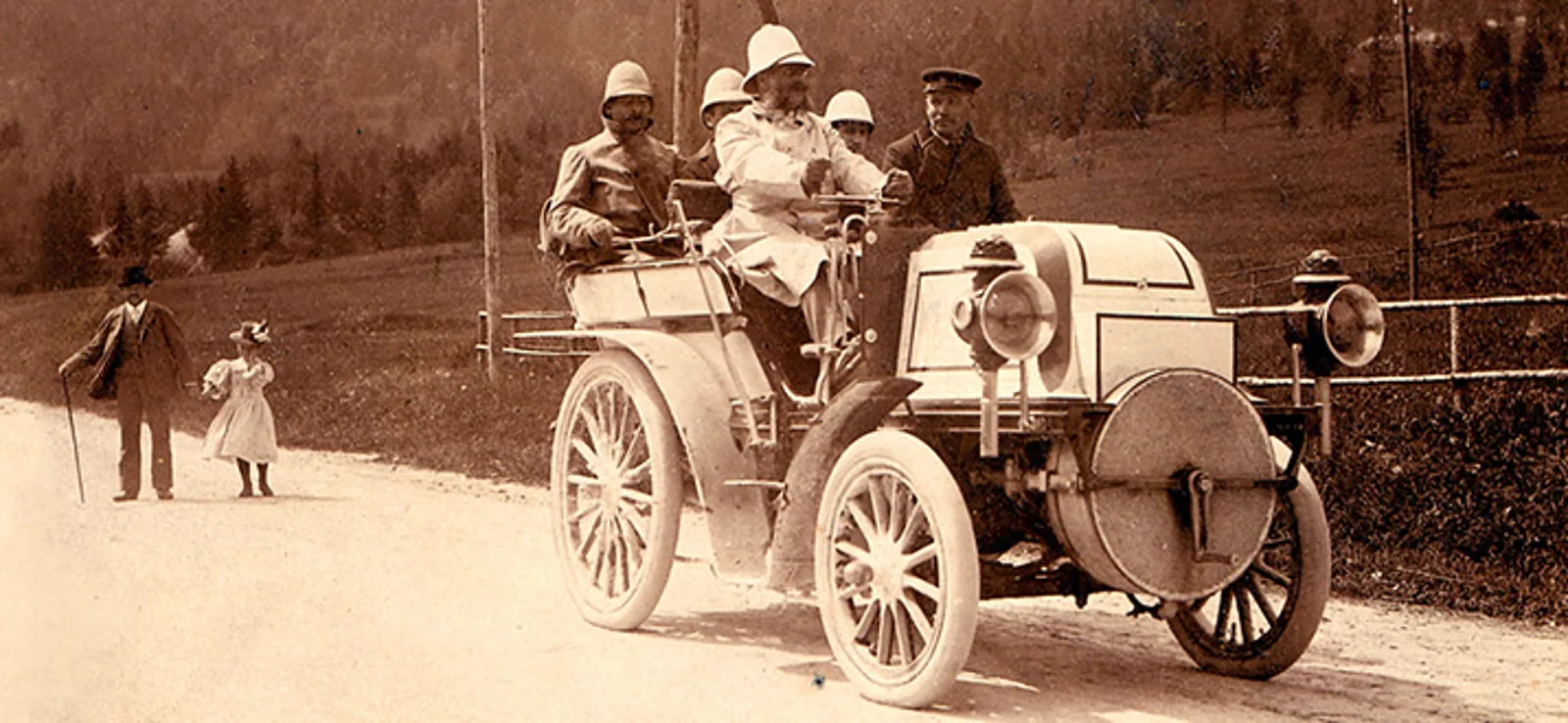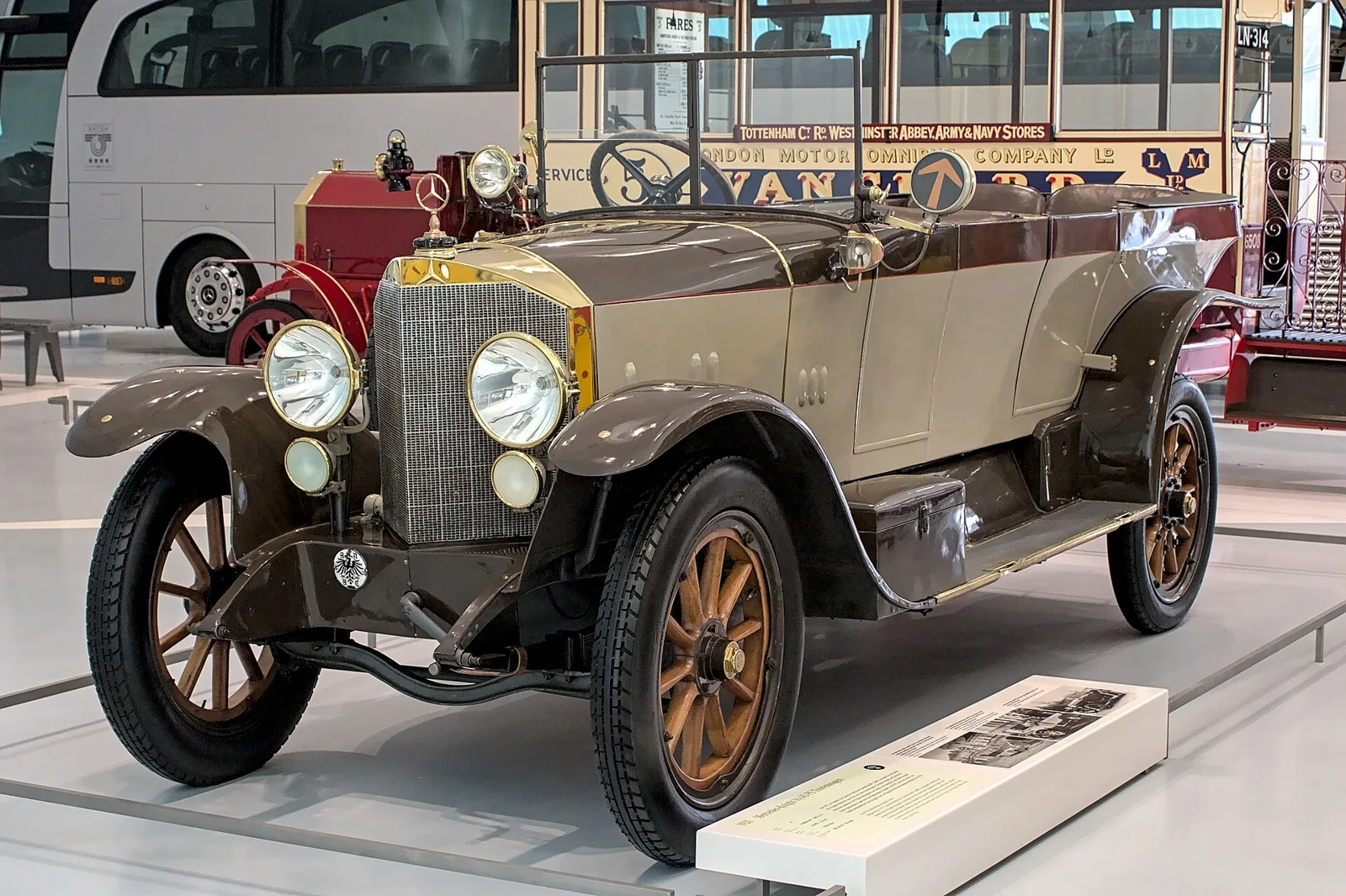
Sleeve-valve engines, a fifth-place run at Indianapolis and more than 5,000 cars built between 1910 and 1924.
The Mercedes-Knight was a family of Mercedes passenger cars built from 1910 to 1924. Their sleeve-valve engines came from the invention of American engineer Charles Knight. Four-cylinder units displaced 2,610 to 6,330 cc, with output from 30 to 65 PS. They made up a separate series in the pre-war Mercedes line-up.
Mercedes-Knight was the name of a group of passenger cars from Daimler-Motoren-Gesellschaft, built between 1910 and 1924. Instead of conventional valves, their engines used sliding sleeves, a principle that came from the American engineer Charles Knight (1868-1940). Within the pre-war Mercedes range the Knight cars stood apart, and they drew both praise and doubt.
Where did the sleeve-valve engine come from?
Charles Knight and an entrepreneur named Kilborn developed the engine in the early 1900s, using two cast-iron sleeves per cylinder with one sliding inside the other. A working version was shown at the Chicago Auto Show in 1906, yet no American carmaker agreed to use it. Knight then went abroad, where three European firms signed contracts: Daimler Motor Company in England, Minerva in Belgium and Panhard & Levassor in France.
The experimental unit had been built earlier, in Oak Park, Illinois, in 1903. Development carried on until 1905, when the prototype passed strict tests in Elyria, Ohio.
In Germany the novelty caught the eye of the firm of Gottlieb Daimler, Daimler-Motoren-Gesellschaft (DMG). Paul Daimler took over as chief engineer in 1907, succeeding Wilhelm Maybach. In April 1909 he built a trial batch of six engines with sleeve valves, and in March 1910 DMG obtained a licence to make Knight engines for 10 years.
The Mercedes-Knight 16/40 PS was presented at the Paris Motor Show in December 1910 as the first passenger car with the special engine. Series production of its 4-litre four-cylinder began in early 1911. With the 10/30 PS and 25/65 PS added in 1913, the range had three four-cylinder models.
Smooth and quiet, but demanding to lubricate, the Knight engine split opinion.
How much power did the Knight engine produce?
Output depended on the version, falling between 30 and 65 PS, or 22 to 48 kW (30 to 64 hp). Displacement ranged from 2,610 to 6,330 cc (159.3 to 386.3 cu in). Top speed ran from 70 to 85 km/h. Between 500 and 1,500 rpm the engine worked better than ordinary units of the same size.
The engine had no valves at all. A concentric pair of moving sleeves sat inside the working cylinder, and the piston moved within them. An eccentric shaft, which took the place of a camshaft, drove the sleeves together with the crank mechanism. Very large inlet and exhaust ports, along with hemispherical combustion chambers, let the engine produce more power for its size than conventional units. A single piston carburettor fed the mixture.
Why was lubrication such a problem?
Oiling the cylinder working surfaces and the bearings correctly mattered a great deal, yet period lubricants often failed to deliver it. The problem grew above 1,600 rpm, where the Knight engine no longer beat ordinary engines even on specific power. At 1,750 rpm the cars could reach only about 80 km/h, which limited the engine's long-term potential.
What were the strengths and weaknesses of the Knight engine?
The engine's strengths were smooth running and sound insulation, both exceptional for the period, plus better performance across 500 to 1,500 rpm. Against them stood lubrication demands and a low speed ceiling. Motorists and professional engineers disagreed about where the balance lay.
Specifications at a glance
| Item | Detail |
|---|---|
| Engine | In-line four-cylinder, sleeve valves |
| Displacement | 2,610 to 6,330 cc (159.3 to 386.3 cu in) |
| Power | 30 to 65 PS (22 to 48 kW; 30 to 64 hp) |
| Top speed | 70 to 85 km/h |
| Fuel tank | 70 to 100 litres, at the rear |
| Gearbox | Four-speed manual, leather cone clutch |
| Chassis mass, 10/30 and 16/45 PS | 1,100 to 1,200 kg (2,425 to 2,646 lb) |
| Chassis mass, 25/65 PS | 1,525 kg (3,362 lb) |
| Steering | Right-hand wheel, worm-and-nut |
Chassis, brakes and wheels
The frame was a steel U-section, with rigid axles front and rear on semi-elliptic springs. Steering came from a right-hand wheel driving a worm-and-nut mechanism. The layout was the classic one of a front engine driving the rear wheels, through a four-speed manual gearbox with a leather cone clutch.
Mass rose with size. The 25/65 PS chassis had a mass of 1,525 kg (3,362 lb), while the 10/30 and 16/45 PS models came in lighter.
A mechanical foot brake acted on the drive shaft, and a mechanical parking brake locked the rear wheels through a lever system. The foot brake was modified in 1924 so that it also worked on the front wheels. From summer 1924 the 16/50 PS version had drum brakes on all four wheels.
The wheels had wooden spokes and steel detachable rims. Tyre sizes differed by model. The 25/65 PS wore solid rubber tyres, with 915 x 105 mm at the front and 935 x 135 mm at the rear. The 10/30 PS took 820 x 120 mm tyres. The most popular car, the 16/40 PS, later sold as the 16/45 PS and 16/50 PS, could use any of three sizes: 820 x 120 mm, 820 x 135 mm or 825 x 150 mm.
How did the Mercedes-Knight perform at Indianapolis?
Theodore Pilette took a 16/45 PS to fifth place in the 1913 Indianapolis 500. His engine had the smallest displacement in the race, yet fuel use averaged one gallon for every 20 miles. It was the first time a Knight-engined car competed in American racing. The full 500 miles were covered on a single stop, and the only work done during it was a carburettor adjustment.
Pilette was a Belgian Mercedes agent and protege of Camille Jenatzy, the driver nicknamed the Red Devil. Before Indianapolis he had already won the 1910 Tsar Nicholas II Tour and the 1912 Spa Week. The model became best known through that Indianapolis run.
Leon Elskamp and the 1913 European races
The Belgian driver Leon Elskamp drove the 45 PS version of the Mercedes-Knight to victory in the 1913 Belgian Automobile Club Grand Prix. He averaged just under 100 km/h over a distance of 381.6 km (237 mi). In August 1913 he finished seventh at the French Grand Prix at Le Mans, in a time of 5 hours 18 minutes and 45 seconds.
Elskamp's win came with the same Knight engine family that Pilette used in America, so the design was raced on two continents in 1913.
What were the Typ UK ambulances?
The company built ambulances, known as Daimler Krankenwagen, on the 10/30 PS engines from 1913 to 1918 and on the 16/45 PS engines from 1920 to 1921. Most were sold on the British market, which is where the Typ UK name came from.
The ambulances used the same power units as the passenger cars, so the Knight engine also served in this role. The two ambulance runs had a gap between them: the 10/30 PS version ended in 1918, and the 16/45 PS version started in 1920.
How many were built, and how long did production last?
More than 5,000 units were built over a production period of 14 years. The 10/30 PS and 25/65 PS were made only until 1915, after which the company produced just the 4-litre version until 1924. Two special cars went to Kaiser Wilhelm II.
Why the model names changed
In mid-1913 the 16/40 PS was renamed 16/45 PS, as DMG renamed all its products at the time. Spring 1924 brought another change, to 16/50 PS, to match the engine's actual output. From summer 1924 this version came with drum brakes on all four wheels.
How was the engine judged by its contemporaries?
Motorists and professional engineers argued over the Knight design. Its smoothness and sound insulation were exceptional for the time, but its lubrication demands and speed ceiling counted against it. DMG still kept loyal customers, and the long production run shows it.