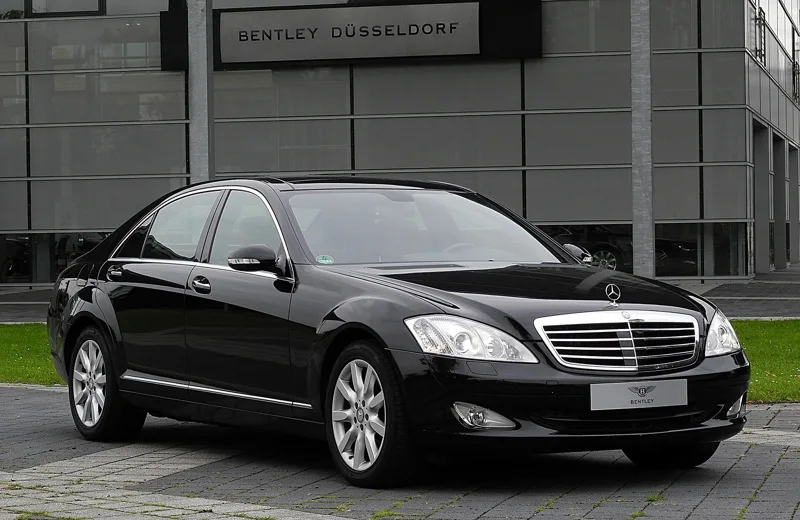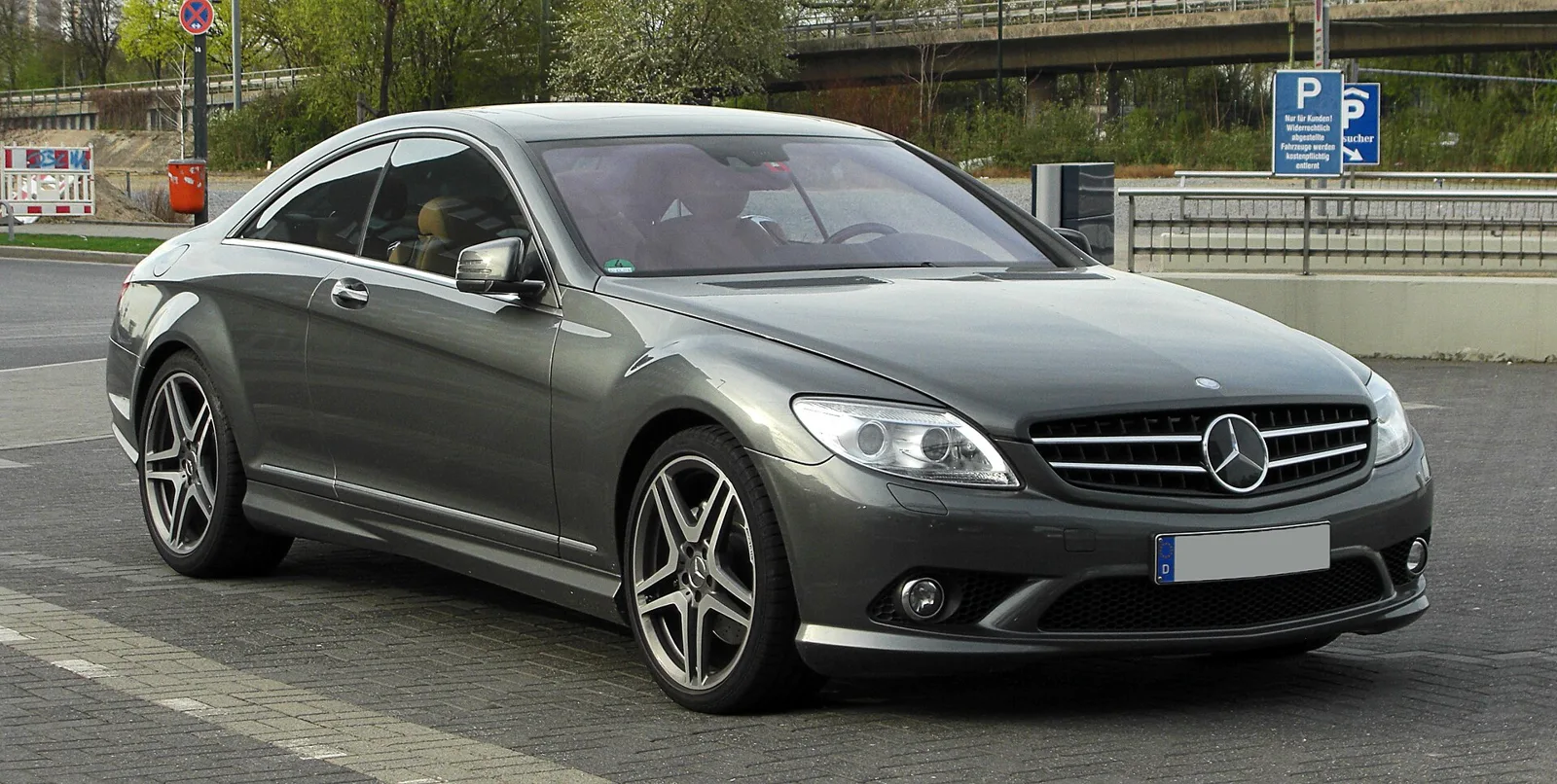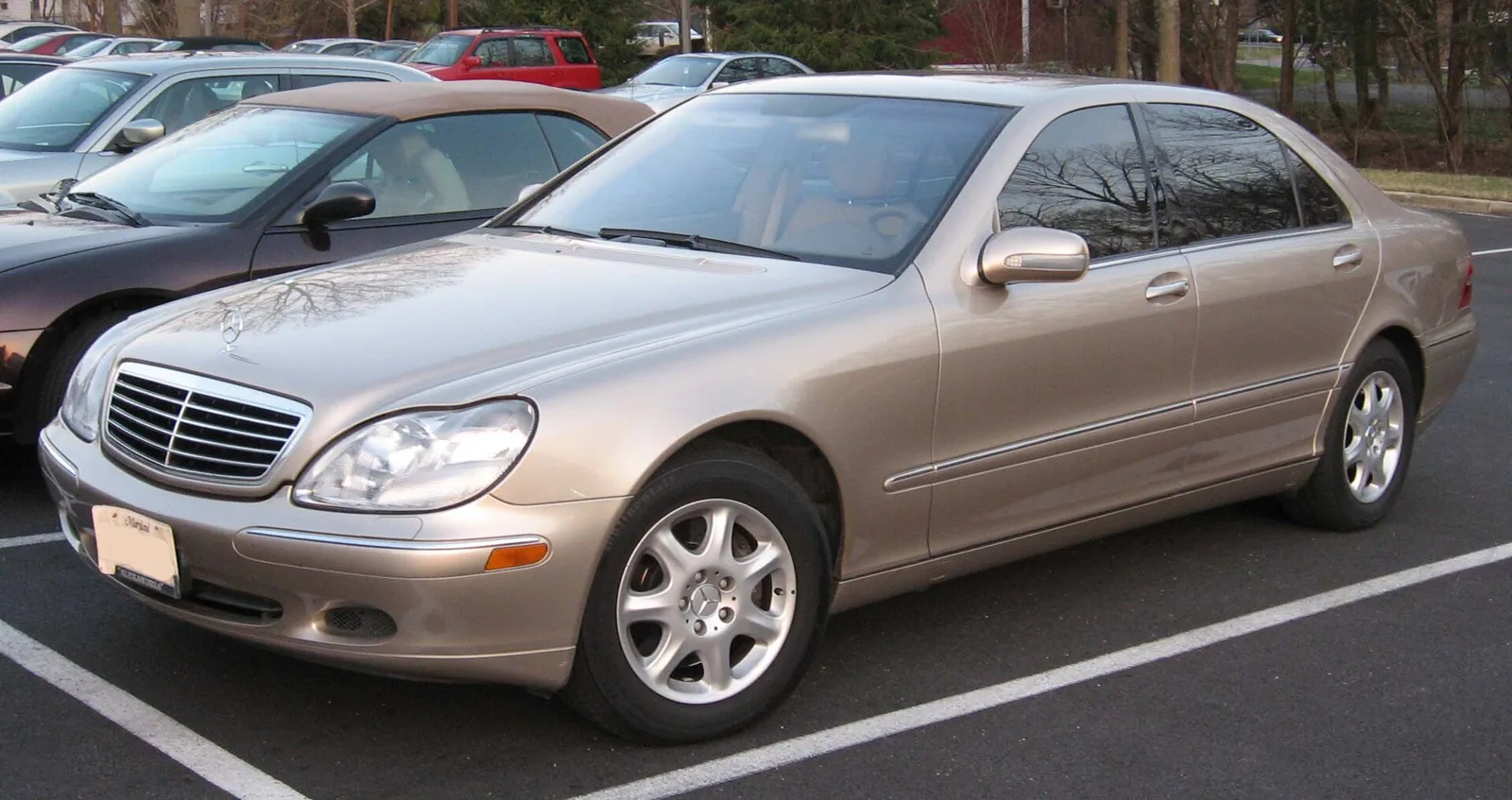
The fourth-generation S-Class, built from 1998 to 2005, paired Airmatic and Active Body Control suspension with V8 and V12 engines and the AMG S 55 and S 65.
The Mercedes-Benz W220 was the fourth-generation S-Class, built from 1998 to 2005. It offered Airmatic and Active Body Control suspension, eight airbags and V6 to twin-turbo V12 engines, with the S 55 and S 65 AMG as its performance flagships.
The W220 was the fourth-generation Mercedes-Benz S-Class, built and sold from 1998 to 2005 as the successor to the W140. It was slightly smaller outside than its predecessor but gave more room inside. Its range ran from a V6 up to a twin-turbo V12, with AMG models at the top end.
Where did the W220 S-Class come from?
Development of the W220 began in 1992, when Steve Mattin drew the first sketch that October. The Daimler-Benz board approved the design in June 1995 and froze it in March 1996, and series production began in September 1998, ready for the 1999 model year.
The design was approved 38 months before production, and the freeze came 29 months ahead of the first cars. The Mercedes-Benz F200 concept had previewed the headlight styling in late 1996, so the look had been settled well before showrooms opened.
Pre-production started in April 1997, and the finished prototypes were presented in June 1998. A coupe version, the C215, went into production in 1999, and the 220 series reached 484,683 units before production ended in July 2005.
A twin-turbo V12 in the S 600 and a supercharged V8 in the S 55 gave the W220 two sides.
What did the 2002 facelift change?
The facelift was styled in late 2000 and reached showrooms in September 2002. The front end became more refined, with a taller grille that stood more upright, transparent headlamp housings, revised taillights and restyled lower air intakes on the bumper.
Inside, the update tackled several weak points of the COMAND system and other interior features. Bi-xenon headlamps arrived with the same update, giving HID lighting for both low and high beams.
The facelift also brought Pre-Safe, the integrated collision avoidance and response system, which had debuted with this update. Its early versions were the start of a safety approach that Mercedes carried into the W221.
How big was the W220 engine range?
The W220 was offered with V6, V8 and V12 petrol engines plus several diesels, from a 2.8-litre V6 with 201 hp (150 kW) up to the twin-turbo V12. Automatic transmission was standard on every model, and the S 500 V8 and S 600 V12 sat at the top of the petrol range.
The 3.2-litre V6 with 224 hp (167 kW) was popular until a 3.7-litre V6 with 245 hp (183 kW) replaced it in the S 350. Six-cylinder S-Class cars did not reach the United States until the 2006 model year, when the S 350 arrived there.
The S 430 was the most popular US model and was powered by a 4.3-litre V8 with 279 hp (208 kW). A four-wheel-drive option arrived for the 2003 model year with 4Matic, a US$2180 extra that split power 40/60 between front and rear.
The S 320 CDI launched with 197 PS (145 kW) and 470 Nm, then was upgraded in late 2002 to 204 PS (150 kW) and 500 Nm. The S 400 CDI rose from 250 hp (186 kW) to 260 hp in 2003.
What made the S 55 AMG and S 65 AMG special?
The S 55 AMG was a high-performance version built around a 5.4-litre V8. From 2003 the engine was supercharged to 493 hp (368 kW; 500 PS) and 700 Nm (516 lb ft). The S 65 AMG, introduced in 2005, used a twin-turbo 6-litre V12 with 612 PS (450 kW; 604 hp) and 1,000 Nm (738 lb ft).
The S 55 gained Active Body Control, larger brakes and an AMG body kit in US specification, along with ventilated seats that offered automatic massage. Its supercharged engine matched the output of the S 600 V12 but was tuned for a sportier driver.
The S 65 was offered only with the long wheelbase and weighed 2,220 kg (4,894 lb) at the kerb. Reviewers praised it as a grand tourer, and one averaged about 17 mpg despite its size and power.
In 2001 AMG also produced a 6.3-litre naturally aspirated V12 in the S 63, rated 444 PS (327 kW; 438 hp). Only 70 cars were sold through AMG, all in European and Asian markets.
How quick was the S 600 V12?
The 2003 S 600 reached 0-60 mph in 4.3 seconds and 100 mph in 9.7 seconds. Car and Driver found it could keep pace with a Ferrari 575M Maranello, edging the Ferrari over a quarter mile in 12.5 seconds at 115 mph.
The 2003 model's 5.5-litre twin-turbo V12 produced 493 hp (368 kW; 500 PS) and 800 Nm (590 lb ft), and the 2001 car had a 5.8-litre V12 with 362 hp (270 kW), so the move to twin turbochargers was the main change between the two.
Braking from 70 mph (110 km/h) took 164 feet on the factory tyres. The car's equipment list included four heated and powered seats, four-zone climate control and Parktronic.
The Pullman and long-wheelbase limousines
The Pullman was 100 cm (39 in) longer than the standard S-Class and gave 70 cm (28 in) more rear-seat space. It could seat as many as seven people, because two rear-facing seats sat between the front and rear rows. It was offered as the S 500 with a V8 or the S 600 with a V12.
The Pullman launched in 2001 with the AMG Advanced Mobile Media System. It used 10.4-inch LCD monitors and could reach the web at up to 43 kilobits per second, and a separate battery let the system run for half an hour with the engine off.
A small batch of S 600L facelift saloons carried the Pullman's options with AMG body styling and alloy wheels, which made them a rare way to buy an AMG-styled flagship.
Which suspension did the W220 use?
The W220 came with Airmatic air suspension, which used adaptive damping and could raise the car by 25 mm from dash switches, or with Active Body Control, a hydropneumatic system running above 200 bar. ABC kept the car level in fast corners and was standard on the S 55 AMG, S 600 and S 65 AMG.
Airmatic lowered the car at motorway speeds to lower its centre of gravity, and it cancelled a raised setting automatically after a short spell of fast driving. At highway speeds the suspension computer also engaged a sport setting to reduce body roll in sharp turns.
ABC needed specific upkeep. Its fluid and filters had to be changed every two years or 20,000 km, and a failing pulsation damper was often identified by a humming noise near 2,000 rpm.
What comfort and convenience features did the W220 offer?
The W220 introduced Distronic, the first radar-assisted cruise control worldwide, which could hold a set distance to the car in front. Keyless Go was an optional smart key system, and Parktronic gave visual and audible warnings from sensors in the front and rear bumpers.
The first Linguatronic, offered from 1996 on the W140, understood 30 words. The second-generation system arrived in 2000, understanding 300 words and controlling the car phone, radio, CD player and later navigation.
The car phone was a Motorola unit with a Timeport system, which switched the radio to mute when a call came in. Owners could also have the front seats adjusted by memory, and the passenger door mirror could tilt down when reversing to show the kerb.
How safe was the W220?
The W220 carried eight airbags, Electronic Stability Program and Brake Assist as standard, and Pre-Safe, which debuted with the 2002 facelift. Its protection was completed by curtain airbags, the first fitted to a Mercedes. The structure combined aluminium and high-strength steel frames and bulkheads.
Testing records were mixed, and one Canadian review said the car had not been rated by the main safety bodies. It did pass the legally required EU front and side impact tests, and German insurers placed it in a lower repair-cost bracket because it was easier to fix. Its aluminium crash boxes at the front and rear could be replaced as separate units, which reduced repair costs.
Recalls and reliability
In 2006 nearly 24,000 cars, 95 percent of the China-market total, were recalled over a fuel tank defect. They had been sold between late 1998 and early 2005, and the recall stayed within China. The same year saw a recall for instrument cluster illumination failures.
Australian recalls covered a heater blower overheating in 2000, a V12 ABC hydraulic line in 2004 and a blower fuse in 2004. A 2007 recall dealt with an ABC hydraulic line that could leak near hot engine parts.
Owners in California also brought a class action over the reed valve in the air and water duct, which could clog with leaves and overflow into the cabin. A 2010 court ruling covered the settlement, and independent reviewers gave the car strong reliability marks, with Edmunds scoring it 5 out of 5.
Which models sat beside the W220?
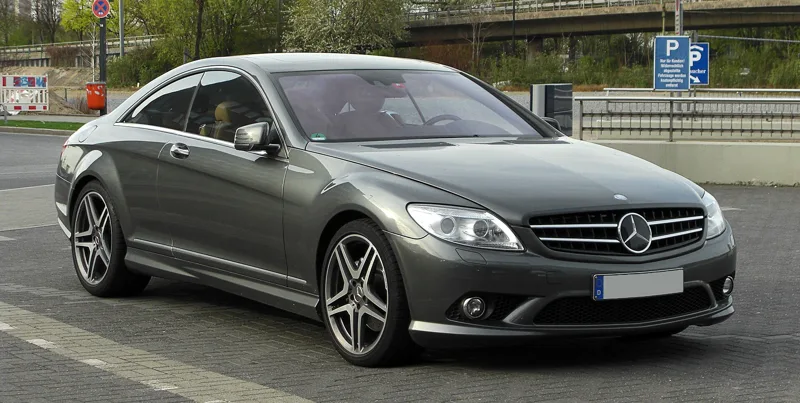
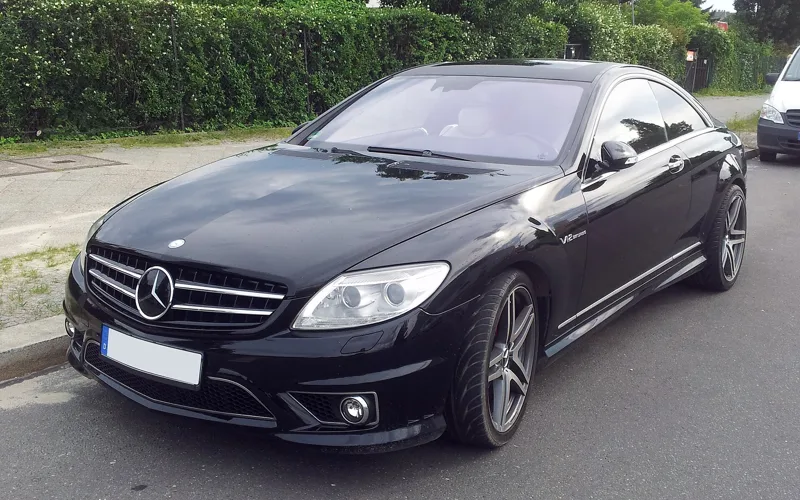
The CL-Class C215 was a shorter coupe version of the W220, riding on an 8-inch shorter wheelbase. It shared many components and features with the sedan, used a unique aluminium and composite body, and had ABC suspension as standard. V8 and V12 engines were carried over, but no diesel or V6 option was offered.
The Brabus S V12 of 2001 raised the 12-cylinder to 6.7 litres and 450 hp. Its top speed was almost 190 mph, and it added BRABUS interior trim, enhanced leather and a 12-inch TFT display.
Renntech sold an ECU upgrade that raised output without any mechanical changes, and Kleemann also built a limited-slip differential for the car and its relatives. Wald and Brabus also offered styling and power packages for the car.
From 2005, the Chrysler LX platform borrowed some suspension parts from the W220, at a time when Chrysler belonged to Daimler.
How did the W220 transmissions change?
Every W220 model had an automatic transmission as standard, which was new for the S-Class line. The early cars used a five-speed 5G-Tronic unit with selectable W and S modes, and from 2003 the S 430 and S 500 were offered with the seven-speed 7G-Tronic.
The V12 models kept the five-speed because the seven-speed could not handle the torque of the twelve-cylinder engines. In the US the 4Matic models also stayed on the five-speed for a time.
What wood and leather did the W220 interior use?
The basic model used Calyptus wood on its dash, console, doors and shift gate, while the S 500 added burl walnut trim. The Designo Espresso edition used elm wood and the Designo Silver edition used maple, and the S 600 gained more leather over its surfaces.
Leather covered the dashboard, doors and console on the most fully equipped cars, and an Alcantara headliner completed the look in the US S 600. The palette of exterior colours was broad, from Alabaster White to Obsidian Black.
Specifications at a glance
| Specification | Detail |
|---|---|
| Production | 1998 to 2005; 484,683 units built |
| Predecessor and successor | W140, then W221 |
| S 430 | 4.3-litre V8; 279 hp (208 kW) |
| S 55 AMG | Supercharged V8; 493 hp (368 kW; 500 PS); 700 Nm (516 lb ft) |
| S 600 (2003) | 5.5-litre twin-turbo V12; 493 hp (368 kW; 500 PS); 800 Nm (590 lb ft) |
| S 65 AMG | 6-litre twin-turbo V12; 612 PS (450 kW; 604 hp); 1,000 Nm (738 lb ft) |
| Transmission | 5G-Tronic; 7G-Tronic from 2003 on S 430 and S 500 |
| Airbags | Eight, including curtain airbags |
| Peak sales year | 2000, with 88,000 sold worldwide |