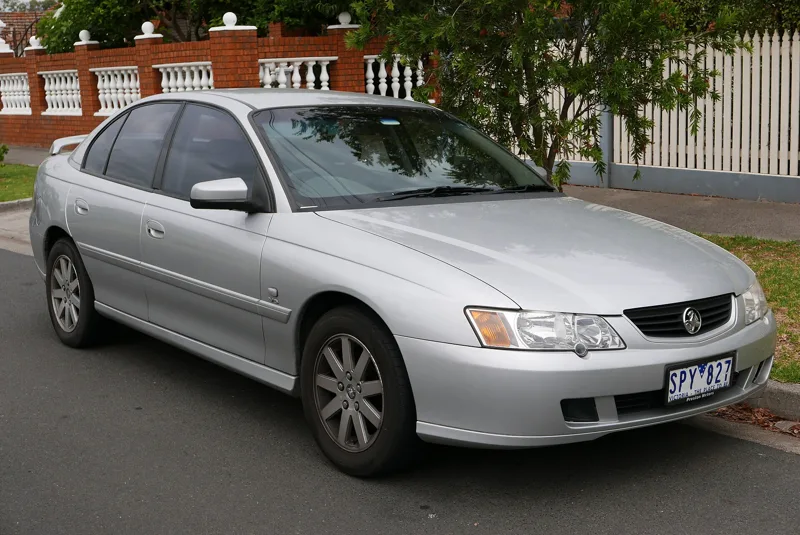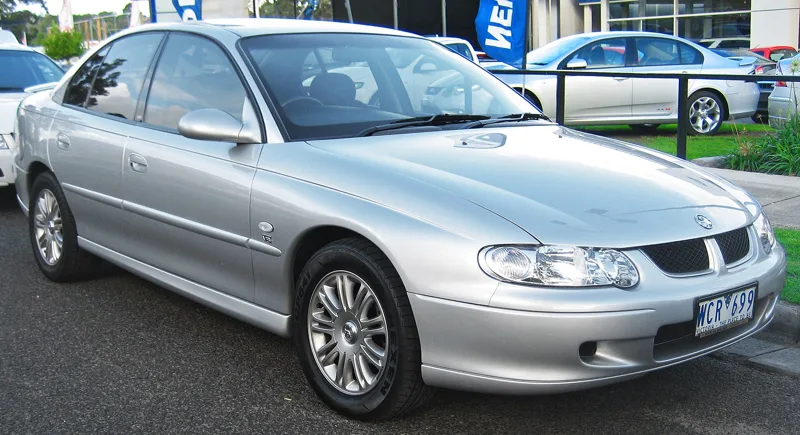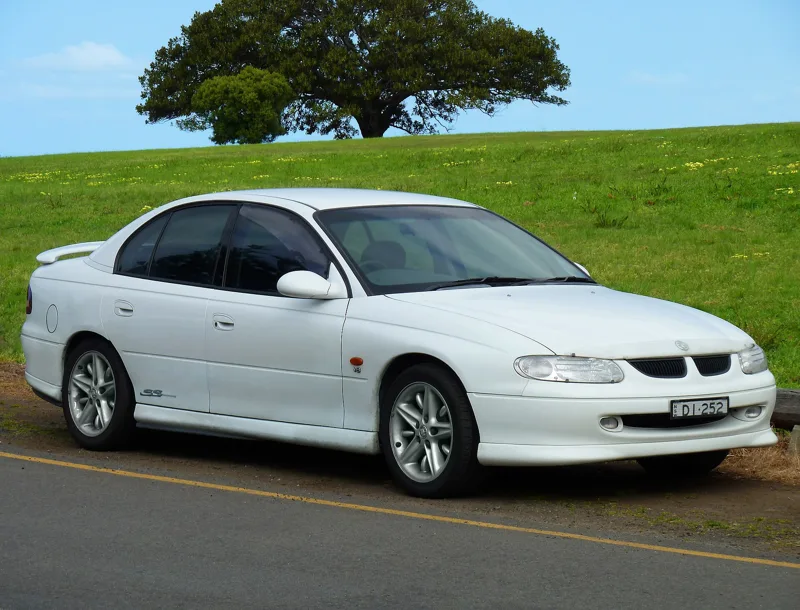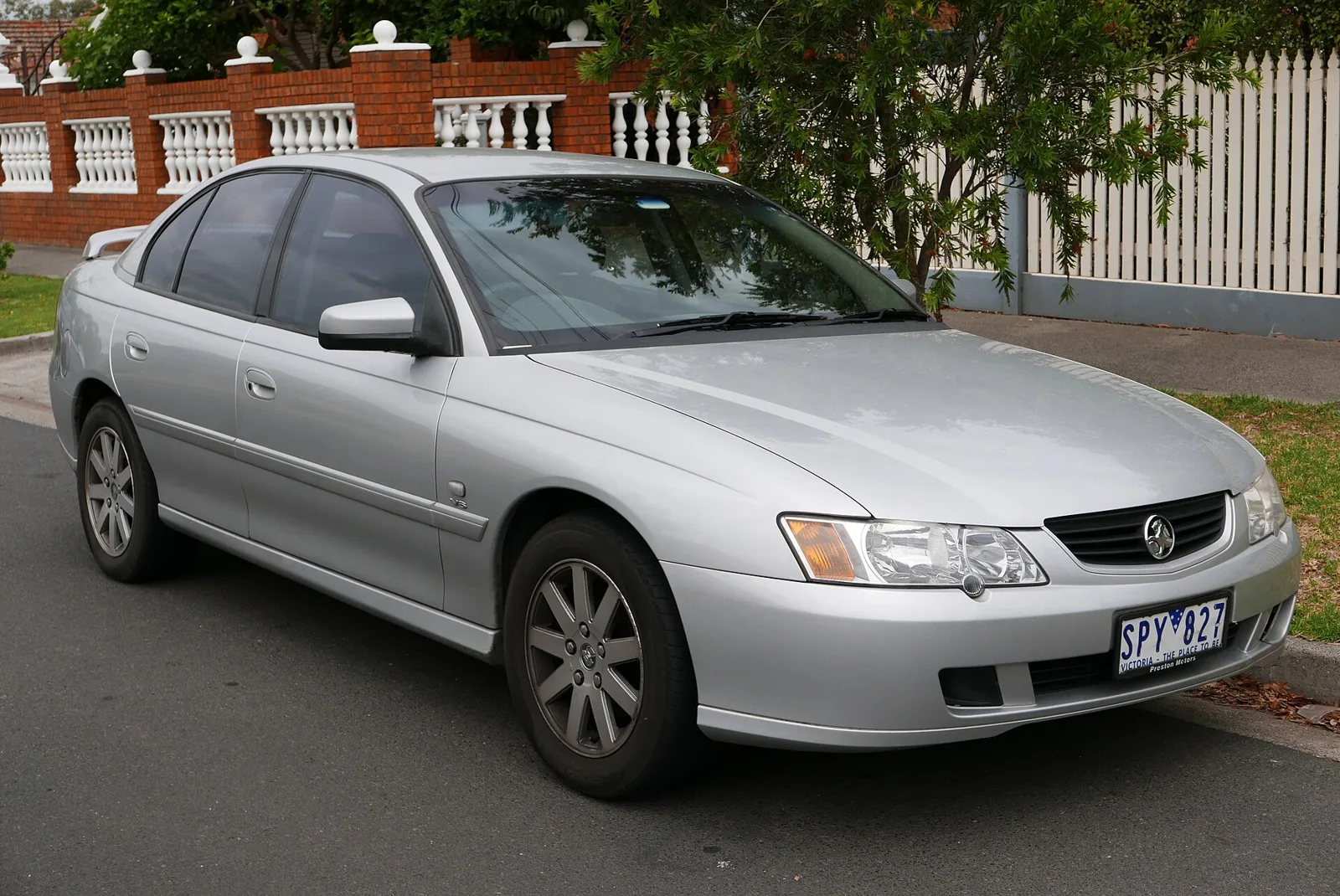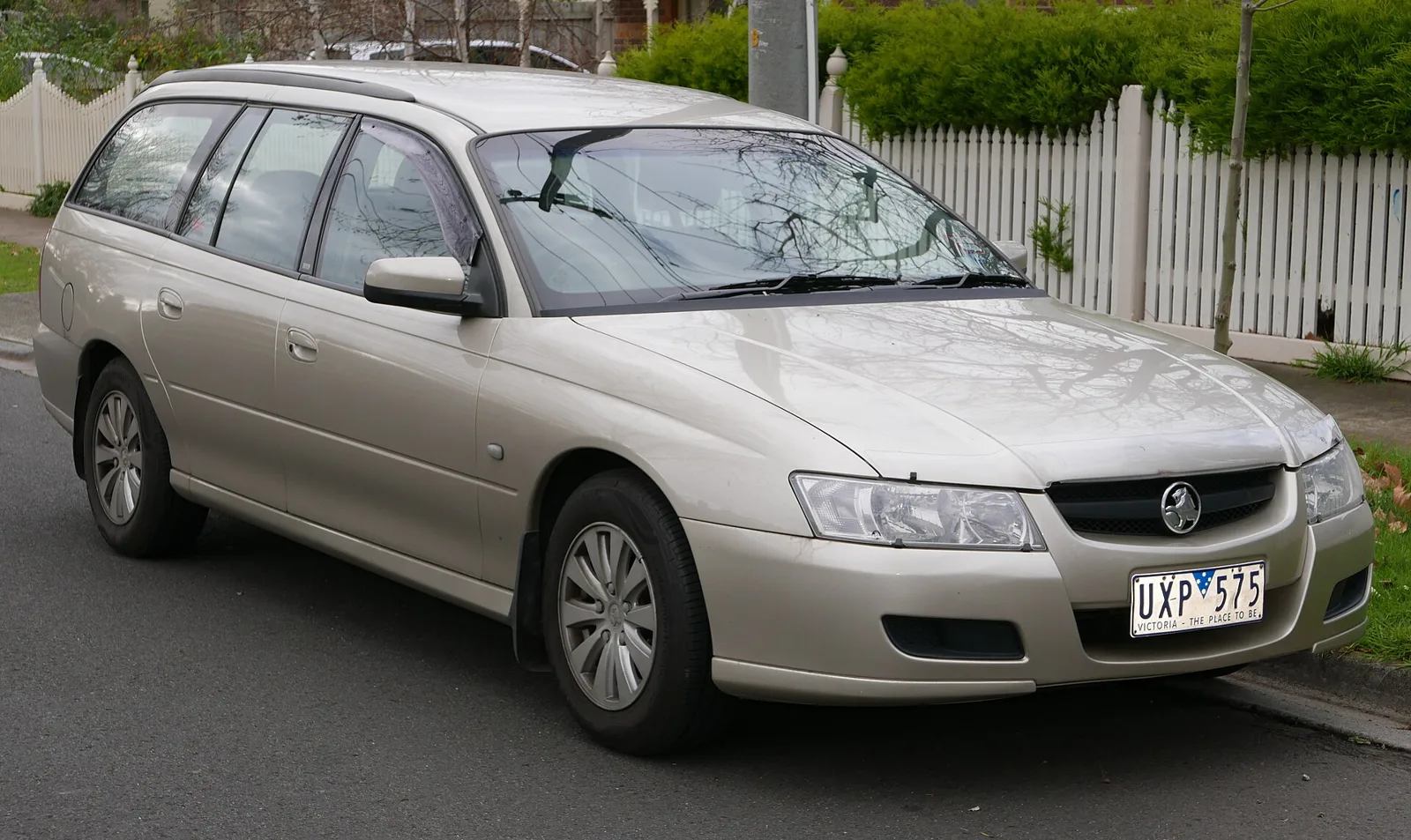
The 2004 facelift that brought the 3.6-litre Alloytec V6, a 6.0-litre V8 mid-cycle and a Maloo that set a pickup speed record before the VE arrived.
The Holden Commodore VZ was a minor facelift of the VY, built as a sedan from 2004 to 2006 and as a wagon and ute until 2007. Its 3.6-litre Alloytec V6 and 6.0-litre V8 updates were its most notable changes in its final years.
The VZ was the fourth and final version of the third-generation Commodore, and its sedan left sale when the VE arrived on July 10, 2006. Released in August 2004, it was a minor facelift of the VY, and its biggest change was under the bonnet.
A new 3.6-litre Alloytec V6 replaced the 3.8-litre Ecotec, and the supercharger that had come with the S models was dropped. The engine range then changed again during the car's short life, through a new V8 and a few mechanical revisions that Holden made within the same model run.
Where did the VZ Commodore come from?
The VZ arrived in August 2004 as a facelift, with a new V6 and reshuffled trim levels as the main changes. The sedan lasted until the VE arrived on July 10, 2006, and the wagons and utes lived on until 2007.
Sales did not match those of the VY. Small cars were growing in popularity, fuel prices were climbing, and buyers were waiting for the VE. The launch in August 2004 started well, but the sales curve bent down as the range aged.
The VZ is also notable for what it did not get. It was the only recent Commodore without an official Series II update, although Holden made several mechanical changes in January 2006 under the MY06 label.
A facelift that changed the engine range more than the car, and ended with the VE in 2006.
What engines did the VZ offer?
The base V6 was a 3.6-litre Alloytec making 175 kW (235 hp), and the High Output version made 190 kW (255 hp). The stronger engine gained variable valve timing on both sides and a dual-stage intake manifold. The 175 kW version had variable valve timing only on the inlet side.
The January 2006 update changed the V8 story. Holden introduced the L76 6.0-litre V8 to replace the outgoing LS1, but the L76 was slightly detuned, with displacement on demand disabled. The L98 used from July 2006 carried neither displacement on demand nor variable valve timing hardware.
Emissions rules forced smaller changes. From January 1, 2006, the base V6 fell from 175 to 172 kW (231 hp), and the High Output engine's torque dropped from 340 N m to 335 N m. The changes met ADR 79/01, the Euro III standard.
The new 5L40-E five-speed automatic arrived on the sports and luxury V6 models, and it was a new unit for the range.
Which VZ models were on sale?
The range ran from the Executive, a nameplate first introduced in 1984, to the Calais at the top. The SV6 replaced the S as the cheapest sports variant, with a six-speed manual, while the SS was the flagship sports model with 18-inch wheels.
The Executive carried ABS, auto headlights, brake assist, cruise control and driver and passenger airbags as standard, with the Acclaim building on that base. The Acclaim added air conditioning, front and rear power windows, side impact airbags and an electronic stability program with traction control.
The SV6 carried a 190 kW (255 hp) V6 with a six-speed manual, traction control and 17-inch alloys. The SV8 was essentially an Executive with a V8, a rear spoiler and 17-inch alloys in its early form, and it used the LS1 at 250 kW (335 hp) until December 31, 2005.
The SS used 18-inch wheels, a six-disc in-dash CD player and a limited-slip differential. Its 6.0-litre L76 from January 2006 made 260 kW (354 PS; 349 hp), and the SS came with a manual or an automatic gearbox.
The Berlina sat between the Acclaim and the Calais as the semi-luxury model. The Calais offered dual-zone climate control, a programmable three-position driver memory and speed-sensitive front wipers, and it sat at the top of the VZ price list.
What did the Adventra and the commercial range bring?
The Adventra updated the VY II wagon to all-wheel drive, and its 3.6-litre V6 was rated at 190 kW (255 hp) with a five-speed automatic. The V8 was uprated to 250 kW (335 hp), but it appeared only on the CX8 and LX8 versions, and its production ended in December 2005.
Holden's replacement for the Adventra came from GM Daewoo in South Korea, the Captiva, which arrived in 2006. Adventra sales never met Holden's expectations, especially next to the rival Ford Territory.
The Crewman Cross 8 added an all-wheel drive option to the commercial range, and it came in a higher specification than the standard Crewman.
What did HSV add to the VZ?
The Z Series, HSV's range from 2004, used the LS2 6.0-litre V8 rated at 297 kW (404 PS; 398 hp). The Clubsport, Senator, Avalanche and Maloo all sat on that base, with the Avalanche using the LS1 instead.
The Clubsport used the LS2 with 510 N m (376 lb ft) of torque at 4,400 rpm, and buyers could choose a six-speed manual or a four-speed automatic. Fuel use came to 15.9 L/100 km, and the R8 version added leather seats, extra gauges and upgraded brakes.
The Senator's LS2 gave it 297 kW (398 hp) and 19-inch wheels as standard, and the car weighed 1,835 kg (4,045 lb). Holden's figures put 0-100 km/h at 6.4 seconds, with the top speed limited to 240 km/h (149 mph).
HSV built the Avalanche in 2005 on the Adventra LX8, a crossover with LS1 power at 270 kW (362 hp). Its permanent all-wheel drive sent 62 percent of its power rearward, which kept the handling close to a rear-drive car.
The Z Series Maloo had 19-inch wheels, traction control and a multi-link rear suspension. HSV built 517 base and 958 R8 Maloos in the first run, and 181 base and 339 R8 units in the MY06 run. The R8 sat above the base model, and both used the new LS2 V8.
How fast was the Maloo R8?
On May 25, 2006, a standard 2006 Maloo R8 driven by Mark Skaife averaged 271.44 km/h (168.66 mph) at Woomera. Guinness World Records recognised the run as the fastest production pickup truck, beating a Dodge Ram SRT-10 whose record had stood at 248.784 km/h. The figure was an averaged speed over the timed run, not a single top speed.
The Dodge Ram SRT-10 was the previous holder, so the Maloo took the title from another performance pickup. The run was timed at Woomera in South Australia, where the Maloo's average was recorded.
What did the 9C1 police pack include?
The 9C1 was a police pack for the Executive, sold to forces in Australia, New Zealand and parts of the Middle East. It added four airbags, FE2 suspension and a larger battery, and most cars were delivered in white.
The equipment list was extensive. Bridgestone Turanza ER30 225/60R15 tyres sat on silver steel rims, and the car had a sump protector, an interior light with a lock-out switch and black dash surrounds. A police-certified speedometer read in 2 km/h increments, and two horns at 400 Hz and 450 Hz completed the list.
Upgraded front brake pads, a 450 CCA battery with 115 minutes of reserve capacity and an extra wiring loom for beacons, sirens and radios rounded out the pack. Limited-slip differential or traction control was offered as an option.
Limited editions and special Commodores
Several special editions followed the police pack, and most were built in small runs with their own badges and trim.
The Commodore Lumina launched in January 2005 on the Executive, and 3,700 were produced. The Commodore Equipe followed in April 2005 on the Acclaim, with 3,500 built. Equipe was a Holden tradition for many recent Commodores, a dressed-up version of a standard model. The SSZ released late in 2005 carried 930 units with leather upholstery, 18-inch Monaro-style wheels and Bluetooth.
HSV also produced a limited SV6000, of which 50 were built in March 2005, and a Maloo R8 15th Anniversary run of 50 units in August 2005. Each of these was a run of 50 cars, which kept them scarce from the start.
How did the VZ sell?
Sales commenced in August 2004 and started well. The VZ then lost ground as small cars gained favour, fuel prices rose and the VE came into view. The sedan ended in July 2006, while the wagon remained on sale until 2008.
The sales figures for the VZ include wagon sales until July 2006, so the sedan and wagon totals cannot be separated cleanly for that period. Its sales figures fell short of those of the VY that came before it.
What was the commercial range?
The ute and Crewman used the 3.6-litre Alloytec as their base engine. At the flywheel it made 175 kW (235 hp), but drivetrain losses left about 119 to 122 kW at the rear wheels.
Crewman vehicles could not exceed 160 km/h because of their long driveshaft, and their longer wheelbase made them heavier on fuel than the ute. The Cross 8 sat at the top of the Crewman range.
The One Tonner ended production in December 2005, which freed factory space for the VE. Its SVZ version used SV6 equipment with leather seats and Monaro CV8 rims, and the Cross 6 was an all-wheel drive One Tonner with the 3.6-litre V6.
What set the Senator apart?
The Z Series Senator had more subtle styling than its predecessor, with 19-inch wheels as standard and Nappa leather in the cabin. Its 6.0-litre LS2 was the same V8 used in the C6 Corvette.
The rear suspension was self-levelling, so the car stayed level when towing a trailer and the headlights kept their aim. Holden had used the same idea on the WH Caprice in 1999, and the Senator's Bosch ABS used twin-piston front calipers with grooved discs.
The Senator measured 1,450 mm high, 4,984 mm long and 1,842 mm wide, with a 2,788 mm wheelbase. Options included a sunroof, satellite navigation, rear-seat DVD players and Xenon headlights.
Exports and overseas badges
Chevrolet Lumina badges went on VZ sedans sold in the Middle East from 2004, following the VY pattern. Malaysia and Thailand also received Lumina exports, which ended during 2005.
GM do Brasil brought the VZ in as the Chevrolet Omega from 2005, replacing the VY-based version. It was a single-trim car with a CD player, and it ran until the VE-based Omega arrived in 2007.
Holden Commodore VZ specifications
| Specification | Detail |
|---|---|
| Production | Sedan August 2004 to July 2006; wagon and ute to 2007 |
| Base V6 | 3.6-litre Alloytec, 175 kW (235 hp), later 172 kW (231 hp) |
| High Output V6 | 190 kW (255 hp), with variable valve timing on both sides |
| V8 to December 2005 | 5.7-litre LS1, 250 kW (335 hp) in the SV8 and SS |
| V8 from January 2006 | 6.0-litre L76, 260 kW (349 hp); L98 from July 2006 |
| Transmissions | 5-speed automatic, 6-speed manual, 4-speed automatic on the V8 |
| Senator | 297 kW (398 hp); weight 1,835 kg (4,045 lb); 6.4 seconds to 100 km/h |
| Maloo R8 record | 271.44 km/h (168.66 mph) at Woomera, May 25, 2006 |