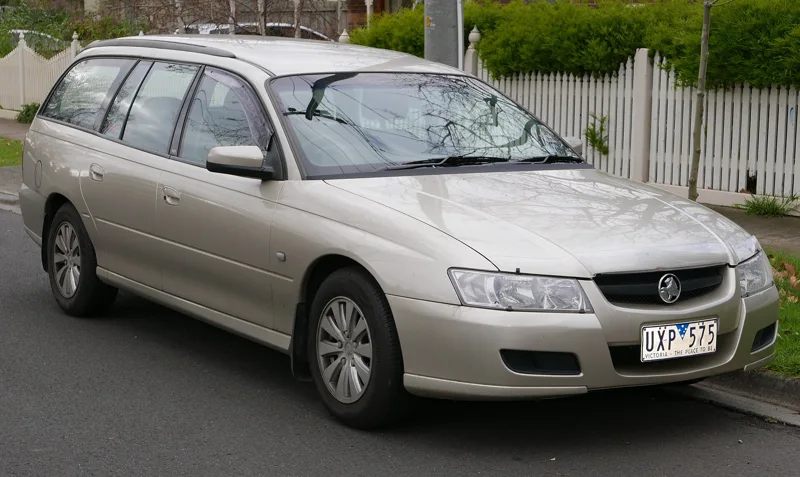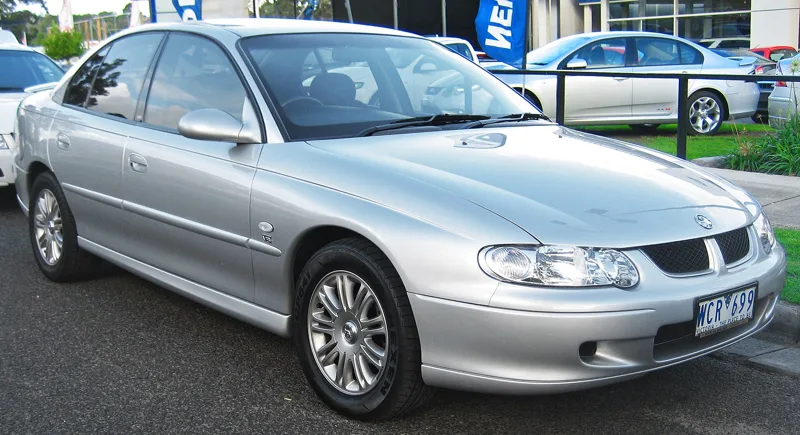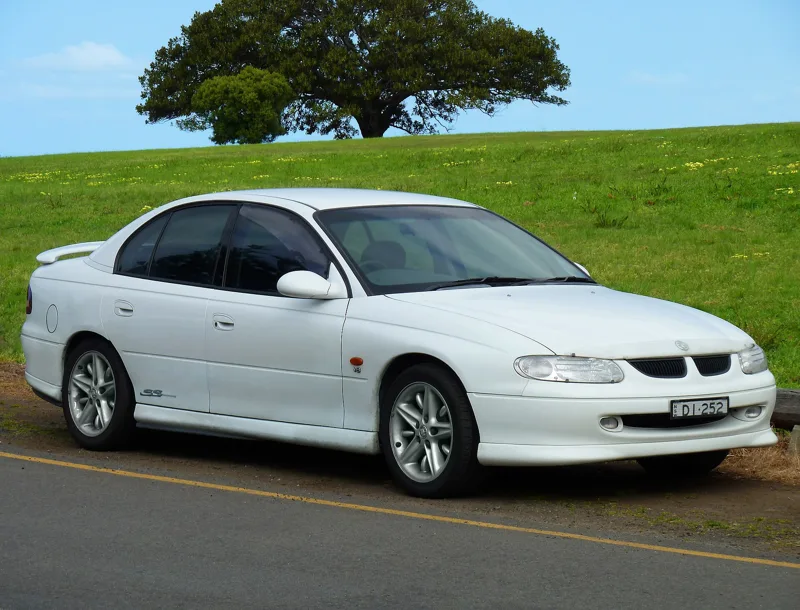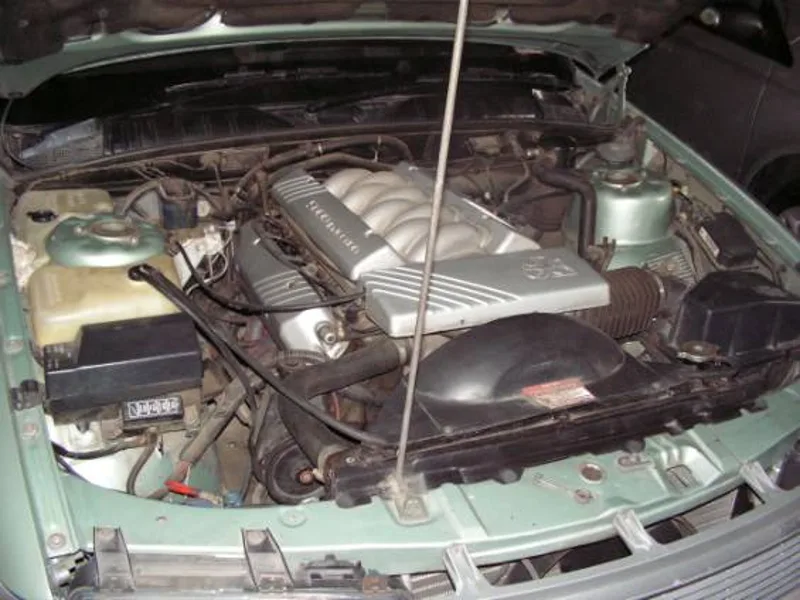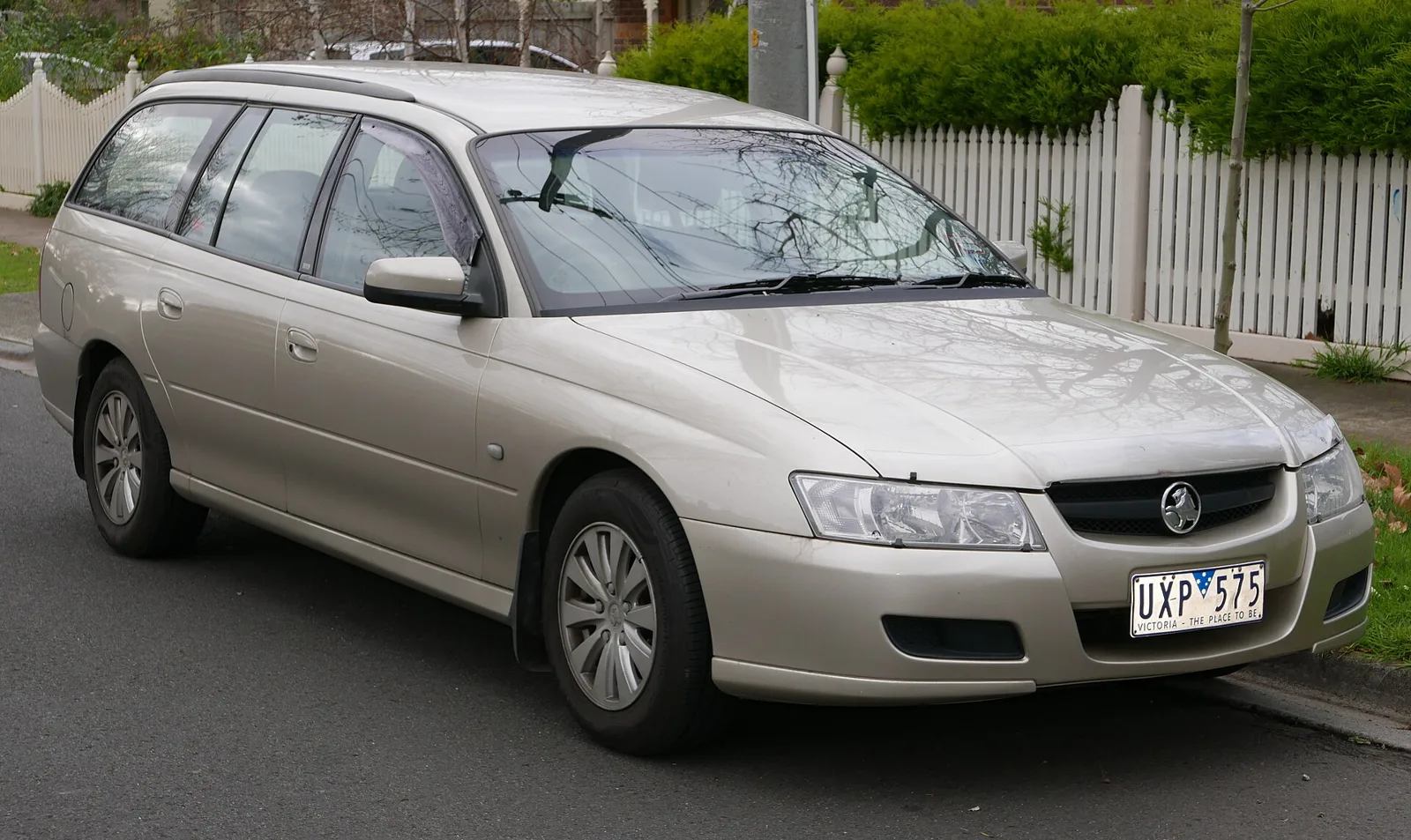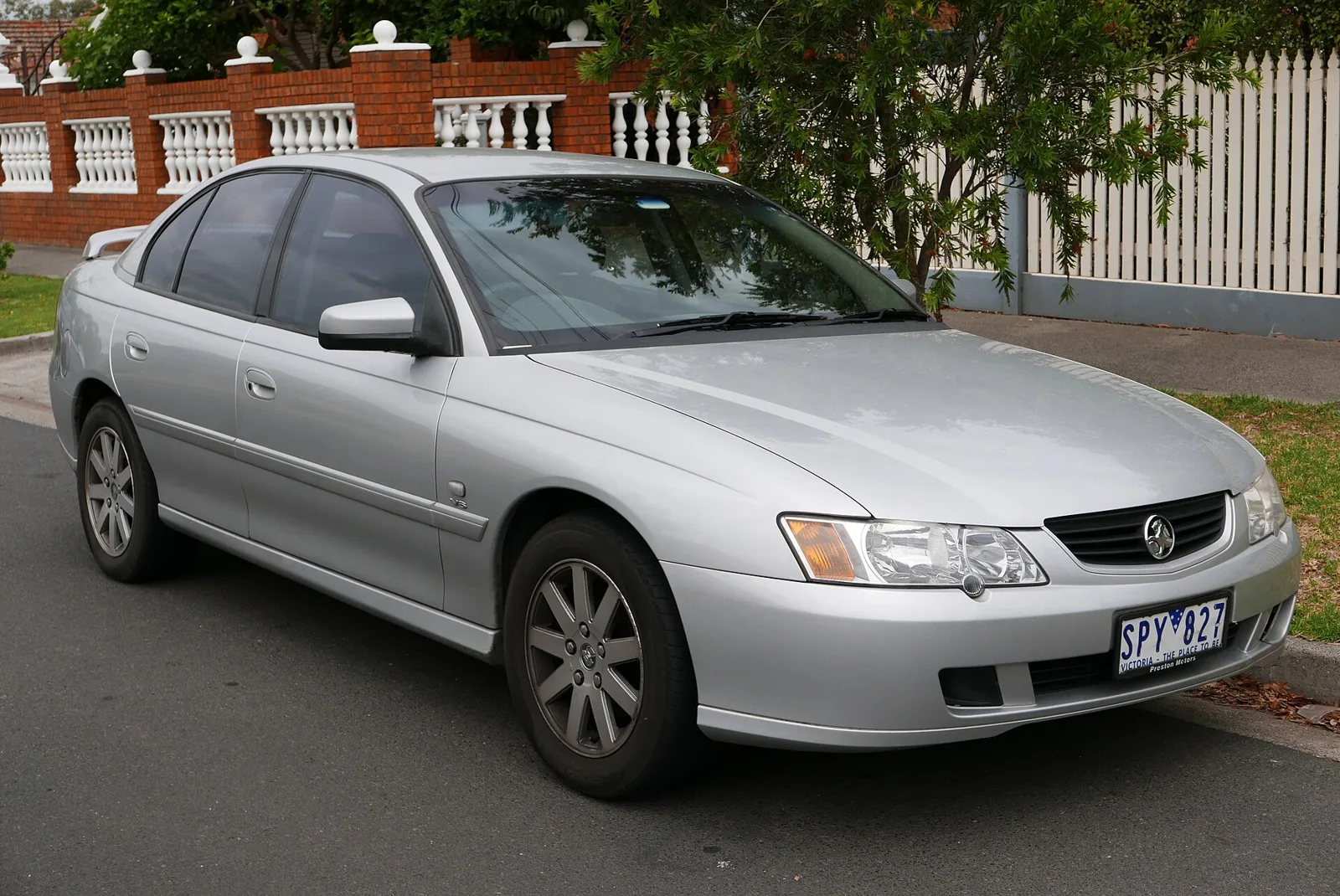
The 2002 VY broke with the look of the late-1990s Commodores, added all-wheel drive wagons and a four-door ute, and was the last to carry the 3.8-litre Ecotec V6.
Built from September 2002 to August 2004, the VY brought all-wheel drive wagons, HSV's Y Series and the Crewman four-door ute. The 3.8-litre Ecotec V6 ended its Commodore run in this model, which stayed on sale for just under two years.
The VY was the first real redesign of the third-generation Commodore, released in September 2002 alongside the Ford BA Falcon. The 3.8-litre Ecotec V6 had first appeared in the VN 16 years earlier, and the VY was the last Commodore to keep it.
Under the skin it was still a Commodore, but the range grew into all-wheel drive wagons, a four-door ute and a Y Series performance line from HSV. The VY stayed on sale for just under two years, and it left a wider family of cars than the one that arrived.
What changed in the VY's design?
The VY had a new front grille, new headlights and taillights, and an upgraded interior with a reworked dash, centre console and steering wheel. Standard features on some models included Twilight Sentinel automatic headlamp control and passenger airbags. The exterior restyle at both ends was modest, while the cabin received the bigger changes.
The new instrument cluster featured a large multi-function digital display. It could show the radio station, the selected gear, a trip computer with a stopwatch function and service reminders. A mobile phone power outlet sat under the centre console.
Some models also had Blaupunkt audio and road-speed sensitive intermittent wipers. The interior changes were significant, while the exterior restyle at the front and rear was minor.
The VY was the first real break from the look of the late-1990s Commodores, and the last to carry the old Ecotec V6.
What did the Series II update change?
The Series II arrived in August 2003 with cruise control, front power windows and variable front seat lumbar support. Sports variants received a 245 kW (329 hp) V8, and the Calais was repositioned with a subtle body kit and a firmer FE 1.5 suspension tune.
The Calais option of a 235 kW V8 replaced the earlier 225 kW version, giving the luxury model a sportier edge. Its FE 1.5 suspension tune was firmer than the standard car's, but it was not as stiff as the FE2 fitted to the sports variants, so the Calais kept a comfort-led character. The changes were evolutionary, and the basic shape of the VY stayed the same.
Which VY models were available?
The core range ran from the Executive to the Calais. The Executive started with a 3.8-litre V6 and a manual gearbox, the S and SS were the sporting choices, and the Berlina and Calais led the luxury side of the line-up.
- Executive: 3.8-litre V6 at 152 kW (204 hp), five-speed manual with a four-speed automatic option, and cruise control
- Acclaim: four-speed automatic, traction control and air conditioning
- S: FE2 sports suspension and a supercharged V6 option at 171 kW (229 hp)
- SV8: 5.7-litre V8 at 235 kW (315 hp), 17-inch alloys and a six-speed manual option
- SS: a 5.7-litre V8 with 18-inch alloys and a limited-slip differential
- Berlina: 3.8-litre V6 with an optional LS1 V8 at 225 kW (302 hp), and 16-inch alloys
- Calais: supercharged V6 or the LS1, with 16-inch alloys in Series 1 and 17-inch alloys in Series 2
The Berlina and Calais sat above the others in equipment and price. The Berlina offered climate control and a four-speed automatic as standard, and its option list included the LS1 V8.
What was the Berlina International?
Holden built 325 Series 1 wagons in 2002, a limited run in Turbine Grey. These were a step above the Berlina, with Calais headlights, unique satin grey badging and dual-zone climate control. The run was offered only as a wagon, which made it a niche car within the family.
The Berlina International also had 8-way electric front seats without memory, Pistachio Green leather with Racquet cloth inserts, and six-spoke alloy wheels borrowed from the WH Statesman. It was a small but distinctive special in the VY range.
What were the Adventra and its all-wheel drive?
The Adventra was Holden's first wagon with all-wheel drive. It was built from October 2003 until February 2005, with a 5.7-litre V8 rated at 235 kW (315 hp) and a four-speed automatic. It came in two levels, CX8 and LX8.
Over the standard wagon, the Adventra added a 60/40 split rear seat and extra gauges above the centre vents. Black plastic trim on the bumpers and wheel guards set it apart from the Commodore wagon.
Holden replaced the VY II Adventra with a VZ version in 2004, and that car brought a V6 as the principal engine. The VZ version carried the all-wheel drive wagon idea into the next model year, and the VY-based Adventra's production window closed in February 2005.
How did the ute and Crewman range change?
The VU ute was facelifted in September 2002 into the VY-based ute, and the same three specifications carried over. The commercial range then gained two new models in 2003, and the expansion was the first major one since 1990.
The One Tonner cab-chassis returned after an 18-year hiatus in 2003. Holden's first four-door ute, the Crewman, arrived alongside it, with a 3,206 mm wheelbase against the ute's 2,939 mm, and a tray of 1,463 mm against the ute's 2,193 mm.
In December 2003 Holden released the Crewman Cross 8, an all-wheel drive ute with a 225 kW (302 hp) V8 and a four-speed automatic.
What did HSV's Y Series include?
HSV stopped using the VY code for its products and called them the Y Series, to separate them from the mainstream cars. The Y Series Senators from 2003 used the 5.7-litre V8 at 260 kW (349 hp), and Series II lifted that output to 285 kW (382 hp).
The Y Series Maloo started with 167 standard and 132 R8 utes in the first series. The second series built 312 standard and 361 R8 models, with the LS1 rising from 260 kW to 285 kW (382 hp).
The Clubsport used a revised 5.7-litre V8 producing 260 kW, offered with a four-speed automatic or a six-speed manual. Only 100 GTS cars were built, by special order.
The Senator Signature offered 19-inch wheels and leather trim, while the ordinary Senator sat on 18-inch wheels. The Senator Signature was the luxury end of the HSV family.
What was the Avalanche?
The Avalanche was an all-wheel drive crossover built by HSV from 2003 to 2005. Its LS1 V8 made 270 kW (360 hp) and 475 N m (350 lb ft), and permanent all-wheel drive sent 62 percent of the torque to the rear. It was based on the Adventra LX8 crossover wagon, so the two cars shared their basic engineering.
The XUV dual-cab utility was derived from the Crewman Cross 8 and sat in the same HSV family. It was built on the Crewman Cross 8 rather than on the wagon.
The Avalanche used a four-speed 4L65-E automatic. The later Avalanches were built over nine months, from April to December 2005, and they can be told apart by a re-profiled front bumper. Its production run was short because the LS1 was being phased out under Euro III emissions rules, which ended its life in late 2005.
Where were VY Commodores sold overseas?
Chevrolet Lumina exports to the Middle East began in 2002 with the VY, following the VX pattern. The Lumina also went to Malaysia from September 2003, first in LTZ trim based on the Berlina, and Singapore took the car in 2004.
The Brazilian arm of GM sold the car as the Chevrolet Omega from 2003, replacing the VX-based version. Brazilian sales of the VY-based Omega ended in 2005, when the VZ-based model took over.
How did the VY compete in motorsport?
The VY was entered in the Supercars Championship during the years 2003 to 2005. The VY's racing career was short, and the car is better known as a road car and as the base for HSV's Y Series.
What did the Senator add inside?
The Y Series Senator had a centre stack with oil and battery gauges, shale leather trim and white backing behind the instruments. Carbon fibre trim ran through the cabin, and a four-spoke leather steering wheel carried remote audio controls.
HSV redesigned the front seats after customers complained that the originals were too uncomfortable. The car also had power mirrors and windows, plus cruise control and climate control, an engine immobiliser, and a rear DVD player with headphones.
The Senator also had a Blaupunkt 6-disc CD stacker and eight speakers, and its fully independent multi-link rear suspension was standard. Electric tyre pressure monitoring and HID driving lights were added as safety features.
What was the equipment across the VY range?
The Executive included ABS, brake assist, a CD player, a power antenna, a security system, a trip computer and cruise control, with 15-inch steel wheels and air conditioning as standard. The Berlina and Calais added climate control and a six-disc CD player to that base.
The Acclaim added front and rear power windows, side impact airbags and traction control, with 15-inch alloy wheels. The S and SV8 brought FE2 sports suspension, and the SS added a limited-slip differential and 18-inch wheels.
The Calais offered Bose speakers, a luggage net, rear park assist and 16-inch alloys in the first series, which moved to 17-inch alloys in Series 2. Its 4-speed automatic and V6 supercharger made it the luxury option in the line-up.
Did the Crewman Cross 8 differ from the Crewman?
The Cross 8 was the all-wheel drive version of the Crewman. It received bolstered wheelarches, a raised ride height and additional equipment, and its only drivetrain was the upgraded Gen 3 V8 with a four-speed automatic. Holden released it in December 2003, after the Crewman had launched earlier that year.
V6 versions of the One Tonner and Crewman were available only with automatic transmission, which kept the commercial range simple.
What colours did the Y Series Maloo wear?
The first Y Series Maloo came in Hothouse Green and Turbine Grey, with climate control air conditioning and the Performance brake system as standard. The R8 had the Premium brake system as standard. Holden's Y Series colour choices were limited to a few paints, and the second series added its own.
The second series added Syracuse gold and HSV Ultra Violet paint. Its LS1 rose to 285 kW (382 hp), the same upgrade that the Series II Senator received, and the second series was built in 312 standard and 361 R8 models.
Holden Commodore VY specifications
| Specification | Detail |
|---|---|
| Released | September 2002; Series II in August 2003; production ended August 2004 |
| Base V6 | 3.8-litre Ecotec, 152 kW (204 hp); supercharged option at 171 kW (229 hp) |
| V8 | 5.7-litre Gen III, 235 kW (315 hp); 245 kW (329 hp) in Series II sports variants |
| Senator | 260 kW (349 hp), rising to 285 kW (382 hp) in Series II |
| Adventra | 5.7-litre V8 at 235 kW (315 hp), four-speed automatic, all-wheel drive |
| Avalanche | 270 kW (360 hp) and 475 N m (350 lb ft), all-wheel drive |
| Crewman wheelbase | 3,206 mm, against 2,939 mm for the ute |
| One Tonner | Returned in 2003 after an 18-year hiatus |