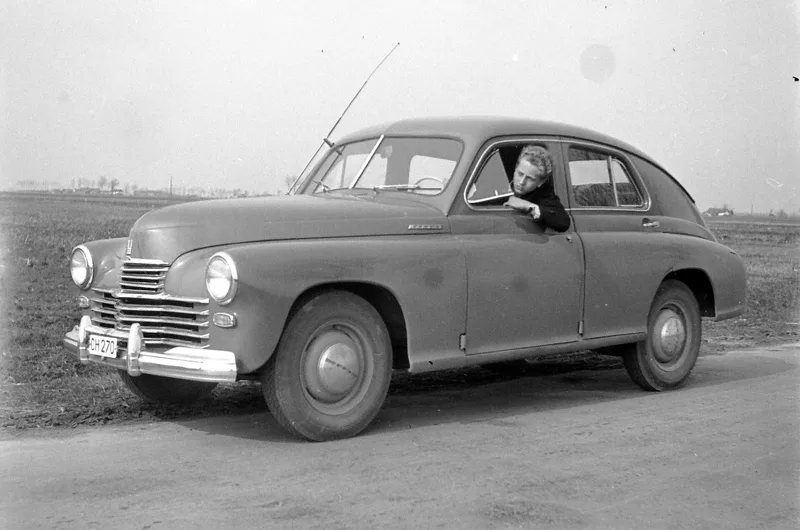
A licence-built Soviet Pobeda that became a Polish taxi, van, station wagon and railway inspection car over 22 years of production.
The FSO Warszawa was a car built in Warsaw from 1951 to 1973, based on the Soviet GAZ-M20 Pobeda. It used a 2.1-litre side-valve engine rated at 50 hp, served widely as a taxi and sold 254,471 units in total.
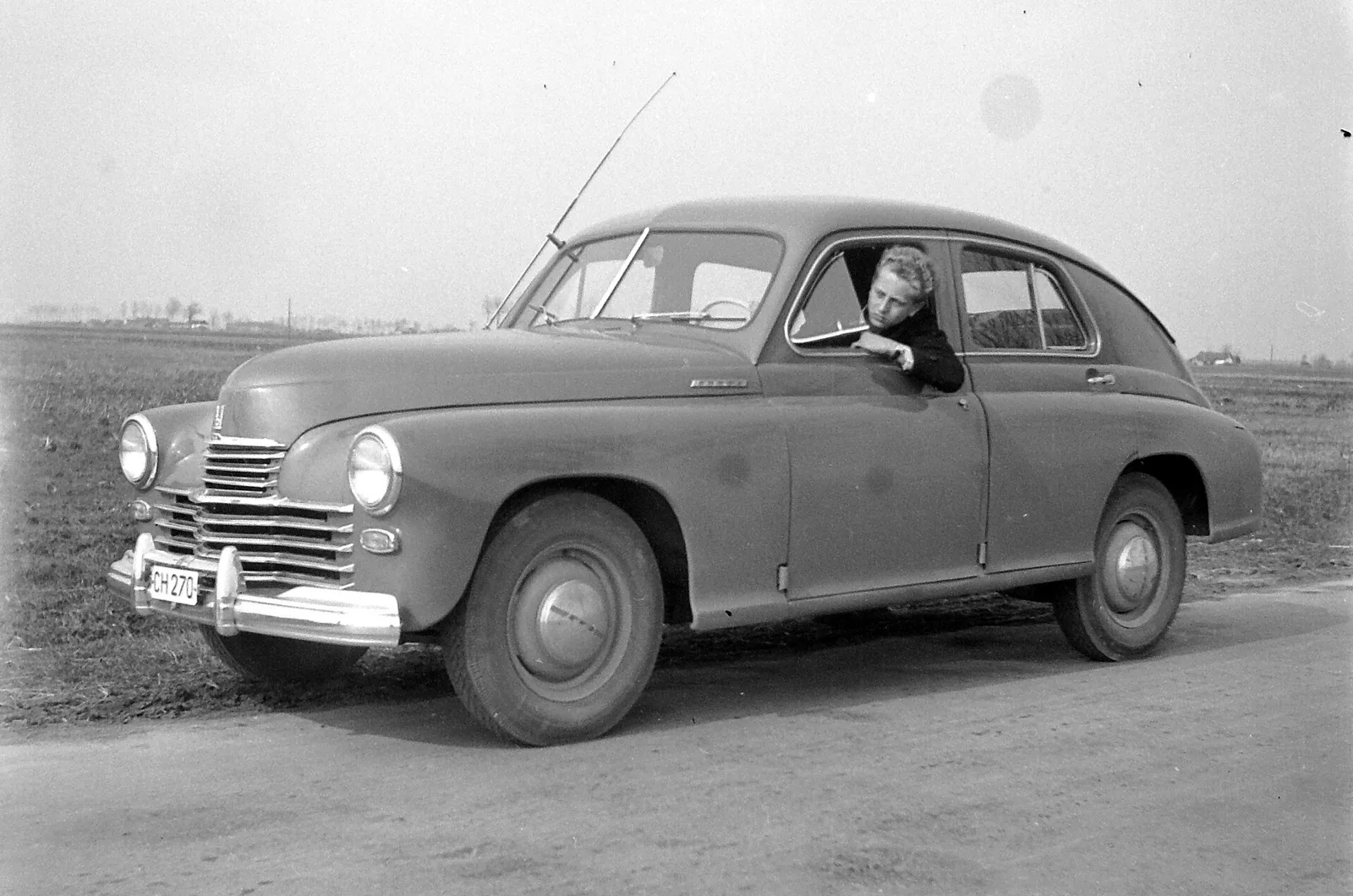
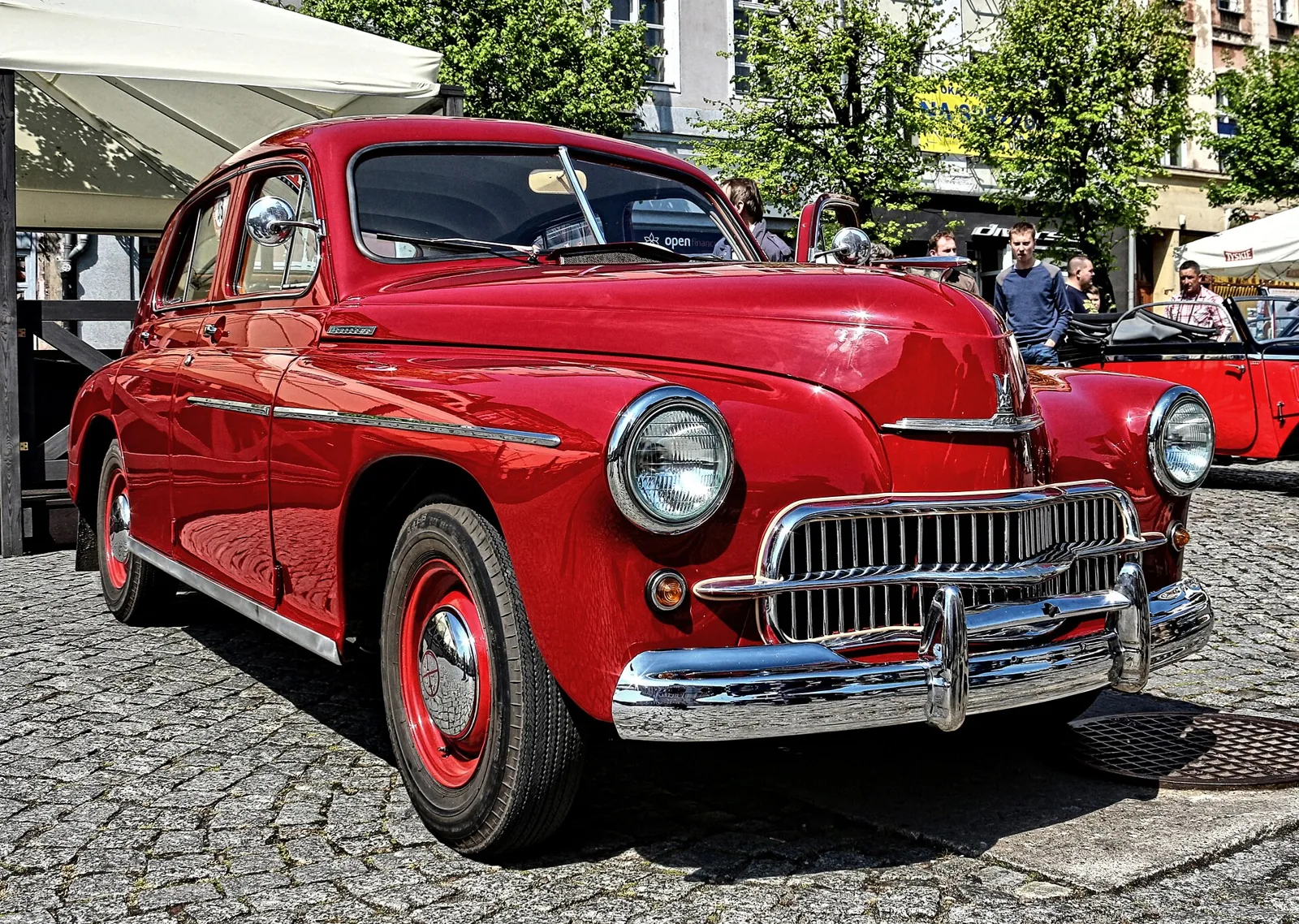
The Warszawa was Poland's first new post-war design, yet for its first six years it was almost the same car as the Soviet Pobeda it was copied from. Built at the FSO factory in Warsaw, it went on to serve as a taxi, a van, a station wagon, a police car and even a railway inspection vehicle. Production totalled 254,471 cars before the last one left the line in 1973.
Where did the Warszawa come from?
The Warszawa began as a licence-built copy of the Soviet GAZ Pobeda. GAZ handed Poland that licence at Joseph Stalin's insistence, and until 1957 the Polish car was practically identical to its Soviet original. The name simply reflected the capital city, Warsaw.
The Pobeda had started production in 1946 and carried technical features derived from the 1938 Opel Kapitan, so the Warszawa was already dated when it arrived. Exports began in 1954, with sales to Romania, China, Bulgaria and Albania, and the car found a ready market among the states of the Eastern Bloc.
Poland's first newly designed post-war car began life as a licence copy of a Soviet Pobeda.
How did the Warszawa engine develop?
The first cars used a side-valve M-20 engine of 2.1 litres (2,120 cc), the same unit as the Pobeda, which produced 50 hp (37 kW). In 1957 compression climbed to 6.8:1 from 6.2:1, and output crept up to 52 hp (38 kW).
Development had been moving elsewhere too. A new four-speed gearbox, begun in 1956, proved unworkable on the road and was shelved. The same year brought work on an overhead-valve engine, a copy of the Etendard unit from the Renault Fregate, which reached Warszawas in 1962.
The OHV inline-four produced 70 hp (51 kW), a clear step away from the old side-valve design. Cars fitted with it were known as the Warszawa 202.
What did the 201 change?
The 201 of 1960 was a lightly modernised 200 that brought around 200 technical improvements. These included rear combination lights, revised electrics, 15-inch wheels in place of the earlier 16-inch units, telescopic shock absorbers and a revised rear bumper. A Lux version came with a roof rack as standard, and two-tone paint.
The earlier 1957 model had begun life as the M20 model 57 before being renamed the Warszawa 200. Its front end was restyled, and the engine changes that came with it were the first real step away from the original Pobeda.
Specifications
| Specification | Detail |
|---|---|
| Built | 1951 to 1973, FSO factory in Warsaw |
| Based on | GAZ-M20 Pobeda, until 1957 identical |
| Original engine | Side-valve M-20, 2.1 litres (2,120 cc) |
| Output, original | 50 hp (37 kW) |
| Output, Warszawa 200 | 52 hp (38 kW) |
| Output, Warszawa 202 | 70 hp (51 kW), OHV inline-four from 1962 |
| Compression ratio, 1957 | 6.2:1 raised to 6.8:1 |
| Pickup payload | 500 kg, two people |
| Van payload | 400 kg (201F) |
| Station wagon top speed | 128 km/h (80 mph), 223-K |
| Total production | 254,471 cars |
| Exports | 72,834 by 1973 |
How did the body change in the 1960s?
In 1964 the body became a ponton, three-box design, a shape that had become mainstream in Europe. The car still looked heavy to western eyes, but the change brought it into line with the wider market. Model designations changed to 203 for the OHV engine and 204 for the sidevalve engine.
Peugeot protested in 1968, because it held rights to model names with three digits and a zero in the middle. FSO responded by renumbering the cars 223 and 224, and those numbers stayed for the rest of the car's life.
In 1967 FSO announced that a Perkins 1.76-litre four-cylinder diesel would be fitted to export Warszawas. Those cars were due to debut at the Poznan International Fair in June 1967, which shows how far the export plans had been pushed.
Why did the Warszawa become a taxi?
Taxi operators liked the Warszawa because it was sturdy and rugged, and it became a common sight in that role. It was underpowered for its weight and used a lot of fuel, but the toughness made those faults easier to accept for a working car.
The car's reputation as a workhorse shaped the rest of its life. Vans, pickups, draisines and police cars all leaned on the same mechanicals, which kept the price of each variant down.
What vans and utility vehicles were built?
The Warszawa became the base for two rigid panel vans, the Zuk, built from 1958 to 1997, and the Nysa, which ran from 1958 until 1994. Its gearbox and clutch, along with its chassis, also went into the FSR Tarpan, and the basic chassis stayed in production for decades.
The van model 201F had two doors. Its fuel tank sat beneath the driver's seat, and the spare wheel lived under the floor at the back, freeing up a fairly large load area. Loading was through a two-piece rear hatch, each half hinged at the top and bottom of the opening, and the suspension was reinforced for a payload of 400 kg, against 500 kg for the pickup.
A side-glass version of the van was also built, and it was used regularly as an ambulance. In 1964 production of the modernised 203F and 204F began, with the front of the body the only part to change. The vans were withdrawn in 1965, when the station wagon arrived.
What was the Warszawa pickup for?
The pickup was a coupe utility developed after Polish cyclists asked for a light delivery vehicle to carry their bicycles and spare parts. It could carry two people and a 500 kg payload. Several hundred were built each year, but output stayed small compared with the saloon, and most went to state-owned enterprises and institutions.
The 223P could reach 120 km/h, and the 224P 105 km/h. The speedometer suggested that the car should not be driven above 70 km/h when fully loaded. The loading bed had an opening tailgate, a floor of pine boards and a tarpaulin over an upper steel body.
When did the station wagon arrive?
The station wagon was presented at the Poznan International Fair in June 1965 as the 203-K and 204-K, and it entered mass production at the end of that year. The models were later renamed 223-K and 224-K, and the new names stuck.
Its roof was lengthened, and window glass was fitted above the rear fenders in the luggage area. A fixed roof rack with a 40 kg load capacity was added, along with reinforced suspension and wider tyres. The 223-K reached 128 km/h (80 mph), and the sidevalve 224-K managed 115 km/h (71 mph).
Cezary Nawrot designed the body, and a team in the Body Design Office, under Stanislaw Lukaszewicz, carried out the technical work.
How was the draisine used by the railways?
The Warszawa draisine served the Polish State Railways for field inspections, with production running from 1956 to 1973. A turntable under the chassis and a screw jack allowed the car to be turned on the track, so it could run in both directions at speed. Only about 200 are estimated to have been made. Most were saloons, though pickups were built as well, and a small number of station wagons went for export.
Its top speed was 105 km/h (65 mph), yet PKP rules capped it at 80 km/h (50 mph) because the braking distance on rails was long. Draisines were exported to Czechoslovakia and Bulgaria, and a Hungarian copy was built with further changes. Most were removed from service and scrapped by the mid-1990s, leaving only a handful.
Did the police use the Warszawa?
A police version was made for the Milicja Obywatelska and Poland's army, and the last batch was completed in 1972. It came in white or cream, with a blue side stripe and Milicja or MO lettering, and it carried a blue roof light and a two-tone siren.
The police car shared the modernisations applied to the civilian and commercial models, and it kept the four-cylinder engine. How many police cars were built has never been officially recorded, because state vehicles were not always logged.
What did the M-20U prototype offer?
The M-20U prototype of 1956 had a new front end and a compression ratio of 7:1, which lifted output to 60 hp at 3900 rpm. It reached 132 km/h and never went beyond the prototype stage.
The new bonnet, wings, bumpers and grille gave the car a fresh look, and it had vertical combined rear lamps and a modernised interior. Its grille carried a third headlight in the centre, which echoed the look of the Tatra 603. The body changes left the supporting structure untouched, and production tooling changed as little as possible. Maximum torque was 127 Nm, and an overdrive with a 0.83:1 ratio was electrically engaged.
Why did the Ghia project fail?
FSO joined the Italian firm Carrozzeria Ghia of Turin in 1957 to design a modern body for the Warszawa. Two complete chassis went to Italy in the autumn of 1957, and they returned in the first half of 1959 as driving prototypes of a saloon and an estate. The project never reached production, mainly because of the high cost of putting it into production.
The prototype designer was Sergio Sartorelli, whose credits included the Karmann Ghia Volkswagen and the Fiat 126, plus the Regata and Ritmo. The prototypes used parts from Lancia, Fiat, Alfa Romeo and Chrysler, and the design cost $62,000. The cars were scrapped at a research centre in Falenica, outside Warsaw, between 1976 and 1978.
A further prototype, the Warszawa 210, was built in 1964 with a six-cylinder engine and a more modern body. It kept the old Pobeda-derived chassis, and it went no further.
How many Warszawas were exported?
By 1973, 72,834 cars had been sent abroad to 25 countries on five continents. Some sources give 81,804, because they include 8,970 cars sold inside Poland as internal export. Most exports went to the Eastern Bloc.
Bulgaria was the largest market, with 26,655 cars, followed by Hungary with 21,142 and China with 8,050. Romania took 5,653, Czechoslovakia 3,396 and Turkey 2,217. Smaller numbers went to Norway, Finland and Cuba, and 26 were even exported back to the Soviet Union, where the Pobeda had begun.
In China the Fenghuang sedan appeared in 1958, built on the Warszawa chassis and engine with a body styled after the 1956 Packard models. A Jiaotong prototype followed in 1959. China eventually chose the Mercedes-Benz 220S (W180) as its basis, and that car became the Shanghai SH760 in 1964.
How did production end?
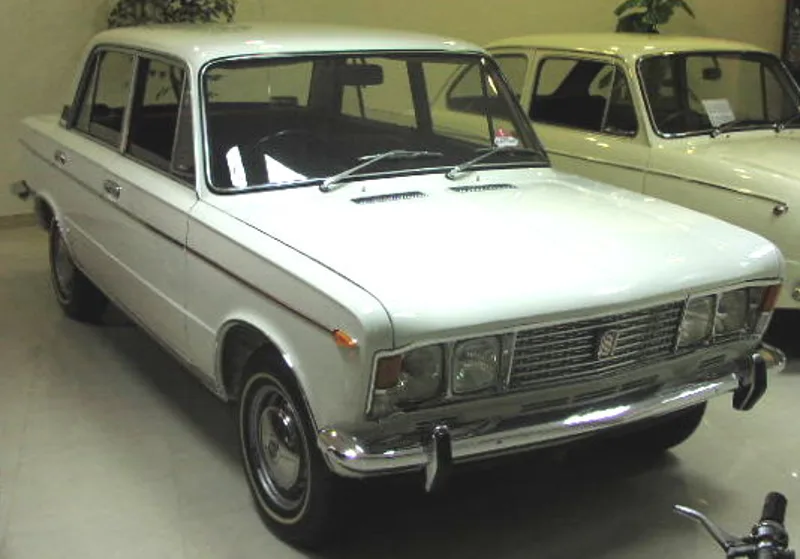
From 1965 FSO began planning a successor. Its options were new FSO products, such as the Warszawa 210 and Syrena 110, or a licence for a modern foreign model. The licence route won out, and Renault's French offer was turned down on unfavourable terms.
Fiat offered the 1300/1500, but the Poles judged that model too small. FSO picked the bigger Fiat 125 for the job, even though the Polish car kept the cheaper mechanics of the 1300/1500. The Warszawa was built until late 1973, and by then it carried numerous Polski Fiat 125p components.
Sales of the 125p far outstripped the Warszawa, especially abroad. The smaller, more modern car ended the Warszawa's run.