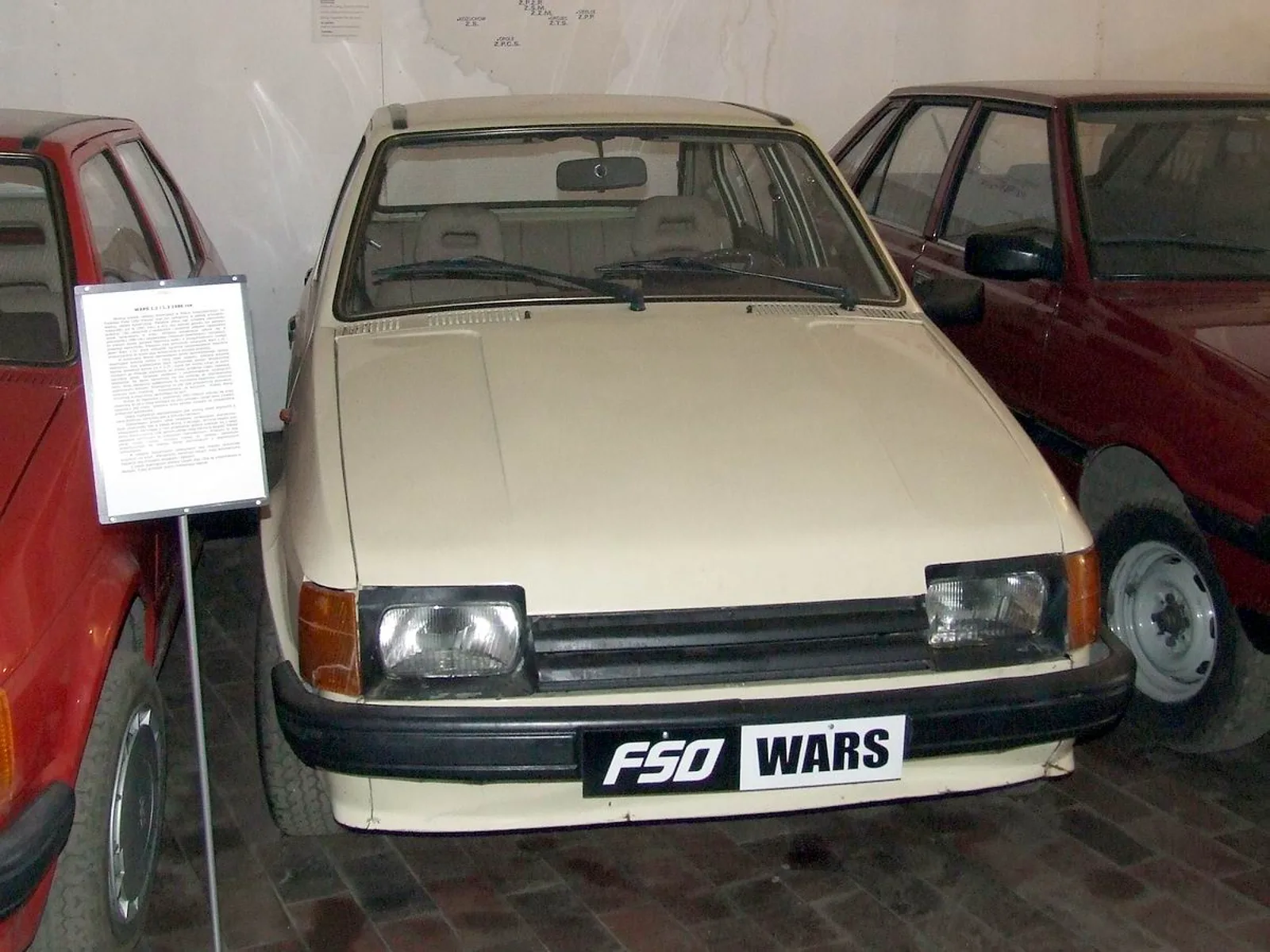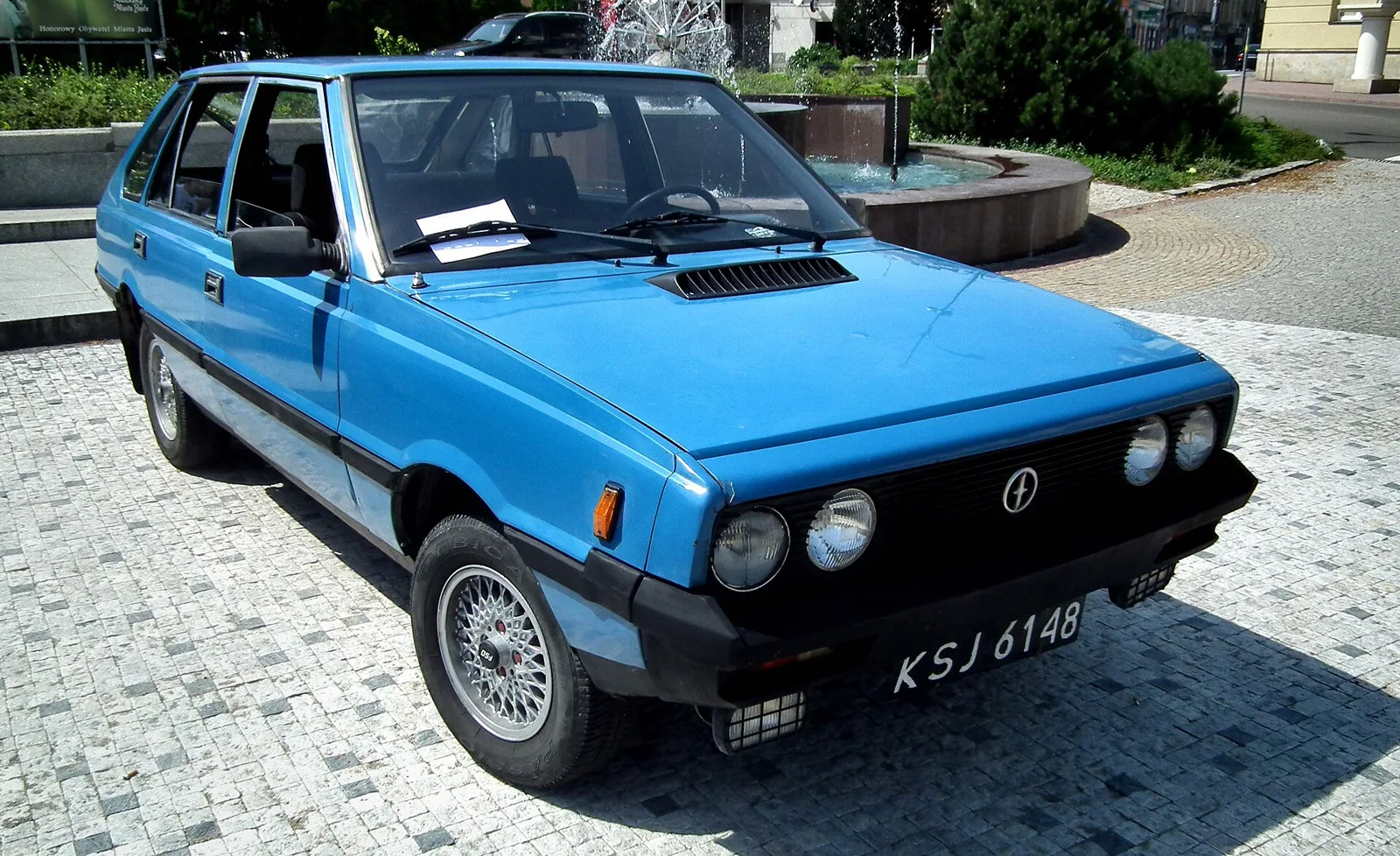
A Fiat 125p floorpan under a new liftback body, the Polonez ran for 24 years, sold abroad in its thousands and became a fixture across Central and Eastern Europe.
The FSO Polonez was a Polish compact car built by Fabryka Samochodow Osobowych from 1978 to 2002. It used the Polski Fiat 125p platform under a new liftback body, and more than one million were made excluding pickup and van variants. It remained popular at home until Poland joined the EU in 2004.
The FSO Polonez was a Polish car developed with Fiat and built by Fabryka Samochodow Osobowych between 1978 and 2002. Its mechanics came from the Polski Fiat 125p, but the body was new, and the family of hatchbacks, estates, sedans and vans sold more than one million units across its life.
What was the FSO Polonez?
Built in Poland between 1978 and 2002, the Polonez was a compact family car sold as hatchback, sedan, estate and van. Its underpinnings came from the Polski Fiat 125p, and the model exceeded a million units. Poland kept buying it at home until the country joined the European Union in 2004.
The name comes from the Polish dance, the polonaise, chosen by a readers' poll run by a Warsaw newspaper. The car was offered as two- and four-door compact-sized models, as station wagons, and as commercial versions including a pickup, a cargo van and an ambulance.
Although it was a Polish product, the Polonez was marketed in many other nations. About 33,000 vehicles were still registered in Poland in 2021.
A Fiat-derived floorpan, a Polish body and 24 years of production that made it a regional fixture.
Where did the Polonez design come from?
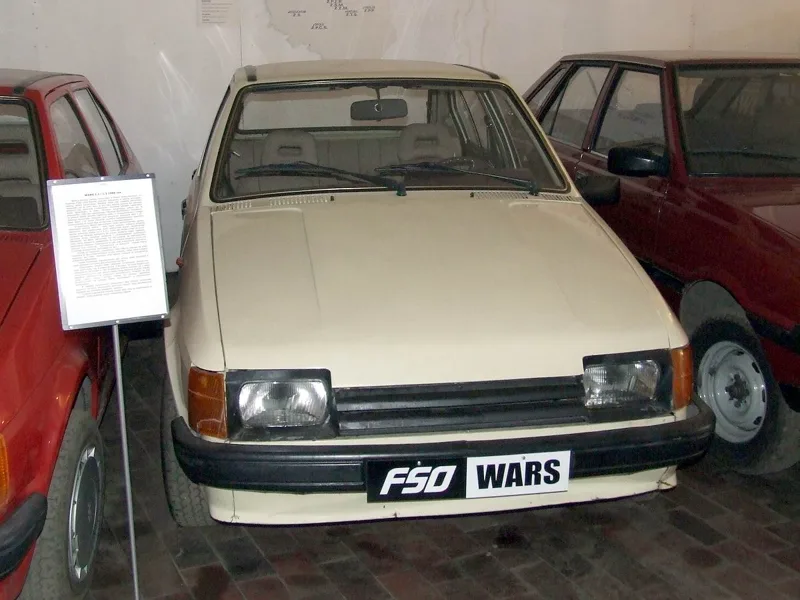
The Polonez borrowed its floorpan, chassis and running gear from the Polski Fiat 125p, which FSO built under licence from Fiat. Its body was a new liftback first drawn in the early 1970s by Centro Stile Fiat, and Polish requirements changed that original design before production began.
FSO chose Fiat's ESV 2000 safety prototype as the base of the new car in 1974. Fiat's own designation for the project was Type 137. Zbigniew Wattson, an FSO designer, joined Walter de Silva to convert the ESV project so it suited the 125p floorpan and running gear.
The car was meant to carry Fiat's 2.0-litre DOHC engine in the 1980s. That plan fell away because financial problems made it impossible to buy the licence from Fiat. Producing the 125p alongside the Polonez for more than a decade, with shared mechanical upgrades, was the practical result of that limit.
How did the Polonez perform on the road?
The Polonez had a reputation for modest performance, with the exception of versions fitted with the Fiat 2.0 DOHC, the Ford 2.0 SOHC or the Rover 1.4 16V engine. The 1979 Polonez 2000 covered 0 to 100 km/h in 12.0 seconds and reached 175 km/h (109 mph).
The 2000 was sold mostly to government officials, and its Fiat twin-cam produced 82 kW (110 hp) through a five-speed gearbox. A 2-litre Fiat DOHC rally version debuted at the Rallye Monte Carlo.
Safety was a genuine strength. In 1978 the Polonez became the only Eastern European car built to pass US crash tests. A 1994 test to EU regulations hit a concrete block at 50 km/h (31 mph) with 40% of the front, and the Caro 1.9 GLD came through well: every door opened, passengers suffered no critical injuries and no fuel leaked.
What engines did the Polonez use?
Engines ran from a 1,481 cc inline-four to a 1,995 cc Fiat twin-cam, with a Citroen 1,905 cc diesel in the Caro GLD and a Ford 2.0-litre in the SLE. Turbocharged 1.5-litre cars went into mass production in 1986, and the 1.6 LE with a 1,598 cc inline-four appeared the following year.
The 1.6 LE produced 64 kW (87 PS) from its 1,598 cc engine, with a top speed of 155 km/h (96 mph). The 1.5 SLE Turbo, introduced in December 1989, used a compression ratio of 8.5 to 1 and produced 180 Nm (133 lb ft) of torque. Its top speed was 180 km/h (112 mph).
The Polonez 2.0 SLE, introduced in 1990, used a Ford 2.0-litre engine producing 105 PS (77 kW). It reached 100 km/h in 12.5 seconds and topped out at 165 km/h (103 mph). The 1.9 GLD diesel of the Caro generation was a Citroen unit producing 50 kW (68 PS), and it sold across mainland Europe.
What was the Stratopolonez?
The Stratopolonez was a one-off competition car built with Lancia Stratos components salvaged from a crashed machine. The original car was driven by Andrzej Jaroszewicz, son of Prime Minister Piotr Jaroszewicz, who crashed into a tree during Rally Poland in 1977 and could not finish.
FSO's research and development centre built the new machine in 1978. Its engine output was raised to 280 PS, and it used an FSC Star radiator at the front as a counterweight, since the car had become mid-engined. It raced until 1985 with four drivers, including Adam Polak and Maciej Stawowiak.
Marian Bublewicz made improvements to the car, widening the rear arches and strengthening the area around the windscreen. The car then went to the Museum of Technology in Warsaw. In 2000 students from the Warsaw Motor Technical College restored it as part of their diploma thesis.
How did the Polonez change through the 1990s?
The Caro of 1991 brought new headlamps, a new grille, new bumpers and improved front crash safety, while the 1.9 GLD diesel joined the range. A 1993 facelift widened the front and rear track by 60 mm (2.4 in) and gave the dashboard round speedometer and rev counter dials.
Quality began to improve after 1992 and rose further after 1995, when Daewoo began working with FSO. The 1996 sedan was first called the Atu, then renamed Polonez Atu after the ATU insurance company objected to the name. From 1997 the Caro Plus and Atu Plus carried a new grille, bumpers and dashboard.
The 1.6 GSI with Delphi multi-point fuel injection, a 1598 cc engine producing 62 kW (84 PS), arrived in December 1997. A station wagon, the Daewoo-FSO Kombi 1.6 GSi MPI, went into production in 1999, a year after its prototype was shown.
Which body styles did the Polonez come in?
The range included the hatchback, a sedan, a station wagon, a pickup called the Truck and an extended pickup with small rear seats. Special bodies were built for service vehicles, a fire brigade edition and an ambulance on a higher-roof Cargo LAV body from about 1993.
The three-door Coupe was a rare model, with only about fifty built, and it had wider side doors and its own rear pillar design. The 1980 three-door 1300 and 1500 used the same short front doors as the five-door, and about 300 were made between 1979 and 1981.
Prototype work covered much more than production cars, including a Kombi, a chassis cab, a four-wheel-drive Analog off-roader and a hydro-pneumatic suspension version. The Truck, with a load capacity of up to 1,000 kg (2,205 lb), was valued for its low price and reliability.
How many Polonez were exported?
FSO exported 226,966 cars to foreign markets, with China, the UK, Egypt and France as the main buyers. In Egypt, El Nasr built complete knock-down kits with Arab American Vehicles from 1983 until 1993, replacing the locally built 125p. Imports to the UK stopped in 1997.
In China, YTO Group produced Polonez-based derivatives as the Dongfanghong and Yituo. These came as a station wagon, the LT5021, and a sedan, the LT5022. Trim pieces came from the Volkswagen Santana, and the engine was a carburetted 1.5-litre unit from the Beijing Engine Factory.
The Chinese cars were less successful than their Polish originals, although they shared many interchangeable parts with the Polonez. The Dongfanghong project was connected with Fiat's tractor technology work, which may have influenced the choice of a car.
Why did Polonez production end in 2002?
The last passenger Polonez left the line in the first quarter of 2002, and production ended after 24 years. Its low price had been the main selling point, but demand slumped, and the final versions built were the trucks, valued for reliability and load capacity.
Once Poland joined the European Union on 1 May 2004, the Polonez was rapidly replaced by cheap, tax-free used cars from Western Europe. That same year Polska Fabryka Samochodow tried to restart Truck production as Poltruck, but the venture failed and only a small number of test vehicles were made.
The Polonez has remained a favourite of the Zombol Charity Rally. In 2018 around 300 teams, roughly 40% of all racers, used a version of the Polonez in the event.
FSO Polonez specifications at a glance
| Specification | Detail |
|---|---|
| Production span | 1978 to 2002 |
| Platform | Polski Fiat 125p floorpan with a new liftback body |
| Total output | More than one million, excluding pickup and van variants |
| Polonez 2000 | 1,995 cc Fiat twin-cam, 82 kW (110 hp), 0-100 km/h in 12.0 seconds, 175 km/h (109 mph) |
| Turbo 1.5 SLE | 1,481 cc, 105 hp (78 kW), 180 km/h (112 mph) |
| 2.0 SLE | Ford 2.0-litre, 105 PS (77 kW), 0-100 km/h in 12.5 seconds, 165 km/h (103 mph) |
| Caro 1.9 GLD | 1,905 cc Citroen diesel, 50 kW (68 PS), 150 km/h (93 mph) |
| Truck payload | Up to 1,000 kg (2,205 lb) |
| Exports | 226,966 cars |
| Last passenger car | First quarter of 2002 |