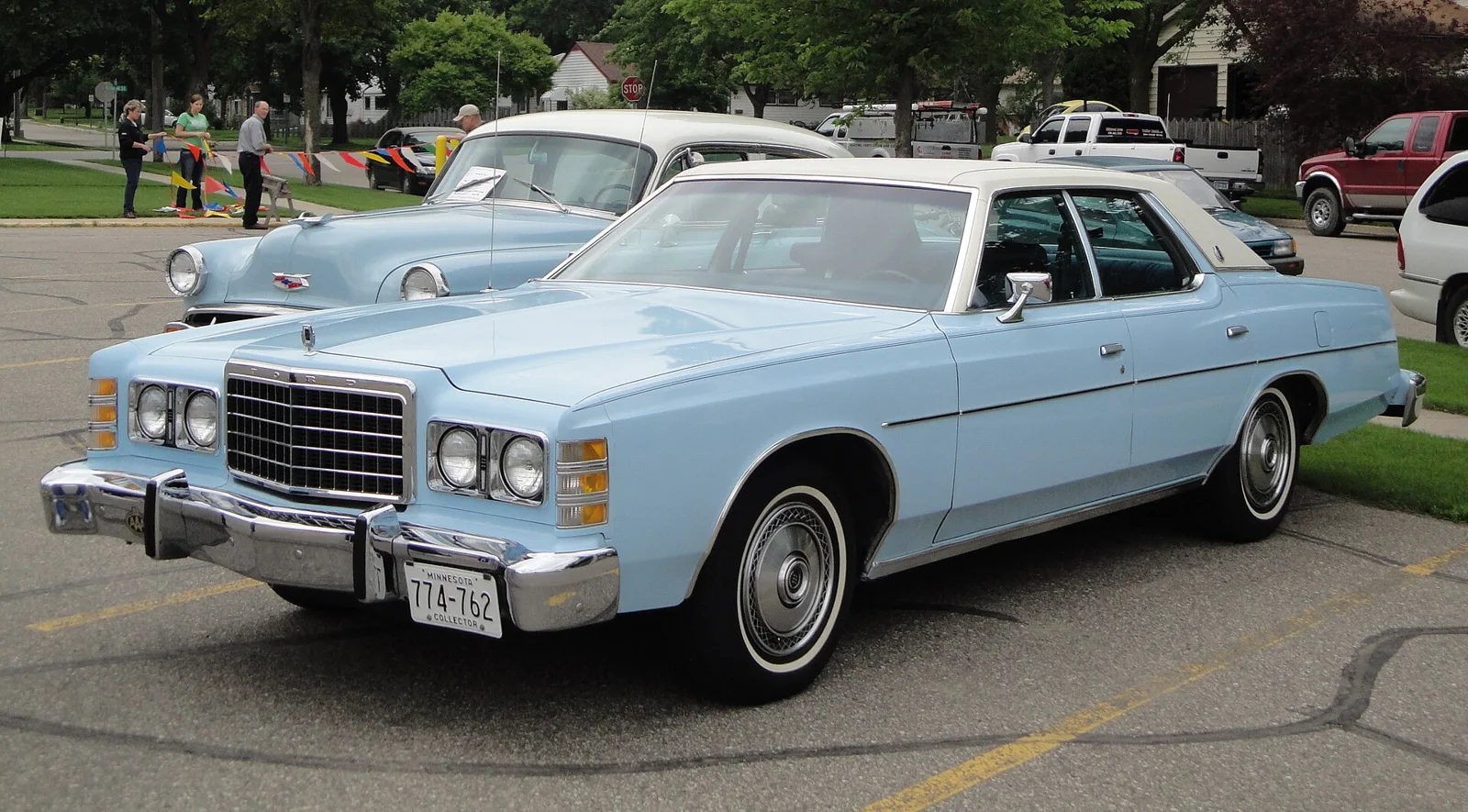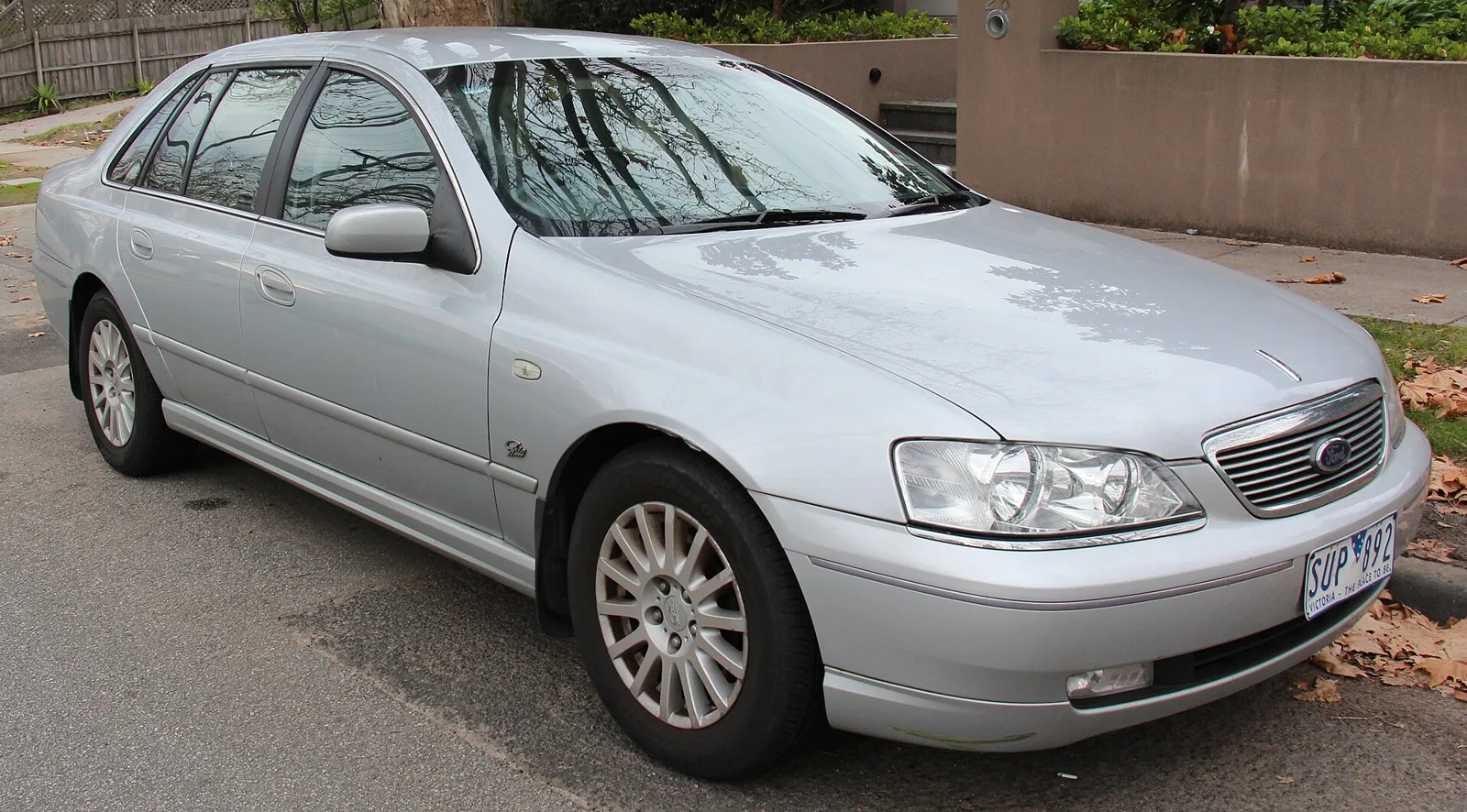
From the locally assembled 1959 Fairlane to the BF G8 and LTD, Ford Australia's full-size luxury sedan ran for almost half a century.
Ford Australia's Fairlane and LTD were full-size luxury sedans built from 1959 to 2007. They began as locally assembled American Fairlanes, became Australian-developed long-wheelbase Falcons, and kept V8 options through most of their life.
The Ford Fairlane and LTD were full-size luxury cars that Ford Australia built from 1959 until 2007, with the LTD arriving in 1973. Over that time the name moved from a locally assembled American model to a home-developed long-wheelbase sedan, and by the late 1990s Holden had overtaken Ford in full-size sales.
Where did the Fairlane name come from?
The name was borrowed from Fair Lane, the Dearborn, Michigan estate of Henry Ford. From 1959 to 1964 the Fairlane was Ford Australia's top model, a locally assembled version of the American car, until an Australian-assembled Galaxie replaced it.
In 1967 Ford Australia revived the name for a home-developed, long-wheelbase luxury car based on its Falcon and Fairmont, placed between the Falcon and the Galaxie in the range. Ford's locally assembled Galaxie had turned into the LTD.
The letters were first read as Lincoln Type Design in Australia, while Ford's later marketing preferred Limited. In 1973 the LTD was replaced by an Australian-developed model based on the Fairlane.
The Fairlane and LTD faced the Holden Brougham from 1968 to 1971, the Statesman from 1971 to 1984, and later the Holden Statesman and Caprice from 1990 to 2007.
A long-wheelbase Falcon-based luxury sedan that kept its V8 for much of its life and ended as the last Fairlane on 13 December 2007.
What did the 1959 Australian Fairlane offer?
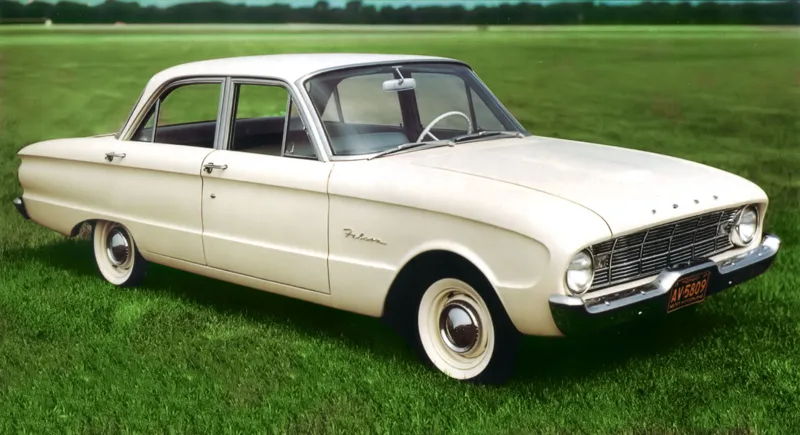
In September 1959 Ford Australia launched three locally assembled models: the Fairlane 500, the cheaper Custom 300 and the Ranch Wagon. They came from Ford of Canada but matched their 1959 US counterparts, and tooling cost almost 1.5 million Australian pounds.
The sedans were nine and a half inches longer and five inches lower than the Customline they replaced. Every model ran a 332-cubic-inch (5.44 L) V8 rated at 204 bhp (152 kW), with a three-speed manual on the Custom 300 and Ranch Wagon and an automatic on the Fairlane 500. The wheelbase was 118 inches.
In 1960 the car adopted Canadian Meteor styling at the front, and its engine rose to 220 bhp (164 kW).
How did the FB, FC and FD intermediates differ?
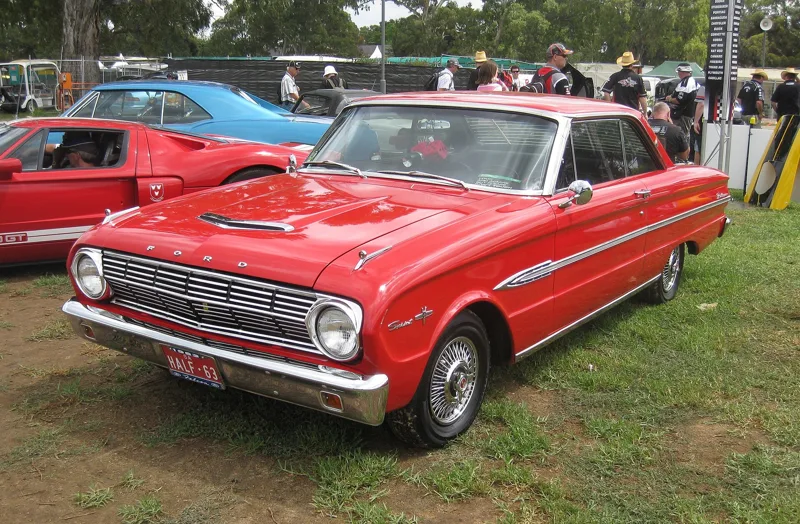
From May 1962 Ford Australia built a smaller 1962 US Fairlane 500 as the FB, which it sold as a compact at 2,000 pounds, 200 pounds less than its predecessor. The FC for 1963 added Ford-O-Matic automatic and a Windsor V8 option, and the FD followed in 1964 before the model was dropped in 1965.
The FB swapped the 332 for a 221-cubic-inch Windsor V8 of 3.62 litres, and it was built at Homebush in Sydney. Some 1,632 were produced.
Assembly of the FC began in November 1962. It had a revised bonnet, front guards, grille, headlamps and taillamps, Ford-O-Matic as standard, and a Windsor V8 of 260 cubic inches (4.3 L) as an option. Australian output for 1963 totalled 1,771.
The FD arrived in April 1964, built from December 1963, without tail fins and with a new seven-bar grille. Buyers could take a 260-cubic-inch V8 with Ford-O-Matic or a 289-cubic-inch V8 (4.74 L) with Cruise-O-Matic. Ford dropped the US Fairlane in 1965 to make way for the Galaxie, after 1,344 had been built in Australia.
What was the ZA Fairlane of 1967?
The ZA arrived in March 1967 as a home-designed car. Its front end recalled the American Falcon sedan of that year, and it was based on the XR Falcon, with the wheelbase stretched from 2819 mm to 2946 mm.
The ZA used the rear quarter panels and boot of the US Fairlane, and square taillights from the 1966 US car replaced the Falcon's round units. The base model had a six of 200 cubic inches (3.3 L), with a 4.74-litre V8 of 289 cubic inches optional, and the Fairlane 500 had that V8 as standard.
Only the automatic could take the V8. A total of 8,814 vehicles were built.
How did the ZB, ZC and ZD series change?
The ZB of March 1968 enlarged the six to 221 cubic inches and the V8 to 302 cubic inches, with the Fairlane 500 still the top model. Its rear badge became script, its taillights came from the 1967 US car, and the base model became the Fairlane Custom.
The ZC of July 1969 brought vertically stacked headlights that recalled the 1966 and 1967 US Fairlane, plus wrap-around taillights. A 221 cu in six was standard on the Custom, a 302 V8 on the 500, and a 351 cu in V8 was optional on both. Air conditioning was available for the first time, and 12,513 ZCs were built.
The ZD of November 1970, for the 1971 model year, made a 250-cubic-inch (4.1 L) six the base engine, kept the 302 and 351 V8s, and restyled the taillights in the XY Falcon manner. Its grille had a metal surround, and the speedometer backing turned black.
Effectively the ZA to ZD were lengthened XR to XY Falcons, with the extra length placed behind the rear door for more legroom.
What did the ZF and ZG Fairlanes bring?
The all-new ZF of April 1972 had swoopier Australian bodywork, though critics said it looked like a four-headlamp XA Falcon. Its styling recalled the US Mercury Montego. The 1973 ZF had the last manual gearbox in the range, and after it every Fairlane was an automatic.
The ZF was also sold in South Africa, where the Falcon had given way to the European Granada. Only the Fairlane 500, with a column shift and seating for six, was offered there, fitted with the 250 hp (186 kW) Cleveland 351 V8.
The ZG arrived in November 1973 with a four-horizontal-bar grille and revised taillight lenses. An anniversary model with a standard 302 followed in 1975, but otherwise the range stayed much as it was for 1974.
What were the P5 LTD and Landau?
The Fairlane-based P5 LTD was released in August 1973, three months before the ZG Fairlane. It was a four-door sedan on an even longer wheelbase than the Fairlane, which was itself a stretched Falcon.
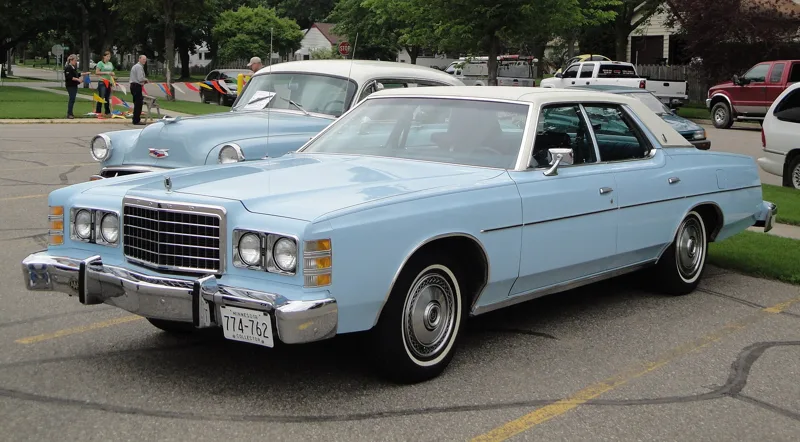
The Landau was a luxury two-door coupe, also a P5, built on the Falcon Hardtop with a 111-inch (2,800 mm) wheelbase against the LTD's 121-inch (3,100 mm). Both had concealed headlamps that were revealed when vacuum-operated grille sections retracted, a technique similar to earlier American Thunderbirds.
Standard equipment on both included integrated air conditioning, automatic transmission, electric windows and a 351 V8. The P5 kept some ZF parts, including the older turn-signal stalk with a floor-mounted high-beam switch.
From July 1975 Ford released 50th Anniversary Town Cars, marking 50 years of Ford in Australia, with 250 of each in the LTD and Fairlane ranges. Fairlane examples had LTD components, 15-inch wheels, leather and electric windows, and most had 302s, while the LTD versions had 351s.
How did the ZH and P6 restyle the car?
The ZH of May 1976 answered complaints that the Fairlane looked too close to the Falcon. Its front and rear ends were lengthened, giving it more bulk and a luxury look reminiscent of the 1968 Mercury Marquis. The 500 became the basic trim, the Custom was deleted, and the Fairlane Marquis took the upscale role.
The Marquis was Ford's answer to the Statesman Caprice, introduced back in 1974 as a rival to the LTD. The ZH also switched to metric engine names, 4.9 L and 5.8 L, and from January 1979 onward Marquises fitted Borg-Warner differentials in place of Ford's 9-inch unit.
The P6 LTD followed in September 1976 with a more flamboyant grille of four round headlamps, which aped Rolls-Royce and other luxury cars. The Landau was dropped at this point.
A 1977 limited-edition LTD called Silver Monarch, which referred to the Silver Jubilee of Elizabeth II, came in Stardust Silver with a silver vinyl roof and Cranberry red velour. The LTD Town Car was another limited edition, offered in 1978.
Why did V8s disappear in the early 1980s?
Ford updated the Fairlane to the ZJ in May 1979, with squared-off lines and a six-light bodyshell that set it apart from the new XD Falcon. Only one Fairlane remained, with a 4.9-litre (302 cu in) or 5.8-litre (351 cu in) V8. In October 1979, with fuel prices in mind, Ford added a 4.1-litre inline-six from the Falcon.
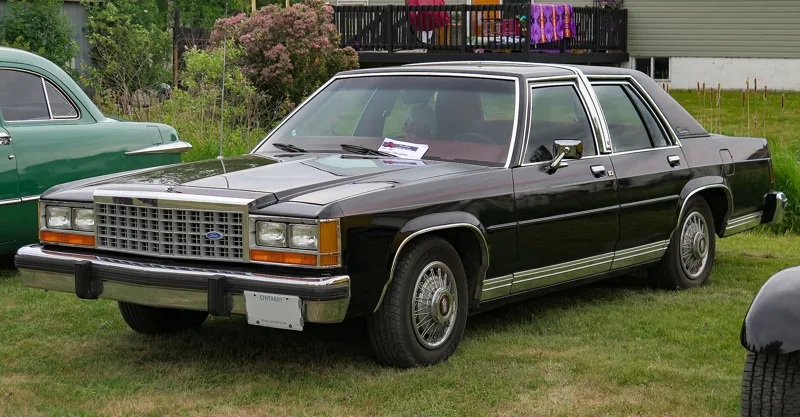
The LTD version of the ZJ arrived in October 1979 as the FC series, with the same wheelbase and body panels as the Fairlane. From mid-1980 the Falcon's 4.1-litre alloy-headed engine became an option, the first time the LTD came with a six.
The ZK of March 1982 deleted the 5.8-litre V8, and in March 1983 the 4.9-litre went too. Ford replaced it with a fuel-injected six that it said matched the V8's acceleration. The ZK also introduced a coil-sprung, Watt's link rear axle, one of the best live rear designs of its time.
What did the NA and NC generations bring?
The NA of June 1988 swapped the Fairlane's straight edges for gentle curves, on the EA26 platform of the EA Falcon. The 4.1-litre six was heavily revised into a 3.9-litre unit with better economy and power.
Officially the cars were EA26s, but enthusiasts preferred a two-letter code, which is why the Fairlane became the NA. The LTD equivalent was the DA. Both sat on the Falcon wagon platform, which left the rear doors unusually narrow on a car that was roomy enough for stretch-limousine builders.
The NB name remains a mystery. The late Ford Australia historian Adrian Ryan insisted that no NB Fairlane existed, yet a 1989 prototype with a four-speed automatic was registered as an NB, and parts catalogues still list one. From November 1989 the NA II and DA II brought the four-speed automatic, replacing the three-speed the Fairlane had used since its debut.
In August 1991 the V8 came back in the NC Fairlane and DC LTD. Ford had dropped V8s in the 1980s and gave in to public pressure. The 5.0-litre was the Canadian-built Windsor used in light trucks, not the Mustang engine, and its inlet manifold was reversed, with accessories moved to suit right-hand drive.
Enthusiasts found that add-ons such as superchargers did not simply bolt on. The NC also introduced the Ghia trim, which could take the V8. A Fairlane wagon was considered in the late 1980s but never built, and a prototype EB Falcon utility with a Fairlane front end did not reach production.
What did the NF and NL Fairlanes look like?
The NF and DF arrived in March 1995 with a major front and rear restyle that made them longer and curvier. Their design was more ornamental than the cleaner NA to NC, and it hid the 1980s origins fairly well. The Sportsman returned for 1996 with the 4.0-litre six.
The NL and DL appeared in September 1996, with rounded lines that recalled the US Taurus and a front end that resembled the Lincoln Town Car. In 1997 a higher Concorde trim arrived, and in 1998 Ford added the Concorde and Concorde Ghia, with a Tickford-modified version available. The NL and DL were the last models with automatic self-levelling rear suspension.
New Zealand's government used the NL Fairlane Ghia as its Crown Limousine, mostly in Amaretto with a few in white. Crown cars had silver 16-inch Concorde wheels, a six-disc CD stacker and flag pole mounts on the front guards. Their government plates ran from CR404 in 1997 to CR437 in 1998, and most were retired after three years. The Fairlane and LTD served the government from the 1970s into the 2010s, when BMW 7 Series models replaced them.
How did the AU and BA series change?
Ford introduced its New Edge look on the AU Fairlane in February 1999. The EA169 platform was a flop, and it let Holden overtake Ford in full-size sales. The AU LTD followed in May 1999, and a high-performance FTE TL50 variant appeared the same year.
The AU range was pared back to the Fairlane Ghia and the LTD, with a Millennium Ghia limited edition in January 2000. The Sportsman Ghia was revived in March 2001, and its seats matched those of the LTD, both in Howe leather. The LTD was exported to Fiji and New Zealand, and a few went to the United Kingdom, where they were converted into hearses and limousines.
The BA of July 2003 moved the Fairlane closer to the BA Falcon, even sharing its taillights. The 5.0-litre gave way to a three-valve 5.4-litre Modular V8, which Australians knew as the Barra 220. The LTD was no longer offered with a six.
The G220 took the Sportsman's place with a 220 kW (295 hp) engine peaking at 4,750 rpm, 472 N-m (348 lb-ft) from 3,250 to 4,000 rpm, a sequential automatic and 17-inch Elegance alloys. The LTD had a power sunroof, satellite navigation, an electrochromic mirror and a vertical bar grille. Between 332 and 347 BA Series I LTDs were built, according to sources.
A facelift in March 2005 brought more chrome, new seven-spoke wheels for the G220, two-tone side skirts, and China Beige leather. The LTD gained a standard REX DVD system that could be swapped for the sunroof. A total of 121 BA II LTDs are listed.
What were the BF models?
The BF of October 2005 renamed the G220 as the G8. Outwardly it matched the BA II, but its steering, suspension, soundproofing and undercarriage were fine-tuned, and fuel economy improved. The Ghia moved from 16-inch to 17-inch alloys as standard.
The G8's V8 peaked at 308 hp (230 kW) at 5,350 rpm, with 369 lb-ft (500 N-m) at 3,500 rpm. A ZF six-speed automatic and a 2.53:1 final drive handled the power, while 225/50 tyres and Redline leather seats completed the sporting image.
The BF LTD had 17-inch seven-spoke alloys, satellite navigation, ten-way front seats, a power sunroof and an auto-dimming mirror, and 153 BF LTDs are listed as built.
In May 2007 Ford announced that the Fairlane and LTD would end, because sales in the long-wheelbase segment had declined beyond the point where production made sense. The last car came off the line on 13 December 2007.
What are the Ford Fairlane Australia specifications?
| Specification | Detail |
|---|---|
| Production span | 1959 to 2007; LTD from 1973 |
| 1959 Fairlane V8 | 332-cubic-inch (5.44 L), 204 bhp (152 kW); 220 bhp (164 kW) from 1960 |
| FB (1962) | 221-cubic-inch (3.62 L) Windsor V8; 1,632 built |
| FC (1963) | 260-cubic-inch (4.3 L) Windsor V8 optional; 1,771 built |
| FD (1964) | 289-cubic-inch (4.74 L) Windsor V8 option; 1,344 built |
| ZA (1967) | Wheelbase 2946 mm; 8,814 built |
| ZC (1969) | 12,513 built |
| ZF in South Africa | 250 hp (186 kW) Cleveland 351 V8 |
| NC V8 (1991) | 5.0-litre Canadian-built Windsor V8 |
| G220 (2003) | 220 kW (295 hp) at 4,750 rpm |
| G8 (2005) | 230 kW (308 hp) at 5,350 rpm; 500 N-m (369 lb-ft) |
| Last Fairlane built | 13 December 2007 |