A North American sport coupe built on Escort running gear, with a Mercury twin, a turbo model and a racing pedigree that outlived the car itself.
The Ford EXP was a two-seat sport coupe sold only in North America from 1982 to 1988, sharing its chassis and powertrain with the Escort. It came in two generations, with a turbocharged Turbo Coupe in the middle years. Mercury sold a near-identical version called the LN7 for 1982 and 1983.
Between 1982 and 1988, Ford Motor Company sold the EXP, a two-seat sport compact coupe built only for North American buyers. Derived from the Escort, it was the first two-seat Ford since the original Thunderbird, and it came in two generations. Mercury sold a near-identical car called the LN7 for part of its run.
What is the Ford EXP?
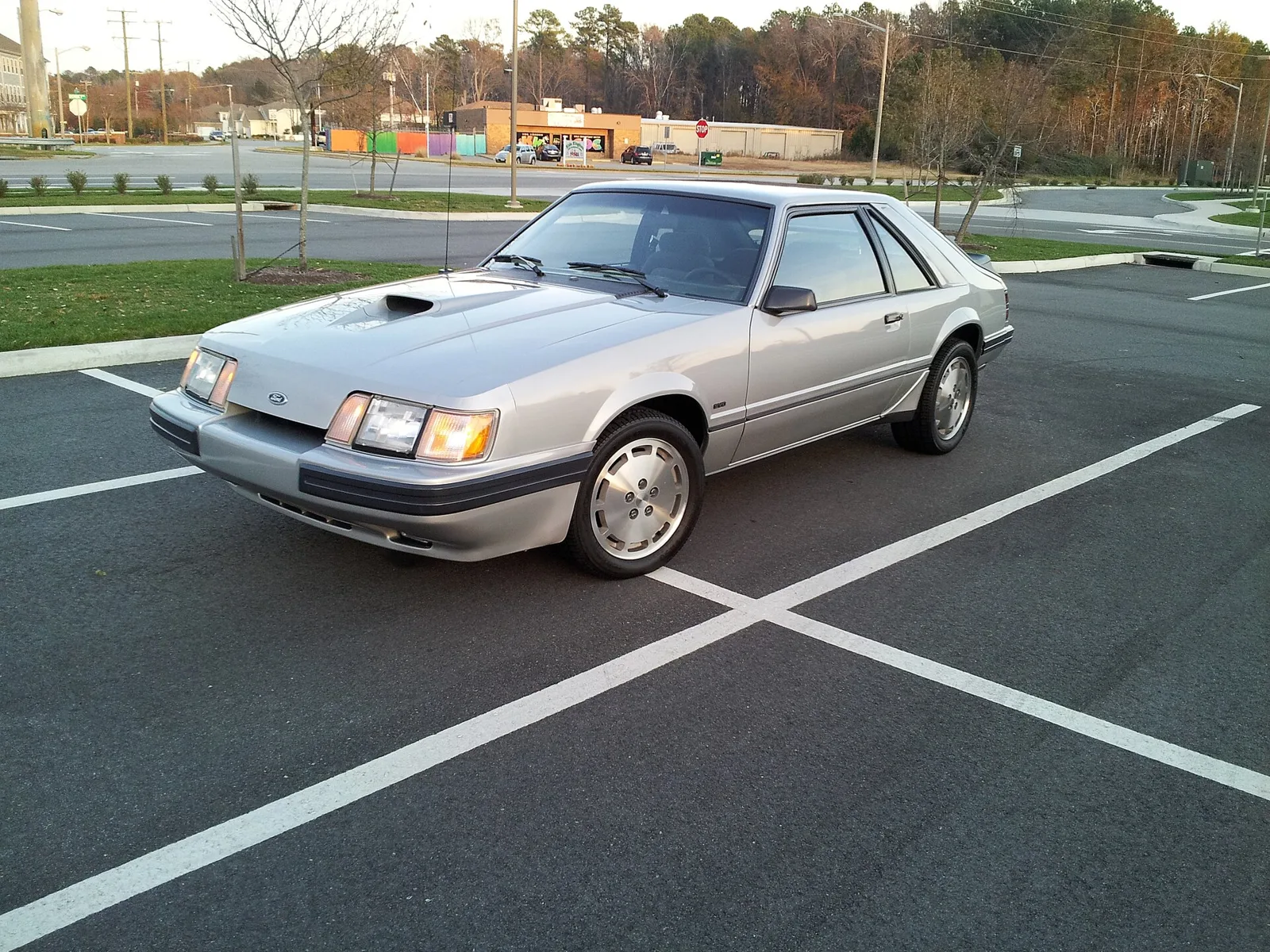
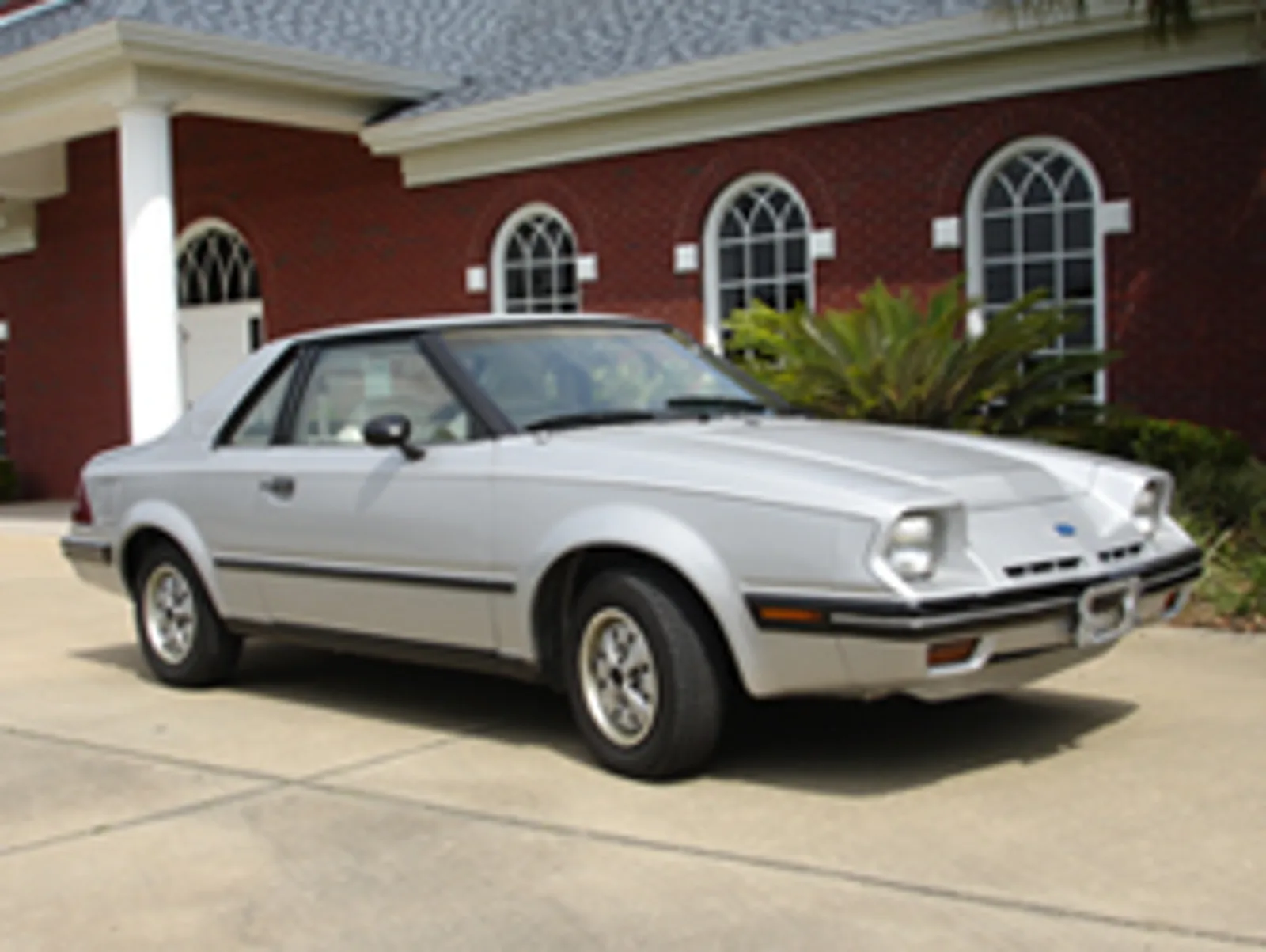
The EXP was a small two-door coupe that used the Escort's unibody, front-wheel-drive layout and suspension. Its body had a sharply sloped windshield, a simple grille and a hatch with flat glass. The car was discontinued after the 1988 model year.
A two-seat Ford built on Escort parts, with a turbo model and a racing history that outlived its own sales.
Why did Ford build the EXP?
Ford built the EXP after its marketing research found growing numbers of one- and two-person households and younger buyers who wanted small, sporty cars. The 1973 OPEC oil embargo had lifted oil prices by 70%, and a second energy crisis and recession followed from 1979 to 1982. Buyers wanted something economical that still looked the part.
The Escort was in development in the late 1970s as a front-wheel-drive small car. The North American version shared little beyond its powertrain and name with its European counterpart, and Ford's design studios also produced a range of sporty small-car concepts. One was the Ghia EXP-II, unveiled in 1981 on an Escort platform with a smooth fastback shape.
Ford Division general manager Louis E. Latalf compared the EXP with the 1955-1957 Thunderbird, calling it another two-seater with the same flair but a far more affordable and fuel-efficient car for the lifestyles of the 1980s.
What is the name EXP supposed to mean?
According to a Popular Mechanics article, the letters stand for Erika Project Personal, with the X used for project cars. Erika was the code name given to the European Escort, which the North American car was based on. The name is often repeated, but it rests on that single published account.
How was the first-generation EXP built?
The first-generation EXP (1982-1985) shared its unibody, 94.2 in (2,393 mm) wheelbase and four-wheel independent suspension with the Escort. It stood 50 in (1,270 mm) tall and was 14 ft (4.3 m) long, which made it longer and lower than the North American Escort. Its drag coefficient was 0.37.
Standard equipment was generous for the price, with power brakes, full instrumentation, carpeting, map lights and a power hatch release. Options included power steering, air conditioning, cruise control, a removable sunroof and TRX tyres. Models with a manual gearbox had a sport-tuned exhaust.
Ford built the first cars at its St. Thomas Assembly plant in Ontario. The first production EXP and LN7 were assembled on 16 February 1981, and Ontario Premier Bill Davis drove the first EXP off the line. The plant built EXPs until 5 August 1983, after which American plants took over.
How much power did the EXP make?
The base car used a 1.6 L CVH engine rated at 70 hp (52 kW), paired with a four-speed MTX-I manual. A High Output version with 80 hp (60 kW) arrived in March 1982, and a fuel-injected 1.6 L followed in late 1982 with 88 hp (66 kW) at 5,400 rpm. A five-speed manual then became available as well.
Car and Driver reported 44 mpg-US (5.3 L/100 km) on the highway for a manual EXP in March 1981, a useful figure for buyers who wanted economy. The fuel tank grew to 13 US gallons (49 L) for 1983, and the optional final drive ratio of 4.05:1 was offered at no extra cost early in the 1982 model year.
Did the EXP have a turbo model?
Yes. The EXP Turbo Coupe arrived in 1984 with a turbocharged 1.6 L CVH that developed 120 hp (89.5 kW) and 120 lb ft of torque from 8 psi of boost. Ford's Special Vehicle Operations unit built it, and it shared many parts with the McLaren ASC EXP. The turbo engine offered a 35% gain over the naturally aspirated cars.
The Turbo Coupe reached 0-60 mph (0-100 km/h) in 9 seconds and covered the quarter mile in 16.9 seconds at 82 mph (132.0 km/h). It had a front air dam, a rear spoiler, black wheel flares and two-tone paint, and the only options were air conditioning and a removable sunroof.
The fuel-injected 1983 cars with five-speed gearboxes did 0-60 mph in 14 seconds and the quarter mile in 20 seconds at 70 mph. The 1.9 L EFI HO engine of 1986 to 1988 managed 17.5 seconds at 77 mph (123.9 km/h), but none of the naturally aspirated cars came close to the turbo car.
What did the TR package add?
The TR Performance Package was a major option in 1982, and it was offered on both cars in every model year. It fitted Michelin TRX tyres on 14.4 in (365 mm) wheels, along with stiffer struts and springs. Its rear springs were progressive, rated at 320-548 lb/in against 195 lb/in on the standard car.
Front springs were rated at 160 lb/in against 120 lb/in standard, and the front anti-roll bar grew from 24 mm to 26 mm, with Turbo models using 27 mm. For 1983 the TRX tyres also became available on steel rims. The soft rubber compound gave strong cornering grip, but it wore quickly and could not be replaced once Michelin stopped making it.
What was the Mercury LN7?
The Mercury division sold a version of the EXP as the LN7. The differences were limited to badging, trim and a few unique body parts. It had a convex bubbleback hatch, black-tinted taillights and a grille with ten slats instead of two, and its drag coefficient was 0.36.
The LN7 sold far below projections. Roughly 40,000 were sold before the model was discontinued after the 1983 model year, which made it an awkward fit for the Lincoln-Mercury line-up. Its dashboard woodgrain was replaced with black plastic in 1983.
How did the second generation change?
The first-generation EXP was discontinued during the 1985 model year, after falling behind newer and sportier rivals. Build quality and refinement were also weaker than those of Japanese competitors. Ford's assembly workers then built a prototype with upgraded Escort parts, and it was approved for production as a 1985 model.
The second-generation car, officially renamed the Ford Escort EXP, dropped the controversial headlight nacelles and wide fenders. It used the flush-mounted Escort headlamps, a single-slot grille below the Ford emblem and redesigned bumpers. The Mercury bubble hatch became standard, and the interior was updated to match the rest of the Escort range.
The Luxury Coupe used low-back seats from the standard Escort. It had a 1.9 L CVH with 90 hp (67.1 kW), and throttle-body injection from 1987. The Sport Coupe had 15-inch alloy wheels, Escort GT suspension and brakes, and a 106 hp (79 kW) fuel-injected version of the 1.9 L engine, rising to 115 hp (86 kW) for 1987.
Which special editions and promotional cars were made?
Ford ran a few promotions around the LN7 and EXP. A Weinstock's sweepstakes produced a batch of LN7s with an all-black interior, purple exterior and gold pinstripes, and it is assumed that only 500 were made. Winners also received a gift certificate from the store.
A 1982 sweepstakes gave away LN7 replicas of the Budweiser Race Team's drag car. The grand prize was a real LN7 painted to match the strip car, while lesser prizes included NHRA event tickets and small go-kart replicas with 3 hp (2.2 kW) motors that reached 15 mph (24.1 km/h).
What motorsport work involved the EXP?
In 1981, one Mercury LN7 was converted for the PPG CART Indy Car World Series pace car. It had a chin spoiler, brake-cooling ducts and a turbocharged 1.6 L CVH rated at 180 hp (134.2 kW) at 7,000 rpm. Its top speeds were around 125 mph (201.2 km/h), which needed heavy suspension changes to handle.
A 1982 pace car was an EXP with a tapered front clip and a body-integrated spoiler, plus widened quarter panels. Ford supplied three EXP or LN7 cars for SCCA competition between 1981 and 1983, including one rally car prepared by Blume Power.
Two EXPs were reportedly fitted with ASC sunroofs and McLaren performance parts, producing 120 hp (89.5 kW) and 137 lb ft of torque. Ford's GN34 mid-engined programme also used EXP mules fitted with a Yamaha-developed V6. That work fed later engineering, although the mid-engined car itself was shelved.
Why was the EXP discontinued?
The EXP never matched Ford's sales targets. Two-seat rivals such as the Pontiac Fiero, Toyota MR2 and Honda CRX drew buyers toward higher-performance cars, and insurance rates on two-seaters rose during the 1980s. Ford's own plans for a front-wheel-drive Mustang also played a part.
When the Mustang plan became the Ford Probe, Ford could not afford to market three compact sports coupes alongside the Festiva, Escort and Tempo. The Escort EXP was the slowest-selling nameplate, so it was dropped. The last car left the line in October 1988, after more than 225,000 had been built.
What one-off and experimental EXPs were built?
Ford experimented with the EXP in several directions, and some of these cars were built for competition, others for promotion and a few for engineering research. Eight EXPs were converted to convertibles by Dynamic Conversions in Michigan, and around 28 LN7s were converted at St. Thomas. Few of these are thought to survive.
Four EXPs were reportedly converted to electric power using 39 hp (29.1 kW) motors. They were estimated to cover 20 to 60 miles on a charge and reach 60 mph (97 km/h), but they fell short of expectations for sport and practicality.
The Ghia Brezza concept was built by Carrozzeria Ghia from two donor EXP chassis, cut and welded into a mid-engined layout. Ghia designer Marilena Corvasce worked on it, and it won the Heritage Vehicle Association's HVA Heritage Award.
Key specifications at a glance
| Item | Figure |
|---|---|
| Generation | First (1982-1985), second (1985-1988) |
| Layout | Front-wheel drive, four-wheel independent suspension |
| Wheelbase | 94.2 in (2,393 mm) |
| Base engine | 1.6 L CVH, 70 hp (52 kW) |
| Turbo output | 120 hp (89.5 kW) |
| Drag coefficient | 0.37 (EXP), 0.36 (LN7) |
| Final production | October 1988 |
| Total production | Over 225,000 Escort EXPs |
Is the Ford EXP still worth collecting?
The EXP is a rare survivor of Ford's compact sports coupe experiment, with a short run, a turbo model and a racing history. The TRX tyres that defined the TR package have not been made since the 1990s and cannot be replaced, so committed owners have to plan around them.
\n\nAnyone looking at a surviving car should first check which generation it is. The Turbo Coupe of 1984 used the first-generation body, while the Sport Coupe of the second generation reached 115 hp (86 kW) in 1987. The Sport Coupe borrowed its suspension and brake upgrades from the Escort GT, which tied it closely to the mainstream car.
\n