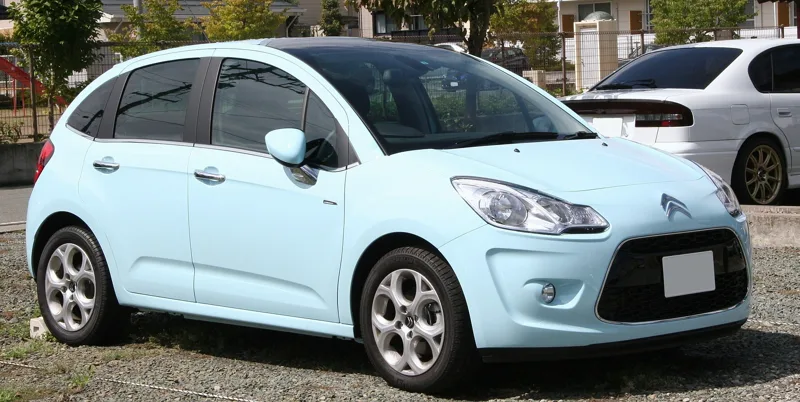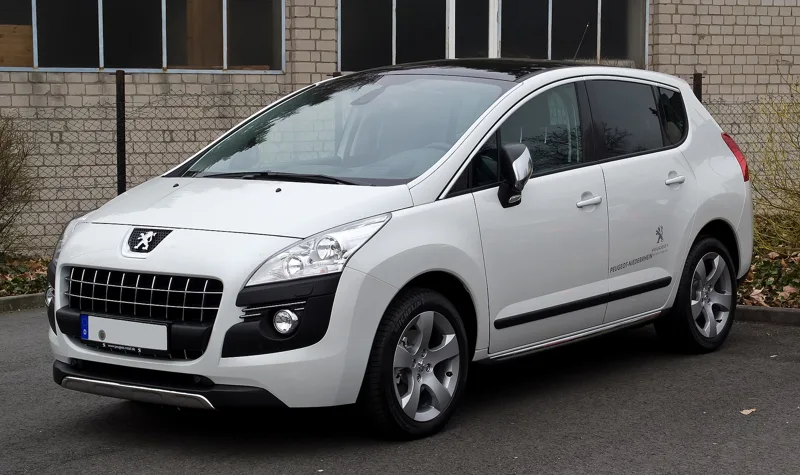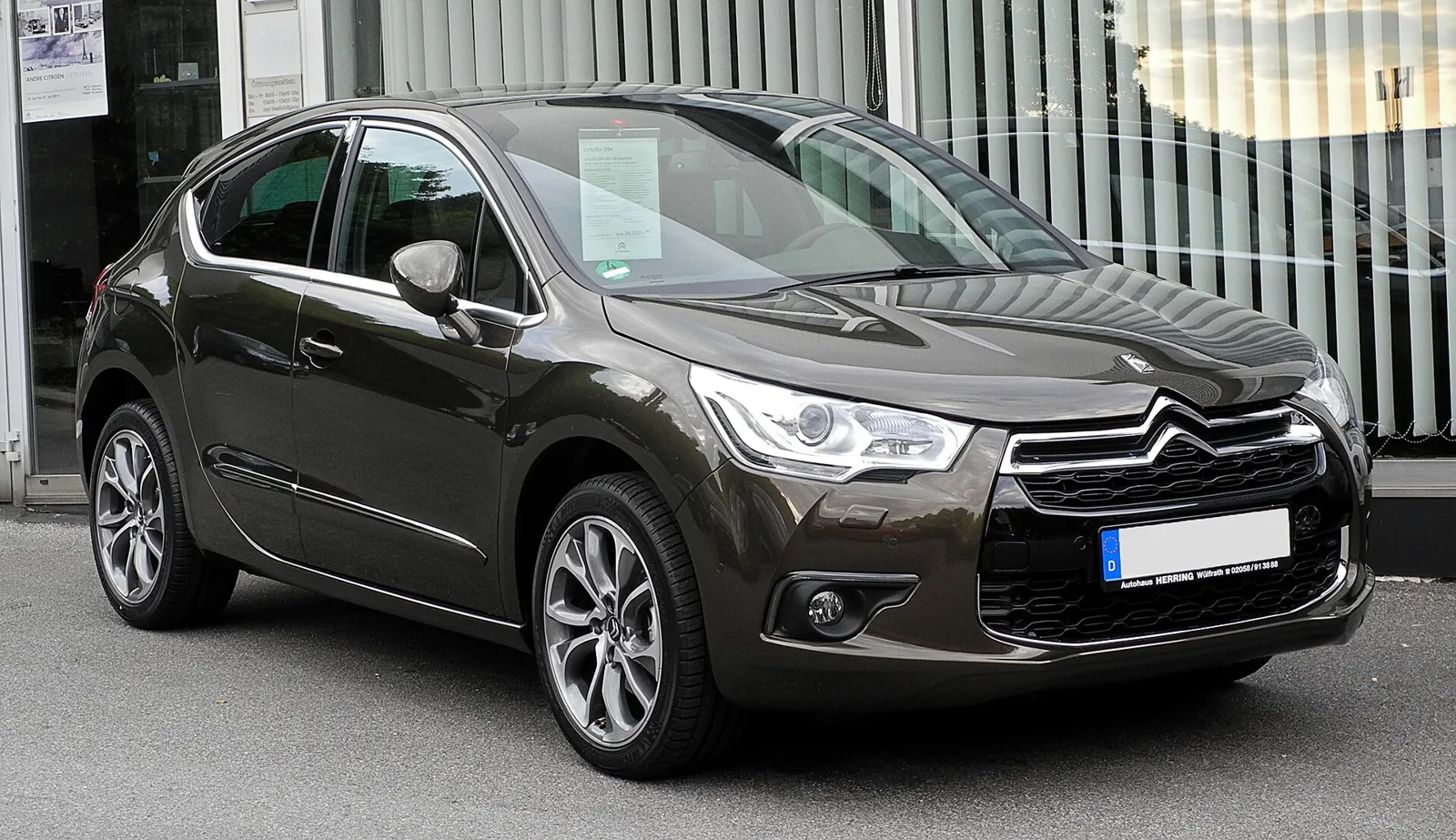
A C4-based five-door with a crossover stance, hidden rear door handles, a Citroen badge until 2014 and production that ended in spring 2018.
The DS 4 was a segment C crossover-styled five-door built from 2011 to 2018, based on the Citroen C4. It was sold as the Citroen DS4 until 2014 and as the DS 4 from 2015, with engines from a 111 PS diesel up to a 200 PS 1.6 THP petrol.
The DS 4 turned a concept car from the Geneva show into a production crossover for Citroen's premium sub-brand. Its styling set it apart from any direct rival, and it kept the mechanical base of the Citroen C4. Production ran for seven years, ending in spring 2018.
Where did the DS 4 come from?
The DS High Rider concept was shown at the Geneva Motor Show in March 2010 as a three-door crossover with a diesel engine on the front axle and an electric motor on the rear wheels. Citroen then unveiled the production car at the Paris Motor Show, and sales were planned to start between May and June 2011.
Citroen had said the DS3 was the start of extending its premium sub-brand to other models, and a car based on the C4 was among them. The concept foreshadowed almost all of the road car, and it used all-wheel drive with technology tested on the 3008 Hybrid4.
The production car looked much like the concept, but it gained rear doors. The DS name stood for different spirit, a label Citroen had used since the new millennium, and the car was unveiled under the name DS4 alongside the new C4 generation.
A car built to be different, with a niche of its own and no direct rival in the crossover market.
How did the DS 4 look?
The DS 4 combined the sportiness of a segment C saloon, the practicality of a five-door body and a ground clearance found on some SUV crossovers. That mix placed it in a niche that is hard to compare with other crossovers. The designers aimed for a car that felt different in a market that had diversified sharply in the second half of the 2000s.
The front is aggressive and carefully finished. The headlights have a mean cut and a design taken from the new C4, and a large trapezoidal grille carries the maker logo in two chrome moustaches. A wide mouth opens in the lower grille to feed air to the engine bay, and the fog lights sit in niches at each end of the bumper shield.
The flank shows the most distinctive lines. The roof is cut almost like a coupe, and the ground clearance is too high for a normal segment C car yet too low for a true SUV. The two rear doors are visually disguised by handles hidden in the rear pillars, a styling detail first introduced 15 years earlier by the Alfa Romeo 156.
The tail is rounded, high and sporty, with a raked rear window that is not large and a spoiler on top. The bumper has two notches at each end that echo those on the front of the DS3, and two bold exhaust outlets are integrated into the shield itself.
The interior is richly finished, with chrome inserts on the dashboard. The designers made the cabin feel original, but they did not redesign anything from scratch. Some parts were carried over from the 3008, such as the passenger grab handle fixed to the dashboard near the centre console. The seats have tortoise-back stitching and hollow head restraints, and the boot offers 385 litres.
Which rivals did the DS 4 face?
The DS 4 had no direct rival, only models that came close in certain respects. The Mitsubishi ASX and the Dodge Caliber were older cars by the time the DS 4 arrived, and the five-seat Nissan Qashqai was also seen as a competitor to both the DS 4 and the 3008. The two French cars were hard to compare with each other, and that is itself a sign of how far the DS 4 sat from the rest of the crossovers.
How was the DS 4 related to the Citroen C4?
The DS 4 was the crossover-styled sibling of the Citroen C4, built on the C4 platform and inheriting its mechanical base. It was first sold under the Citroen name, and its base survived the C4 generation change.
The second-generation change kept the mechanical base, apart from some updates. The DS 4 therefore shared a chassis design with the C4 rather than a separate layout.
Platform, mechanics and brakes
The platform and mechanics came directly from the two generations of the standard C4, with the base kept largely unchanged when the C4 moved to its second generation. The front axle is a pseudo-MacPherson layout, and the rear is a deformable cross-member design. Both axles carry coil springs, hydraulic telescopic dampers and anti-roll bars.
The front discs are self-ventilated and the rear discs solid, and the braking set-up includes brake force distribution. Electronic aids such as ABS, ESP, traction control and emergency brake assist came as standard across the range.
Which engines did the DS 4 launch with?
At its debut the DS 4 was offered with four engines. The petrol units were the 1.6 VTi and the 1.6 THP, and the diesels were the 1.6 e-HDi and 2.0 HDi. The 1.6 e-HDi was the light hybrid with an integrated Stop and Start system.
- 1.6 VTi: 1,598 cc (97.5 cu in) Prince petrol, 120 PS (88 kW; 118 hp)
- 1.6 THP: turbocharged 1,598 cc (97.5 cu in), 156 PS (115 kW; 154 hp) or 200 PS (147 kW; 197 hp)
- 1.6 e-HDi: 1,560 cc (95.2 cu in) turbodiesel with light-hybrid Stop and Start, 111 PS (82 kW; 109 hp)
- 2.0 HDi: 1,997 cc (121.9 cu in) turbodiesel, 163 PS (120 kW; 161 hp)
In some markets, Germany among them, a version with the standard 1.6 HDi and without Stop and Start was also planned. The 1.6 VTi came as standard with a five-speed manual, the 156 PS 1.6 THP was paired only with a six-speed automated manual, and the 200 PS 1.6 THP was available only with a six-speed manual.
What trim levels were sold in Italy?
In Italy the DS 4 came in three trim levels. The base Chic was already well equipped and was planned for the 1.6 VTi and 1.6 e-HDi, while So Chic and Sport Chic moved up through automatic air conditioning, larger wheels and driver aids.
Chic included ABS, ESP, front, side and curtain airbags, central locking, Hill Holder, cruise control and a multifunction leather steering wheel. It also had LED lights, Cornering Light fog lamps, heated electric mirrors, a panoramic windscreen and 16-inch alloy wheels, plus a radio with an MP3 player.
So Chic replaced the manual air conditioning with automatic dual-zone units and added 17-inch alloy wheels, rain sensors, rear parking sensors, a USB socket and an AUX socket. Its fabric and leather upholstery came with adjustable front head restraints, a photochromic interior mirror, aluminium pedals, and front seats with massage, lumbar and height adjustment. Intelligently aimed bi-xenon headlights and heated front seats were among its key options.
The engine a buyer chose also narrowed the trim choice. Sport Chic was the top level, available only with the 200 PS 1.6 THP and the 2.0 HDi. It added 18-inch alloy wheels, blind-spot monitoring, door mirrors with memory and automatic tilt in reverse, front parking sensors and leather upholstery. Its options included 19-inch wheels and the DLW lane departure warning.
How did the DS 4 change between 2011 and 2014?
In December 2011 the 1.6 THP rose from 156 to 163 PS, and its automated manual gave way to a six-speed automatic. Italy received that version only from February 2012. In late summer 2012 a detuned 2-litre turbodiesel of 136 PS joined the range, a lower-output tune of an existing 2-litre engine.
After more than two years without changes, the end of 2014 brought a 1.2 THP of 131 PS, which replaced the naturally aspirated 1.6 Prince of 120 PS. The 200 PS 1.6 THP was dropped from some markets, the 163 PS automatic gained a small increase to 165 PS, and a 1.6 BlueHDi of 120 PS entered the diesel line.
What happened when the DS 4 joined the DS range?
In March 2015 the DS 4 left the Citroen range for the new DS range, so its official name became DS 4 rather than Citroen DS4. The engine range stayed the same, with a 131 PS 1.2 turbo and 165 and 200 PS 1.6 THP petrols, and diesels including the 92 PS 1.6 HDi and the 2-litre BlueHDi of 150 and 180 PS.
The DS3 and DS5 joined the DS range in the same period. The restyle that followed also brought the DS 4 into line with the styling already used by DS models sold in China for some time. The top model lost every reference to the double Chevron, while the DS 4 kept its double Chevron grille until the restyle, as did the DS 3.
The 2015 restyle and the Crossback
Six months later the restyled DS 4 was presented at the Frankfurt Motor Show. Its front was completely redesigned, stripped of the Citroen logo and given the DS badge, with new light cluster cuts, new front bumpers and new fog lamps. The rear changed only in a few details.
A new 211 PS 1.6 THP became the top engine, and the 114 PS 1.6 HDi was removed. All diesels became BlueHDi from then on. The Crossback version arrived with a ride height raised by 30 mm and roof bars for carrying luggage.
When did production of the DS 4 end?
Production of the DS 4 ended in spring 2018. The model was old by then, and its engines did not meet the Euro 6c anti-pollution rules due to take effect on 1 September 2018. Stock in warehouses was sold off until the end of August.
In spring 2016 a 1.6 BlueHDi of 99 PS joined the range, shared with many other PSA group models. A year later the top 211 PS 1.6 THP left the price list. The second generation of the DS 4 followed three years after production ended, in summer 2021.
DS 4 specifications at a glance
| Specification | Detail |
|---|---|
| Production | 2011 to 2018; Citroen DS4 until the end of 2014, DS 4 from 2015 |
| Platform | Citroen C4, two generations |
| Petrol at launch | 1.6 VTi 1,598 cc (97.5 cu in), 120 PS (88 kW; 118 hp); 1.6 THP 1,598 cc (97.5 cu in), 156 or 200 PS |
| Diesel at launch | 1.6 e-HDi 1,560 cc (95.2 cu in), 111 PS (82 kW; 109 hp); 2.0 HDi 1,997 cc (121.9 cu in), 163 PS (120 kW; 161 hp) |
| Gearboxes | Five-speed manual with 1.6 VTi; six-speed automated manual with 156 PS 1.6 THP; six-speed manual with 200 PS 1.6 THP and diesels |
| Top petrol after 2015 | 211 PS 1.6 THP |
| Crossback | Ride height raised 30 mm, with roof bars |
| Trim levels in Italy | Chic, So Chic and Sport Chic |
| Boot | 385 litres |
| Production ended | Spring 2018, followed by stock clearance until the end of August |