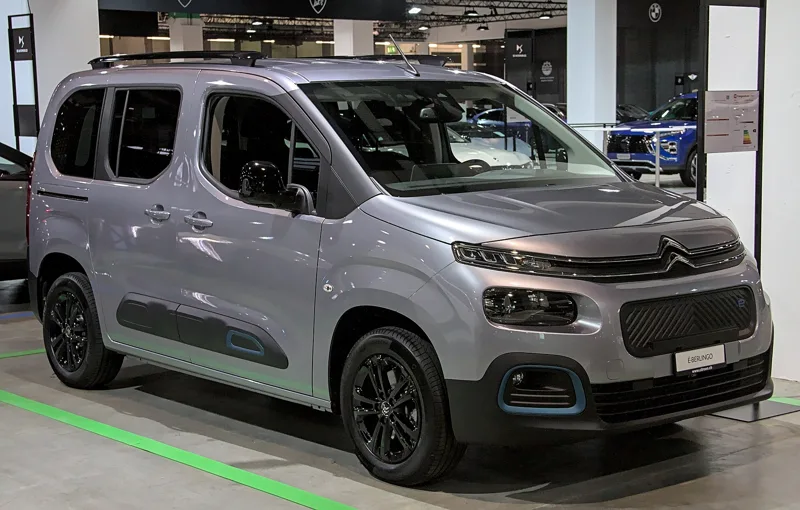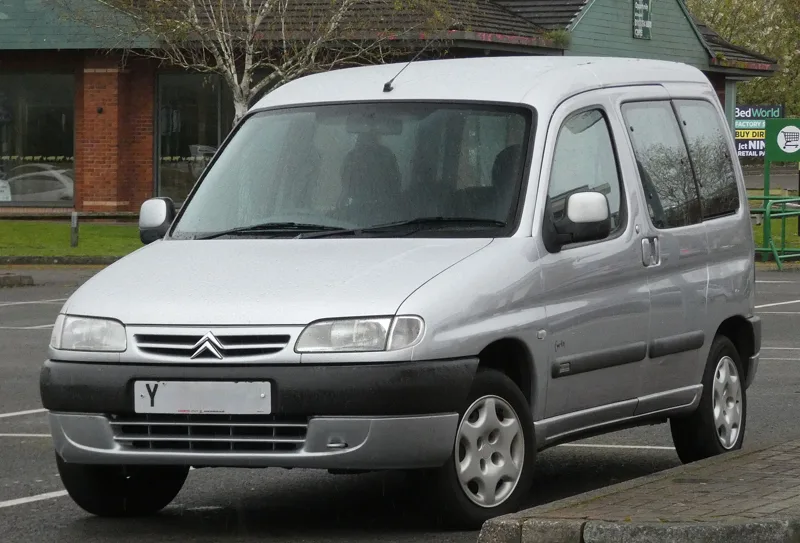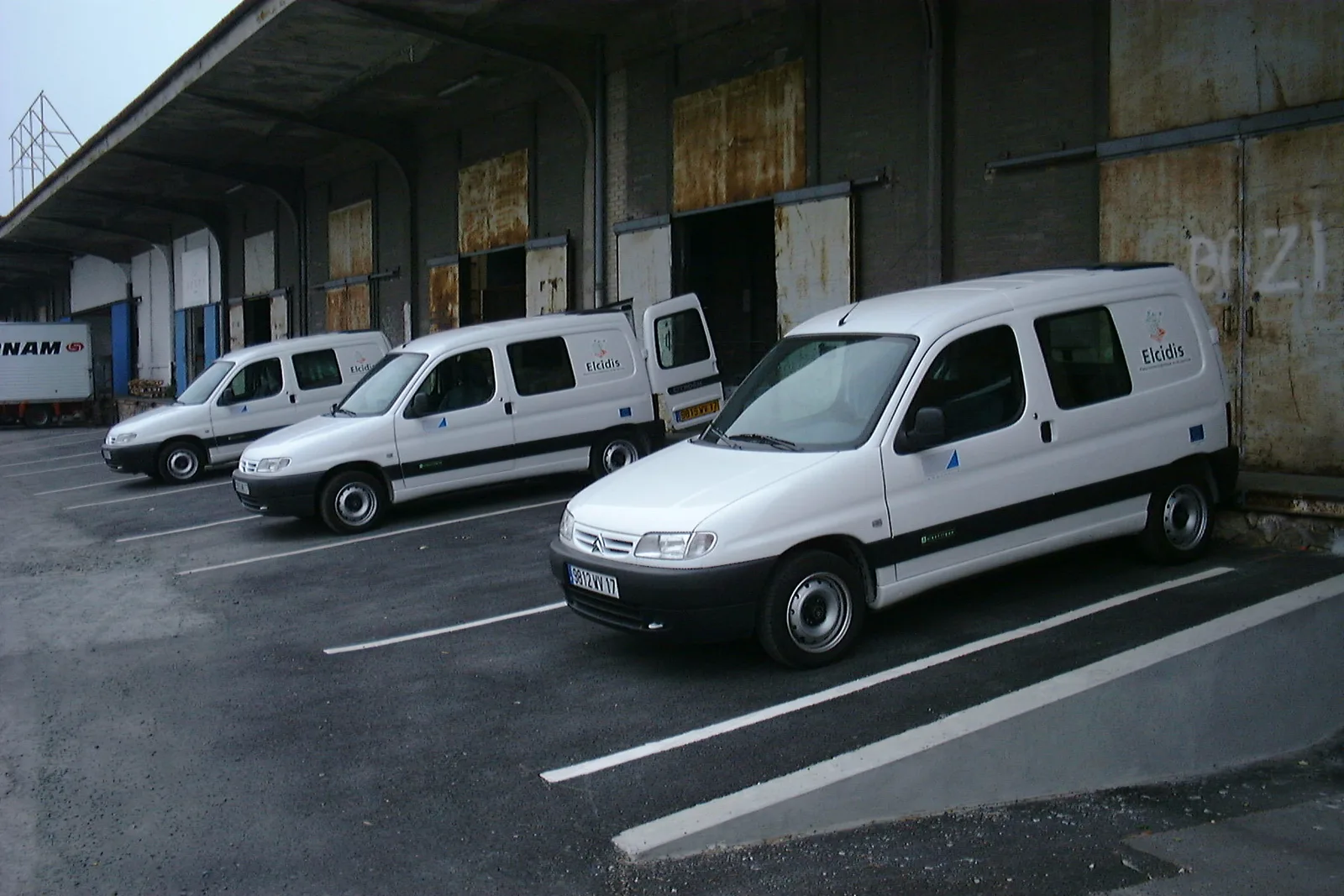
A 162 V nickel-cadmium van from 1998 to 2005, with one forward gear, a petrol-fired heater and a typical range of 95 km (59 mi).
The Citroen Berlingo electrique was a 1998 to 2005 battery van with a 162 V pack, a 28 kW motor and one forward gear. It carried a payload of 500 kg (1,100 lb) and had a typical range of 95 km (59 mi).
The Citroen Berlingo electrique was an electric take on the first-generation Berlingo van, which ran from 1998 to 2005. Its 162 V nickel-cadmium pack drove a 28 kW motor to a top speed of 95 km/h (59 mph), with a typical range of 95 km (59 mi). Beneath the electric hardware, it was a conventional van body with a petrol-free drivetrain.
What was the Berlingo electrique?
The Berlingo electrique was a battery-powered version of the first-generation Berlingo van. Built and sold between 1998 and 2005, it replaced the C15 electrique. Its 162 V Saft NiCd battery drove a 28 kW Leroy Somer motor, giving a top speed of 95 km/h (59 mph) and a typical range of 95 km (59 mi).
A Peugeot-badged twin, the Partner electrique, used the same hardware. The van was designed from the outset as a petrol, diesel and electric vehicle, so its instruments and controls look very similar to those of a conventional petrol or diesel van. Drivers moving between the two would find few surprises in the cabin.
One forward gear, a petrol heater and a 162 V pack made the Berlingo electrique a van that was electric without feeling experimental.
How much could the Berlingo electrique carry?
The Berlingo electrique offered a cargo area 1,140 mm (45 in) high, with a load length of 1,700 mm (67 in) and a width of 1,190 mm (47 in) between the wheel housings. Its gross vehicle weight rating was 1,966 kg (4,334 lb), which allowed a maximum payload of 500 kg (1,100 lb).
The liftover height of 570 mm (22 in) from the ground is the figure to check when loading heavy items by hand. The payload figure includes the driver, so a heavier driver leaves less room for cargo.
How did the electric motor produce its power?
The traction motor delivered its maximum torque of 180 N m (130 lbf ft) between 0 and 1,600 rpm. Maximum power of 28 kW (38 hp) arrived between 1,600 and 5,500 rpm. Its continuous rating was 15.5 kW (20.8 hp), and it ran at a nominal 400 V.
The motor was a brushed DC unit with separate excitation, which meant periodic maintenance to replace the carbon brushes. Serious damage would follow if that job were overlooked, so brush replacement had to follow the service schedule.
How was the 162 V battery built?
The high-voltage pack used 27 nickel-cadmium modules, each rated at 6 V and 100 A-hr. Connected in series, they gave a nominal voltage of 162 V and a storage capacity of 16.2 kW-hr. Average consumption was 26 kWh/100 km (81 mpg-e).
The pack connects to the motor through a main traction battery relay. That relay closes with an audible clunk when the key is turned to the start position, which is covered in the starting section below.
Did the Berlingo electrique have a gearbox?
No conventional gearbox was fitted. The motor turns the wheels through a direct-drive reduction gear set, and the van effectively has only one forward gear, serving speeds up to 0-70 mph (110 km/h). The van is often described as automatic, but the wide power range of an electric motor makes several ratios unnecessary.
The selector looks like an automatic's selector, but it offers only Drive, Neutral, Reverse and Park. Selecting Drive lights a green forward gear warning lamp, while Reverse lights an orange one, which confirms the chosen direction at a glance.
How far could the Berlingo electrique go on a charge?
Range depends mainly on speed. Atmospheric drag rises non-linearly, so a 25% rise in speed cut the range by 36%. Driving at the slowest practical speed gives the best result, as it does in most electric vehicles.
At a gentle 35 mph (56 km/h), energy use could be as low as 250 Wh/mi (130 mpg-e). Driving faster pushed consumption up to 600 Wh/mi (56 mpg-e). Above 50 mph (80 km/h) the controller starts to heat up and becomes less efficient.
Rain and snow also matter. They add rolling resistance, and the typical reduction in efficiency is about 15%. Terrain, weather, speed and controller efficiency all shape the final figure.
How did starting and the instruments work?
The ignition key works in stages. Turning it clockwise through the first detent enables the accessories, the second stop brings on the ignition circuit, and the spring-loaded position beyond that engages the starting circuit. The main traction battery relay then closes and connects the battery to the motor.
At the ignition position only the STOP and handbrake warnings show, unlike a conventional van, where every indicator lights for a bulb check. The van will not start if the charging plug is connected or the accelerator is pressed, and the STOP light flashes to warn of that.
The dashboard has two large round gauges. The left one is the speedometer and the right shows state of charge. Between them, the Teconoscope shows instant energy flow: the needle sits at zero at rest, swings left into the ECO zone when energy returns to the battery, and moves right as charge is used.
The energy meter shows remaining energy as a percentage and is accurate, because the controller tracks the amp-hours going in and out rather than the voltage. A separate lamp comes on below 20% charge, but it is driven by voltage, so it may not switch on at exactly the same level in every van.
How was the cabin heated without an engine?
The van carried a petrol-fired heater by Webasto, fully integrated into the vehicle. The heater was included to limit battery use for warmth. It typically takes 5 to 10 minutes to warm up and gives excellent cabin heat.
The heater tank holds 8 L (1.8 imp gal; 2.1 US gal), and fuel use is typically 0.5 L/h (0.11 imp gal/h; 0.13 gal/h). The heater keeps running for several minutes after the ignition is switched off, so it does not stop abruptly.
How did the brakes and steering work without an engine?
Regenerative braking returned energy to the traction battery whenever the accelerator was released. Because an electric motor produces no engine vacuum, the brake servo needed a dedicated vacuum pump, which ran for 10 to 15 seconds and then rested for a couple of minutes. Power steering used an electric motor to drive the hydraulic pump.
Regenerative braking could slow the van noticeably without the brake lights coming on. Other drivers may not notice the deceleration. The manual notes that brake light operation during regeneration can be switched on, although it is off by default. Power assistance for the brakes also stops when the ignition is off.
How long did charging take?
Charging from a domestic supply used a cord stored under the passenger seat. In the UK the socket should give 230 V and 16 A, be earthed and carry 30 mA differential protection. Starting from 20%, the traction battery took about seven to eight hours to reach 100% from a home connection.
Rapid charging used an Avcon connector at the vehicle inlet on the front wing. The inlet door works as a switch, so charging only begins once it closes, and it stops at 80% state of charge. With a 150 A supply, the van gained about 20% every eight minutes. If the state of charge was already 80% or more, rapid charging was not possible.
A quirk can catch owners out. Removing the plug before a full charge can switch on the Electrical Fault Light, which stays lit until a full trickle charge clears it. The manual says the car must then go to a dealer to reset the fault.
What servicing did the Berlingo electrique need?
The Electrique needed little routine servicing. The auxiliary battery, the fusebox and several fluids sit under the bonnet, including windscreen washer, power steering, coolant and brake fluid. Hydraulic brake fluid should be changed every two years or 60,000 km (37,000 mi), whichever comes sooner.
Battery watering had to be done at regular intervals, about every 4,000 miles (6,400 km) depending on use. Dealers carried out the job, or owners could use a third-party kit. Brush replacement sits on the same maintenance schedule.
Original equipment tyres were 165/70 R14, inflated to 41 psi (2.8 bar).
Why did the basic van lack rear seats?
The basic Electrique did not come with rear seats or rear windows. Many owners fitted a rear seat and windows taken from a conventional Berlingo I Multispace, in countries where that is allowed. In France, however, such conversions are not permitted.
Where was the Berlingo electrique sold?
Besides France, its country of origin, the Electrique was sold in at least six other countries: Sweden, the United Kingdom, Denmark, Norway, Belgium and Switzerland. That list is a minimum, and it shows the van reached several northern and western European markets.
What replaced the original electric Berlingo?
Production of the original electric van ended in 2005. Venturi Automobiles then fitted an electric drivetrain with a ZEBRA molten-salt battery to the first-generation Berlingo. Those cars went to La Poste in France from 2010, but were not sold to general consumers.
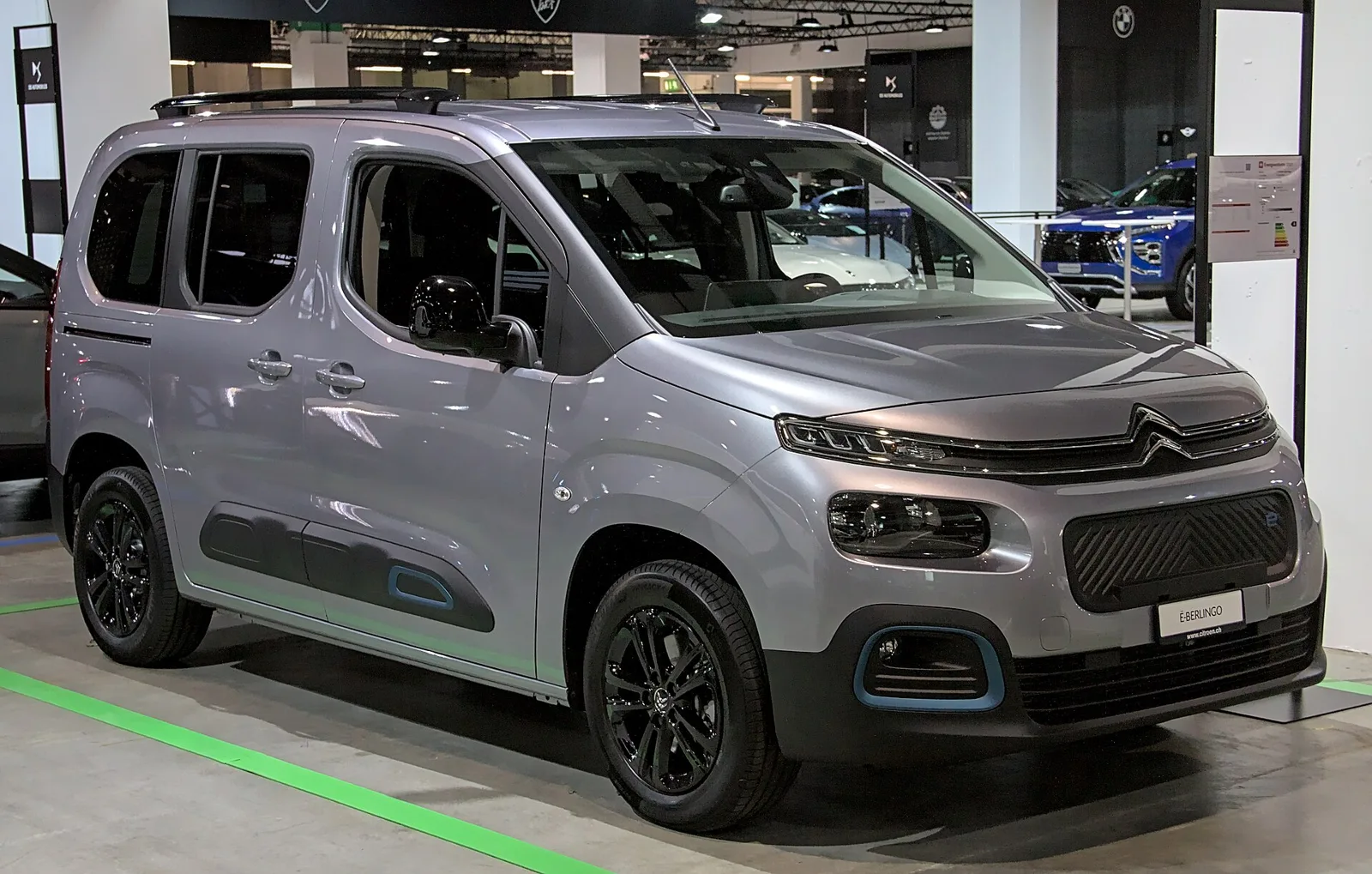
The next step came in 2013 with the Berlingo Electric, based on the second generation, whose drivetrain was derived from the Mitsubishi i-MiEV. In 2021 the e-Berlingo arrived on the third-generation van, using a drivetrain developed internally by the PSA Group.
Which rival electric vans were similar?
The Berlingo electrique resembled the 1992-93 Ford Ecostar, though it replaced the older 1991 Citroen C15 electrique. A Peugeot-badged version was sold as the Peugeot Partner Electric. Battery electric versions of the Peugeot 106 and Citroen Saxo super-minis were also developed.
During the Berlingo's sales period it had no comparable goods vehicle rival. After production ended, the Nice Car Company marketed a mini van, and Modec developed an electric commercial vehicle with a 2 tonne payload.
What was the Berlingo Dynavolt hybrid?
A hybrid prototype called the Berlingo Dynavolt was developed in 1998. It used the electrique base but carried 23 nickel-cadmium batteries and a 500cc twin LPG engine made by Lombardini, which acted as a range extender to recharge the batteries.
The engine only ran when needed to avoid pollution, which was a focus in the design. The Dynavolt decided when to run it using the charge level and the distance to the destination from GPS. In emergency mode it started the engine to give just enough power to keep going.
The Saxo Dynavolt came first, shown at the Paris Motor Show in October 1998 and then at the Geneva Motor Show in March 1999. The Saxo used a two-stroke direct-injection gas engine under the back seats, while the Berlingo used a four-stroke LPG engine under the hood beside the electric motor.
What were the key figures for the Berlingo electrique?
| Specification | Detail |
|---|---|
| Built | 1998 to 2005, first-generation Berlingo van |
| Battery | 27 NiCd modules at 6 V, 100 A-hr each; 162 V nominal; 16.2 kW-hr |
| Motor | 28 kW (38 hp) Leroy Somer, 180 N m (130 lbf ft) torque |
| Continuous rating | 15.5 kW (20.8 hp) at a nominal 400 V |
| Top speed | 95 km/h (59 mph) |
| Typical range | 95 km (59 mi) |
| Consumption | 26 kWh/100 km (81 mpg-e) average |
| Gross vehicle weight rating | 1,966 kg (4,334 lb) |
| Maximum payload | 500 kg (1,100 lb), including the driver |
| Cargo height and length | 1,140 mm (45 in) high; 1,700 mm (67 in) load length |
| Rapid charge | Stops at 80%; about 20% every eight minutes on 150 A |
| Heater tank | 8 L (1.8 imp gal; 2.1 US gal) petrol |