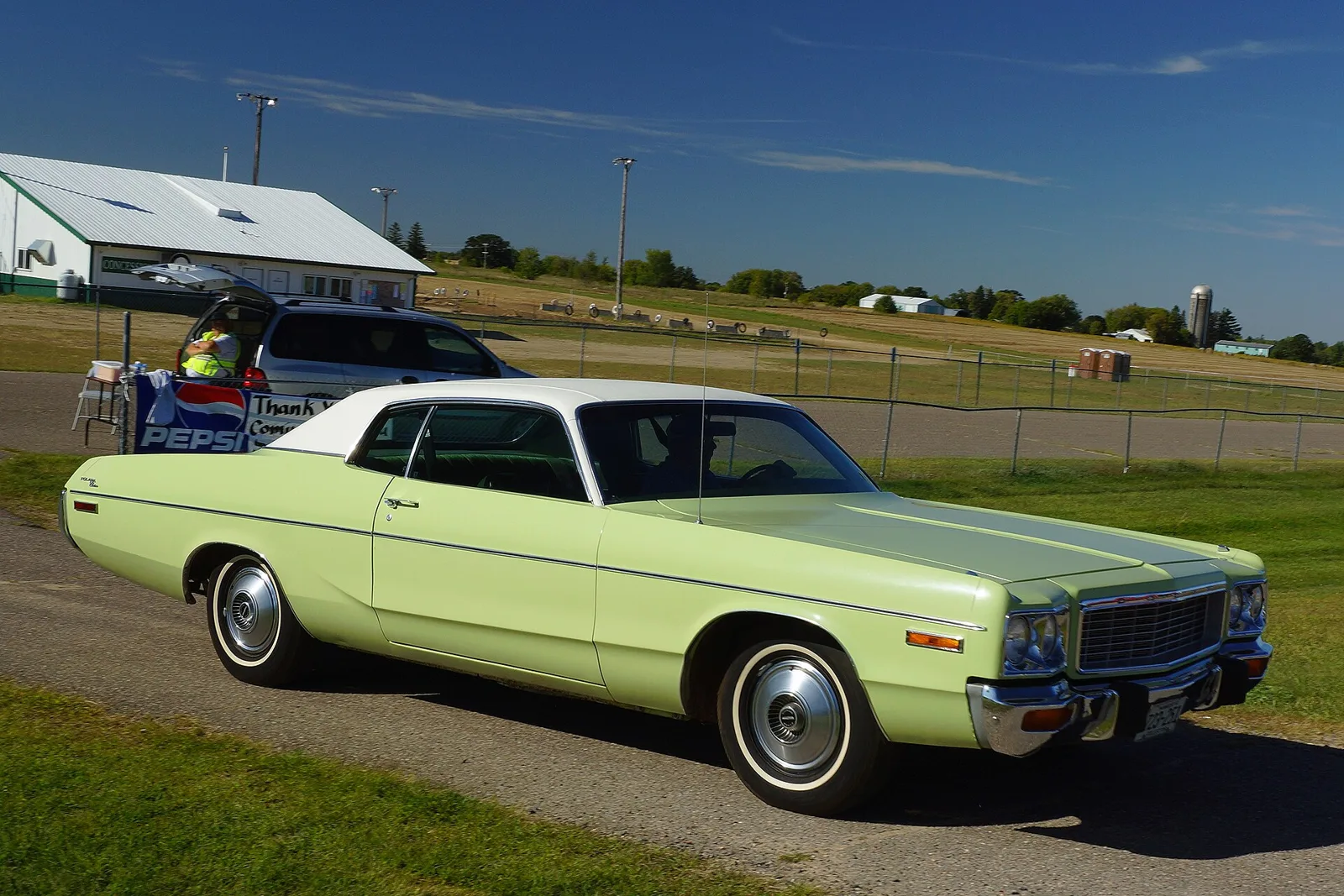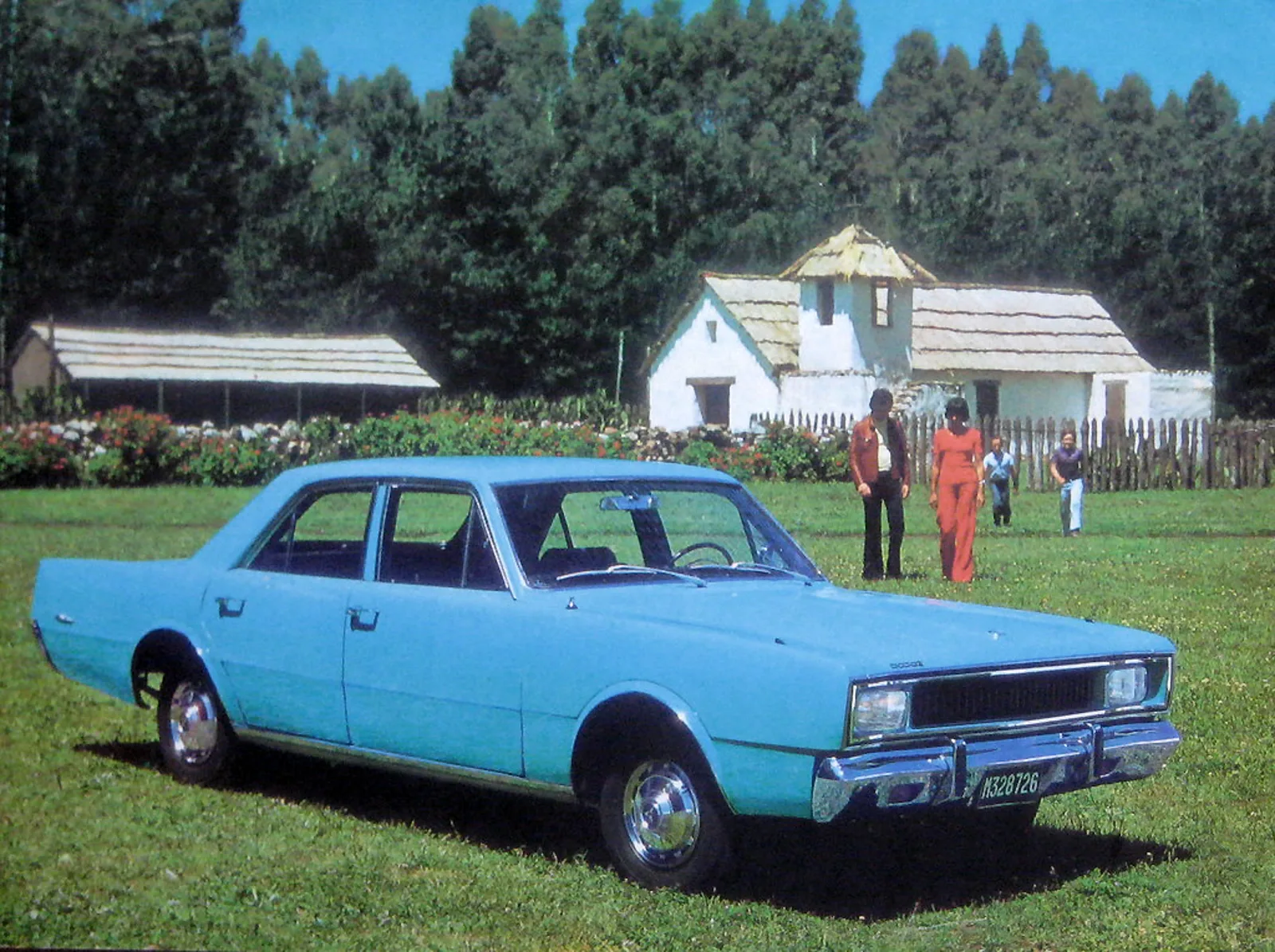
A sedan and coupe built in Argentina from 1968, with a V8 GTX and a Turismo Carretera record that ran to 2006.
The Dodge Polara was an F-segment car sold in Argentina and made from 1968. Its GTX coupe with a V8 became a racing car in national championships. Production is given as ending in 1979 or 1980, after the Argentine business passed to Volkswagen.
The Dodge Polara was designed in Argentina, and it became the representative model of the Linea Dodge range. Launched in 1968, it came in sedan and coupe body styles, with the coupe line starting in 1970, and its GTX coupe with a V8 later raced in national championships. The story runs from the first sedans to a Turismo Carretera title in 2006.
Where did the Polara come from?
The Polara was conceived and engineered in Argentina for domestic sale and then export. Its sedan drew on the North American Dodge Dart in its fourth generation, or on the Valiant already sold in Argentina, which meant the Early A-body platform that North America used from 1960 to 1966.
The sedan received a design made for this market first, with a large body and aerodynamic finishing. The coupe was also a local development, combining lines of the Argentine Polara and Coronado. The Polara arrived in 1968 as the successor to the Linea Valiant, and it brought Chrysler-Fevre's output under the Dodge name.
The Polara was the second model in a series sold as the Linea Dodge Sedan, and all these models were based on the same car. The series began with the Dodge Valiant, a base model later renamed plain Dodge, and continued with the Dodge GT, a sports model, the Dodge Coronado, the luxury option, the Dodge Taxi and then the Polara Diesel, an urban variant of the Taxi.
Its size, its elegance and a GTX that won its place on the Turismo Carretera track.
When did the coupe line start?
The coupe line began in 1970 with a six-cylinder Dodge GTX. In 1971 the more extreme GTX arrived, and the six-cylinder stayed optional until 1972. That year Polara Coupe production began and lasted until 1973, giving way in 1974 to the sporty Polara RT.
Why did the entry model carry the Valiant name?
Chrysler Fevre Argentina's entry-level car was called the Dodge Valiant when the Dodge line launched. It was in fact a Dodge, and the Valiant name was perhaps chosen for commercial reasons. It lacked a radio and power brakes, and the word Valiant appeared on its rear wings. In 1970 the plain Dodge replaced it.
What engines and gearboxes did the Polara use?
Both Polara versions used a Chrysler Slant 6 RG of 225 cu in (3.7 litres) with a three-speed manual gearbox. The Polara Diesel instead used a four-cylinder in-line Perkins diesel, and it shared the four-speed gearbox of the petrol GTX coupe. The Perkins 4 PA 203 unit of 203 cu in (3.3 litres) appeared in 1976.
The GTX coupe was the most extreme version, with a 318 cu in (5.2 litres) V8 whose output depended on the engine's origin and ran from 158 to 172 kW (212 to 230 hp). The GTX could also be bought with the Slant Six, and that option lasted until at least the departure of the Coupe RT in 1973. The V8 cars carried a V8 badge on the front wings.
Engines and gearboxes by version
| Version | Engine | Gearbox | Power |
|---|---|---|---|
| Polara sedan and coupe | Chrysler Slant 6 RG, 225 cu in (3.7 litres) | Three-speed manual | - |
| Polara Diesel | Perkins four-cylinder in-line diesel, 203 cu in (3.3 litres) from 1976 | Four-speed manual | - |
| Polara RT | Uprated six-cylinder | Four-speed floor-mounted manual | - |
| GTX coupe | V8, 318 cu in (5.2 litres) | Four-speed, floor lever with reverse lock | 212 to 230 hp (215 to 233 PS) (158 to 172 kW) |
What were the main Polara variants?
The standard Polara was joined by three variants: the Dodge Coronado, a luxury sedan; the Dodge Polara RT, a sporty coupe; and the Dodge GTX, a high-performance coupe that also served as a racing car. The RT's styling, meanwhile, echoed rivals such as the Falcon Sprint and the Chevy Serie 2. Lower-volume models included the Dodge GT, which existed only for 1969 and early 1970. The Coupe RT in turn took over from the Polara Coupe as the cheaper two-door, and the GTX took over from the GT as the sportier version.
- Dodge Coronado: radio with automatic aerial, air conditioning and leather upholstery; an automatic version was also developed
- Dodge Polara RT: four-speed floor-mounted manual gearbox and uprated six-cylinder engine
- Dodge GT: a four-speed A-833 gearbox, known as Daytona Barracuda, with a floor shifter lacking a reverse lock
- Dodge Valiant: entry model with no radio and no servo brakes, replaced in 1970 by the plain Dodge
Any Dodge originally fitted with the A-833 gearbox is still usually taken to be a GT today, although some cars had only the GT gearbox without its luxury equipment.
A plain Dodge could also be specified with the GT's gearbox, mainly once the GT itself was dropped in 1970. Fans call the plain Dodge of that year the Dodge Dodge to tell it apart. Cars with an R rather than a P on the front left door frame are thought to be leftover GTs or plain Dodges ordered with the A-833.
The Dodge Taxi was built for fleet use as a taxi, and the Dodge Polara Diesel, an urban version of it, replaced it in the range.
How did the Polara perform in motorsport?
The Polara debuted in the 1960s with four-door models, racing alongside the Chrysler Valiant models it was replacing in the market.
Through much of the 1980s the Polara took the Turismo Carretera crown eight times, six of those straight. Its first win came on 18 July 1971, when Juan Manuel Bordeu won the 15th Vuelta de esa Ciudad at the semi-permanent circuit of Olavarria. Bordeu, a former Turismo Carretera champion, was married to the actress Graciela Borges.
Roberto Mouras won four titles, in 1981, 1983, 1984 and 1985. Oscar Castellano won in 1987 and 1988, Antonio Aventin took the 1980/1981 season, and Oscar Angeletti won in 1986.
In 1981 Mouras also won a special five-round tournament named after Antonio Lizeviche and the ex-boxer Victor Galindez, two men who died in an accident at the 25 May race while walking back to their pits.
Several leading drivers then left the brand. Mouras joined Chevrolet and Castellano moved to Ford. Rule changes put the Slant Six engines at a disadvantage, and the brand paused until 1995, when a Dodge was fitted, on an experimental basis, with a six-cylinder engine taken from a Jeep Cherokee. The ACTC granted it homologation, making it the brand's official engine. That engine later went into the IKA-Renault Torino, and the evolved coupes, using six-cylinder engines from Jeep Cherokee pickups from 1997, were called Dodge Cherokee and Torino Cherokee.
Ernesto Bessone II ended a 13-year wait for the brand in 2003, and Norberto Fontana repeated the feat in 2006.
Why do Argentine fans still value the Polara?
Fans prize the Polara for its size and elegance, and for what the GTX sedan achieved in the Turismo Carretera. Those qualities made it a cult object, in the same way as its former rivals, the Chevrolet Chevy, Ford Falcon and IKA-Renault Torino.
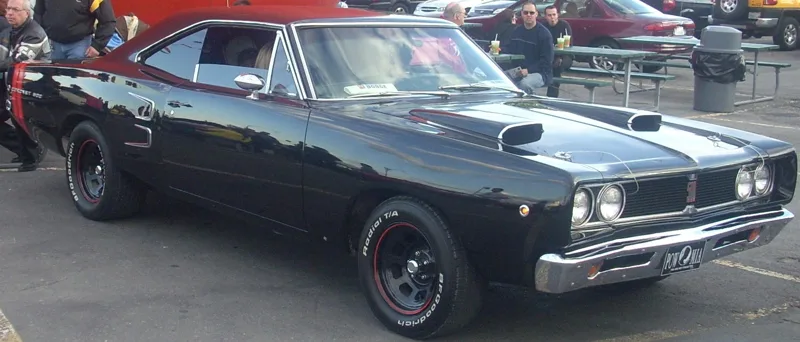
The hardtop coupes, designed entirely in Argentina, looked somewhat like the American Dodge Charger B-body of 1968 to 1970. The standard Polara came as a four-door sedan and as a hardtop coupe, and the Coronado was the luxury development of the same body. Coachbuilders also made ambulance and hearse versions on the Polara platform.
When did Polara production end?
Accounts differ on the final year. One gives 1979, a year before the Argentine subsidiary was sold to Volkswagen to form Volkswagen Argentina. Another gives 1980, the year Chrysler Fevre Argentina shut and was absorbed by the new company. The Polara Diesel differed from the other models not only in its engine but in its equipment, and it was the base model in both lines.
How did the Dodge 3700 reach Spain?
In 1971 the Polara was presented in Spain as the Dodge 3700. The firm Barreiros handled the assembly of the CKD kits and the sale of the car, with distribution covering the whole European market. There the body was assembled in CKD form in 1971 and 1972 using Argentine parts, and from 1973 the car was made entirely in Spain to meet local law.