A Chrysler V8, a turbo that made it the first British production car with factory turbocharging, and a price that sat well below the Rolls-Royce Corniche.
Built by Bristol Cars between 1980 and 1993, the Beaufighter took a Chrysler eight and a Rotomaster turbo into the 412 layout. Only a little over 20 cars were built in total, and it was priced well below a Rolls-Royce Corniche.
The Bristol Beaufighter was a turbocharged convertible with a fixed roll bar, built by Bristol Cars Ltd. in very small numbers from 1980 to 1993. It was a development of the Bristol 412 and used a Chrysler V8 with a Rotomaster turbocharger, which made it the first British production car to leave the factory with a turbo engine. It was also priced well below a Rolls-Royce Corniche.
How did Bristol end up making cars?
Bristol's roots lay in the Bristol Aeroplane Company, founded in Bristol in 1910 as an aircraft maker. When aircraft orders fell sharply after the Second World War, the company expanded into the car industry to keep its capacity busy. The first car of the new marque, the Bristol 400, drew on components from the BMW 326, 327 and 328 designs developed before the war, and it used the BMW 326 chassis almost unchanged for later models.
Bristol's engines followed a similar path. A six-cylinder engine based on a BMW design lasted until 1961, when the 407 brought in eight-cylinder units from Chrysler. Over time the sportiness of the early cars gave way to comfort and outward restraint, which set the scene for the Beaufighter.
Bristol gave no official output figures, yet its owner billed the turbo car as the quickest accelerating four-seater with an automatic gearbox.
Where did the 412 and Beaufighter come from?
In 1974 Bristol added the 412 beside its closed four-seater 411. The 412 used the same technology but had its own body by Zagato, in the style of a safety convertible. The idea continued a tradition begun in 1959 with the 406 Zagato and carried on in 1961 with the 407 GTZ Zagato. A revised 412 S2 followed in 1977 and stayed in production until 1980.
Taking both series together, Bristol built 39 examples of the 412. The Beaufighter that followed was not a new body but a 412 with a different heart, and its outward changes were limited to details.
Why did Bristol turn to turbocharging?
Bristol wanted more performance from the 412 at the end of the 1970s. Early trials with a larger Chrysler engine went badly. A prototype fitted with a 7.2-litre (439 cu in) eight-cylinder V engine changed the car's handling "brutally", because of the way the engine delivered its power. From 1977 the company looked at turbocharging instead.
The idea of a supercharged version of the eight-cylinder came from Chrysler, which had been experimenting with such concepts since 1974. Chrysler abandoned the work during its economic crisis, and Bristol took the project over. The engineers Dennis Sevier and Eden Holder brought it to production readiness, and in 1980 the Beaufighter went on sale, about a year and a half ahead of the Bentley Mulsanne Turbo.
What engine and gearbox did the Beaufighter use?
The engine was a 5,898 cc (360 cu in) small-block eight of the LA family from Chrysler. Bristol had fitted it since 1976 in the 603 and since 1977 in the 412 S2. Bristol's engines were built in Canada, and they carried special cylinder heads developed in Britain. A four-barrel Carter carburettor was fitted in a form not used on the American versions.
The Rotomaster turbocharger was not always working. A priority valve controlled it, so that the throttle position decided whether it was active. Bristol said this made the Beaufighter the first European car with such a setup. The electronic ignition was reworked, Chrysler's Lean Burn System was disabled, and the engine received a high-performance petrol pump and larger intake ports.
The TorqueFlite automatic also had to change, because the old version could not handle the higher torque. It received a stronger torque converter that Chrysler had developed for its discontinued 7.2-litre eight, and the clutch came from the same version. The engine and gearbox sat 25 mm lower than in the 412.
Bristol gave no official output figures. Owner Tony Crook said the car had more than enough power, and he put the gain in power and torque at 30 per cent. Newspapers reported later that output was roughly 320 PS (316 hp). At the launch Crook called it the quickest accelerating four-seater with an automatic gearbox and the biggest boot.
Why was the car named after a wartime bomber?
The name Beaufighter referred to a fighter-bomber of the same name, built in large numbers during the Second World War by the company that had been Bristol's former parent, the Bristol Aeroplane Company. Bristol Cars had until then labelled its own cars with number codes, from the 400 to the 412 and the 603, for decades.
The Beaufighter broke that habit for the first time. The company's other models later took names with aviation links as well, among them the Britannia, the Brigand and the Blenheim. Some sources also call the car the Bristol 412 S3 Beaufighter, which places it in the 412 series as the successor to the 412 S2, discontinued in 1980.
How did the Beaufighter fit into Bristol's range?
At first the Beaufighter supplemented Bristol's closed four-seater, the 603. From 1982 the Britannia took over as the 603's successor in the closed line. The closed model could also be had with the Beaufighter's turbo engine, and in that form it was known as the Bristol Brigand.
The Beaufighter, Brigand and Britannia all stayed in the programme until 1992. Production of the Beaufighter itself ran until the summer of 1993, shortly before Bristol switched production to the new Blenheim.
How did the Beaufighter look?
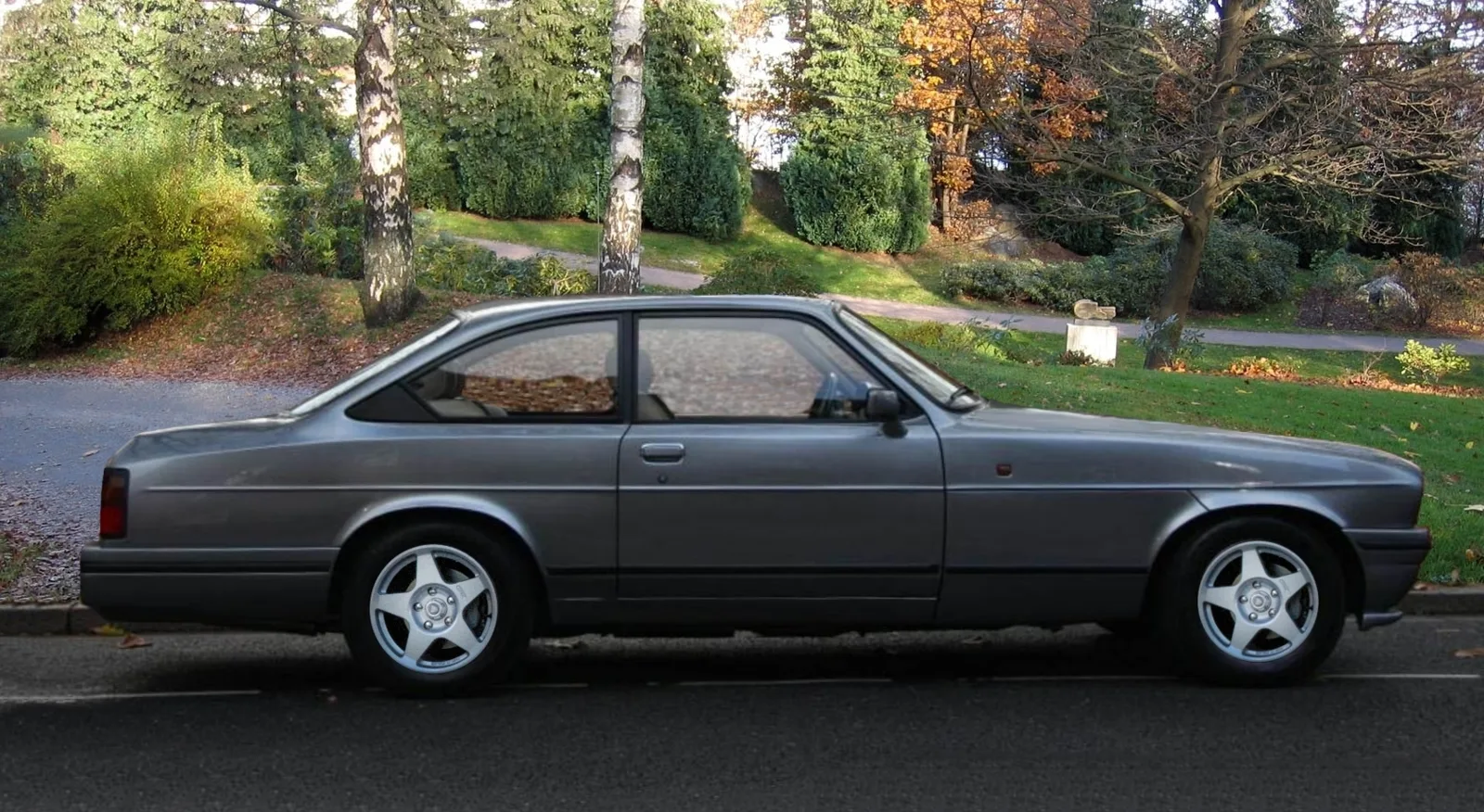
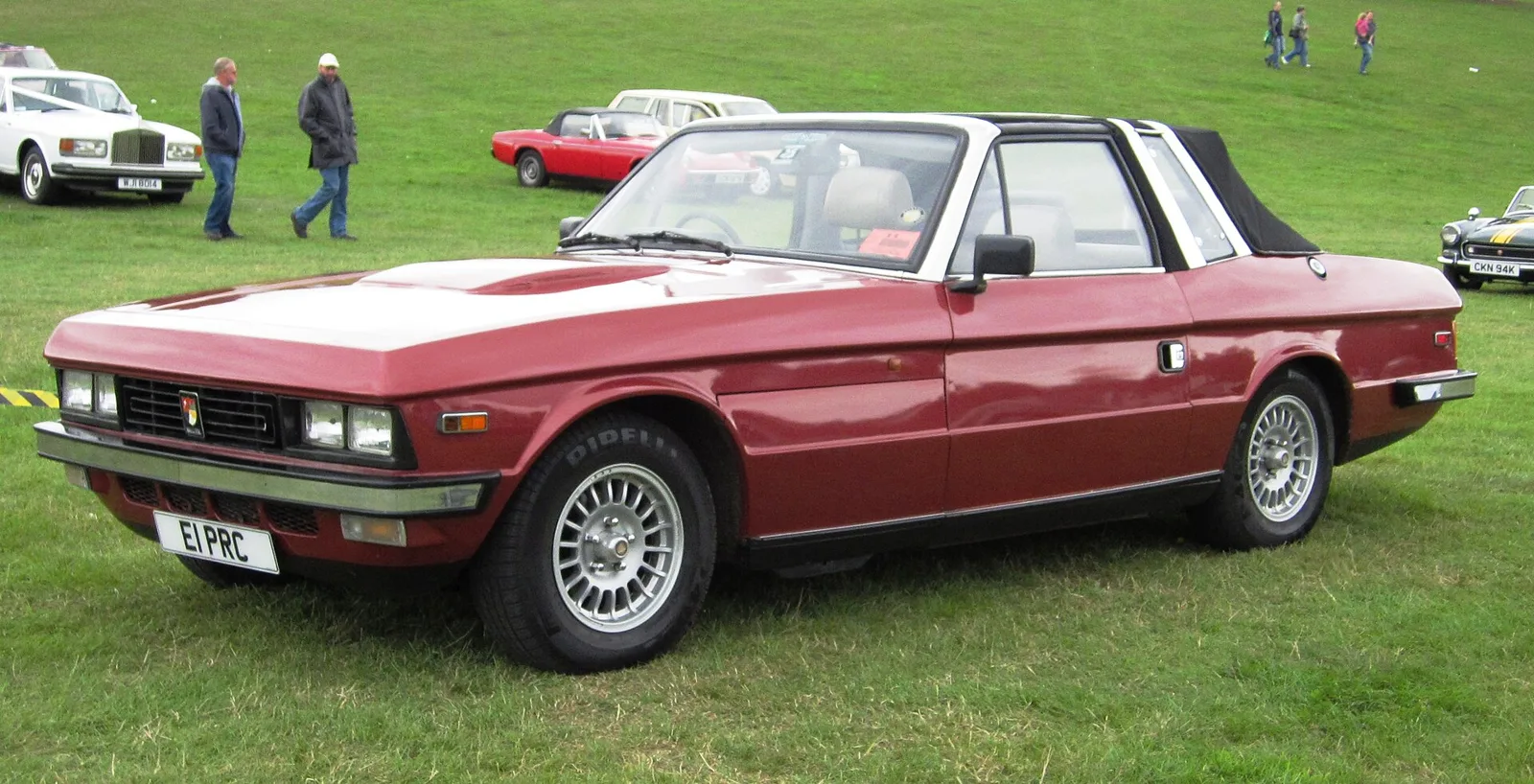
The body stayed close to the 412. It kept the safety-convertible layout, with a fixed roll bar and a hardtop over the front seats. Unlike the 412, that front hardtop was fixed, while the fabric roof over the back seats still folded down. Maggiora in Turin continued to make the bare shells, and Zagato claimed the detail changes had been developed in Italy.
The clearest difference was the four rectangular twin headlamps, which replaced the headlamp and indicator unit taken from the Opel Commodore B. The indicators moved under the front bumper. A bulge on the bonnet came from the turbocharger, and from 1983 side marker lights were fitted front and rear as standard, following American practice, even on cars sold in Europe or the Middle East.
The styling was open to criticism. At its introduction in 1980 the car was described as unmistakable but certainly not beautiful. Bristol also tried a smoothed dashboard without the oval surround behind the steering wheel, which had been typical since the 404, but it soon went back to the classic layout. Digital instruments, inspired by the contemporary Aston Martin Lagonda, were also dropped after experiments showed the pros and cons did not balance.
How fast was the Beaufighter?
In a first test the Beaufighter went from 0 to 96 km/h (60 mph) in 6.7 seconds and passed 240 km/h (149 mph) at the top end. Performance was clearly better than that of the 412 and of the 603, which was built at the same time. Early test drives returned more than 30 L/100 km (9.4 mpg-imp; 7.8 mpg-US). Fine-tuning over the following months cut that to around 25 L/100 km (11.3 mpg-imp; 9.4 mpg-US).
The body held back the car's performance, because it was comparatively poor aerodynamically. The Bristol Brigand, a closed model with the same turbo engine that came out in 1982, had a much better aerodynamic shape and was clearly faster at a similar kerb weight.
How many Beaufighters were built and what did they cost?
Very few were built. The car was made at Bristol's works in Filton and, from 1984, in the neighbouring Patchway. Production ran for 14 years and ended in summer 1993, shortly before Bristol moved to the new Blenheim. A 2014 sales listing from Bristol Cars put the total at just over 20 cars for the 1980 to 1993 run.
The Beaufighter was an expensive car. Its price was roughly that of an Aston Martin V8, but far below a Rolls-Royce Corniche. At its 1980 launch it was offered for 37,999 pounds, and a Rolls-Royce Corniche Convertible cost more than 30,000 pounds extra at the time.
What was the Bristol Beaufort?
The Bristol Beaufort, shown in 1984, was a one-off full convertible based on the 412. It dropped both the roll bar and the targa roof, and its lined hood was electrically operated. Other changes included altered door handles and a covered fuel filler neck. The large hood well greatly shortened the rear bench, which could be used only to a limited extent.
The car was built on the initiative of owner Tony Crook, but no series production followed. Crook felt the space in the back was not enough, and Bristol was in economic difficulty during the first half of the 1980s, so the development could not be financed. Crook drove the Beaufort himself before selling it to an Egyptian businessman. In the 1990s it stood unused in London until the works reconditioned it. It was offered for sale in Britain in 2008, and it still appears now and then at marque gatherings.
Did the Beaufighter get a sports version?
Not in production. The Beaufighter received only small changes during its 14-year run. Toward the end of the 1980s Bristol drew up a shorter, lighter sports version of about 4,500 mm (177.2 in) in length. It would have had a folding rear seat to increase luggage space, but the work never went beyond drawings, and the death of the leading developer ended the project.
Beaufighter at a glance
| Item | Detail |
|---|---|
| Built by | Bristol Cars Ltd. |
| Years built | 1980 to 1993 |
| Engine | 5,898 cc (360 cu in) Chrysler small-block V8 |
| Induction | Rotomaster turbocharger, priority valve |
| Output | About 320 PS (316 hp), per later reports |
| Transmission | TorqueFlite automatic, stronger torque converter |
| 0-96 km/h (0-60 mph) | 6.7 seconds in a first test |
| Top speed | More than 240 km/h (149 mph) |
| Consumption | About 25 L/100 km (11.3 mpg-imp; 9.4 mpg-US) after tuning |
| Launch price, 1980 | 37,999 pounds |
| Production | Just over 20 built, per a 2014 sales advertisement |