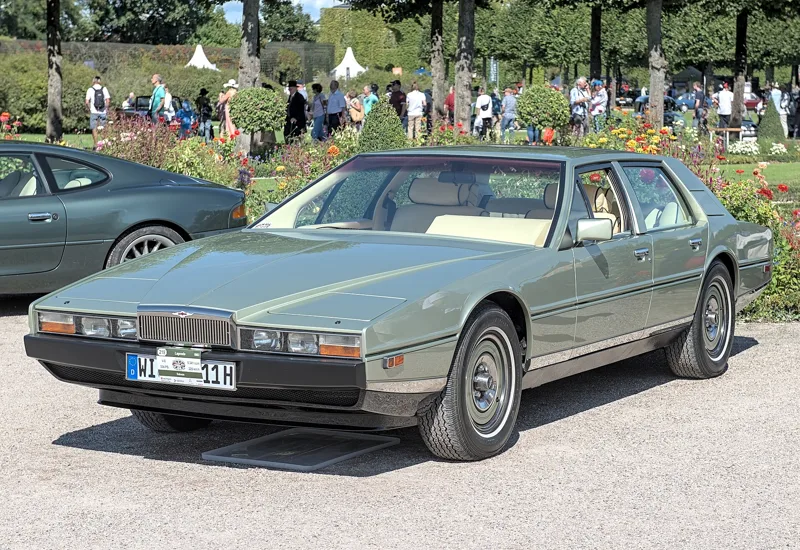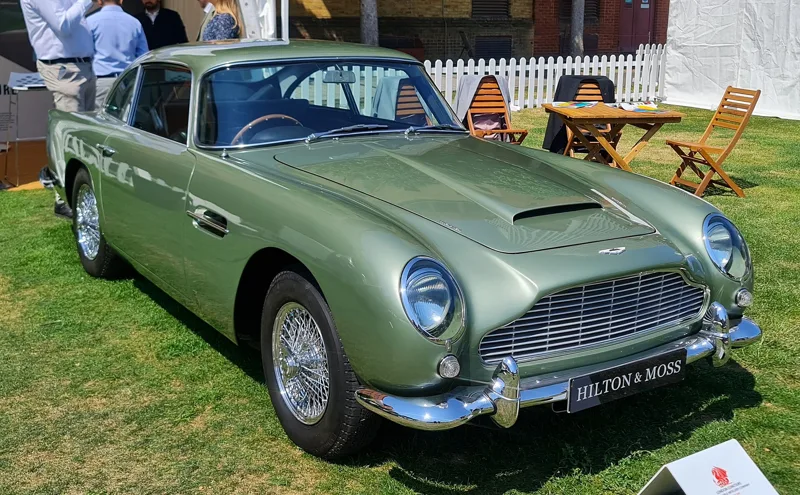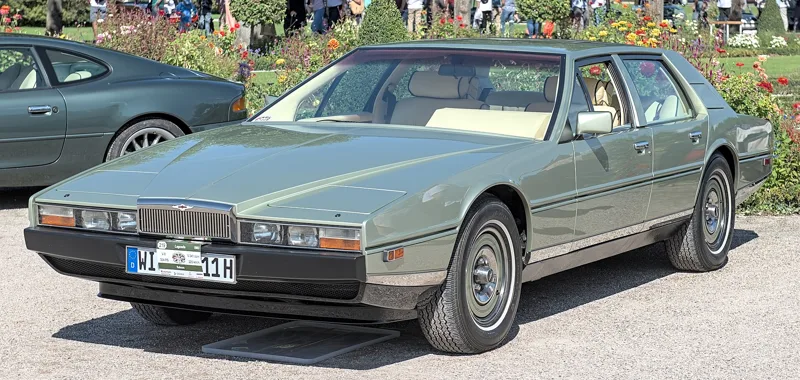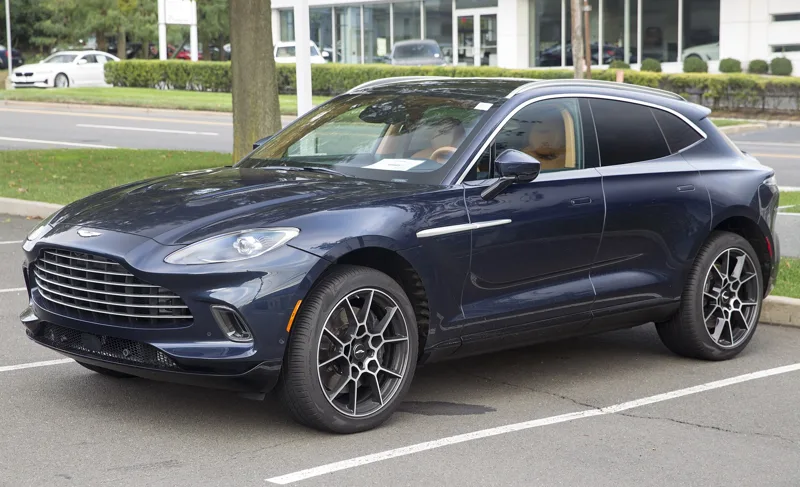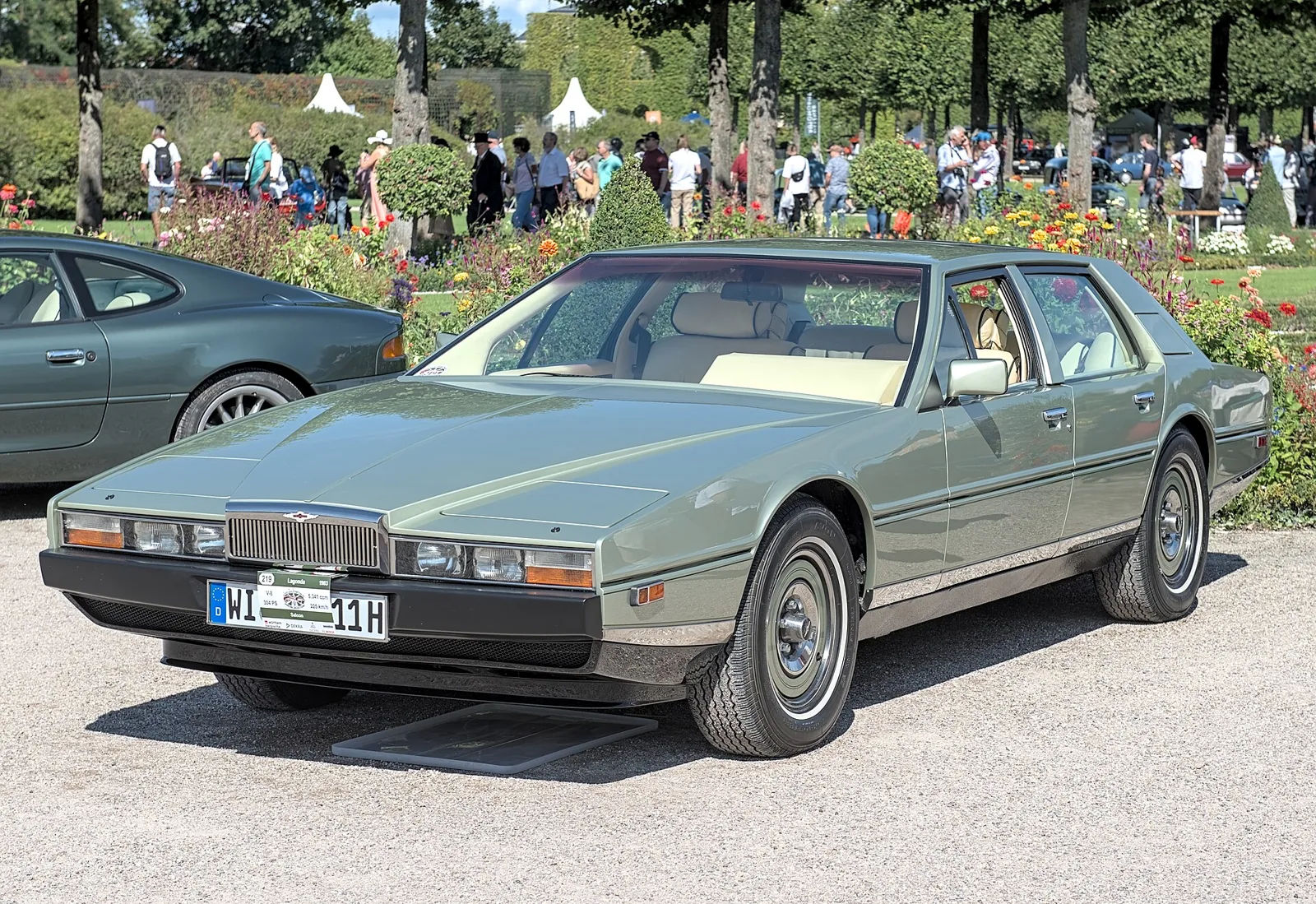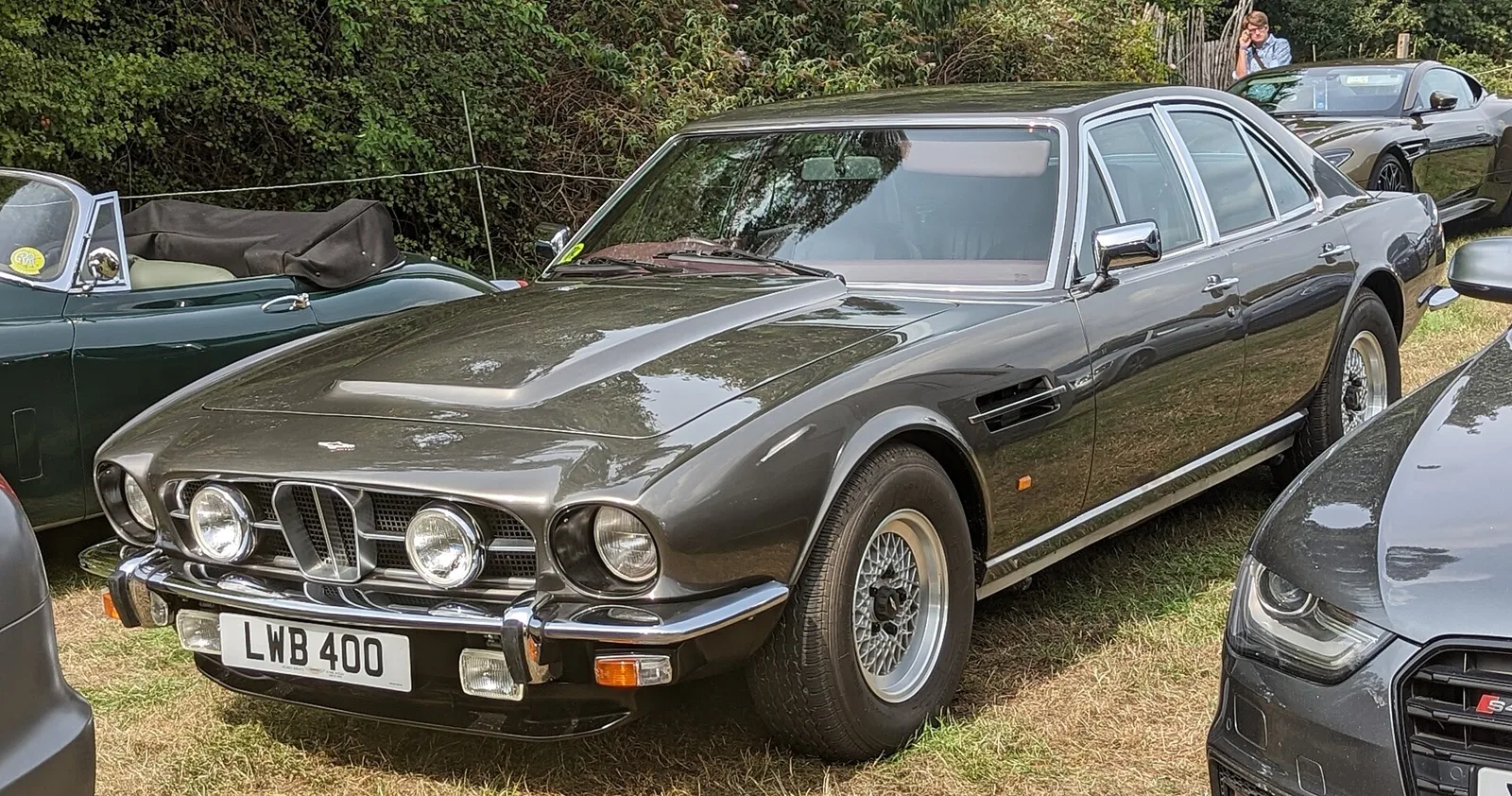
A four-door saloon built on the V8 coupe platform, with a 5.3-litre V8, a launch price of GBP 14,040 and a very small production run.
Built only in small numbers between 1974 and 1976, the Lagonda S1 paired a 5.3-litre V8 with a four-door body derived from the V8 coupe, and it cost GBP 14,040 at launch. The 1969 prototype came first, and seven cars were completed by 1976.
The Aston Martin Lagonda Series 1 was a four-door saloon built from the Aston Martin V8 coupe. A prototype appeared in 1969, but the car reached production only from 1974 to 1976, in a run of very few cars that coincided with a company crisis.
Where did the Lagonda name come from?
Lagonda was a sports car maker that David Brown took over in 1947 and integrated into Aston Martin. While Aston Martin handled sports and racing cars, Lagonda filled the market for high-priced sporting saloons. Three Lagonda series with Aston Martin technology were sold until 1964, when the Rapide was discontinued and the name fell silent.
A four-door variant of the DBS V8 coupe, sold under the Lagonda name, was built as a prototype in 1969. The car stayed a prototype, and the single 1969 car was used privately for a time by the group chief, David Brown.
The company's fortunes turned in 1972, when the British investor Company Developments took over Aston Martin. In 1974 Company Developments cleared the way for series production, and the saloon was added alongside the two-door V8 coupe in the range. That coupe had itself replaced the DBS V8, and it was sold as the DBS first and as the V8 from 1972.
The Lagonda 2.6 Litre ran from 1948 to 1953, the 3 Litre from 1953 to 1958, and the Rapide from 1961 to 1964, all with Aston Martin technology.
A four-door Aston built from the V8 coupe, with a 5.3-litre engine and a very small production run.
How was the Series 1 body designed?
William Towns designed the Series 1 body, and when Aston Martin began planning the DB6 successor in 1966, his counter-proposal beat the design of the Italian coachbuilder Carrozzeria Touring, which Aston Martin had first commissioned. The four-door car is a version of the V8 Series 3 coupe and shares most of its front-end panels with it.
Towns had planned a coupe and a saloon from the start. He drew the saloon first and derived the shorter coupe from it. Regardless of this, the coupe reached the market before the saloon. He argued that Bristol Cars had done it the other way round, stretching the coupe 404 into the saloon 405 at the cost of much of its aesthetics.
The rear wings follow a coke-bottle line, which Towns said he took from the Chevrolet Camaro of 1966. The roofline echoes the fastback of the first Ford Mustang, and the front carries a horseshoe-shaped grille insert meant to recall the Lagonda Rapide, a part the V8 did not have.
A tall, open air scoop sits in the bonnet, as on the V8 Series 3 coupe. The saloon's wheelbase is 30.5 cm (12.0 in) longer than that of the DBS and V8, and its overall length is longer by the same figure.
What engine did the Lagonda S1 use?
The Series 1 used a 5.3-litre V8 of 5,341 cc (325.9 cu in) with four twin-choke carburettors, producing about 208 kW (283 PS; 280 bhp). The engine's basic construction matched that of the DBS V8 and the V8, and Aston Martin had developed it from 1963 under Tadek Marek. Technically the saloon's engine matched the tune used in the V8 Series 3 coupe.
The drivetrain choice matched the V8: buyers could take a three-speed automatic, or a five-speed manual. Only two cars received the manual unit. Some Lagondas were later fitted with altered, in some cases heavily tuned, engines.
Why does the car carry the Lagonda name in two forms?
Aston Martin sold the 1974 to 1976 saloon as the Aston Martin Lagonda rather than under the Lagonda brand, which had been reduced to a model name. A scheme has since become established for telling generations apart, and the 1974 to 1976 car is the Series 1.
The wedge-shaped saloon presented in 1976 kept the Aston Martin Lagonda name. It was built from 1979 in three series, which are called Series 2, Series 3 and Series 4.
How did the 1969 prototype differ from the production car?
The 1969 prototype closely matched the later cars but had the front of the DBS coupe, with four small iodine vapour lamps set into the radiator cowling alongside the indicator and sidelight units of the Ford Cortina Mk. II. Its engine was originally a 5.0-litre V8.
Later owners of the prototype replaced that engine with a production 5.3-litre unit. The production cars, by contrast, carried the front of the contemporary V8 Series 3.
How many Lagonda Series 1 cars were built?
Aston Martin built eight chassis and bodyshells in 1974, and seven of them were completed and sold by 1976. The company became insolvent in December 1974 and built no car in the first six months of 1975.
When a consortium of British and North American businessmen took over in June 1975 and formed Aston Martin Lagonda (1975) Ltd., production restarted step by step. In 1975 the company built only 21 cars in total, and the last orders for the four-door saloon were worked off by 1976.
From the last set of parts, a collector built an eighth car between 1998 and 2007. It has chassis number 12008 and the engine of a V8 Vantage from the last series.
How much did the Lagonda cost?
At its presentation the Lagonda cost GBP 14,040. That was GBP 2,691 above the price of an Aston Martin V8, and close to the price of a Rolls-Royce Corniche.
How did the press judge the car?
Test drivers were restrained. Handling, ride comfort and the noise of the engine and body drew criticism, and the performance drew the sharpest comment, because it fell well short of what a car with a 5.4-litre engine should deliver.
One reviewer concluded that a few examples could have sold had the car been developed further, but doubted that it could save Aston Martin.
What happened to the cars afterwards?
Some Lagondas were heavily altered after they left the factory, far beyond the original output of about 208 kW (283 PS; 280 bhp). At least two received a 7.0-litre enlargement of the eight-cylinder engine from a specialist tuner, with outputs between 450 and 480 PS (331 to 353 kW; 444 to 473 hp).
One car also took a tail from the V8 Series 4 nicknamed Oscar India, slightly longer than the original and finished with a breakaway edge. Today all seven production cars and the 1969 David Brown model survive, most of them in Great Britain.
Surviving cars sell for far higher prices than the two-door V8 models. The last 1976 Lagonda went under the hammer at auction in summer 2008 for GBP 254,000.
What did the wedge-shaped Lagonda that followed look like?
The wedge-shaped Lagonda was built from a design drawn within one month by William Towns, and it carried a striking digital instrumentation that was prone to faults in everyday use. It was presented in 1976 and built from 1979 in three series.
The new management ordered the development of this car. It was meant to look different from the familiar V8 coupe and worked as an eye-catcher, showing what Aston Martin Lagonda (1975) Ltd. could do. The result was a four-door notchback saloon with a wedge-shaped body.
Specifications
| Specification | Detail |
|---|---|
| Project code | MP 230 |
| Prototype | 1969 |
| Series production | 1974 to 1976 |
| Engine | 5.3-litre V8, 5,341 cc (325.9 cu in), bore x stroke 100 x 85 mm |
| Carburettors | Four twin-choke carburettors |
| Power | About 208 kW (283 PS; 280 bhp) |
| Transmission | three-speed automatic, or five-speed manual (two cars) |
| Wheelbase | 30.5 cm (12.0 in) longer than the DBS and V8 |
| Launch price | GBP 14,040 |
| Cars built | Seven completed by 1976; an eighth built 1998 to 2007 |