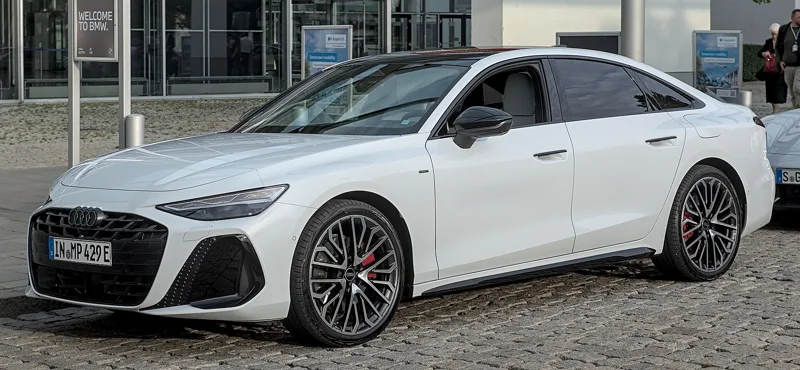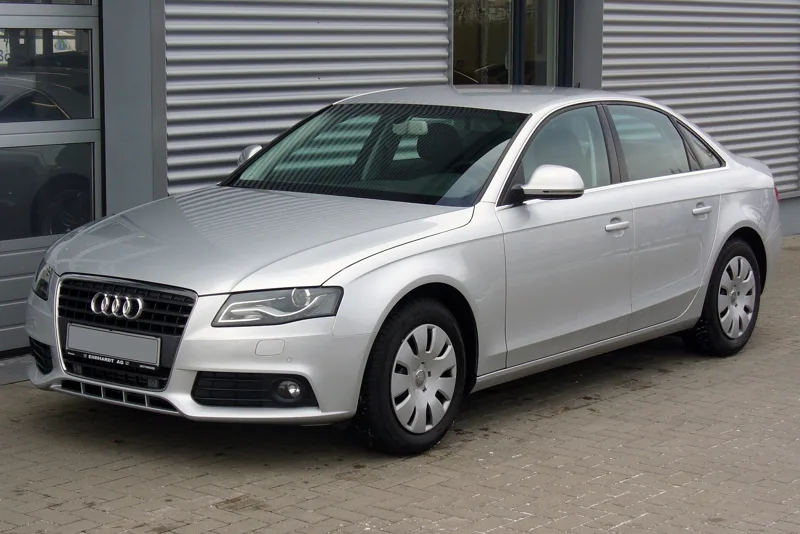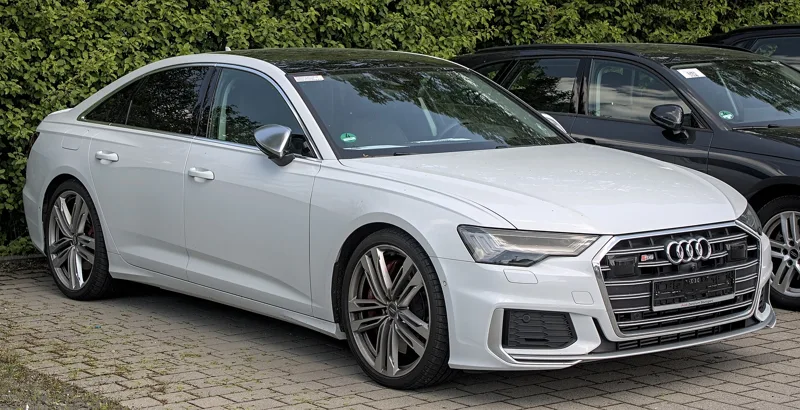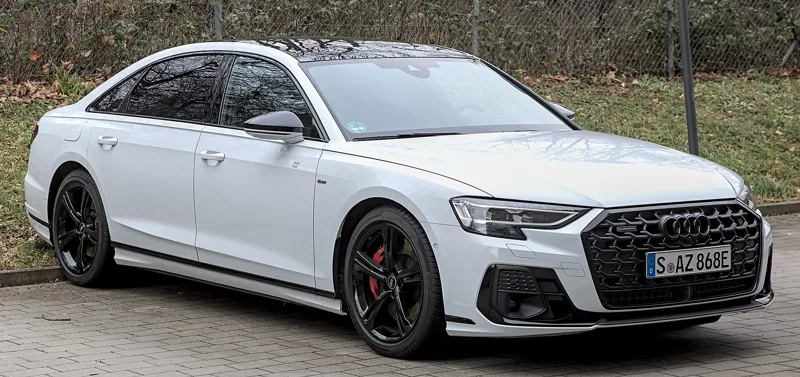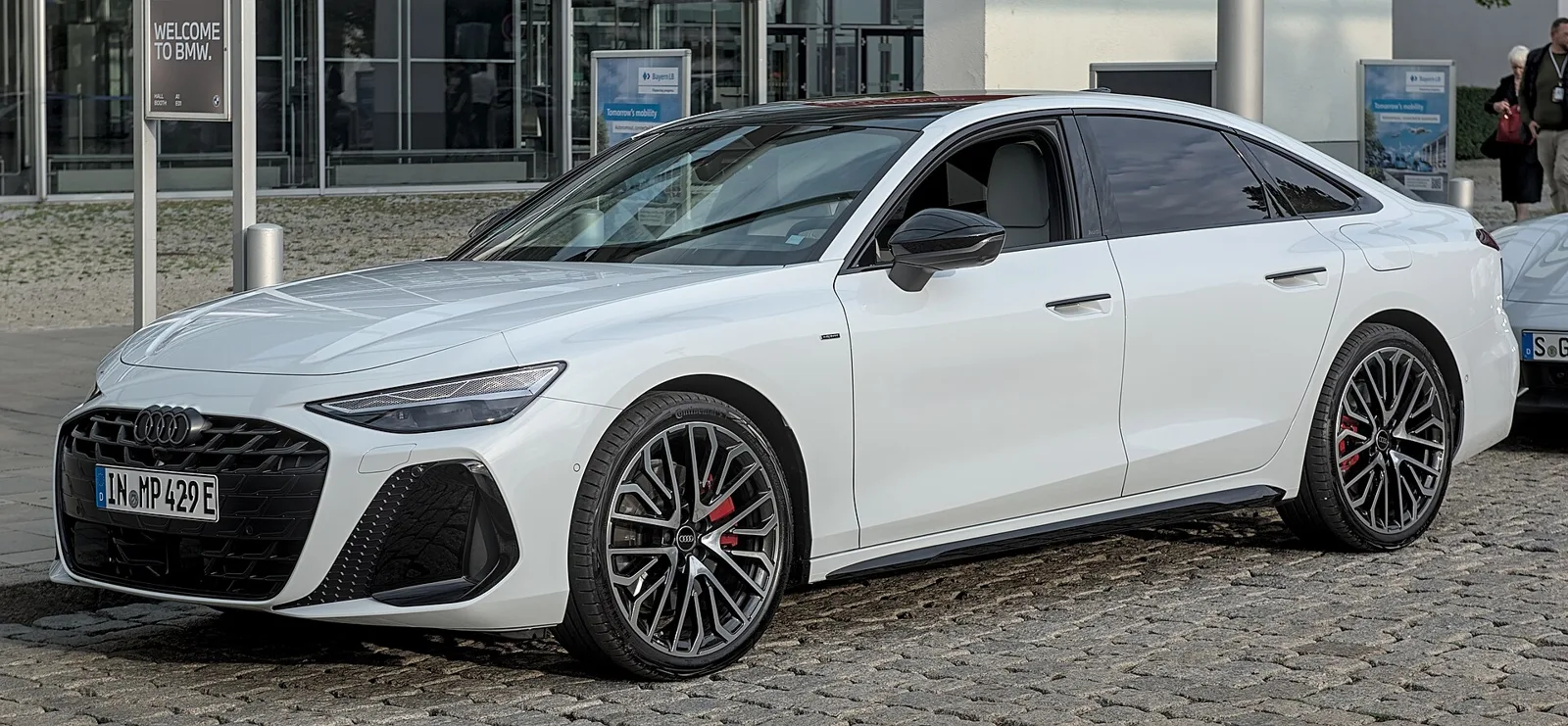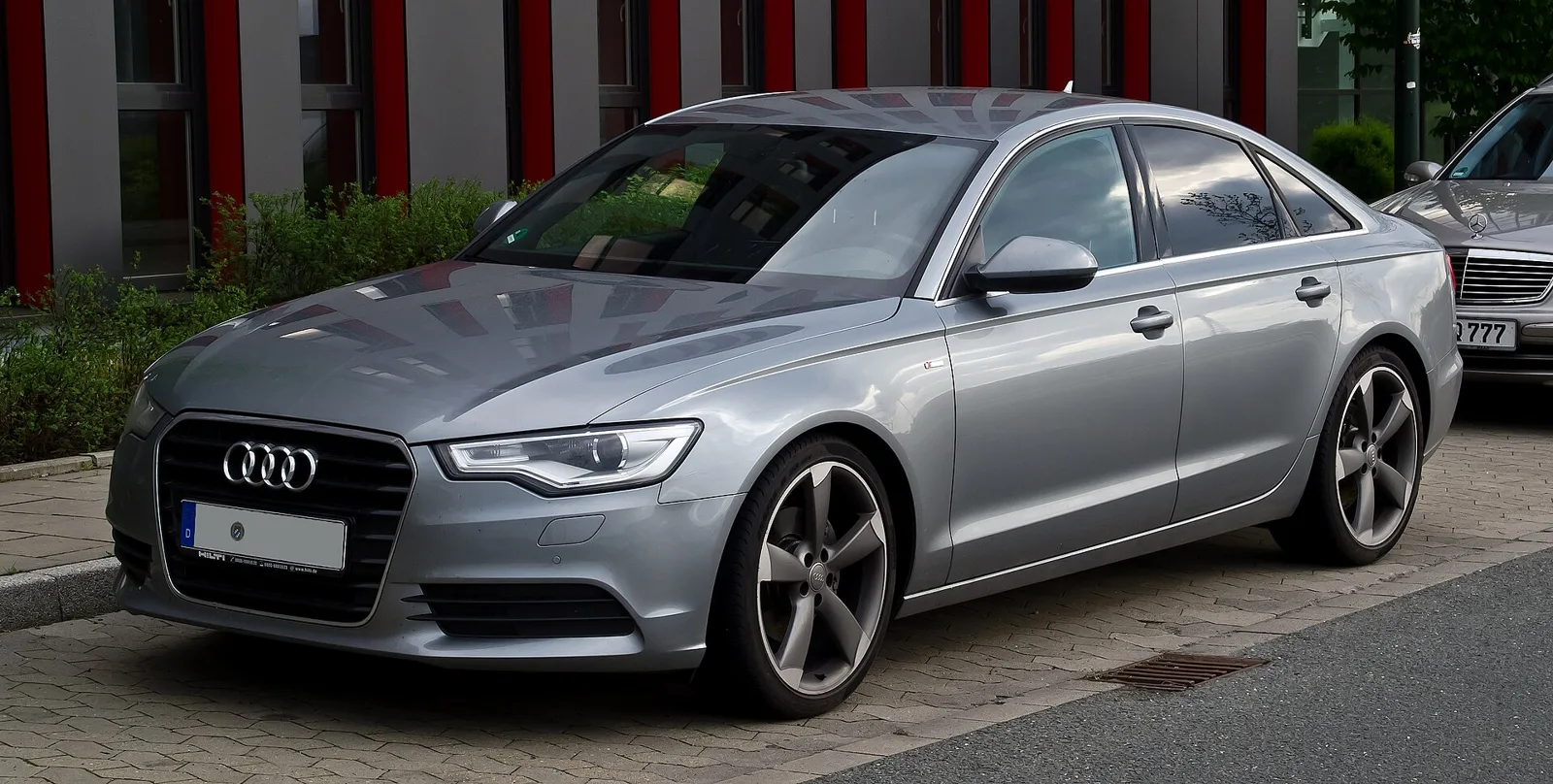
The 2011 A6 shared its interior and platform with the A7, carried A8 styling cues, and was built in saloon and Avant form until 2018.
Launched in early 2011, this fourth-generation A6 was sold as a saloon and Avant until 2018. It shared its platform and powertrains with the A7, borrowed styling from the A8, and offered engines from a 204 hp V6 up to the 560 PS RS6 Avant.
The Audi A6 C7 was the fourth generation of Audi's executive car, built from 2011 and sold in saloon and Avant estate forms until the next model arrived in 2018. Its chassis, interior and powertrains were shared with the Audi A7, and its styling was heavily influenced by the larger A8. Its allroad, S6 and RS6 Avant versions gave the range its rugged and performance variants.
What was the Audi A6 C7?
The C7 was internally designated Typ 4G. Images of it leaked online in December 2010, and the car went on sale in early 2011, starting in Europe with other markets to follow. It replaced the C6, which had been on sale since 2004.
The Audi A6 is an executive car built in Neckarsulm, Germany. Internally, Audi counts the A6 as part of the Audi 100 family line, so the C7 sits between the C6 and the C8.
A fourth-generation executive saloon that shared its platform with the A7 and its styling cues with the A8.
How did the A6 start out?
The A6 began in 1994 as a facelift of the C4 Audi 100, which was called the Audi 5000 in the United States. It was renamed to fit Audi's new alphanumeric nomenclature, which had just been applied to the full-size A8. The exterior changed only slightly, with new lights, a new radiator grille and revised engines.
The new engines for the 1994 A6 were a 1.8-litre 20-valve inline-four, a 2.0-litre eight-valve inline-four, a 2.6-litre V6 and a 2.8-litre 30-valve V6. Diesel buyers could choose a 1.9 turbocharged direct injection four, or a 2.5 TDI five-cylinder rated at 103 kW (140 PS; 138 bhp). The United Kingdom was the first market to receive the A6.
The launch also brought the S6, a renamed S4 later known as the Ur-S6. Its 2.2-litre turbocharged five-cylinder produced 169 kW (230 PS; 227 bhp), and a 4.2-litre V8 became available as an option. In 1997 the S6 Plus, built by quattro GmbH, offered 240 kW (326 PS; 322 bhp) in only 952 cars.
How did the C5 and C6 prepare the ground?
The C5 A6 arrived in 1997 on a new Volkswagen Group platform, and it competed directly with the BMW 5 Series and the Mercedes-Benz E-Class. Its body had a drag coefficient of 0.28. A long-wheelbase version was later built for China, the first stretched German sedan developed for that market.
The C6 arrived in 2004, designed by Satoshi Wada, and it was visually an evolution of the C5. It was lengthened to 4,927 mm (194.0 in) and introduced the Multi Media Interface and Fuel Stratified Injection. Its S6 used a 5.2-litre V10 taken from the Lamborghini Gallardo, although that engine was detuned.
The A6 won the World Car of the Year award in 2005. It also took Practical Caravan's Towcar of the Year awards, thanks to features such as adjustable suspension height and damping and a 123 Trailer Stability Programme.
Where did the C7 design come from?
Design work on the C7 began in 2006, and Jurgen Loffler's exterior design was chosen in 2008. The car was heavily influenced by the Audi A8 (D4), and it borrowed exterior details from that larger saloon. The A6 also shared its interior, platform and powertrain with the Audi A7 four-door sedan, which had been released shortly before in 2011.
The C7 used Audi's Modular Longitudinal Platform, the same architecture as the A7.
How much bigger was the C7?
Wheelbase grew by nearly 3 in (76 mm) and width by 2.7 in (69 mm). The redesigned body brought the drag coefficient down to 0.25, which was a useful gain for a large saloon.
The longer wheelbase and wider body were the main dimensional changes over the C6.
Which engines did the C7 offer in Europe?
Petrol choices in Europe were a 2.8-litre FSI V6 rated at 204 hp (152 kW) and a 3.0-litre supercharged FSI making 300 hp (224 kW). Two diesels were offered, a 2.0-litre inline-four and a 3.0-litre turbocharged diesel in three states of tune.
The European 3.0 TFSI could be specified with a seven-speed dual-clutch transmission and an air suspension option. Neither feature was offered on the US model.
What did North American buyers get?
The North American A6 3.0 TFSI quattro used a 3.0-litre supercharged V6 that produced 310 PS (228 kW; 306 hp) and 325 lb-ft (441 N-m). It was the same engine as the previous car's 3.0 TFSI, in a higher state of tune, and it was mated to an eight-speed automatic.
The A6 2.0 TFSI quattro used the 2.0-litre turbocharged inline-four found in the A4 and Q5. An entry-level 2.0 TFSI FrontTrak, with front-wheel drive, was sold in the United States but not in Canada, and it used the Multitronic continuously variable transmission.
What driver assistance came with the 2012 model?
The 2012 model year brought the driver assistance systems from the A8 to the A6. It added an automotive head-up display and active lane assist. Full LED headlamps with automatic high beam switching, or Audi adaptive xenon lighting with variable headlight range control, were available.
What was the A6 hybrid?
A hybrid version arrived for the first time in the A6 in 2012. It combined a 2-litre TFSI producing 211 PS (155 kW) with a 45 PS (33 kW) electric motor. Power came from a 1.3 kWh lithium-ion battery, which gave an electric-only range of 3 km at a steady 60 km/h (37.28 mph), with a top speed of 100 km/h (62.14 mph) on electric power.
The market launch was scheduled for 2012, but production of the US model was delayed. The hybrid was discontinued in 2014 because of low sales, after roughly 4,000 units had been sold.
What were the allroad and S6 versions?
The allroad quattro was shown at the 2012 Geneva show, next to the RS4 Avant, and British customers received their first cars in July 2012. Audi designed more than 1,100 new parts for it. These included special bumpers and fender flares with a matte finish, larger tyres and redesigned headlights and mirrors.
The allroad's air suspension can lift the car to provide 208 mm (8 in) of ground clearance, and a low-range mode is available with the manual gearbox. Together these let the car complete an official Land Rover test course, which which has been reported as the only car-based SUV to pass that test. Lowered to 142 mm (6 in) above the road, it can also drive like a sports saloon.
The S6 saloon and Avant arrived in 2012 with a twin-turbo V8 rated 420 PS (309 kW; 414 hp), with 550 N-m of torque from 1450 to 5250 rpm. It came with a seven-speed S tronic gearbox and permanent quattro all-wheel drive with a self-locking centre differential and torque vectoring. The S6 wore 8.5Jx19-inch wheels in a five parallel-spoke design.
What was the Black Edition?
The Black Edition was a UK-only trim available in saloon and Avant bodies, from November 2012 sales with deliveries in early 2013. It was built on the A6 S line trim, using 177 PS 2.0-litre TDI engines and larger ones, but not the S6, with front-wheel drive or quattro.
Its equipment list covered 20-inch dark titanium alloys, a black grille, privacy glass behind the B-pillar, Piano Black inlays and black Valcona sports seats. The stereo was a BOSE system with DAB radio, plus a music interface for iPod use.
What was the RS6 Avant?
The RS6 Avant was the highest performance version of the C7 range, built from 2013 to 2018. Its twin-turbo V8 produced 560 PS (412 kW; 552 hp) at 5700 to 6700 rpm and 700 N-m of torque from 1750 to 5500 rpm. A cylinder-on-demand system deactivates the valves of four cylinders.
The RS6 used an eight-speed tiptronic transmission and quattro permanent all-wheel drive with torque vectoring. It carried four vented brake discs and 20-inch forged wheels in a seven twin-spoke design. Its Dynamic package raised the top speed to 280 km/h (173.98 mph), and the Dynamic plus package raised it to 305 km/h (189.52 mph).
What was the A6L e-tron?
The A6L e-tron was a plug-in hybrid concept shown at Auto China 2012 in Beijing. It combined a 2.0 TFSI producing 211 PS (155 kW; 208 hp) with a 95 PS (70 kW; 94 hp) electric motor. A 14.1 kWh lithium-ion battery gave it an all-electric range of 80 km (49.71 mi) at a steady 60 km/h (37.28 mph).
A production version of the long-wheelbase car was planned for China in 2016, with a 180 kW (241 hp) output and a 50 km (31.1 mi) electric range.
What did the 2015 facelift change?
Audi unveiled the 2015 mid-life facelift at the 2014 Paris Motor Show. It brought styling tweaks, a new engine line-up, a revised transmission and an updated MMI infotainment system. The new MMI used a faster Tegra 3 processor, handwriting recognition and Audi connect telematics with 4G mobile internet.
Advanced Matrix LED headlights were added to the range. All three TFSI 1.8 engines and all five TDI engines met the Euro 6 emissions standard. The entry-level 2.0 TFSI FrontTrak swapped its CVT for a seven-speed dual-clutch automatic.
In the United States, Canada and the UK the saloon's 3.0 TFSI quattro rose from 300 PS to 310 PS. Some European markets, France among them, gained a 1.8 TFSI petrol with 190 PS from the 2016 facelift models onward.
How did the C7 sell in China?
China was a significant market for the A6. According to the research company Dunne & Company, purchases in China and Hong Kong made up about half of the 229,200 Audi A6s sold worldwide as of 2011. The A6L, a long-wheelbase variant for the Chinese market, was unveiled at Auto Shanghai in 2009 and later joined by the 2012 A6 L built in Guangzhou.
By 2012 many Chinese government officials were driving Audi A6s. The shift followed a 1994 government campaign against officials riding in Mercedes stretch limousines.
What are the Audi A6 C7 specifications?
| Specification | Detail |
|---|---|
| Internal type | Typ 4G |
| Launch | Early 2011 in Europe |
| Wheelbase increase | Nearly 3 in (76 mm) |
| Width increase | 2.7 in (69 mm) |
| Drag coefficient | 0.25 |
| European 2.8 FSI V6 | 204 hp (152 kW) |
| European 3.0 supercharged | 300 hp (224 kW) |
| North American 3.0 TFSI quattro | 310 PS (228 kW; 306 hp), 325 lb-ft (441 N-m) |
| Hybrid petrol and motor | 211 PS (155 kW) 2-litre TFSI plus 45 PS (33 kW) |
| S6 V8 | 420 PS (309 kW; 414 hp), 550 N-m |
| RS6 Avant V8 | 560 PS (412 kW; 552 hp), 700 N-m |
| A6L e-tron battery | 14.1 kWh, 80 km (49.71 mi) electric range |
| Hybrid units sold | Roughly 4,000 before discontinuation in 2014 |