Drag records, Group A touring cars, rally stages, Super GT titles, drifting and a hybrid race win: the Supra has raced almost everywhere.
The Supra has raced in drag racing, Group A touring cars, rallying, sports car racing, drifting and NASCAR. Its strongest record is in Japan, where Super GT titles and speed records have been won with it since the 1990s.
The Toyota Supra has spent decades on drag strips, touring car grids, rally stages, sports car circuits, drift events and time attack tracks. Its record runs from early Japanese drag wins to Super GT title defences and a hybrid race victory, and this article traces where it raced, what it achieved and where its records stand.
How did the Supra perform in drag racing?
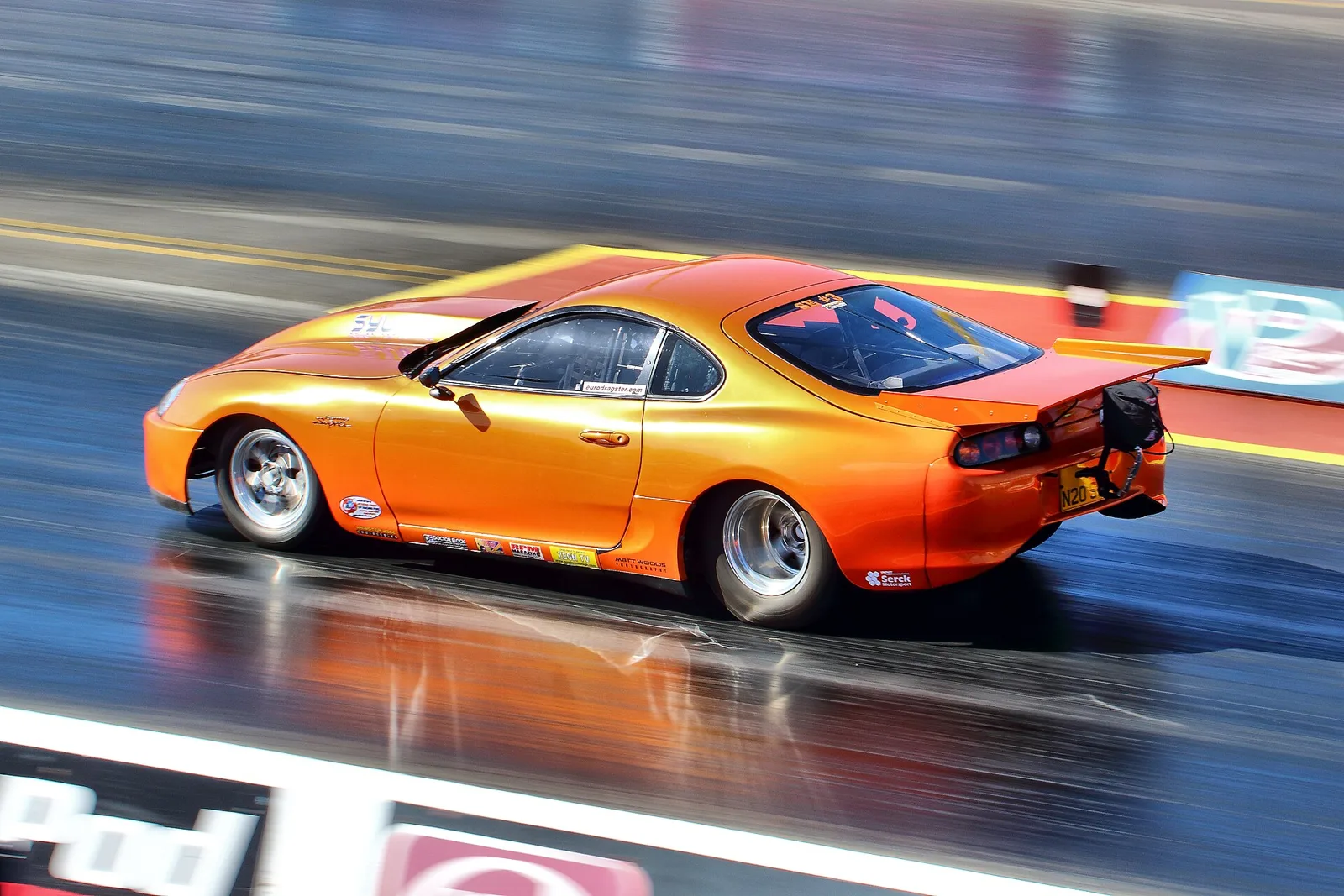
The Supra became a fixture on drag strips in Japan and the United States. HKS ran a twin-turbo Mk III, Vinny Ten held US national records from 1997 to 2000, and the current quarter-mile benchmark for a Supra stands at 6.23 seconds.
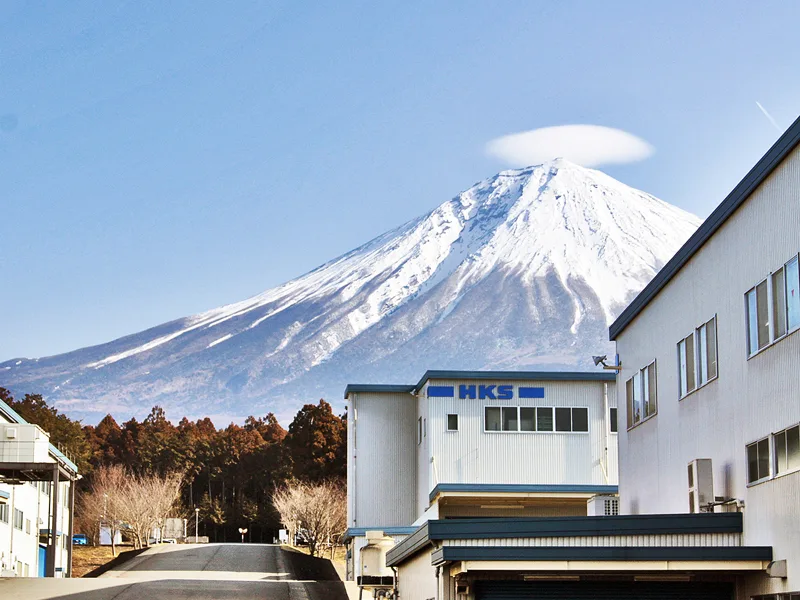
HKS built its first Drag Supra on a custom chassis with a carbon fibre body. The Mk III version housed a de-stroked 2.89-litre twin-turbo 7M-GTE, producing 600 kW (800 bhp) at over 9000 rpm, and its best quarter mile was 8.09 seconds with Charlie Goncalves Catanho at the wheel. A later car, the HKS Drag 70, ran a 7-second quarter mile in 1991.
Vinny Ten was one of the first Pro Mod drivers in import drag racing. His car was the first in the US to run a 700 kW (1,000 bhp) Japanese engine without nitrous or alcohol, and it broke into the 12 to 8 second barriers while topping 260 km/h (160 mph). Ten later took his Supra into the six-second range.
Craig Paisley, another sport compact pioneer, ran a nitrous-assisted Supra and posted a best of 8.2-second e.t. at more than 260 km/h (160 mph). He moved to a factory-supported Tacoma by 2002 and became the first sport compact racer to receive factory sponsorship. Toyota itself had become the first Japanese car company to take part in drag racing.
In 2002 HKS returned with a Mk IV Drag Supra driven by Tetsuya Kawasaki. Its 4.0 litre 1UZ-FE V8 used two prototype HKS GT3540 turbos to make 1,103 kW (1,479 bhp), and the car had already set a sub-7 second quarter mile in 2001.
In 2003 the Supra was barred from the NHRA Sport Compact Series after its category was axed, so it ran demonstrations instead. At Englishtown it posted 6.893 ET at 310.81 km/h (193.13 mph), eclipsing its Japanese best of 7.277 at Sendai Hi-Land Raceway.
| Record or result | Car and driver | Figure |
|---|---|---|
| Fastest Supra quarter mile | 10.5 Supra, Ebrahim Kanoo and Gary White | 6.23 seconds at 365 km/h (227 mph) |
| Fastest IRS Supra, TX2K20 | Jack Cuoto | 6.807 at 319 km/h (198 mph) |
| Fastest fifth-generation GR Supra | Mikey Botti, Darlington Dragway, May 2023 | 7.908 seconds at 283 km/h (176 mph) |
| Fastest pass on stock Getrag V160 gearbox | Vlad Yevtushenko | 7.88 at 295 km/h (183 mph) |
| Record at Englishtown demonstrations | HKS Supra, 2003 | 6.893 ET at 310.81 km/h (193.13 mph) |
Drag records, Super GT titles and a hybrid race win: the Supra has left its mark in almost every form of motorsport.
How did the Supra fare in touring car racing?
The Mk II Celica Supra and the Mk III Supra (MA70) raced in Group A and touring car championships in Japan, Europe and Australia. TOM'S won the Mk III's debut at Sugo in 1987, but a rule change in 1988 left the car uncompetitive, and the factory effort ended after the 1990 season.
The Mk II Celica Supras debuted in August 1981 in Division 3 against the Rover SD1 and the BMW 635CSI. Win Percy took a BTCC round at Brands Hatch with one of them, though he was soon lured away by Tom Walkinshaw's TWR Jaguar team.
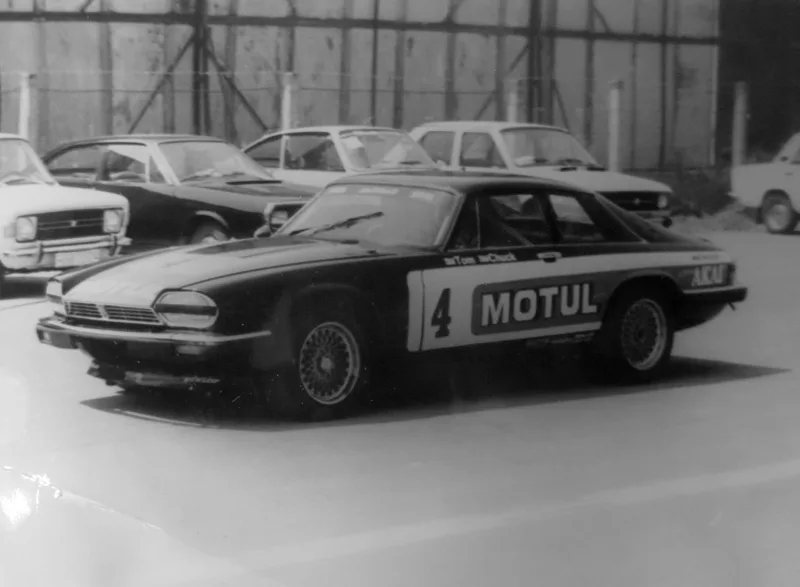
For the 1985 BTCC season Toyota GB signed Barry Sheene, the Grand Prix motorcycle star, to drive. The Supra was outclassed by newer turbocharged cars, but Sheene drew the crowds before retiring at the end of the year. The car was then shipped to an Australian privateer, where it won the first Group A race on that continent.
The Mk III Supra replaced the Mk II. TOM'S and SARD ran the factory effort from 1987 to 1990, and TRD Japan built eleven MA70 Group A turbos for racing. The car was competitive in Japan in 1987, outqualifying every Nissan Skyline in Division 3 of the JTCC for the rest of that season.
In January 1988 the FIA raised the weight multiplier from 1.4 to 1.7, and the Mk III lost its edge as rivals ran larger engines. The Ford Sierra Cosworth RS500 and the Nissan Skyline GT-R became the cars to beat in top-flight Group A racing.
The most successful private MA70 team was Bemani of Switzerland, which switched early to a naturally aspirated 7M-GE engine. With support from Walter Frey of Toyota Switzerland, it entered two cars in the European Touring Car Championship and finished fifth overall and third in class at the Spa 24 Hours.
Bemani then raced in the DTM in 1989 and 1990 with the Toyota Supra 3.0i, which made 330 horsepower. The team briefly led a heat race at Mainz-Finthen and ran second at AVUS, but the AMG team forced it out of one race on the direct orders of its team principal.
The Group A factory race effort ended after 1990 in favour of the Toyota Corolla AE101. A few privateer cars stayed in competition during 1991 and 1992. In Australia, Peter Fitzgerald won the 1989 Australian Production Car Championship in a Supra Turbo.
Did the Supra compete in rallying?
Yes, though far less often than the Celica. A touring car Celica Supra was used in Group A rallies, and the Supra 3.0i led the 1987 Safari Rally until its engine overheated on the final day. Toyota Team Europe later focused the Supra on African events before the car was withdrawn.
In 1983 a Celica Supra finished second in category at the Circuit of Ireland, the Scottish Rally and the Welsh Rally for Per Eklund and Dave Whittock, who defended their British Open Rally Championship title. Toyota sold the car after the 1985 season.
The Supra 3.0i made its Group A debut with 216 kW (290 bhp), which was a disadvantage given its weight and size. Bjorn Waldegaard drove it, and the car's only win came at the Hong Kong to Beijing Rally with the same driver. A 300 kW (400 bhp) turbo version followed.
On its debut at the Rallye Cote d'Ivoire the turbo Supra led, but the team withdrew when a hired Cessna 340 crashed. The accident killed team manager Henry Liddon, his assistant Nigel Harris, and the pilot and navigator. Toyota Team Europe returned to African events for two more years but could not repeat its earlier success, and the lighter Celica took over that work.
A privately entered, naturally aspirated A80 Supra also competed in the SCCA ProRally series from 1996 to 1998.
How has the Supra performed in sports car racing?
The Supra raced in IMSA, Super GT, the GT4 category and at Le Mans, but its strongest record is in Japan. It took five GT500 drivers' titles in Super GT and returned to the top class in 2020, after Lexus had carried Toyota's colours from 2007 to 2019.
In 1983 Kent Racing and All American Racers ran Supras in IMSA's GTU class for cars under 3.0 litres. Kent's car used a 220 kW (300 hp), 2030 cc, 16-valve DOHC engine, and aerodynamicist Hiro Fujimori reworked its body. AAR later adapted a 2.1-litre turbocharged 4T-GT to a GTU car, which won at Laguna Seca in the GTO category in 1985.
Toyota raced the JZA80 Supra as a GT500 car from 1994. The early engine was a 2.1-litre turbocharged 503E, later replaced by the 3SG and then by a 3UZ-FE V8 in the early 2000s. The car took the drivers' title in 1997, 2001, 2002, 2005 and 2021, and team titles in 1997 and 1999.
The Supra's last competitive year in that era was 2006, when Toyota Team Tsuchiya and Toyota Team SARD ran it. From 2007 Lexus cars such as the SC430 and LC500 represented Toyota in GT500. In 2020 the Supra returned to both GT500 and GT300, and both classes won their first race of the season at Fuji.
The 2021 GT500 title went to TGR Team au Tom's, driven by Yuhi Sekiguchi and Sho Tsuboi, which overcame a 16-point deficit in the final round. The 2023 season brought title wins in both classes, with GT500 won by Tsuboi and Ritomo Miyata and GT300 by Hiroki Yoshida and Kohta Kawaai of Saitama Green Brave.
The GT4 story is different. Toyota Gazoo Racing Europe, based in Cologne, designed the GR Supra GT4 for the SRO GT4 category, and it launched in 2020 with a 3-litre twin-turbo engine making 320 kW (430 hp) and 650 N m (480 lbf ft). The GT4 EVO arrived in 2022 with up to 660 N m (487 lb ft) of torque.
By 2022 more than 50 GR Supra GT4 cars had raced, winning 11 national and international championships with over 100 podium finishes. In August 2022 one earned its 50th class win in a major championship, at Sportsland Sugo.
Away from the circuits, Matt Andrews drove Curtis Chen's Mk IV Supra to victory at the 2008 Super Lap Battle Finals in the Street RWD class, with a time of 1:57:711.
What is the Supra HV-R?
The Supra HV-R was a four-wheel-drive hybrid race car based on the Super GT Supra, developed by Toyota and Toyota Team SARD. It became the first hybrid race car to win a race when Toyota Team SARD took first place at the Tokachi 24-hour Super Taikyu event on 16 July 2007.
The HV-R combined a 4.5 L V8 with 358 kW (480 hp) from its Super GT UZ-FE engine, a rear-axle electric motor with 150 kW (200 hp) and two front in-wheel motors of 10 kW (13 PS) each. Together they produced over 520 kW (700 hp), and the car weighed 1,080 kg (2,380 lb).
The winning car completed 616 laps and finished 19 laps ahead of second place.
Why is the Supra popular in drifting?
The Supra has been used at the top level of drifting, most notably by Manabu Orido, whose JZA80 was both his personal car and a Super GT racer. Newer GR Supras have competed in D1 and Formula Drift since 2019 and 2020.
Orido, a D1GP judge turned competitor, used parts from his JGTC racer, and his car made over 522 kW (700 bhp) from a modified 3.4 litre engine. He set it at 447 kW (600 bhp) for reliability. In 2005 he finished 12th overall with a second place at Ebisu, but a transport accident on the way to an event ended that season and his career in the sport.
Orido returned to the Supra in 2010 and drove it until 2012, when he moved to a Toyota 86. He took second at Okayama in 2010 and a half-points victory at Autopolis in 2011, his first recorded victory in D1GP.
Toyota Gazoo Racing sponsored a GR Supra in D1 from 2019, raced by Daigo Saito. In March 2020 the first GR Supra for Formula Drift was unveiled, with a modified B58 engine making over 750 kW (1,000 hp) and driven by Fredric Aasbo. A GReddy-built Supra with 600 kW (800 hp), driven by Ken Gushi, followed for Formula D.
Aasbo won the Formula D championship in 2021 and 2022 in a GR Supra, and he had won five individual rounds since 2020. Toyota also helped the GR Supra win the overall Formula D Auto Cup in both of those years.
How did the Supra enter NASCAR?
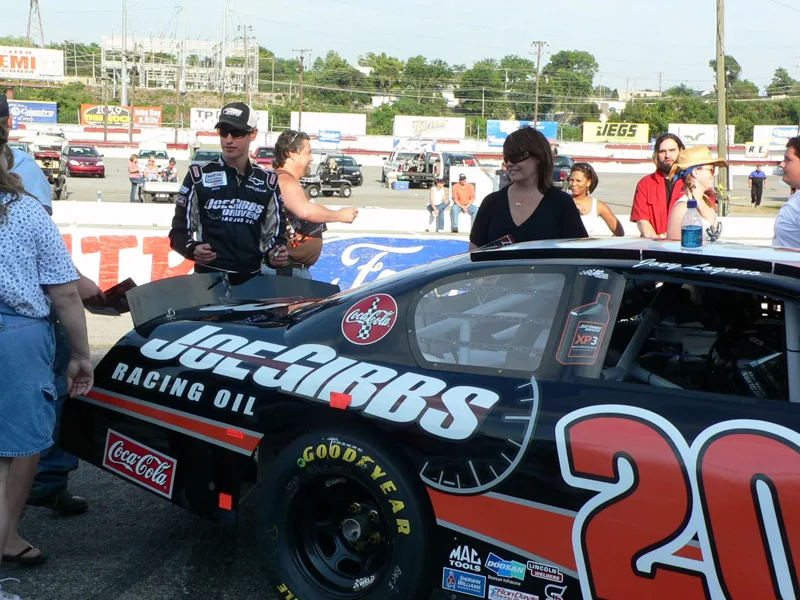
Toyota announced on 5 July 2018 that the fifth-generation Supra would replace the Camry in the 2019 NASCAR Xfinity Series. Christopher Bell of Joe Gibbs Racing won the car's first race at Atlanta on 23 February 2019, and the Supra has since taken two Xfinity titles.
The Xfinity titles came in 2021 with Daniel Hemric and in 2022 with Ty Gibbs. The production Supra generation was due to be discontinued by March 2026, but Toyota said it would keep fielding the Supra-bodied stock car in the series for the foreseeable future.
What speed and lap records has the Supra set?
Tuners and race teams have used the Supra for speed and time attack records since the 1980s. HKS's M300 became the first Japanese car to pass 300 km/h in 1983, and the Top Secret V12 Supra reached 222.6 mph in 2008. A fifth-generation GR Supra set a 58.038-second lap at Tsukuba in 2023.
HKS built the M300 from a Celica XX, the Supra's Japanese name, with a twin-turbocharged 5M-GE engine. It set a speed record of 301.25 km/h (187.19 mph) at the Yatabe proving grounds. In 1993 the HKS T-001, a modified Mk IV, produced more than 535 kW (730 PS; 720 hp), reached 344 km/h (214 mph) and set a 1 minute 1.97 second lap at Tsukuba.
Since 1994 Smokey Nagata and the Top Secret team have run speed trials on specialised Mk IV Supras. Their runs included 341 km/h (212 mph) on the Autobahn, 358 km/h (222 mph) at Nardo with a V12 Supra and 317 km/h (197 mph) on UK public roads. Several of those runs took place on public roads and were not sanctioned.
At the Nardo Ring in 2008, the Top Secret V12 Supra set a top speed of 222.6 mph. It used a swapped 1GZ-FE with dual HKS GT2835 turbochargers and was tuned to 930 hp and 745 lb-ft of torque.
The Nurburgring Nordschleife has also seen Supra lap times. In 1997 BLITZ teamed up with Racelogic to take on the non-series class and set a time of 7:49.40. The car was claimed to make 750 PS (552 kW; 740 hp), but on the day it ran on 606 bhp (452 kW; 614 PS).