From a Swedish rally operation founded by Ove Andersson to the Cologne facility behind Toyota's Formula One, Le Mans and World Rally Championship programmes.
Toyota Racing GmbH is the Cologne facility that develops Toyota's motorsport cars and runs its entries for Gazoo Racing. It was once Andersson Motorsport, then Toyota Motorsport GmbH, and it has worked on rallying, Formula One and Le Mans cars.
Toyota Racing GmbH (TRG) is the Cologne-based engineering arm that has built and run Toyota's motorsport cars for decades. Its work spans rallying, Formula One, sportscar racing and electric prototypes, and it has been renamed several times as the Toyota group reorganised its racing.
What is Toyota Racing GmbH?
Toyota Racing GmbH (TRG) is an automotive engineering and motorsport services facility in Cologne, Germany, fully owned by Toyota Motor Corporation. It develops motorsport vehicles and runs entries for Gazoo Racing in the World Endurance Championship and World Rally Championship, with the rally side run from Finland.
The company began life in Sweden as Andersson Motorsport. Ove Andersson, a rally driver, set it up to support his own racing career, and his relationship with Toyota began in 1972, when he was offered a Celica to drive in the RAC Rally.
A Swedish rally operation that became Toyota's engineering base in Cologne, carrying the marque from rally stages to Le Mans.
How did Andersson Motorsport become Toyota's rally arm?
From 1973 Andersson Motorsport ran Toyota's works entries in the World Rally Championship under the name Toyota Team Europe (TTE). The team moved to Brussels in Belgium in 1975 and then to Cologne in 1979, where it became Andersson Motorsport GmbH as a works operation.
Toyota Motor Corporation bought the company in 1993 and renamed it Toyota Motorsport GmbH (TMG). Andersson remained team manager of TTE, and at that time TMG employed 300 staff from 17 nations.
TTE began in February 1975 and carried Toyota's works rally effort until the company withdrew from rallying at the end of 1999. Its name outlasted the Andersson era, and the team's results over that quarter of a century shaped how Toyota was seen in rallying.
TTE's early achievements were striking. Hannu Mikkola won the team's first rally, the 1000 Lakes, in August 1975 in a Corolla 1600. In September 1987 the team moved to a larger premises, still its home, and revealed its first four-wheel-drive car, the Celica GT-Four, driven by Juha Kankkunen and Kenneth Eriksson.
Which drivers won titles for TTE?
Carlos Sainz won the 1990 drivers' title with the ST165 and the 1992 title with the ST185, which debuted at the 1992 Rallye Monte Carlo. The ST185 also gave Juha Kankkunen the 1993 drivers' and manufacturers' titles, and Didier Auriol took the 1994 drivers' crown.
The good run was interrupted in 1995, when TTE was banned from the World Rally Championship for 12 months for cheating. The team had designed an illegal air restrictor on the ST205, complete with a bypass and spring-loaded devices to hide it from scrutineers. Toyota still backed other crews in selected events while the team was out.
In 1997 Toyota introduced the Corolla WRC at the Rally of Finland under a Castrol team name. In 1998 the team finished second overall in both the drivers' and manufacturers' championships. In 1999 another manufacturers' title followed, the third in TTE's existence, and Toyota then withdrew from rallying at the end of that season to focus on Formula One and CART.
The 1998 Corolla WRC was driven by the crews of Carlos Sainz with Luis Moya, and Didier Auriol with Denis Giraudet. Their combined results gave the team second overall in both championships, a strong showing for a car that had only recently been introduced.
Why did Toyota move from rallying to Formula One?
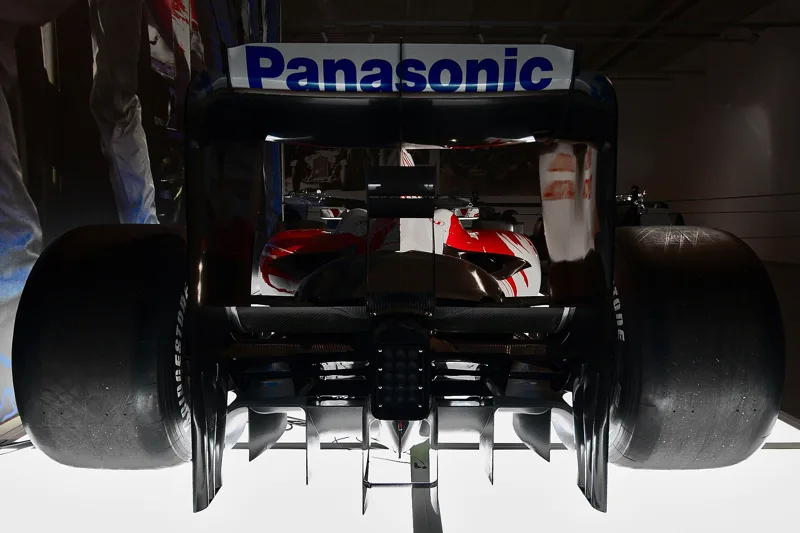
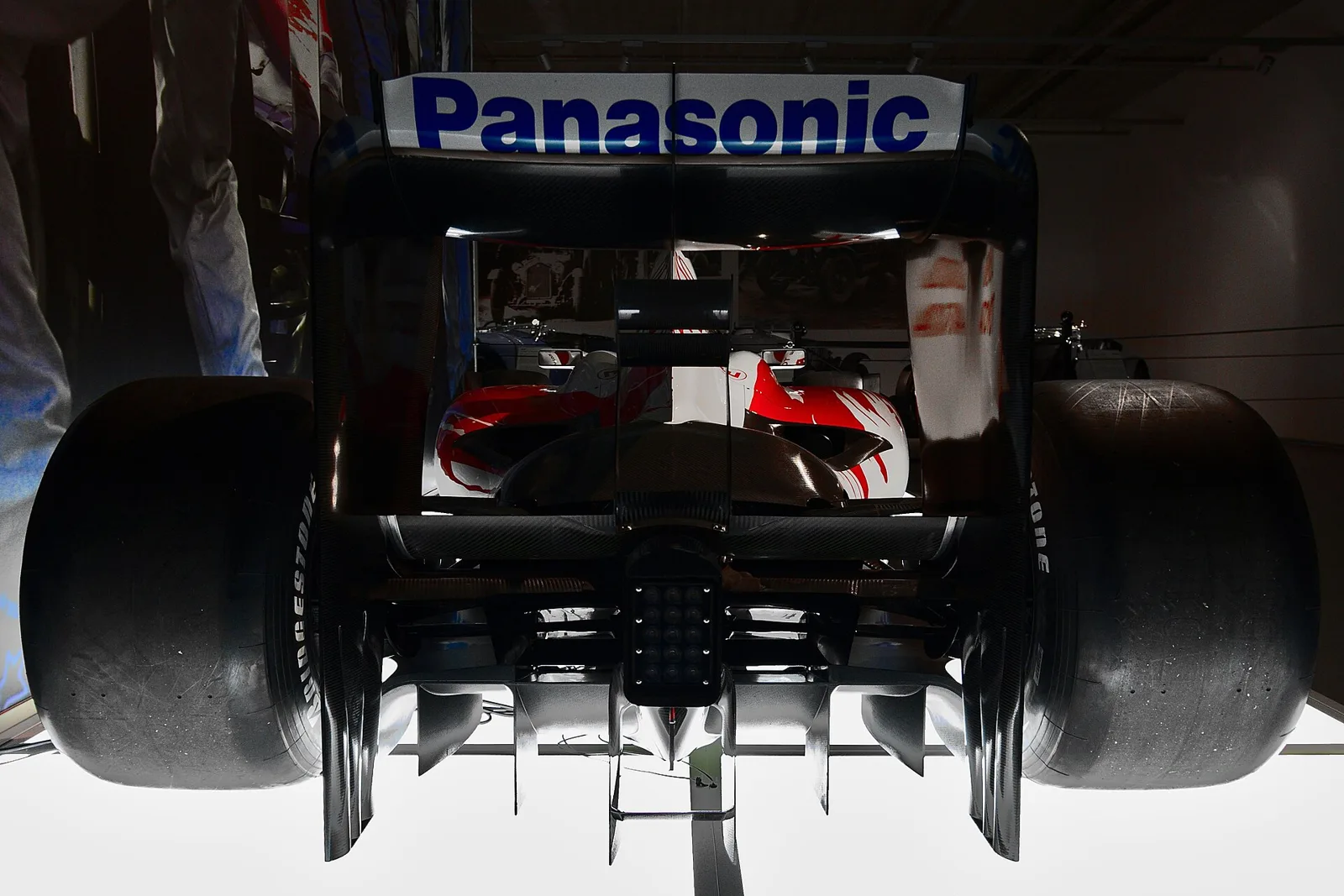
After 1999 Toyota stopped rallying and sportscar racing to prepare for a switch to Formula One in 2002, using existing Toyota Motorsport resources. From 2002 to 2009 TMG ran the parent company's Formula One team as Panasonic Toyota Racing, starting 139 Grands Prix.
The record was modest but real. TMG counted 13 podium finishes, three pole positions and a total of 278.5 points across the period. Its engines also went to Jordan in 2005, which was then sold and renamed Midland F1 Racing in 2006, and Williams ran Toyota engines from 2007 to 2009.
Toyota announced its withdrawal from Formula One on 4 November 2009. TMG then moved back into sportscar racing in 2011 as an engine supplier to Lola Cars, powering Rebellion Racing, and it fully returned to sportscar entries in 2012.
How did the GT-One fare at Le Mans?
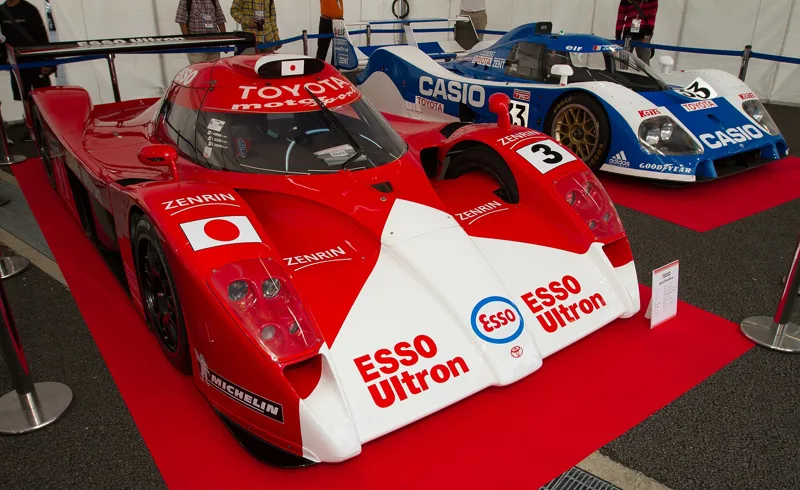
TMG entered the 24 Hours of Le Mans in 1998 and 1999. The GT-One qualified second, seventh and eighth in 1998, and in 1999 the team finished second, with Ukyo Katayama setting the fastest lap of the race. Had it won, Toyota would have been only the second Japanese manufacturer to take an overall Le Mans win, after Mazda in 1991.
Introduced for Le Mans in 1998, the GT-One first appeared at official testing in May, when three cars set the second, fifth and tenth best times. In the race itself the No. 28 car crashed at high speed halfway through, and the No. 29 car suffered a gearbox failure while challenging for the win.
The 1999 race was troubled. Martin Brundle retired after a puncture at high speed on the Mulsanne Straight, and Thierry Boutsen crashed out after a rapid deflation. Katayama then charged back through the field to take second.
Across two Le Mans appearances the GT-One produced several near misses rather than a win.
The GT-One raced once more at the 1999 Le Mans Fuji 1000km, finishing second, one lap behind Nissan's R391. The programme ended there, and Toyota's top-level sportscar absence lasted until its return in 2012.
How did the TS030 Hybrid return to Le Mans?
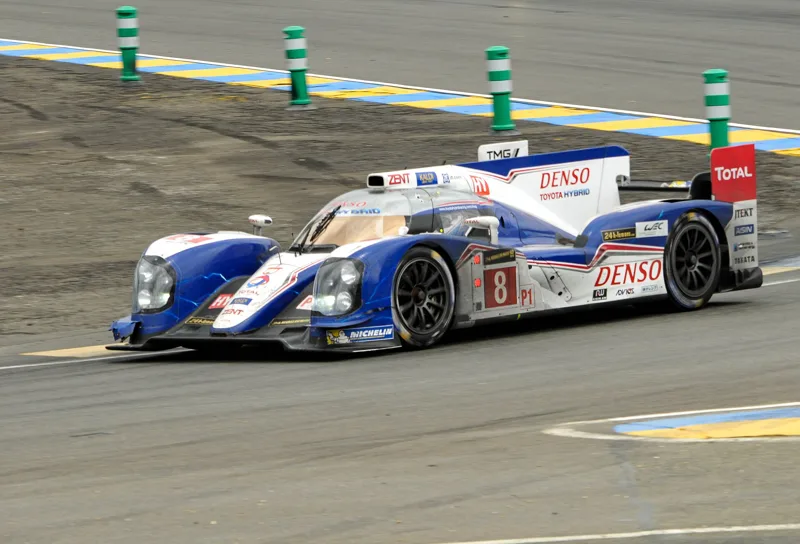
Toyota announced its Le Mans return in October 2011, aiming for 2012 with a hybrid prototype. A crash at the 6 Hours of Spa-Francorchamps delayed the debut, and at Le Mans that year neither TS030 finished.
The No. 8 car, driven by Anthony Davidson, crashed into a Ferrari 458 and fractured two of his vertebrae. The No. 7 car hit the DeltaWing and later retired with an engine failure, so the season began with a double setback.
The team still won three World Endurance Championship races in 2012, including the 6 Hours of Fuji. The 2013 Le Mans race brought Toyota a second-place finish, its fourth at the race, with Stephane Sarrazin, Anthony Davidson and Sebastien Buemi sharing the car.
Which hybrid cars followed the TS030?
The TS040 Hybrid, with a 3.7L V8 for the 2014 LMP1 rules, was followed by the TS050 Hybrid, which used a 2.4L V6 twin-turbo engine from 2016. The GR010 Hybrid, a 3.5L V6 twin-turbo, raced in 2021 under the Le Mans Hypercar regulations.
The TS040 used regenerative braking at both axles to allow temporary four-wheel drive, and the TS050 added a battery hybrid system of 2.22 kWh. The GR010 Hybrid put its petrol engine on the rear wheels and its battery hybrid system on the front.
Toyota also built an electric racing car, the TMG EV P001, based on a Radical sportscar and developed with the Cologne company e-Wolf. It drew on knowledge from Toyota's KERS work for Formula One and used some of the company's dedicated engine dynos, including an EV component test rig. In August 2011 it set a new lap record for an electric vehicle at the Nurburgring Nordschleife, 7mins 47.794secs.
How did the World Rally Championship programme move to Finland?
In 2015 Toyota announced a return to the World Rally Championship for 2017 with a Yaris WRC. TMG ended up responsible only for engine development, while Tommi Makinen Racing Oy of Finland developed the car and ran the entry. The rally operation is run from a satellite facility in Jyvaskyla.
In April 2020 TMG was renamed Toyota Gazoo Racing Europe, and in 2021 TGR-E took over the WRC team from Tommi Makinen Racing. That year the Finnish company was renamed Toyota Gazoo Racing World Rally Team Oy and became a branch of TGR-E, while the Cologne site kept supplying engines for the hybrid GR Yaris Rally1 from 2022.
Why is the company being renamed again?
In January 2026 Toyota announced that the Gazoo Racing name will return, while TGR-E will be renamed Toyota Racing. The exercise is due to be completed in January 2027. The change follows a period in which the group's motorsport brands passed through several names, from Andersson Motorsport to Toyota Motorsport GmbH and Toyota Gazoo Racing Europe.
What were the key results?
| Programme | Result | Year |
|---|---|---|
| Rally, Celica ST165 | Drivers' title, Carlos Sainz | 1990 |
| Rally, Celica ST185 | Drivers' and manufacturers' titles, Juha Kankkunen | 1993 |
| Rally, Celica ST185 | Drivers' title, Didier Auriol | 1994 |
| Rally, Corolla WRC | Second overall in drivers' and manufacturers' championships | 1998 |
| Rally, TTE | Manufacturers' title, the third in TTE's existence | 1999 |
| Formula One, Panasonic Toyota Racing | 13 podium finishes and three pole positions | 2002 to 2009 |
| Le Mans, GT-One | Second place overall | 1999 |
| World Endurance Championship, TS030 Hybrid | Three wins, including the 6 Hours of Fuji | 2012 |
| Le Mans, TS030 Hybrid | Second place overall | 2013 |
| Electric, TMG EV P001 | Lap record at the Nurburgring Nordschleife | 2011 |
What is the legacy of Toyota Racing GmbH?
The facility's legacy is a line of championship-winning cars from the Celica to the GR010 Hybrid, engineered in Cologne and run from Finland for rallying. Its engineering has moved the Toyota name from rally stages to Formula One and back to endurance racing.
The planned rename, with TGR-E becoming Toyota Racing by January 2027, marks another chapter in a history of name changes that began with Andersson Motorsport in Sweden. The engineering base itself has stayed in Cologne through each change.
The Cologne facility continued to provide engines for the hybrid Yaris Rally1 after the rally team moved to Finland. That split of roles, with engines from Germany and the car and entry run from Finland, is one of the clearest features of the modern programme.