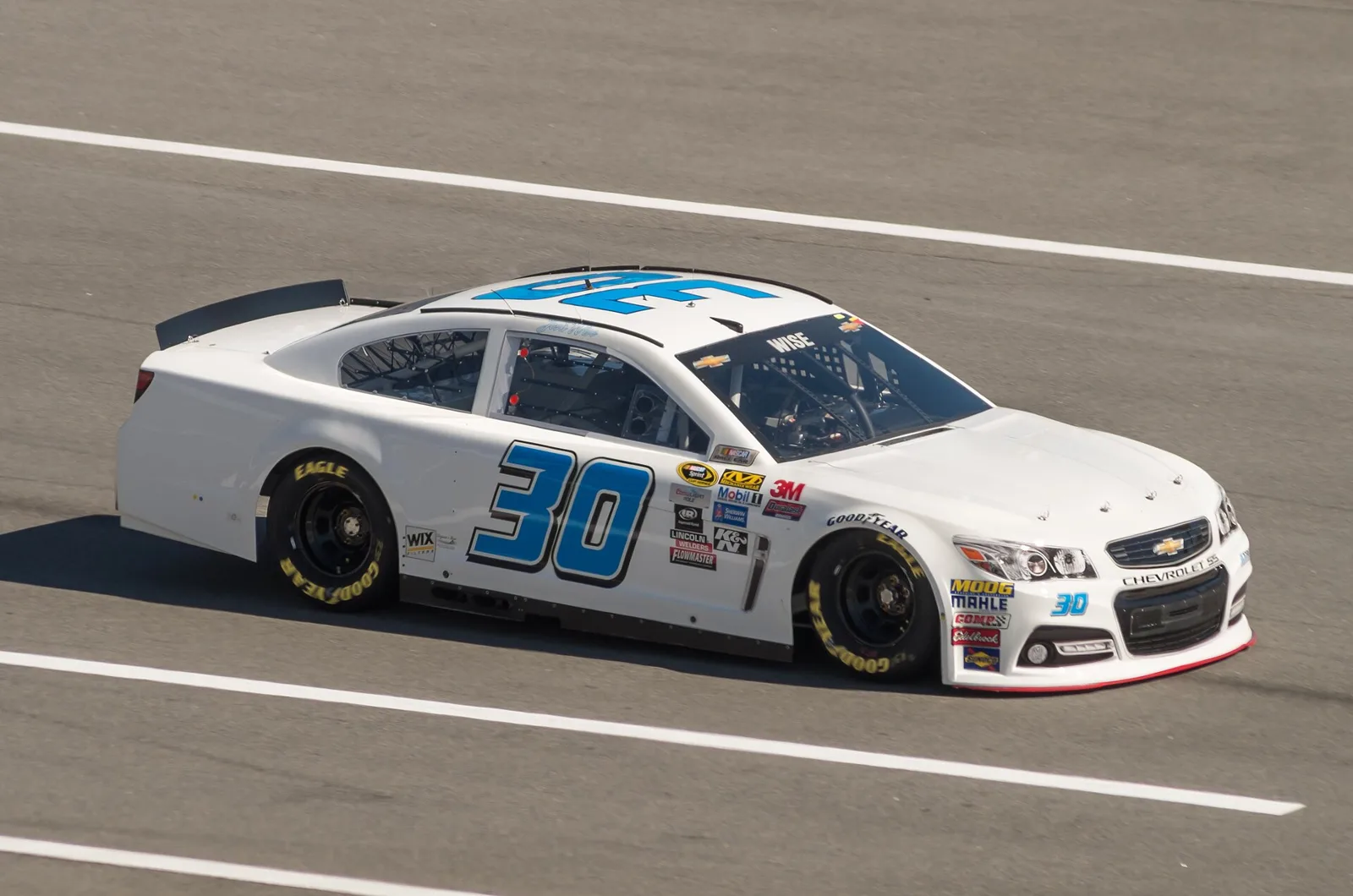
Founded by Curtis Key in 1993, the team raced Busch cars, returned to Cup in 2015 with the No. 30 and closed in 2019 after a Circle Sport partnership ended.
The Motorsports Group was a stock car team founded by Virginia businessman Curtis Key in 1993 and based in Mooresville, North Carolina. It returned to the Cup Series in 2015 with the No. 30, shared the No. 33 with Circle Sport in 2017, and closed in 2019.
The Motorsports Group was an American stock car team, known for a time as Key Motorsports and Circle Sport - The Motorsports Group, that competed in the NASCAR Cup Series in its final years. Founded by Virginia businessman Curtis Key, it was run from Mooresville, North Carolina, and it had earlier raced in the Xfinity and Camping World Truck series before closing in 2019.
Who was Curtis Key?
Curtis Key is a businessman and plumber from Chesapeake, Virginia, who owns Curtis Key Plumbing. He founded Key Motorsports in 1993 when he bought a team owned by Tommy Ellis. Key was a Busch Series owner, and the team raced in that series between 1993 and 1998.
Key's first start as an owner produced the team's best early result, a fifth place at Hickory Speedway with Ellis at the wheel. A few more top-ten finishes followed, but Key later closed the operation after a family tragedy and a lack of funding. He stayed away from the sport for about a decade.
A family-run team that moved from the Busch Series to a Cup entry and ended after a partnership with Circle Sport dissolved.
How did the Busch Series years go?
Key Motorsports debuted at the Miller 500 in 1993 as the No. 05 Moen Faucets Chevrolet, with Roger Sawyer qualifying 14th and finishing 22nd. Bobby Hamilton drove a race at Dover and finished 29th after handling problems. Ellis then finished fifth in the team's final race of that year at Hickory, and Randy MacDonald ran two races early in the next season with a best finish of 21st.
The team's later Busch years were thin. Chuck Bown finished ninth at Charlotte in 1995, and Jeff Burton drove once for the team in 1996 and finished 42nd. In 1997 the team hired 19-year-old Jimmy Foster for ten races in the No. 11, and his best finish was 16th at New Hampshire. Lack of funding and a family tragedy forced the team to close after that season.
| Period | Series and car | Result |
|---|---|---|
| 1993 | Busch, No. 05 Chevrolet | Fifth at Hickory with Tommy Ellis |
| 1997 | Busch, No. 11 Chevrolet | Jimmy Foster best 16th at New Hampshire |
| 2008 | Nationwide, No. 31 Chevrolet | Jeff Green best 28th in three races |
| 2015 | Cup, No. 30 Chevrolet | Hornaday 42nd at Atlanta, no other starts |
| 2016 | Cup, No. 30 Chevrolet | Josh Wise 24th at Kentucky, team best |
How did the team return to racing in 2008?
Key rebuilt the team in 2008 and ran it as a start-and-park operation. The team later took the name The Motorsports Group in 2012, and until 2014 it used cheaper entries to keep a presence on the grid while it planned a full-time return.
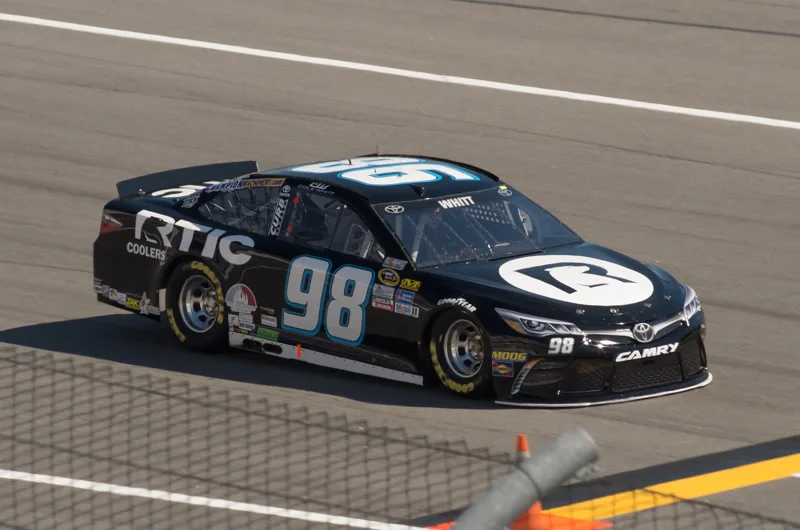
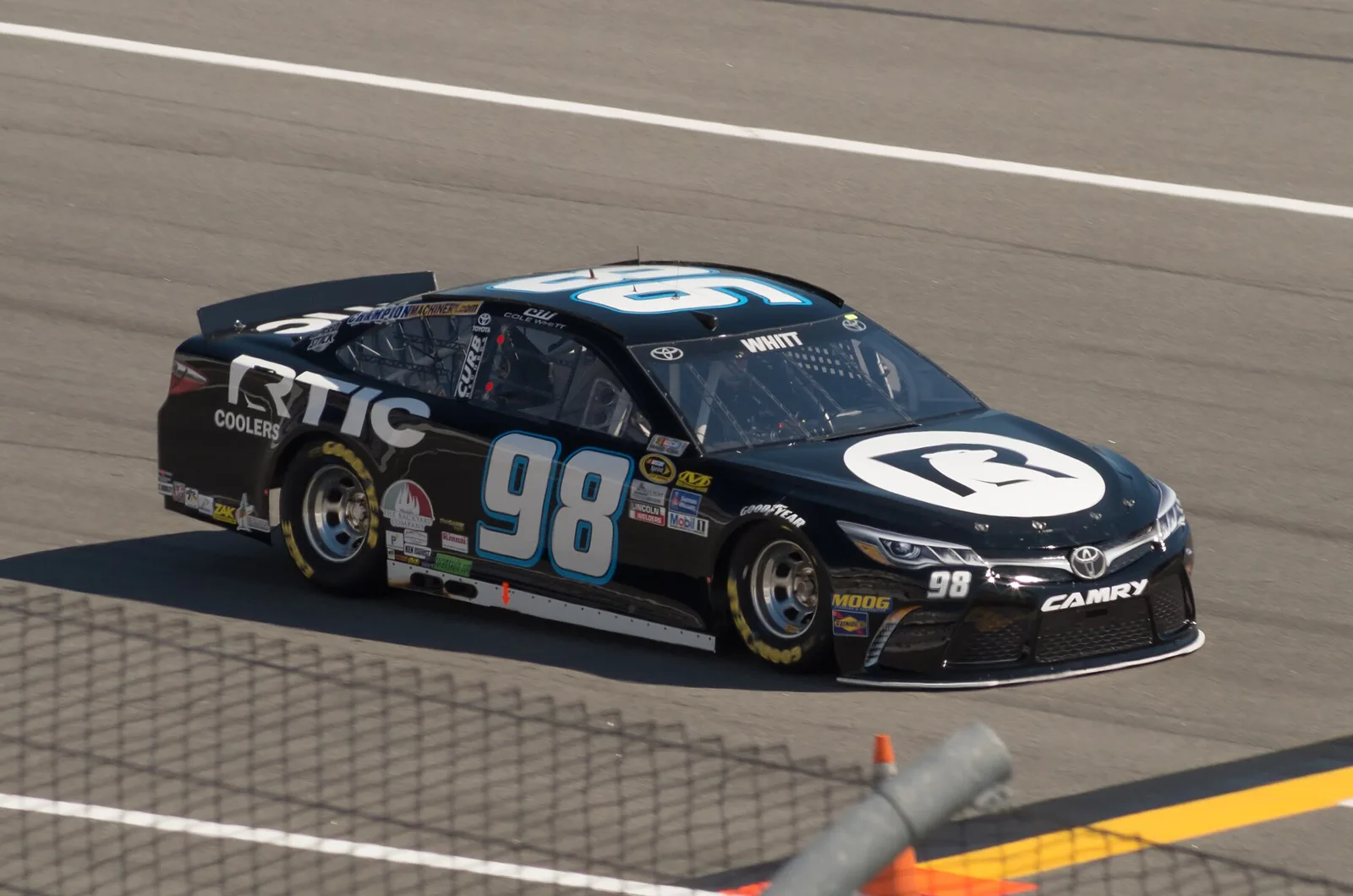
The return came on 15 September 2014, when the team announced a full-time No. 30 entry for the 2015 Sprint Cup Series. Ron Hornaday Jr. was named its primary driver in January 2015, but the car struggled from the start.
Why did the No. 30 struggle in 2015?
Hornaday failed to qualify for the Daytona 500, and he made the field at Atlanta the following week only to finish 42nd after a broken gear ended the race after 182 laps. The team skipped the West Coast swing to prepare for Martinsville, but Hornaday crashed during qualifying there and missed the race. After a failed attempt at Bristol, he was replaced.
Jeff Green took over from Richmond. He qualified on speed and started 33rd, finishing 40th, and he then made the Sprint Showdown and finished 19th in a 29-car field. He missed the Coca-Cola 600 and Dover and was released. Travis Kvapil drove next, but the team failed to qualify at Kentucky, Bristol and Darlington. Josh Wise then missed the Richmond race after qualifying 37th, and rainouts and a withdrawal for Hurricane Joaquin ended the season for the car.
The team temporarily suspended its operations until 2016. Its Cup record that year was a series of failed attempts, with few starts and no points-paying results.
What did the 2016 season look like?
Josh Wise rejoined the No. 30 for the full season in 2016. He missed the Daytona 500, but he went 39th at Atlanta after losing 13 laps, and the car made the field for several races when fields were thin. He qualified 41st of a 40-car field at the GEICO 500, and a run of starts was followed by a failure to qualify at the Coke Zero 400.
Wise delivered the team's best finish that year with a 24th place at Kentucky in July, although he missed the Brickyard 400 after the slowest speed among 41 cars in qualifying. For the Southern 500 weekend the team took a two-race deal from Incredible Bank, an online banking firm that joined after Wise asked for sponsorship on social media. The car ran a throwback scheme honouring Dale Earnhardt's 1976 No. 30 Army car. Gray Gaulding drove at Martinsville, Phoenix and Homestead.
How did the Circle Sport partnership change the team?
In January 2017 the team agreed a partnership with Key's longtime friend Joe Falk and Circle Sport Racing to field the Nos. 30 and 33 Chevrolets. Falk's team was a satellite of Richard Childress Racing, so the joint operation was linked to RCR, and Hendrick Motorsports agreed to supply a pit crew and manager. The No. 30 did not run in 2017, despite expectations that it would.
The No. 33 was the team's real car in 2017. Falk brought the charter and the No. 33 on 6 January 2017, and former crew chief Pat Tryson returned before being released again. Jeffrey Earnhardt drove the Daytona 500 for the team and finished 26th after a crash on lap 143, and Boris Said ran the two road courses. Frank Stoddard was crew chief for Said's races, while Eddie Pardue ran the car for the rest of the year.
The partnership ended at the close of 2017. Falk and Circle Sport parted ways with Key and TMG, and Earnhardt, who had signed an extension in October, was left without a ride.
| Date | Development | Effect on the team |
|---|---|---|
| January 2017 | Circle Sport partnership announced | Joint Nos. 30 and 33 entries |
| December 2017 | Circle Sport and TMG part ways | Earnhardt left without a ride |
| 21 June 2018 | Team renamed Key Motorsports | Back to the older name |
| Early 2019 | Team closes its shop | End of operations |
What happened to the team after 2017?
For 2018 The Motorsports Group planned to run a No. 30 team with Eddie Pardue as crew chief, but the driver was never named. The team did not enter a single race in 2018. It briefly renamed itself Key Motorsports on 21 June 2018, and it shut its shop at the start of 2019.
That ended a team whose most visible period had been the 2015 to 2017 Cup attempts. The operation had moved from a family-run Busch team to a Cup organisation that relied on partnerships to fill its entries.
Who drove for the team?
Ron Hornaday Jr., a former Truck Series champion, was the planned driver in 2015, but he left after a few races. Jeff Green, Travis Kvapil, Josh Wise and Gray Gaulding also drove the No. 30, while Jeffrey Earnhardt and Boris Said were the main drivers of the No. 33 in 2017.
Earlier, the Busch and Nationwide years used a long list of drivers, including Roger Sawyer, Tommy Ellis, Chuck Bown, Jeff Burton and Jimmy Foster. Many of those entries were part-time, which reflected the team's small budget.
What is the legacy of The Motorsports Group?
The team's legacy is its persistence. It went from a 1993 Busch purchase to a Cup entry in 2015, and it survived closures, renamings and partnerships. Its most significant result was a fifth in the 1993 race at Hickory, while its Cup years produced few starts.
Its history also illustrates how hard it was for a small independent team to keep a Cup entry running. Without sponsorship or a charter, even a planned full-time car could struggle to make the field.
How did the Nationwide Series entries fund the main car?
The team's Nationwide Series effort centred on the No. 40, with the No. 42, 46 and 47 run as start-and-park entries that helped fund it. Scott Wimmer ran 24 races for the 40 in 2009, with a best finish of seventh at Memphis. Mike Bliss drove 31 races in 2010 and posted an eighth at Bristol. In 2011 Wimmer left after 11 races with a best result of 12th, and Charles Lewandoski took over, finishing 24th at best while keeping the team inside the top 30 in owner points.
Matt DiBenedetto ran full races for the No. 40 in 2014 after starting out in the No. 46. He left for BK Racing at the end of the year, and the No. 40 was sold to MBM Motorsports when the team turned its attention to its own Cup entry. Jeff Green, Aric Almirola and Jeffrey Earnhardt were among the other drivers who filled seats in the car in those years.
What did the truck team look like?
The truck team returned in 2004 at the season-opening race at Daytona International Speedway, with Joey Clanton wrecking out of his two early starts in the No. 40 Optech Chevrolet. Tony Raines failed to qualify at Richmond and Martinsville that fall, and in 2005 Andy Houston finished 33rd at the summer Bristol race after a wreck.
In 2006 Chad Chaffin made the first six starts, and Dale Earnhardt, Inc. development driver Ryan Moore took over from the City of Mansfield race. Moore recorded three top-twenty finishes before he resigned after the New Hampshire race. Derrike Cope ran in the top ten at Talladega before a late crash. In 2007 Mike Bliss drove the first four races and finished tenth at California, and Brandon Miller ran five races with Westerman Companies sponsoring.
A second truck, the No. 44, was added in 2007. Larry Foyt finished 32nd at Daytona after an early accident, and Frank Kreyer finished 28th at Martinsville before a 34th at Mansfield after engine problems. The No. 44 ran as a start-and-park car in later seasons.
Who was Tommy Ellis?
Tommy Ellis was the driver whose team Curtis Key bought in 1993. Ellis drove for Key in the team's final race of that first year at Hickory, where he finished fifth. He returned for a part-time schedule the following year, making nine starts with two top-ten finishes and seven failures to finish. Ellis's connection to the team began with the sale, and his Hickory result remained the best early mark for the operation.
Ron Hornaday Jr., a four-time Truck Series champion, was the planned driver for 2015. His run with the team was short, and it showed how quickly a Cup entry could change direction when the car was not making the field.