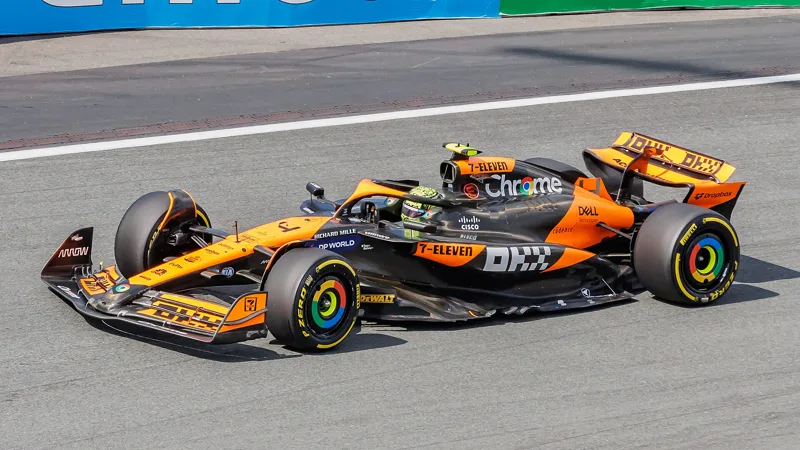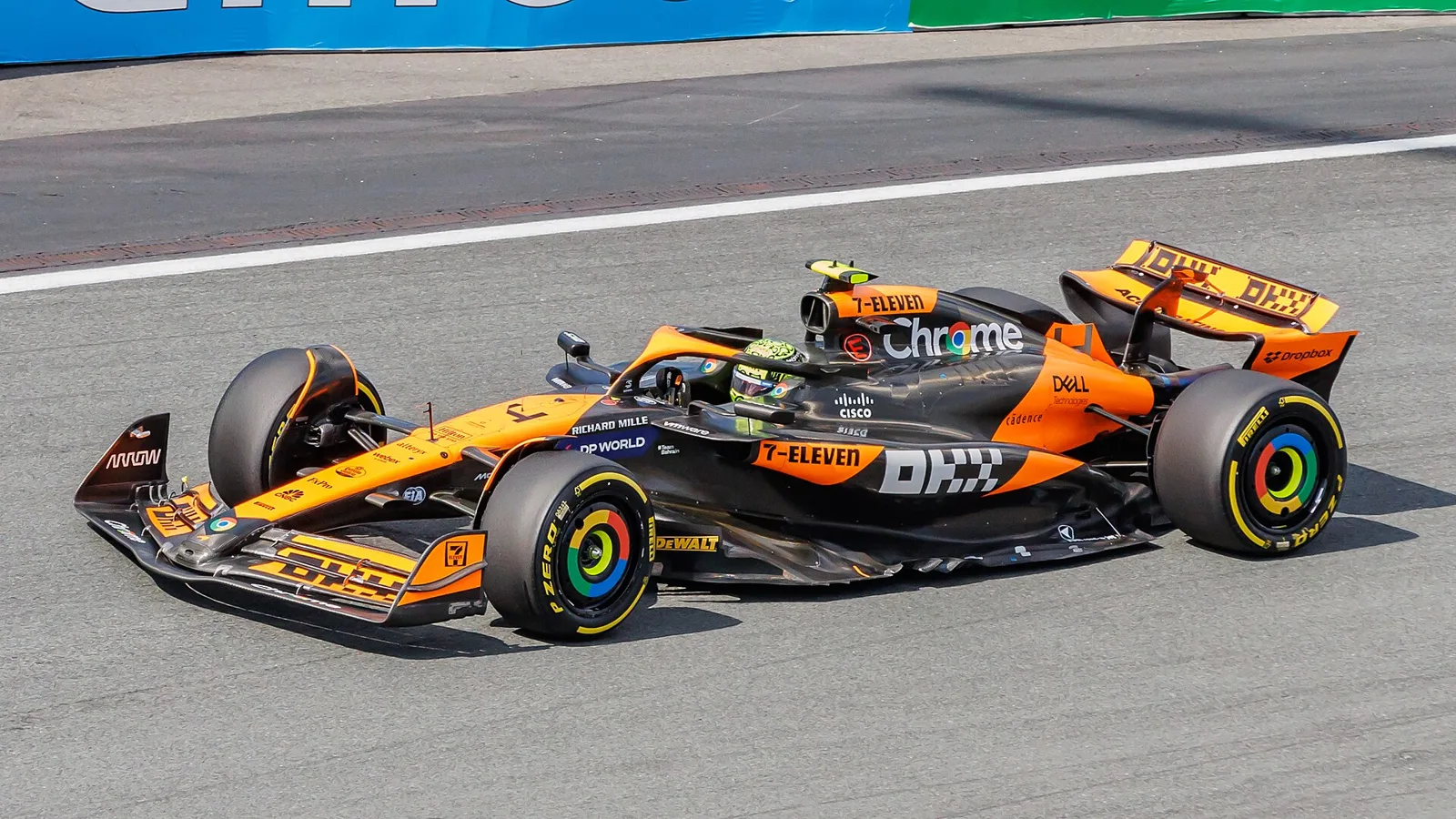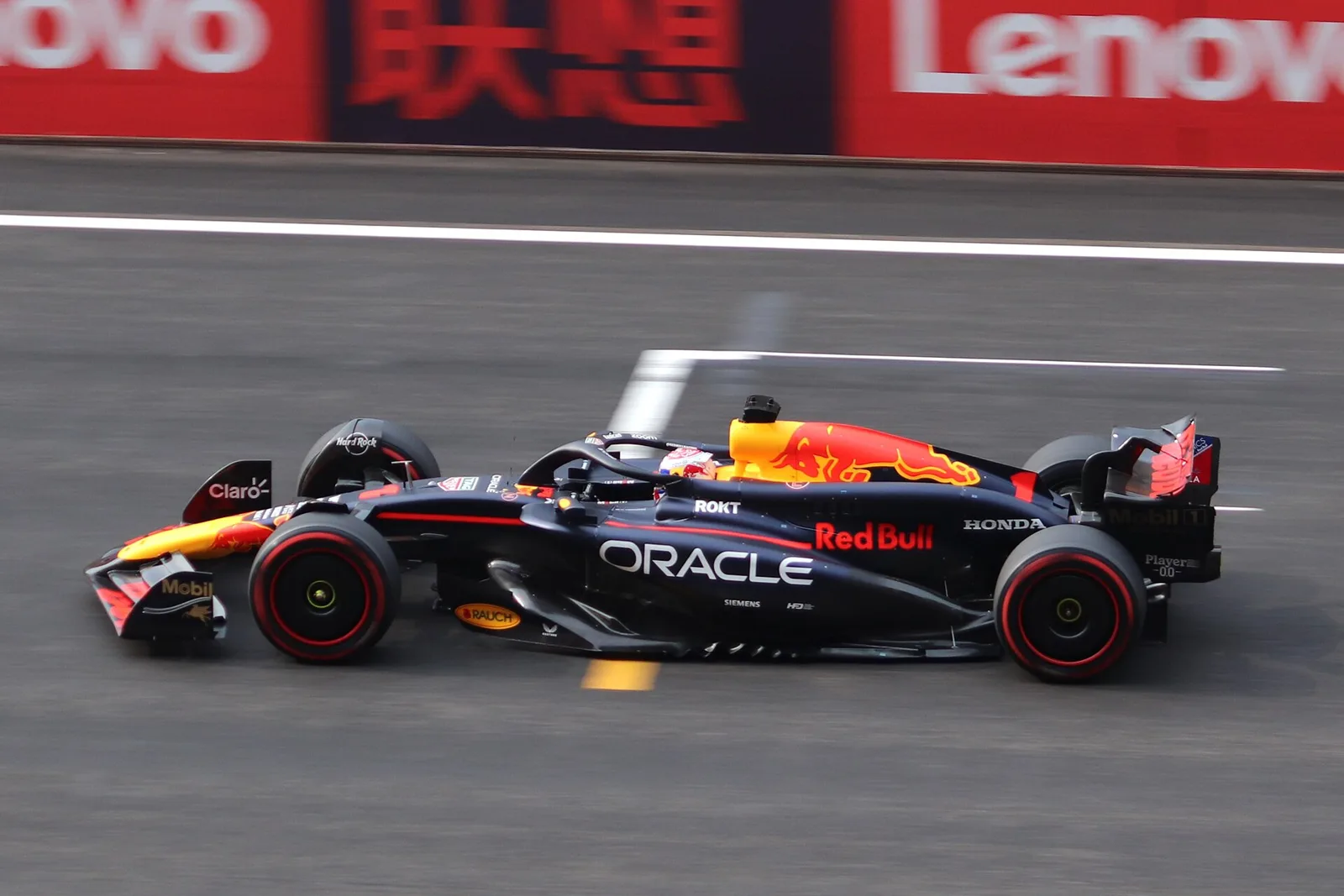
The 2024 car that started with a run of dominant wins, lost its edge to McLaren and Ferrari mid-season, and still carried Max Verstappen to the drivers' crown.
Newey's final Red Bull design started its life as a dominant machine. Verstappen won the drivers' title with it, but McLaren and Ferrari caught up in the middle of the year and Red Bull ended up third. The car also produced nine race wins across the season.
The Red Bull Racing RB20 was the championship-winning Formula One car that carried Max Verstappen to the 2024 drivers' title, with Sergio Perez alongside him in what proved to be his final season for the team. The car started the year with dominant wins, then lost ground to McLaren and Ferrari as the season went on. Red Bull finished third in the constructors' standings, while McLaren took the title.
What was the Red Bull RB20?
The RB20 was Red Bull Racing's Formula One car for the 2024 world championship, powered by the Honda RBPTH002 power unit. It succeeded the RB19 and was unveiled at the team's factory in Milton Keynes on 15 February 2024. It made its competitive debut at the 2024 Bahrain Grand Prix.
The car is best known for being the last Red Bull design produced under Adrian Newey. Newey left the team for Aston Martin midway through the season, so the RB20 became the final chapter of a long run of cars shaped by his work.
A car that won the title late in the season, with its designer gone and its balance problem still unsolved.
Who designed the RB20?
Adrian Newey was the designer of the RB20, and it was the last Red Bull Formula One car to carry his name in that role. He left for Aston Martin midway through the season, before the year's most difficult stretch.
Before the season began, Verstappen was reported to be pleased with the car's characteristics during pre-season testing at Sakhir. Red Bull topped only the first day of that test, and the team chose not to focus on lap times.
How did the RB20 start the 2024 season?
The opening rounds were dominated by the RB20. Verstappen took pole for the Bahrain Grand Prix and went on to score his fifth career grand chelem, with Perez second 22 seconds behind. In Saudi Arabia Verstappen won again, Perez finished second once more, 13 seconds back, and Verstappen reached his 100th career podium.
Australia was the first setback. Verstappen suffered a brake failure while on pole, his first retirement in over two years, and Carlos Sainz of Ferrari took the win. Further wins and double podiums followed in Japan and China, and the team looked comfortable at the front for much of the spring.
The Miami Grand Prix turned against Red Bull. Verstappen was set to win after taking the sprint, but a bollard he hit damaged his floor. The safety car that followed let Lando Norris pass him for his maiden Grand Prix victory, while Perez finished fourth.
Why did Red Bull fall behind in the middle of the season?
Red Bull's pace started to slip against McLaren and Ferrari as the mid-season races arrived. The RB20 still won several races, including Canada and Spain, but Perez struggled to finish near the front and the balance problems grew harder to fix.
At the Emilia Romagna Grand Prix Verstappen led most of the race from pole and won, although Norris closed in late. Monaco was harder, because Perez had a heavy tangle with the Haas cars and all three drivers retired. Verstappen won the Canadian Grand Prix after a close qualifying session with George Russell, and the race was held under intermediate conditions. He also won in Spain, finishing ahead of Norris in both races.
Austria brought a clash between the two title rivals. Verstappen took pole and won the sprint, and he was on course to win the main race before a slow stop let Norris into contention. The pair fought for the lead and collided on lap 64, giving both cars punctures. Verstappen received a time penalty for the incident but still finished fifth, while Norris was left with race-ending damage.
Britain was tricky for both Red Bull drivers. Errors in qualifying sent Perez out of Q1, and Verstappen gained floor damage. His floor was replaced after qualifying, and he finished second after working his way up the field, while Perez finished seventeenth. Hungary was not any better, as Verstappen struggled with the car's handling and pace.
The Dutch Grand Prix saw Verstappen take second-fastest in qualifying and briefly lead after Norris had a poor start. Norris retook the lead on lap 18 and won by over 22 seconds. Verstappen, while ahead, could manage a gap of under 1.5 seconds to Norris, and he struggled with the car turning in. At Italy he finished sixth, 37 seconds behind winner Charles Leclerc.
How did the closing rounds decide the title?
The closing rounds were a fight against rivals rather than a procession. McLaren overtook Red Bull in the constructors' standings after Azerbaijan, and Norris's late charge threatened Verstappen's title lead. Verstappen answered with wins and podiums in the second half of the season.
In Azerbaijan Perez outqualified Verstappen for the first time that season, and Verstappen started sixth. Perez had been in contention for a podium for most of the race, but he collided with Sainz late on and both were out. Norris climbed from sixteenth on the grid to pass Verstappen for fourth, and McLaren's large points haul lifted it ahead of Red Bull for the first time.
Singapore was expected to be difficult, given the car's issues with kerb-riding. Set-up changes in practice improved the car's driveability, and Verstappen qualified and finished second, although he was still more than twenty seconds behind Norris, who won. Perez finished tenth.
Red Bull brought an upgrade package to the United States Grand Prix, and Verstappen took pole for the sprint and won it. The main race was harder, as Verstappen was outpaced by both Ferrari drivers and Norris. Norris overtook Verstappen on lap 52 but was penalised for going off track, which promoted Verstappen to the podium.
Mexico was a poor weekend. Verstappen suffered power unit problems in free practice, and Perez was knocked out of Q1 in his home race. Verstappen was handed penalties totalling twenty seconds after he forced Norris wide twice, and Red Bull dropped to third in the constructors' championship behind McLaren and Ferrari.
Sao Paulo produced a memorable win. Verstappen started seventeenth after a five-place grid penalty for a change of his internal combustion engine, and he scythed through the field in tricky conditions. The victory was his first since the Spanish Grand Prix and the RB20's first since then.
The title was settled at Las Vegas. The RB20 struggled to match the straight-line speed of its rivals there, and Verstappen qualified fifth. He finished ahead of Norris, which secured the 2024 drivers' championship with two races to spare.
Qatar was the final race that mattered for Red Bull's constructors' hopes. Verstappen took the lead from pole-sitter George Russell at turn 1, and he held on to claim his ninth victory of the season. Perez spun during a safety car restart and retired with a clutch failure, and Red Bull fell out of contention for the constructors' title with one race to go.
How did Perez's season unfold?
Perez finished eighth in the drivers' standings with 152 points, well behind Verstappen's 437. His year was marked by qualifying exits, crashes and retirements, and a clutch failure in Qatar ended his race and Red Bull's hopes of the constructors' title.
Early on he was second in Bahrain and Saudi Arabia, finishing 22 and 13 seconds behind Verstappen. In Miami he finished fourth, but at Monaco he collided with the Haas cars, and the trio all went out. In Canada he spun and broke his rear wing, and he retired from that race. In Spain he finished eighth, and in Austria Hulkenberg passed him late on to leave him seventh.
Britain brought another qualifying error, which sent him out of Q1 and left him seventeenth at the finish. Hungary was no better, as he crashed out of Q1 for the second consecutive race in a row before recovering to seventh. At Belgium he started on the front row for the first time since the Chinese Grand Prix, but he slipped to seventh in the race.
Later races followed the same pattern. He finished eighth in Italy, tenth in Singapore and seventh in the United States, where he lost out to George Russell despite the Mercedes starting from the pit lane. Mexico was his worst weekend, with a ten-second penalty for starting outside his grid box and a finish of seventeenth. He spun on the opening lap in Sao Paulo and finished eleventh, and he was tenth in Las Vegas after a double overtake on Liam Lawson and Kevin Magnussen.
What were the RB20's main weaknesses?
The RB20 was quickly challenged by McLaren, Ferrari and Mercedes after an initially dominant start. The most persistent problem was a balance issue that led to understeer, most visible at the Hungarian and Dutch Grands Prix. The car also struggled with kerb-riding, especially at Monaco.
At Hungary Verstappen complained over the team radio that the car kept understeering even with a -5 setting on his brake bias. After the race he said the pace had fallen behind McLaren's MCL38. Team principal Christian Horner later admitted the balance problem had caused a downward trend that the team was still trying to fix, and he traced the issue to an upgrade to the RB19 introduced at the 2023 Spanish Grand Prix. Development then focused on Verstappen's car rather than the wider issues.
How did the RB20's season numbers add up?
| Measure | RB20 2024 |
|---|---|
| Verstappen points | 437 |
| Perez points | 152, eighth in the drivers' standings |
| Wins | 9, plus 4 sprint wins |
| Podiums | 18 |
| Pole positions | 8, plus 4 sprint pole positions |
| Fastest laps | 4 |
| Constructors' finish | Third, behind McLaren and Ferrari |