From a 1984 Richard Petty entry to a long Busch Series run and a 2011 shutdown, the Mike Curb team carried several famous drivers and sponsors.
Curb Racing was a NASCAR team founded in 1984 with Richard Petty in its No. 43 Pontiac. It later ran in the Busch Series from 1996, went through several sponsor and driver changes, and shut down in 2011 under the Baker-Curb name.
Curb Racing was a NASCAR team that competed mainly in the Cup and Xfinity series between 1984 and 2011, with a Truck entry in 2004. The team was owned by Mike Curb, who runs Curb Records and once served as a California Lieutenant Governor. It fielded cars for several well-known drivers, including Richard Petty, Dale Jarrett, Jimmie Johnson and Greg Biffle.
How did Curb Racing start in the Cup Series?
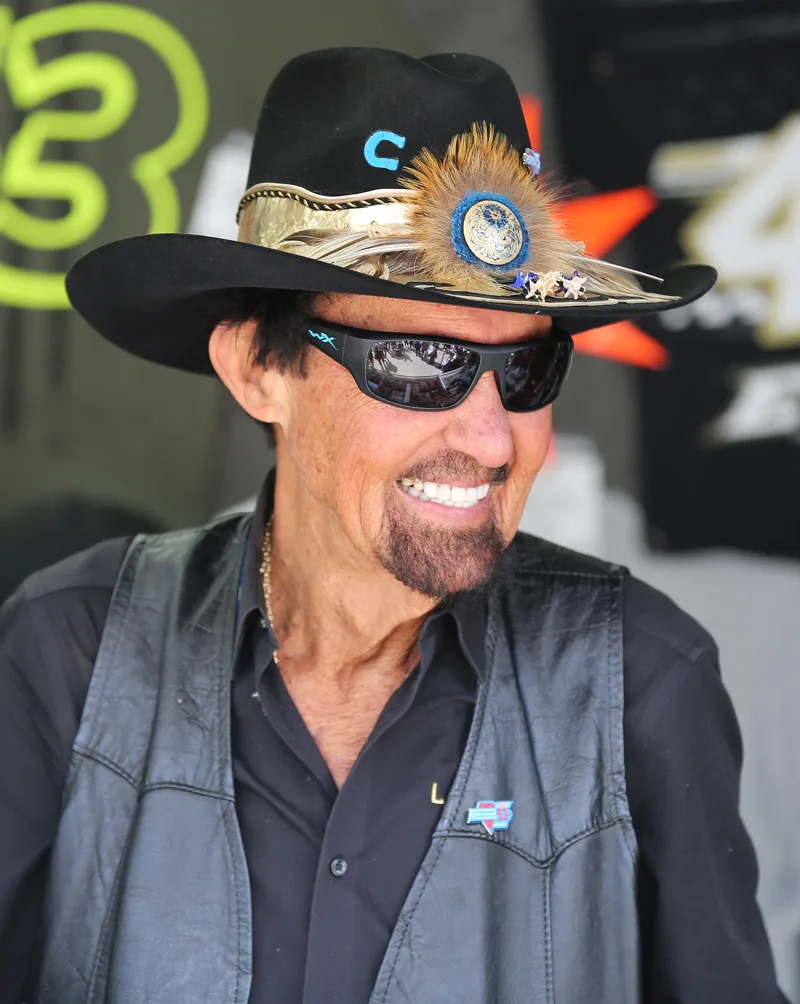
The team was founded as Curb Racing in 1984, running Pontiacs in the Winston Cup Series. Seven-time champion Richard Petty drove the No. 43, bringing his STP sponsorship and the car number with him from Petty Enterprises. Buddy Parrott was the crew chief in that first season.
Petty scored two wins in 1984, including the Firecracker 400, which was his 200th and final career victory. He finished tenth in the final standings, a strong debut for a team that had only just formed. Petty returned in 1985 with Mike Beam as crew chief, posting 13 top-10 finishes but only one top five and 12 DNFs.
In 1985 the team also fielded a second car at Atlanta. Tom Sneva drove an unsponsored No. 42 Pontiac there, finishing 32nd after an engine failure. It was the only time Curb ran two cars in a Cup race.
A team that began with a seven-time champion in its first car and ended in 2011 after two decades of part-time racing.
What happened when Petty left the team?
In 1986 Petty and STP left Curb to rejoin Petty Enterprises, and Petty took the No. 43 with him. Curb switched to the No. 98 and reduced the team to a part-time schedule. Ron Bouchard became the new driver, and Valvoline replaced STP as the sponsor.
Bouchard ran 17 of the 18 races the car entered that year and recorded top-ten finishes at the Daytona 500 and the Winston 500. Engine problems struck in the second half of the season, and Bouchard also took a Buick to Rockingham Speedway. Dale Jarrett drove the No. 98 at Bristol with Busch sponsorship, but he started 28th and finished 29th.
Why did the Cup team shut down after 1988?
In 1987 the team lost Valvoline and Bouchard left, and the team switched to Buick. Ed Pimm entered four races that season, missing the Daytona 500 in an unsponsored ride and then making three attempts with different sponsors. His best finish was 27th, and Noffsinger also tried the fall Riverside race and did not qualify.
In 1988 the No. 98 returned to full-time racing with Sunoco as the new sponsor. Noffsinger replaced Pimm and finished 14th on his series debut at Atlanta in the spring, which was his best result of the year. He failed to qualify for eight races and finished 38th in points. Sunoco then left the team, and the Cup operation shut down.
How did the team return to NASCAR in 1996?
After the Cup team closed, Curb suspended operations until 1996. The team returned in the Busch Series with the No. 96 Ford Thunderbird, run by an ownership group called CAA Performance that included Cary Agajanian, John Andretti and Donald Laird alongside Curb.
USAC driver Stevie Reeves drove the car with Clabber Girl Baking Powder as sponsor. He began with a DNQ at the season opener at Daytona and got his best finish of the season the next week at Rockingham, 15th. Clabber Girl left the team after the season, and the car stayed busy but largely outside the top ten.
For 1997 Reeves returned to the No. 96, and Big A Auto Parts signed on for the full 30-race season. Reeves finished seventh at Bristol in August, but he had no other top tens. Andretti and Laird then left to form Andretti-Laird Motorsports, taking the No. 96 and the Big A sponsorship with them.
What happened to the No. 43 in the Busch Series?
Curb Racing switched back to the No. 43 in 1998, when the team became known as the Curb Agajanian Performance Group. The car began the season unsponsored, with Reeves driving a mix of Fords and Chevrolets. Brad Noffsinger took over at Charlotte.
He had raced for Curb in the Cup Series before, and he entered six races for the team. Kevin Grubb replaced him at Gateway, but Grubb crashed out and was let go. Jimmie Johnson drove the season finale at Homestead. The car entered 12 races in 1998 without a sponsor, qualified for 11, and posted a best finish of 27th at the Dover spring race.
In 1999 the operation went full-time again with Shane Hall and Central Tractor as sponsor. Hall had a fourth at Myrtle Beach Speedway and finished 24th in points, but he also had six additional DNQs. Central Tractor left after the season.
How did Jay Sauter and Quality Farm change the team?
Rookie Jay Sauter replaced Hall in 2000, and Quality Farm and Country took over the sponsorship at the start of the season. Sauter recorded eight top tens and finished 17th in points, and the team's best finish was 4th at the season opener at Daytona.
In 2001 Sauter finished third at Texas, grabbed a pole at Kentucky Speedway and scored seven top tens, finishing 19th in points. He was fired after Memphis with three races to go, when Morton Salt became the sponsor and Ron Hornaday finished out the season. Hornaday took a top five at Phoenix.
The team then cut back sharply. In 2002 it lost both Quality Farm and Morton Salt, and Hermie Sadler drove four late races, none finishing better than 29th.
How did the team win its first Busch race?
Curb ran part-time in 2003. Johnny Sauter, Jay's brother, ran 17 races in Chevrolets with Channellock sponsorship. Jay Sauter was also driving the No. 21 for Richard Childress Racing that year, and the two combined for a full season.
The team picked up its first Busch Series win at the Funai 250 at Richmond in September, with Jay Sauter in a Chevrolet. Johnny Sauter had run 17 races for the team earlier that season.
In 2004 the team began the year with Josh Richeson in the No. 43 Chevrolet at Daytona, sponsored by Ollie's Bargain Outlet. At Rockingham the team switched to Evernham Dodges and signed Aaron Fike. Fike ran 12 races, and his best finish was 17th at Dover.
What did the 2005 full-time season look like?
In 2005 the No. 43 went full-time again, running both Dodges and Fords. Channellock and Jo Dee Messina returned after a year away, and Kimberly-Clark's Kleenex brand joined as a sponsor. The main drivers were Aaron Fike and A. J. Fike, with Jeff Green running three races.
Ron Fellows made a start for the team at Watkins Glen, but his engine overheated early in the event. The team's best finish that year was 14th at Charlotte with Aaron Fike in a Ford.
Who ran the team after Fike left?
In 2006 the team returned to Evernham Dodges, and Fike drove full-time with race-to-race sponsorships. He sat 29th in points after 12 races, but he failed to qualify at Charlotte and was fired. The team then scaled back to part-time.
P. J. Jones and Chris Cook each attempted four races that season. The best finish for the No. 43 in 2006 was 13th for Jones at the July Daytona race.
How did Baker-Curb Racing take shape in 2007?
Due to a lack of sponsorship the No. 43 sat idle at the start of 2007. Curb and Gary Baker bought Clarence Brewer's Ford team, Brewco Motorsports, in September before the Fontana race. Baker-Curb Racing took over the team's entries that weekend and ran the final nine races of the season out of Brewco's shop.
The No. 27 was sponsored by Kimberly-Clark's Kleenex brand, which had backed the car since 2004. Jason Keller drove the first race for Baker-Curb at California Speedway, finishing 17th. Bobby East, Robby Gordon, Casey Atwood and Brad Baker shared the remaining races, and East reached 12th at Homestead.
The No. 37, which Brewco had also run, carried Kick-Butt Energy Ballz as its sponsor in 2007. Bobby East drove it at California in its first race for the team, and the car's best finish was a 14th at Dover for Casey Atwood.
What did the 2008 and 2009 seasons bring?
In 2008 the team moved into its own shop, and Brad Coleman became the full-season driver of the No. 27 Ford. Kimberly-Clark returned for most races, and USPS, Federated Auto Parts and Carino's Italian Grill covered the rest. Coleman ran each of the first 24 races and finished 16th in points, but he had only two top-10 finishes.
After Watkins Glen, Coleman received an offer from Hall of Fame Racing in the Sprint Cup Series and left Baker-Curb. Keller took over the No. 27 at Dover for the final seven races of the year. The car's best run that season was ninth, with Coleman at Las Vegas.
For 2009 Kimberly-Clark sponsored 34 of the 36 races in the No. 27 Ford, with Jason Keller running full-time. Keller finished eighth in points. Its top result was sixth at Iowa in August. Kimberly-Clark walked away after the season, and Keller moved on to TriStar Motorsports.
How did the 2010 season end the team's best years?
In 2010 the No. 27 ran Roush Fords split between Greg Biffle and Scott Wimmer, with Red Man Tobacco as the sponsor. After 14 races the Red Man deal ended because new FDA regulations stopped tobacco advertising in sporting events, and the Roush partnership dissolved after Kentucky.
The team ran a single car at Road America, leasing out the No. 43 points. Biffle took the No. 27 to second at Fontana and at Richmond in the spring of 2010.
Jennifer Jo Cobb was set to drive the No. 27 for the COT races, but she destroyed the car in a wreck during her debut for Baker-Curb at Daytona. The same accident took out the team's other entry, the No. 43 driven by Johnny Chapman. Seven different drivers then ran the No. 27 Ford in one-race deals.
How did the team end in 2011?
After initially planning to shut down for 2011, Baker-Curb ran the No. 27 Ford for the first five races. J. R. Fitzpatrick and his sponsor Schick joined the team at Daytona, but he crashed after 10 laps and finished 42nd. He returned at Fontana to finish 20th, with Schick again sponsoring.
Baker-Curb Racing then suspended operations and shut down three weeks later. Canadian businessman Steve Meehan acquired the No. 27 operation for his Go Canada Racing effort, and Fitzpatrick later drove for that team.
What did Curb do after leaving the team?
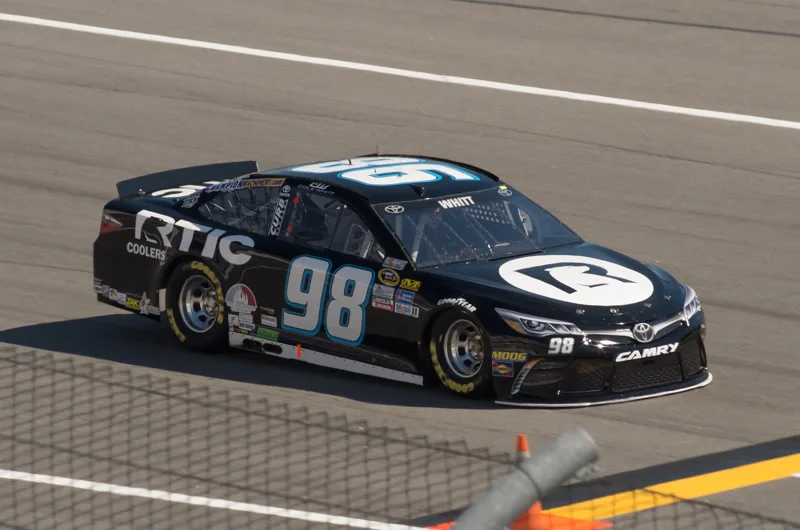
Following the sale of the Busch Series operation in 2011, Curb partnered with Richard Childress Racing. Curb sponsored and was listed as owner of Austin Dillon's No. 98 Chevrolet, and it used that space to promote the Ronald Reagan Centennial Celebration.
In 2012 Curb became the listed owner of Phil Parsons Racing's No. 98, a start-and-park operation in the Cup Series. That team finished only three of its 36 races that year, and it was sold to Premium Motorsports halfway through the 2015 season.
How did the Truck Series and ThorSport fit in?
Curb's Truck Series effort ran part-time in 2004 as the No. 43. Johnny Sauter failed to qualify its first truck at Martinsville, but at Indianapolis Raceway Park he qualified sixth and finished second to Chad Chaffin. That runner-up result was as close as Curb came to a win in all three national series.
The Truck team was co-owned with Johnny Sauter under the name Edge Performance Group, and it shut down after the 2004 season. Mike Curb was first listed as owner of ThorSport Racing's No. 13 in 2009, and he held that role until 2013, when the sponsorship and listed ownership followed Sauter to the team's No. 98.
| Year | Car | Driver | Notable result |
|---|---|---|---|
| 1984 | No. 43 Pontiac | Richard Petty | Two wins, tenth in points |
| 1986 | No. 98 Pontiac | Ron Bouchard | Top tens at the Daytona 500 and Winston 500 |
| 1988 | No. 98 Buick | Brad Noffsinger | Fourteenth at Atlanta, 38th in points |
| 1997 | No. 96 Ford | Stevie Reeves | Seventh at Bristol |
| 2000 | No. 43 Chevrolet | Jay Sauter | 17th in points, eight top tens |
| 2001 | No. 43 Chevrolet | Jay Sauter | Third at Texas, 19th in points |
| 2009 | No. 27 Ford | Jason Keller | Eighth in points |
| 2010 | No. 27 Ford | Greg Biffle | Second at Fontana and Richmond |