A new car, a new tyre supplier and a title won by Jake Dennis with one race to spare in London.
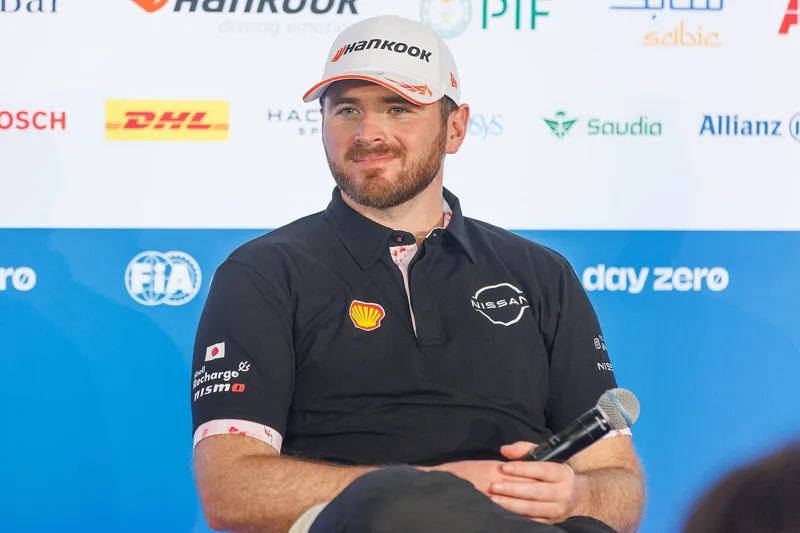
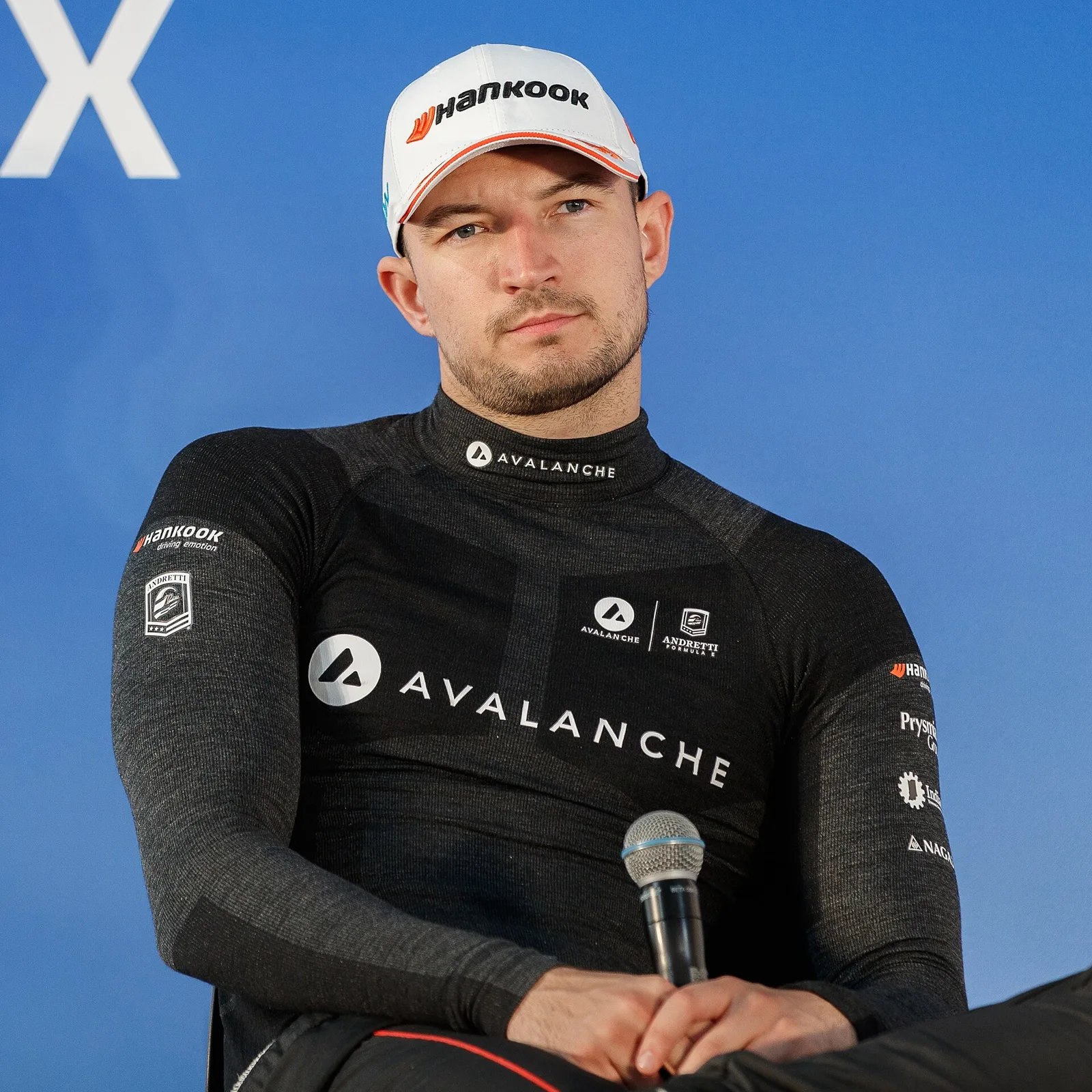
Jake Dennis won the 2022-23 Formula E world title for Avalanche Andretti with one race to spare in London. Envision Racing took the Teams' title, and Nick Cassidy finished runner-up in the first season of the Gen3 cars.
The 2022-23 season was the ninth in the history of the FIA's electric championship and the first to run the third-generation car. Jake Dennis of Avalanche Andretti claimed the Drivers' title with one race left. Envision Racing took its first Teams' crown, with Jaguar TCS Racing second, and Nick Cassidy finished as runner-up after a year in which the lead changed hands again and again.
What was the new Gen3 car like?
The third generation of championship rules brought a completely new car, again built by Spark Racing Technology. It carried two powertrains, with a second unit on the front axle, which lifted maximum power from 250 kW to 600 kW in total.
The new car was the smallest and lightest used in the championship, weighing 60 kg less than its predecessor. Maximum speeds climbed above 320 km/h.
Regeneration rose from 25% to 40%, and the new cars dispensed with hydraulic rear brakes altogether. The extra regeneration came from the second powertrain.
Hankook replaced Michelin as the tyre supplier, so every team ran Hankook rubber on the Gen3 car.
The third-generation cars arrived with a new tyre maker, and the title was settled in London with a race to spare.
How did the race format change?
Races went back to being run for a fixed count of laps rather than a fixed duration, and safety cars or full course cautions added laps to the race distance. The change meant the number of laps, not the clock, decided when a race finished. Fanboost was discontinued.
A so-called attack charge format was planned for select races, with drivers pitting for a recharge mid-race. The idea never made it onto the calendar.
A rule requiring every team to run a rookie driver in practice was dropped after teams criticised it. Two extra sessions for rookie drivers were added to the weekend instead.
Which teams and entries changed for 2022-23?
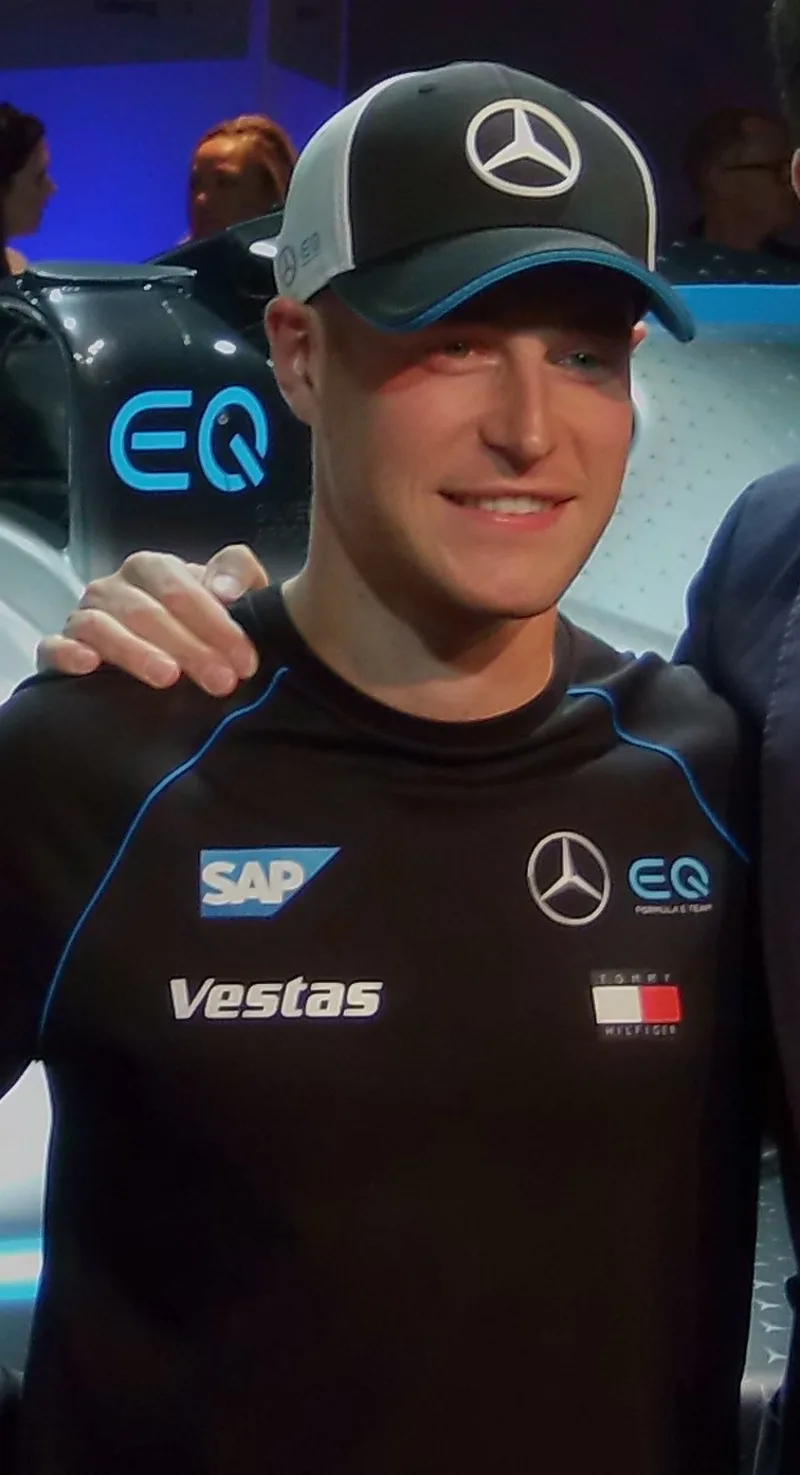
Mercedes-EQ left the championship after winning the 2020-21 and 2021-22 titles. Its entry was bought by McLaren, which ran Nissan powertrains, so the defending teams' champions were absent from the grid, and the exit was the biggest single change on the entry list.
Maserati joined as the first Italian manufacturer in the series. In April 2022 it forged a partnership with ROKiT Venturi Racing, and the marque had not been a constructor in formula racing since the 1950s.
Nissan took full ownership of the e.dams team in April 2022. ABT Sportsline returned to the series as ABT CUPRA, running Mahindra powertrains, and DS ended its partnership with Techeetah after four seasons.
DS formed a new partnership with Penske, while Techeetah sat out the 2022-23 season.
Which drivers changed teams for the new season?
Lucas di Grassi moved from ROKiT Venturi to Mahindra, replacing Alexander Sims. Andre Lotterer signed for Avalanche Andretti in September 2022, and Stoffel Vandoorne and Jean-Eric Vergne were announced together at DS Penske. Several of those moves followed the team changes above.
Sebastien Buemi moved from Nissan to Envision Racing, while Sacha Fenestraz and Norman Nato joined Nissan in August 2022. Maximilian Gunther joined the Maserati MSG team, and Nyck de Vries left Formula E for Formula One with AlphaTauri.
Injuries and substitutes shaped the early rounds. Robin Frijns broke his wrist in Mexico City, and Kelvin van der Linde stepped in as his replacement. Roberto Merhi replaced Oliver Rowland at Mahindra after Monaco.
Which venues joined the calendar?
Mexico City opened the season for the first time, taking over that role from Diriyah. Hyderabad joined after a letter of intent was signed in January 2022, and Sao Paulo was introduced after an earlier unsuccessful bid. Between them, these changes reshaped the calendar.
Jakarta became a double-header, and Cape Town was introduced after being planned for an earlier season. Marrakesh did not return, having only stood in for the cancelled Vancouver round.
The US round left New York City for Portland International Raceway in Oregon, where the 3.166 km layout was slightly altered.
Seoul did not return to the updated calendar, and Paris was left out of the schedule.
How did the opening rounds unfold?
The third generation began in Mexico City, where Lucas di Grassi took pole on his debut for Mahindra. Jake Dennis took the lead on lap 12 and won by 7.8 seconds, while di Grassi held off Jake Hughes for third.
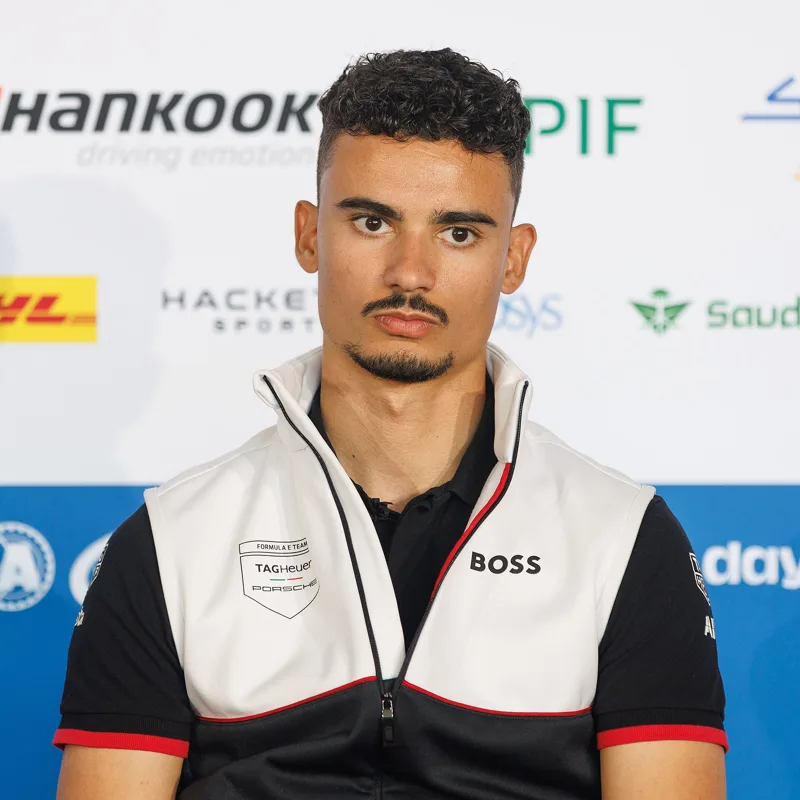
Buemi had taken pole for the first race in Diriyah, but Wehrlein won from ninth on the grid.
In the second Diriyah race Hughes took his maiden pole. Wehrlein won again ahead of Dennis, and Rast's third place gave McLaren its first Formula E podium. Wehrlein took a six-point championship lead.
The inaugural Hyderabad ePrix was won by Vergne, who got past Buemi on lap 15. Cassidy followed him through to second, and da Costa was promoted to the podium after a penalty for Buemi. Wehrlein finished fourth and extended his lead over Dennis to 18 points.
Hyderabad was also messy. Evans mistimed his attack mode, and Bird hit him, ending both Jaguars' races. Hughes's loose mirror then lodged in his steering wheel and sent him into the wall, which brought out another safety car.
Cape Town brought Fenestraz his maiden pole, but all four Mahindra cars were withdrawn over safety concerns with their rear suspension. Early on, Wehrlein crashed into Buemi, and Gunther clipped a wall on lap 21 and retired. Da Costa won the race, and Cassidy took third once Fenestraz had crashed out on the final lap.
How did the title race swing in mid-season?
Sao Paulo was the third new ePrix in succession. Vandoorne took pole for DS Penske, but the race was short on energy for most of the field, and Evans took the lead from Cassidy on lap 32 and won, giving Jaguar its first victory of the season.
Wehrlein started 18th and finished seventh after a collision with Dennis, which forced Dennis into retirement. That result extended Wehrlein's championship lead to 24 points.
The Berlin double-header began with Buemi taking a record 16th pole. Ticktum rocketed from fourth into the lead, but Evans passed Buemi on lap 40 and won, with Bird and Gunther completing the podium. Drivers were reluctant to lead and preferred the slipstream, and several crashes brought out safety cars. Dennis hit the wall while attempting to pass Gunther for fifth.
In the second Berlin race a wet qualifying session gave ABT CUPRA a front-row lockout. Protestors briefly stormed the grid, and when the race finally got underway Cassidy started eighth, took the lead on lap 25 and won. Dennis scored his first points since Diriyah, and the gap to Wehrlein fell to four points.
Monaco began with Hughes on pole after a lap time was deleted. Cassidy moved past three cars on lap four, including Dennis, Wehrlein and Gunther, before Evans took the lead after the first attack mode round. A collision between Bird and Muller brought a safety car for the finish, and Cassidy won his second consecutive race, moving 20 points ahead in the standings.
Jakarta's first race produced Gunther's pole for Maserati, and Wehrlein won ahead of Dennis. The second race went to Gunther, the first single-seater win for Maserati since 1957, when Fangio won at the Nurburgring. Wehrlein led Dennis by a single point after the weekend. In the second race Dennis finished second, while Wehrlein could only manage sixth.
How did the title race finish?
Portland was the new American round, and Dennis took pole. The high-speed track made energy saving the top priority, and drivers often lapped more than 10 seconds off the pace early on. Cassidy won, his third victory of the season, and reclaimed the championship lead by 18 points over Wehrlein.
The weekend was not without drama, because Muller's brake failure caused a heavy crash and a red flag, and Dennis had led until his first attack mode activation.
Rome's first race was halted by a red flag on lap nine, once several cars had collided. Dennis led from lap 12 before dropping to fourth after conserving energy, while Cassidy's advantage grew to 15 points.
Bird lost control at turn six and hit the wall, and the red flag that followed meant 14 cars took the restart, led by Fenestraz. Dennis took pole in the second Rome race and led at the start. Nato was second behind him but clipped the rear of the Andretti and damaged his front wing. The result put Dennis back on top, 24 points ahead of Cassidy.
The first London race began with Evans on pole, but a five-place grid penalty for his Rome crash meant Cassidy started first. Buemi took second at the start, and then Cassidy let him through to help the team in the Teams' championship, only for teammates to collide. Fenestraz crashed heavily into turn 16, and da Costa was given a three-minute penalty afterwards. Dennis clinched the title in that race, the first British Formula E Drivers' World Champion.
Two red flags came in quick succession. Shortly after the first restart, Nato, Buemi and Bird came together at turn 19 and blocked the track.
The second London race was the final round of the championship. Rain delayed the start, and Cassidy took his first pole of the season and won. Evans finished second and Dennis third, while Envision Racing won the Teams' title ahead of Jaguar TCS Racing.
Which driver led the championship at each stage?
The lead changed hands several times, and the table below shows who led after key stages and by how much. Wehrlein led for most of the first half, Cassidy took over in the middle of the season, and Dennis took the crown at the end.
| Stage | Leader | Margin |
|---|---|---|
| After Diriyah | Wehrlein | Six points |
| After Hyderabad | Wehrlein | 18 points over Dennis |
| After Sao Paulo | Wehrlein | 24 points |
| After Berlin, first race | Wehrlein | 23 points over Cassidy |
| After Berlin, second race | Wehrlein | Four points over Cassidy |
| After Monaco | Cassidy | 20 points |
| After Jakarta | Wehrlein | One point over Dennis |
| After Portland | Cassidy | 18 points over Wehrlein |
| After Rome, first race | Cassidy | 15 points |
| After Rome, second race | Dennis | 24 points over Cassidy |
Dennis's 24-point margin after the second Rome race was one of the largest in the table, and it gave him a platform for the London weekend. Cassidy's challenge depended on winning the final round, and after the first London race his chances had all but gone.