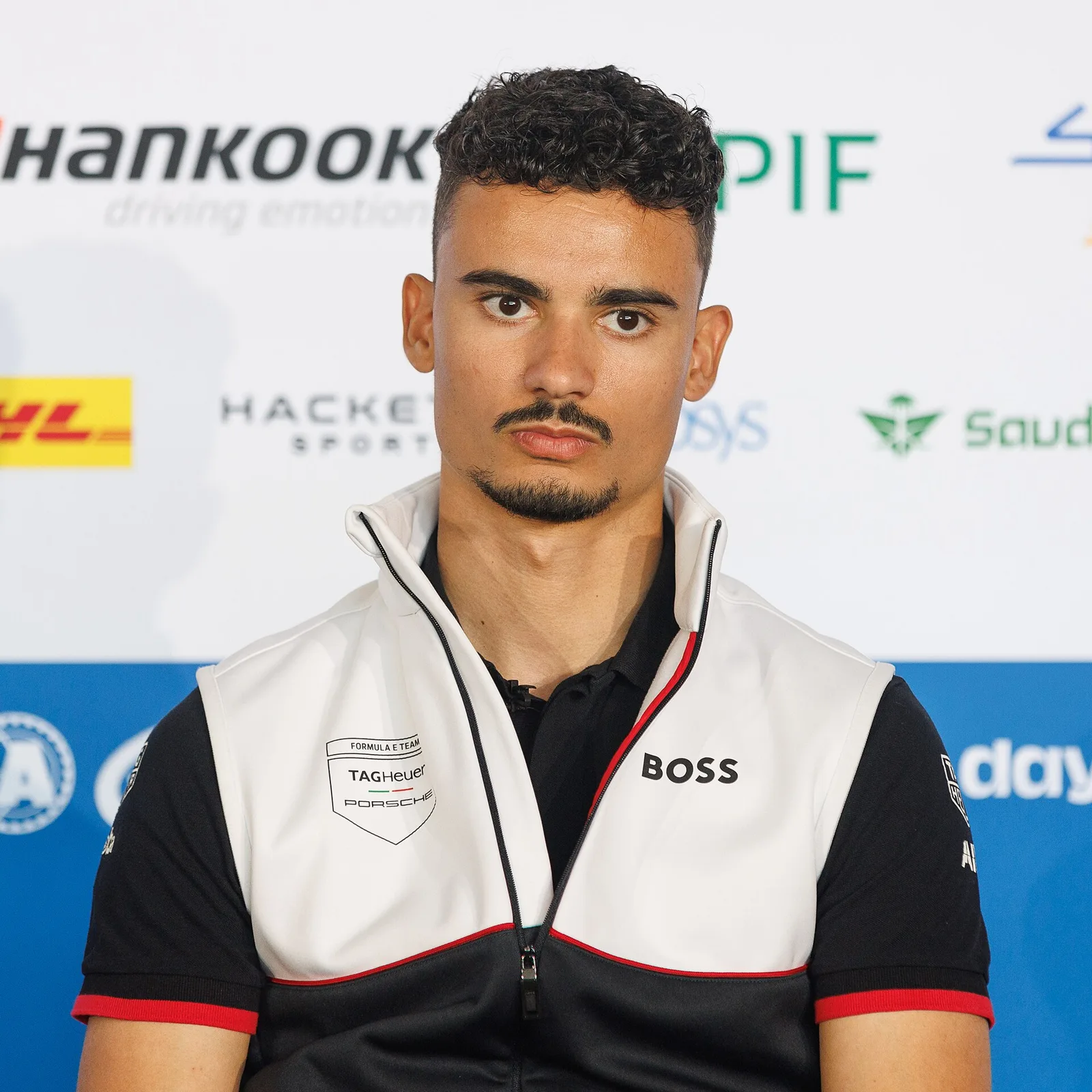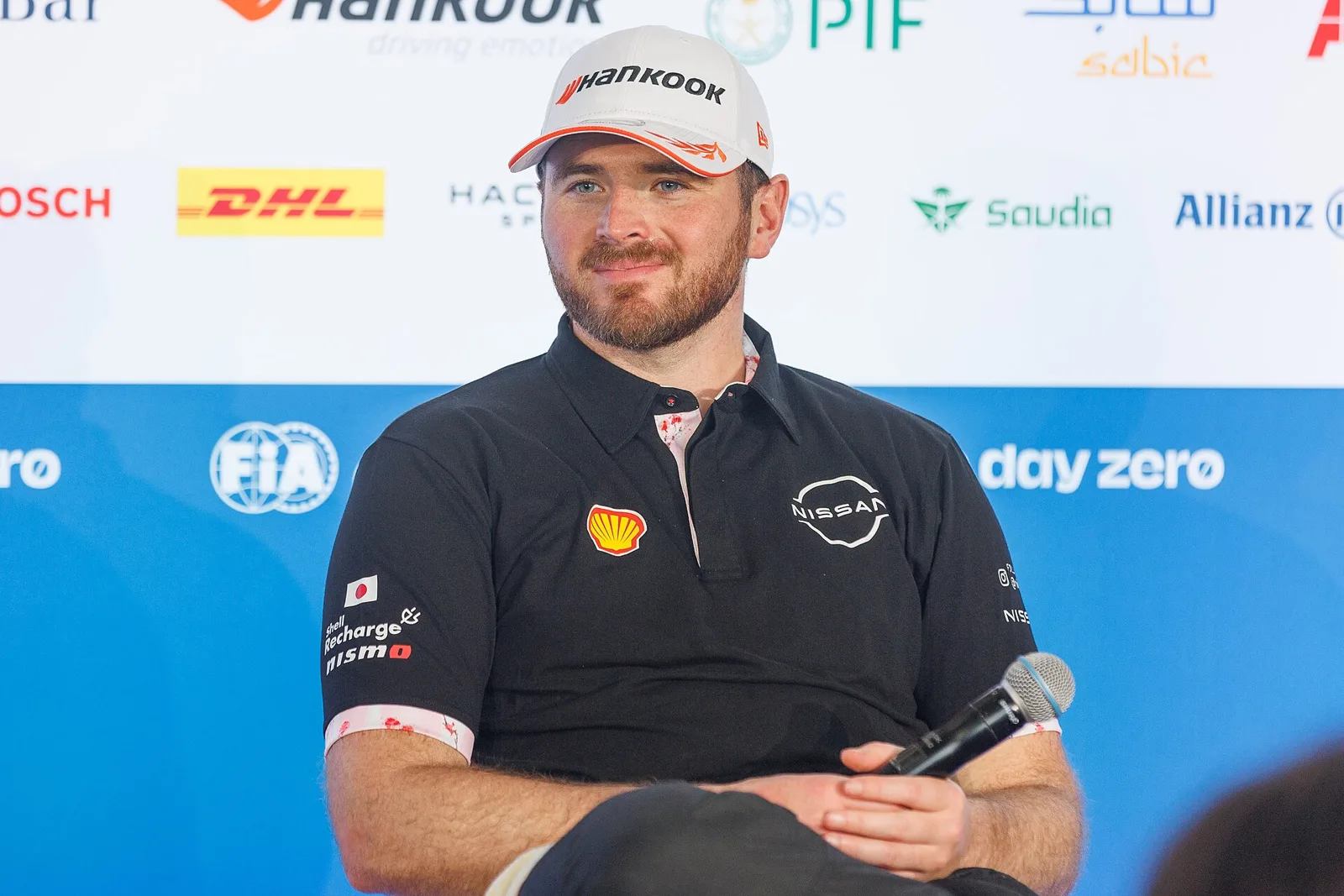
Oliver Rowland's first world title, a Porsche teams' double, a Lola return and a season of pit boost, chaos and late swings.
The 2024-25 Formula E World Championship was the eleventh season of the series, with Oliver Rowland winning his first drivers' title for Nissan. Porsche took the teams' title for the first time and also won the Manufacturers' Championship.
Oliver Rowland won the 2024-25 Formula E title for Nissan with two races to spare, taking the first world championship of his career. Porsche took the teams' crown for the first time at the season finale, and the same maker also won the Manufacturers' Championship.
What was the 2024-25 season?
The 2024-25 campaign was the eleventh season of the FIA's electric championship, which ran across a full calendar. It introduced the Gen3 Evo car, the upgraded version of the Gen3 machine, and the first quick-charging pit stops, which the series called Pit Boost.
The season combined close racing with changes to the business side of the series. Attack mode, now helped by an active front powertrain, could reshape a race in seconds, and critics said the series was trying to fit too many strategic elements into short races. Off track, McLaren left the series and failed to find a buyer for its entry, which raised questions about the championship's long-term future.
Pit Boost, Gen3 Evo and a late run of wins gave Oliver Rowland his first world title with two races to spare.
How did Rowland win his first title?
Rowland collected four wins and three further podiums in the first half of the year, which kept him at the top of the standings. He won Mexico City, the second Jeddah race, the first Monaco race and a Tokyo round, and he wrapped up the title at Berlin with two races still to run. His Nissan team also benefited from a strong finish, as Nato was the only Nissan-powered car to finish inside the top ten in London.
The title race was never one-sided. Da Costa briefly led the standings after Mexico City, and Cassidy closed in across the later rounds. Rowland's approach was to hold back his final attack mode until the others had spent theirs, which gave him a late surge in several races and turned his lead into a long cushion by Tokyo.
Which teams changed for 2024-25?
Lola came back to top-level motorsport after a long gap, last racing at that level in the 2006 Champ Car World Series, and entered Formula E with its own powertrain, built with Yamaha. The entry supplied ABT, which had used Mahindra powertrains until then, and the team raced as Lola Yamaha ABT Formula E Team.
ERT Formula E Team was acquired by The Forest Road Company after a single year and rebranded as Kiro Race Co, racing under an American licence. It stopped building its own powertrain and agreed to use Porsche's 2023-24 unit, and Cupra joined it ahead of the Sao Paulo weekend as Cupra Kiro.
Which drivers moved between teams?
Stoffel Vandoorne left DS Penske after two seasons for Maserati MSG Racing, while Maximilian Gunther made the reverse move to DS Penske. Jehan Daruvala lost his Maserati seat, which went to McLaren's Jake Hughes, and McLaren promoted Taylor Barnard to a full-time drive.
Norman Nato left Andretti after one season to return to Nissan, and Nico Muller left ABT to take his place at Andretti. Zane Maloney replaced Muller at ABT and became the first Barbadian driver to compete in the series. David Beckmann made his full-time debut with Cupra Kiro alongside Dan Ticktum, replacing Sergio Sette Camara, who joined Nissan as reserve.
What changed in the rules?
The Gen3 Evo update gave the car a more robust front wing and new Hankook tyres aimed at more grip. An active front powertrain was used in qualifying, at the race start and during attack mode, which lifted acceleration and power output. Pit Boost required each driver to make a stop of around 30 seconds in a window chosen by race officials, and only one car per team could take it at a time.
The Manufacturers' Trophy, introduced in season ten, became a full World Championship title alongside the Teams' and Drivers' titles. Points follow the same logic as the Teams' title and are based on the two highest-scoring cars for each maker in every race.
How did pre-season testing go?
The pre-season test was due at Circuit Ricardo Tormo in Valencia from 4-7 November 2024, but flooding forced a move to Circuito del Jarama on 5-8 November 2024. Nissan and Jaguar both missed the first of the four days, a penalty for breaching the cost cap in the 2022-23 season.
Jaguar's Mitch Evans set the fastest time on the final day, ahead of Ticktum and Wehrlein. Wehrlein also led his Porsche teammate da Costa to a 1-2 in the traditional simulation race. An all-female session, the first of its kind in an FIA-sanctioned championship, closed the test, and Abbi Pulling posted the fastest time for Nissan.
How did the opening rounds unfold?
Sao Paulo opened the season with Wehrlein on pole after a final duel with Rowland. Evans came from 22nd to win by 0.3 seconds from da Costa, while Barnard became the youngest podium finisher in series history. Mexico City then saw Porsche lock out the front row, but Rowland won for Nissan.
In Sao Paulo, Cassidy used the active front powertrain to grab an early lead while Wehrlein fell back. Rowland took the lead again on lap 14, and Dennis's electrical failure brought out a red flag. Rowland was later hit with a drive-through penalty. Cassidy and Wehrlein collided behind Evans, sending Wehrlein into the wall and causing a second red flag. Evans then led the three-lap restart.
Mexico City began with Wehrlein leading the first 15 laps before Dennis overtook him. A safety car came out after Beckmann collided with di Grassi, and Rowland, still in higher power mode, passed three cars within twelve corners to take the lead. Another safety car followed Evans's clash with Muller, and Rowland held off da Costa on the final restart to win. That result left da Costa 12 points ahead of Rowland in the standings, with Evans third.
What happened at Jeddah and Miami?
Jeddah hosted its first Formula E weekend with two races, and Gunther won the opener from pole after Pit Boost was introduced. Rowland won the second race, and his points lead grew to 17.
The first Jeddah race was held with the new Pit Boost format. Gunther led until a safety car recovered debris after a collision between da Costa and Muller. Gunther gave the lead to Rowland to save energy, and Rowland looked set to win before struggling late, which allowed Gunther to pass him on the final lap. Barnard finished third in only his fourth Formula E race, and Rowland's second place put him four points clear of da Costa.
The second Jeddah race had no mandatory stops. Barnard became the youngest pole sitter in Formula E history, and he led early before Rowland overtook him on lap 9. Rowland saved his final six minutes of higher power for the closing stages and retook the lead with five laps to go. Barnard finished second, Hughes third, and Rowland's points lead grew to 17.
Miami returned to Homestead-Miami Speedway for the first time. Nato took his maiden pole, and Wehrlein and da Costa held strong positions for most of the race. A red flag came with six laps remaining after three cars collided in the final chicane. Several drivers who had not used all their attack mode were penalised, including the on-track winner Nato, and Wehrlein inherited the win. Di Grassi took second, Lola's maiden podium, and Rowland finished eleventh but kept a 15-point lead over da Costa.
How did Monaco and Tokyo change the title race?
Monaco held a double-header for the first time. Rowland won the first race two seconds ahead of de Vries, and Buemi won the second with a record-breaking fourteenth career victory. Rowland's championship lead rose to 48 points after the second Monaco race, and Tokyo later pushed it to 60.
In the first Monaco race, Barnard took his second pole, but Rowland hit the wall in the final session. Rowland and the Andretti and Mahindra drivers used attack mode and Pit Boost to move through the field. De Vries took the lead on lap 24 ahead of Muller, who had recovered from a lap one puncture. Rowland waited until the others had used their attack modes and reclaimed the lead a lap later. Dennis was given a five-second penalty for speeding under yellow, and Muller's position was lost in the scramble.
The second Monaco race began in wet qualifying, where Rowland and de Vries ran off the road at Sainte-Devote. Rowland recovered faster and took pole when Vergne lost his lap times. Buemi used his second attack mode to take the lead and built a gap of over three seconds. Rowland came second, and Cassidy took his first podium of the year after starting 13th.
Tokyo became a double-header for the first time in 2025. Saturday's qualifying was cancelled due to poor weather, and Vandoorne ran an unusual strategy with heavier energy use at the start. A red flag came after Gunther stopped on track with an electrical problem. Vandoorne came through to the front with a 25-second lead and won his first race in three years, with Rowland and Barnard behind. Rowland's lead grew to 60 points.
On Sunday, Ticktum crashed in his final duel with Rowland, and Evans could not start. Rowland dropped from first to sixth early on, then recovered. Mortara collided with Barnard on lap 29, bringing a late safety car, and Rowland won at Nissan's home race ahead of Wehrlein. Ticktum took his maiden Formula E podium in third, and Rowland left Tokyo 77 points clear of Wehrlein.
How did Shanghai and Jakarta play out?
Gunther won the first Shanghai race from pole with a seven-second gap. Cassidy won the second, in rain that delayed the start for hours. Rowland finished 13th in the wet and scored no points, and his lead over Wehrlein fell to 68 points.
Shanghai race one saw the first pit boost stop on a heavily energy-sensitive circuit. Gunther saved his second attack mode until late and won with a gap of seven seconds. Ticktum climbed from 21st on the grid to second, only to be passed by Vergne and Barnard in the final corner, and Rowland finished fifth. Barnard moved to second in the standings, 86 points behind Rowland.
Shanghai race two was the third race of the year affected by rain. Practice was red-flagged for most of the session, so qualifying consisted only of its group stages. Cassidy took pole and then led throughout, while Wehrlein slipped off track and lost his progress. Cassidy's win was his first since Berlin in 2024.
Jakarta returned to the calendar after a one-year absence as round twelve. Dennis took pole and led at the start, but de Vries cut back too soon and broke his front wing. The restart was chaotic, as Dennis's speed limiter stuck, de Vries had a technical failure and Vandoorne crashed heavily. Ticktum inherited the lead and won, his first win and his team's first since the 2015 Moscow ePrix. Mortara finished second and Buemi third, and Rowland's 69-point lead over Wehrlein survived the day.
Who won the Berlin and London rounds?
Evans won the first Berlin race, his first victory since the opening round, and Cassidy won the second. Rowland finished fourth in the second race, which was enough to clinch the drivers' title with two races to spare.
The first Berlin race was another wet affair in qualifying. Evans took pole, built a ten-second gap and held it, while Wehrlein slid off on the penultimate lap. Da Costa was penalised five seconds for spinning Hughes, which promoted Mortara to the podium. Rowland retired after contact with Vandoorne, and his lead over Wehrlein stood at 50 points.
The second Berlin race saw Wehrlein take pole, but he chose a different attack mode strategy and dropped down the order. Rowland was given a five-place grid penalty for the previous day's incident and started eighth. Cassidy climbed from 20th to win, with Dennis and Vergne behind him. Wehrlein finished 15th, and Rowland's fourth place sealed his maiden world title.
The London opener saw Evans take pole ahead of de Vries. A collision between Mortara and Gunther brought a safety car, and Evans lost ground by delaying his attack mode. Cassidy, starting fifth, used an early pit boost stop and attack mode on lap 27 to pass de Vries. Ticktum spun Evans in a clash with Dennis and then crashed out, bringing out another safety car. Cassidy controlled the restart and won, ahead of de Vries and Wehrlein.
The season final began with Ticktum on pole, but a grid penalty meant Cassidy started first. He led off the line while Evans passed Gunther for second. Rowland's race ended after contact with de Vries and a collision with Muller, which brought out the safety car. Cassidy stretched clear on the restart and won, with de Vries and Buemi on the podium and Evans relegated to fifth for speeding under yellow. Porsche's teams and manufacturers titles were sealed by that result.
Who won each race?
Rowland and Cassidy led the winners' list, with Rowland taking four races and Cassidy four. Evans and Gunther each won twice, and Wehrlein, Buemi, Vandoorne and Ticktum took one each.
| Race | Winner |
|---|---|
| Sao Paulo | Mitch Evans |
| Mexico City | Oliver Rowland |
| Jeddah, race one | Maximilian Gunther |
| Jeddah, race two | Oliver Rowland |
| Miami | Pascal Wehrlein |
| Monaco, race one | Oliver Rowland |
| Monaco, race two | Sebastien Buemi |
| Tokyo, race one | Stoffel Vandoorne |
| Tokyo, race two | Oliver Rowland |
| Shanghai, race one | Maximilian Gunther |
| Shanghai, race two | Nick Cassidy |
| Jakarta | Dan Ticktum |
| Berlin, race one | Mitch Evans |
| Berlin, race two | Nick Cassidy |
| London, race one | Nick Cassidy |
| London, race two | Nick Cassidy |
How was the season received?
The racing drew praise for its unpredictability, but the strategy was often criticised as too dense for short races. Jaguar's struggles were a major story, as the team scored only 52 points in the first eight rounds, which made Cassidy's runner-up finish a surprise.
The off-track story was less comfortable. McLaren's exit and its failure to sell its assets or licence cast doubt on the championship's future at a time when the car industry was under pressure.