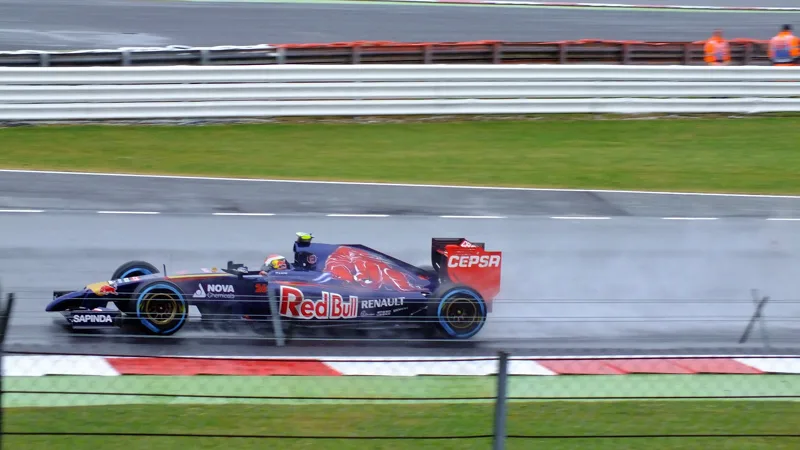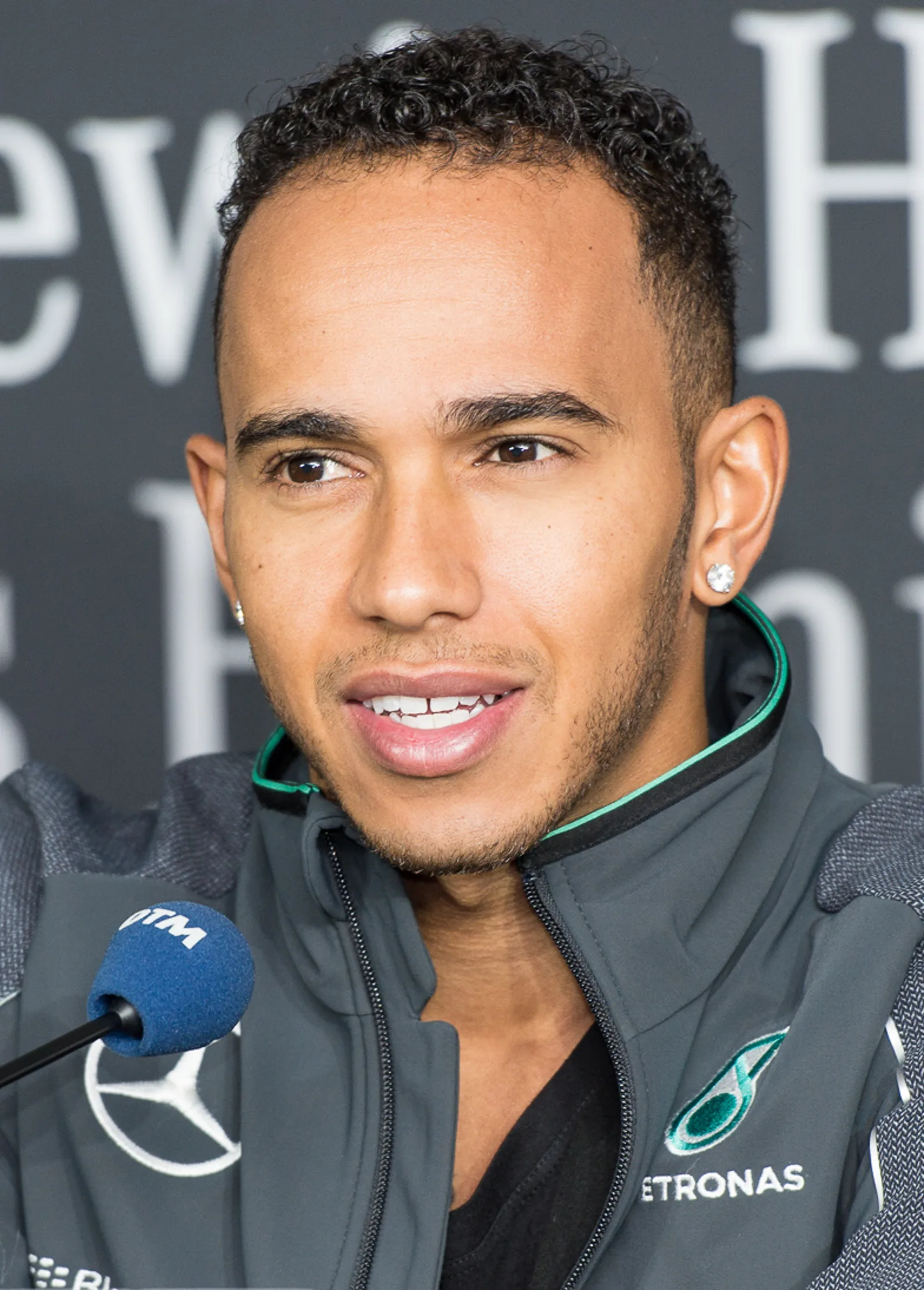
The turbocharged 1.6-litre V6 era begins, Mercedes takes its first constructors' title and Lewis Hamilton edges a season-long battle with his teammate.
Lewis Hamilton won the 2014 drivers' title for Mercedes, while Mercedes took the constructors' championship at the Russian Grand Prix. The season was the first under the 1.6-litre turbocharged V6 engine formula, and Vettel went winless as the defending champion.
The 2014 FIA Formula One World Championship was the 68th season of the sport's top class, and the first to run under a new engine formula. Nineteen Grands Prix were contested by eleven teams and twenty-four drivers, from Australia in March to Abu Dhabi in November. Mercedes dominated the year, and its two drivers fought each other for the title.
The new rules changed the sound and the strategy of the sport. The 2.4-litre V8 engines used from 2006 to 2013 gave way to 1.6-litre turbocharged V6 units with energy recovery, and the change brought turbo engines back to Formula One for the first time since 1988.
What happened across the 2014 season?
Lewis Hamilton won his second drivers' title, and his first with Mercedes, with 384 points and eleven wins. Nico Rosberg took the runner-up spot with 317 points and five wins, while Mercedes secured its first constructors' championship as a full works team at the Russian Grand Prix. Red Bull's four-year run at the top of the sport came to an end.
Mercedes started strongly. Rosberg won the season-opening Australian Grand Prix after Daniel Ricciardo was disqualified for exceeding the fuel-flow limit, and he won Monaco later in the spring. Hamilton then took Malaysia, Bahrain, China and Spain, building a lead that Rosberg spent the rest of the year chasing.
Australia showed how precisely the rules would be policed. A breach of the fuel-flow limit cost Ricciardo the result, and that decision handed the win to Rosberg, which made the opening round a lesson in precision as well as pace.
Mercedes' winning run ended in Canada, where both of its cars suffered power unit failures. Ricciardo took the win in a race that was his maiden Grand Prix victory. Rosberg then won Austria, while Hamilton took Britain after Rosberg's gearbox failure, and the lead changed hands several times over the summer.
The second half of the year brought a mix of results. Rosberg won Germany after Hamilton had started from twentieth place, and Ricciardo took Hungary and Belgium. Hamilton won Italy, his sixth win of the season, and then Singapore, where he retook the championship lead.
Rosberg's pole count was a measure of his pace. His pole positions gave him a steady platform on Saturdays, even though Hamilton converted more of his chances into race wins. Hamilton's eleven wins showed his race pace, and the contrast between qualifying and racing defined the duel between the two drivers.
The closing rounds decided the title. Hamilton won the rain-shortened Japanese Grand Prix, a race cut short by weather and an accident, then Russia, where Mercedes took the constructors' title, and the United States, his fifth consecutive win. Rosberg won Brazil with Hamilton second, and Hamilton then won Abu Dhabi to finish the season.
A new turbo era, one dominant team and a title settled by a season-long duel.
Which teams and drivers changed for 2014?
Felipe Massa left Ferrari for Williams, and Kimi Raikkonen returned to Ferrari. Daniel Ricciardo moved from Toro Rosso to take Mark Webber's seat at Red Bull, while Sergio Perez left McLaren for Force India and Kevin Magnussen took his place at McLaren.
Engine supply changed across the grid. Williams parted ways with Renault and switched to Mercedes power, while Toro Rosso ended its seven-year Ferrari arrangement and moved to Renault. Cosworth decided not to build an engine for the new rules, and Marussia moved to Ferrari customer engines.
The line-ups at the back shifted as well. Kamui Kobayashi returned to Caterham and was partnered by Marcus Ericsson, and Susie Wolff became a Williams test driver, the first woman to take part in a Grand Prix weekend since 1992. Max Verstappen, at 17 years and 3 days, became the youngest driver to take part in a Grand Prix weekend.
Wolff's role was limited to selected Friday practice sessions, a programme that gave Williams a development driver with race-weekend experience and kept her close to the cars.
Caterham and Marussia were both in financial trouble. Caterham entered administration after the Russian Grand Prix, and Marussia followed it into administration later in the year. The 2014 season was the final Formula One season for several drivers, including Chilton, Vergne, Kobayashi, Sutil and Bianchi.
The new formula also ended a long period in which naturally aspirated engines had been the rule. Turbocharged engines were back, and the switch set the sport's technology on a new path for the seasons that followed.
How did the calendar change?
The Austrian Grand Prix returned to the Red Bull Ring after a ten-year absence, and the Russian Grand Prix was staged at the Sochi Autodrom. The Russian race was the first in a century, and it was held near the end of the season on a street circuit around the Olympic Park.
Red Bull agreed with Bernie Ecclestone to revive the Austrian race, and the Red Bull Ring had last hosted the Grand Prix in 2003 under the name A1-Ring. The United States race was first scheduled for 9 November, but it moved after a university football game clashed with it.
The Hockenheimring returned for the German Grand Prix, in line with the arrangement with the Nurburgring. India was not held after the rupee devaluation and tax disputes, and the Korean, Mexican and Grand Prix of America races were dropped from the provisional list. Bahrain was held under lights to mark its tenth anniversary.
What rule changes shaped the 2014 season?
The power units were the biggest change. Each one combined an engine with a turbocharger, energy recovery systems and control electronics, and the engines were limited to 15,000 rpm. Fuel flow was capped at 100 kg/h above 10,500 rpm, and the energy recovery system could add 161 bhp (120 kW) for thirty-three seconds per lap.
Drivers were limited to five engines for the season, down from eight in 2013. The engine freeze was replaced by a development budget of sixty-six points, which manufacturers could spend on changes to the power unit.
The development rules shaped how the teams worked. The old engine freeze had prevented any upgrades, but the new points budget let manufacturers spend development points on the areas where they most needed gains.
Aerodynamics were trimmed. Beam wings were banned, false camera mountings were outlawed, and the exhaust was angled upward so that exhaust-blown diffusers became hard to achieve. The FRIC suspension was banned after the British Grand Prix, on the grounds that it was a movable aerodynamic device.
The chassis rules tightened too. The minimum weight of the car rose to 691 kg (1,523 lb), and the tip of the nose had to sit no more than 185 mm (7.3 in) above the ground, which removed the stepped noses used in 2012 and 2013. Teams also had to nominate eight gear ratios before the first race.
Sporting rules changed in several places. A five-second penalty was added to the stewards' options, twelve penalty points triggered a race ban, and the pit lane speed limit was cut from 100 km/h to 80 km/h. Race numbers became permanent for each driver, and the number one stayed with the champion.
Safety measures followed Jules Bianchi's accident at the Japanese Grand Prix. The Virtual Safety Car was tested at the United States Grand Prix, and a remote speed limiter became mandatory so that Race Control could slow the cars during yellow-flag periods.
The first season of the new formula was a test of reliability as much as speed. The cars' failures in Canada showed how demanding the new units were, and that theme returned throughout the year.
Which races shaped the title fight?
The title was decided by a season-long rivalry between Hamilton and Rosberg. Ricciardo's three wins kept Red Bull in contention for the first half of the year, but Hamilton's late wins in Japan, Russia and the United States pushed him clear, and Rosberg could not respond.
Ricciardo's disqualification in Australia cost Red Bull an early result, and the team spent much of the year looking for reliability. Those early setbacks shaped the team's season, even though Ricciardo later won three races and finished third in the championship.
| Grand Prix | Winner | Note |
|---|---|---|
| Australia | Nico Rosberg | Ricciardo disqualified for fuel flow |
| Malaysia | Lewis Hamilton | Rosberg second |
| China | Lewis Hamilton | Third consecutive win |
| Bahrain | Lewis Hamilton | Night race |
| Spain | Lewis Hamilton | Ricciardo third |
| Monaco | Nico Rosberg | Ricciardo third |
| Canada | Daniel Ricciardo | Maiden win; Mercedes power unit failures |
| Austria | Nico Rosberg | Rosberg ahead of Hamilton |
| Britain | Lewis Hamilton | Rosberg gearbox failure |
| Germany | Nico Rosberg | Hamilton third from twentieth on the grid |
| Hungary | Daniel Ricciardo | Second career win |
| Belgium | Daniel Ricciardo | Third career win |
| Italy | Lewis Hamilton | Sixth win of the season |
| Singapore | Lewis Hamilton | Retook the championship lead |
| Japan | Lewis Hamilton | Rain-shortened race |
| Russia | Lewis Hamilton | Mercedes' first constructors' title |
| United States | Lewis Hamilton | Fifth consecutive win |
| Brazil | Nico Rosberg | Hamilton second |
| Abu Dhabi | Lewis Hamilton | Title secured; Rosberg outside the points |
Who won the 2014 Drivers' Championship?
Hamilton won his second World Drivers' Championship with 384 points and eleven victories. He carried a seventeen-point lead into Abu Dhabi, where points were doubled. He led from pole and won the race, while Rosberg struggled with electrical problems and finished outside the points. That race was his final statement of a season in which he had won more often than any other driver.
Sebastian Vettel finished the season without a win, the first defending champion since 1998 to do so. Rosberg collected the inaugural FIA Pole Trophy with eleven poles across the season, and Hamilton's title was secured through a mixture of consistency and wins at the right moments.
The title was settled in the final race, which made the Abu Dhabi weekend the defining event of a season in which the lead changed hands several times. Points were doubled for that race, which kept the title fight alive for longer than a single-points finale would have. Ricciardo's three wins were a highlight for Red Bull, and his results in Hungary and Belgium showed the team could still compete at the front when the car suited the track.
What the 2014 season left behind
Ferrari's run of eighty-one consecutive points finishes ended in Japan, which was the longest run in Formula One history. The team failed to win a race in the season, the first time since 1993 that Ferrari had gone a whole year without a victory.
Red Bull finished second in the constructors' table, 296 points behind Mercedes. Daniil Kvyat became the youngest driver to score points after finishing ninth in Australia, while Verstappen's early appearance pointed to the next generation of drivers entering the sport.