The final race before the 2013 Chase ended with a win for Carl Edwards and a manipulation scandal that brought Michael Waltrip Racing a record team fine.
Edwards' victory at Richmond came in the last race before the Chase for the Sprint Cup. The race is remembered as Spingate, because NASCAR found that Michael Waltrip Racing, Penske Racing and Front Row Motorsports had manipulated the finish and the Chase positions.
Carl Edwards won the 2013 Federated Auto Parts 400 at Richmond International Raceway on 7 September 2013, his second win of the season. Richmond's 400-lap race was the final event before the Chase for the Sprint Cup. It became known as Spingate after NASCAR concluded that three teams had attempted to fix the finish and the Chase places.
How did the Chase qualifying rules work in 2013?
Twelve drivers could make the Chase in 2013: the top ten in points, plus two Wild Card places for drivers ranked 11th to 20th who had won a race. Kasey Kahne had already secured the first Wild Card with wins at Bristol and Pocono. As the only repeat winner outside the top ten, he had the first spot sewn up, leaving the second to be decided.
Ryan Newman trailed Martin Truex Jr. for that second Wild Card. Jeff Gordon sat 16 points behind Joey Logano in the tenth place that was the last guaranteed spot by points, which made the final laps decisive for several drivers. Without the caution before the white flag, Gordon would have earned a Chase berth on his running position alone, a point NASCAR later conceded.
NASCAR fined Michael Waltrip Racing $300,000, the highest team fine in the series' 67-year history.
What happened on lap 393?
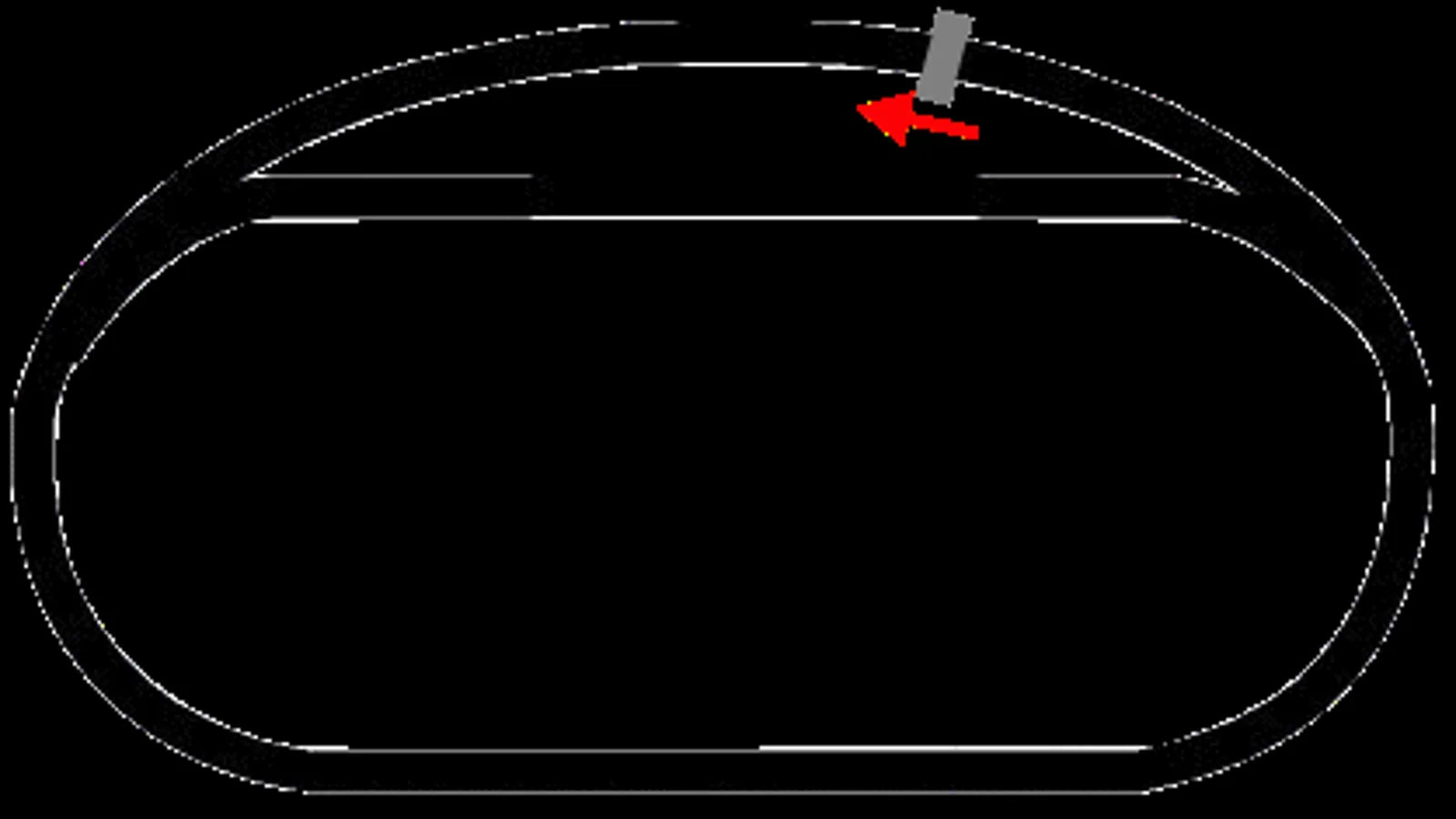
Clint Bowyer, driving for Michael Waltrip Racing, spun out in turn 4 on lap 393 and brought out a caution. The field pitted under the yellow, and the order was reshuffled in a way that threatened Gordon's place in the Chase.
At that stage Gordon was two points ahead of Logano for the last guaranteed Chase berth. Later radio exchanges showed Bowyer's team openly fretting that Newman could win and knock Truex out of the Chase on the 391st lap, two laps before the spin. Dale Earnhardt Jr., who was directly behind Bowyer, called the spin one of the craziest things he had seen.
Why was the spin treated as suspicious?
Bowyer's car spun onto the apron instead of washing up the track as a car with a cut tyre normally would, and the popping noise associated with a flat came only after the spin. Those details, combined with the radio traffic, led many in the garage to suspect a deliberate spin.
Bowyer said a flat right front had caused the spin, and the right front was indeed down afterwards. NASCAR could not find conclusive proof that he had spun on purpose, but it did rule that a later pit stop was illegal.
What was the pit stop that NASCAR ruled illegal?
Once the field restarted on the 398th lap, Ty Norris, the team's general manager and spotter, told Brian Vickers to pit under green. The order was given to give Martin Truex Jr. another position and tie Newman on points, and Vickers was not aware of the plan at the time.
NASCAR found that Vickers's pit stop, made on Norris's orders, was illegal. The organisation indefinitely suspended Norris, and the scandal was soon nicknamed Spingate, and also the Singapore Sling after a 2008 Formula One incident that was similar in character.
Was the 2008 Singapore Grand Prix a parallel?
Yes, the comparison is widely drawn. In the 2008 Singapore Grand Prix, Nelson Piquet Jr. caused a caution that helped his team-mate Fernando Alonso, who went on to win. Piquet was also entered in the Nationwide Series race that same weekend.
The Richmond affair became known as the Singapore Sling for that reason. Its details were different in that the manipulation involved team orders and radio traffic rather than a single crash, but the outcome was similar in its impact on the race result.
What penalties did NASCAR hand out?
NASCAR fined Michael Waltrip Racing $300,000, the highest team fine in the series' 67-year history. Bowyer and Truex were each docked 50 driver points, Vickers was also docked 50, and every MWR car lost 50 owner points.
The 50-point deduction dropped Truex to 17th in the standings, which removed him from Wild Card eligibility and handed the spot to Newman. Norris was suspended, and all three MWR crew chiefs were placed on probation until 31 December. Penske Racing and Front Row Motorsports were also placed on probation.
Bowyer had already clinched a Chase berth two races earlier, so the deduction did not change his seeding. Vickers was not eligible for Cup points under the series' declaration rule, since he was a Nationwide Series regular, but he was still docked 50 points, leaving him with a negative total at the end of the year.
| Finish | Driver | Note |
|---|---|---|
| 1st | Carl Edwards | Roush Fenway Racing; second win of the season |
| 2nd | Kurt Busch | Finished second behind Edwards after the restart |
| 3rd | Ryan Newman | Third, after a slow pit stop had dropped him there earlier |
| 4th | Jamie McMurray | Fourth place finish |
| 5th | Paul Menard | Fifth place, after NASCAR ruled his tyres spun on the restart |
Did Carl Edwards get away with the restart?
Edwards went on to win, but he appeared to jump Paul Menard on the restart. NASCAR ruled that Menard had spun his tyres and was slow to get up to speed, so no penalty was issued. Jimmie Johnson had been penalised for a similar restart at Dover in June.
Kurt Busch and Ryan Newman finished behind Edwards. Newman's earlier slow stop had dropped him to third, behind Edwards and Menard, with Kurt Busch alongside, so the closing laps were decided by who could hold position on the restart.
How did the Wild Card race finish?
Newman and Truex finished tied on both wins and points for the final Wild Card. A second-place finish at Texas gave Truex the tie-breaker, and with it a Chase place.
Logano overtook Gordon on the final restart and clinched the last non-Wild Card spot by a single point. Gordon was left out of the Chase at that point, a position NASCAR later reversed when it added him to the field.
What happened after the penalties?
Rumours then surfaced that Logano had received help from Front Row Motorsports driver David Gilliland, since Penske and Front Row both ran Ford cars with Roush Fenway Racing powertrains. Radio traffic suggested Front Row staff had asked Gilliland to ease off and let Logano through for an undisclosed payment.
NASCAR's second inquiry led to probation for both Penske and Front Row, and it required all teams to attend an ethics meeting at the Chicagoland race. France then said Gordon would join the Chase, lifting the field to 13 drivers, because the manipulation had put him at an unfair disadvantage.
What were the sponsorship and team consequences?
NAPA, Truex's primary sponsor, withdrew from Michael Waltrip Racing at the end of the season, announcing its decision on 19 September 2013. It moved its support to Hendrick Motorsports and Dale Earnhardt Jr. for 2014, and Chase Elliott later became a NAPA-backed champion.
Michael Waltrip Racing scaled its No. 56 team down to part-time, and Truex joined Furniture Row Racing, where he won the 2017 Monster Energy NASCAR Cup Series Championship. The team folded at the end of 2015, and its charters went to Stewart-Haas Racing and Joe Gibbs Racing.
Before that, Michael Waltrip Racing ran as a two-car operation in 2014 and 2015 but never returned to victory lane. Team principal Rob Kauffman had bought a stake in Chip Ganassi Racing in 2015 as the organisation wound down.
Has the record fine been beaten?
The $300,000 fine stood as the record until 2023, when Hendrick Motorsports was fined $400,000 for louver irregularities found on its four cars before the United Rentals Work United 500. The penalty worked out at $100,000 per car, and a Kaulig Racing car was also involved.
NASCAR faced another race manipulation case in 2019, when backmarker teams were accused of manipulating the season finale, the Ford EcoBoost 400, to win bonuses tied to the owner points.
Edwards's win at Richmond was overshadowed by the scandal that followed it, and the lasting image of that race is the Spingate affair rather than the finish itself. The episode is remembered for its manipulation rather than for the finish itself.