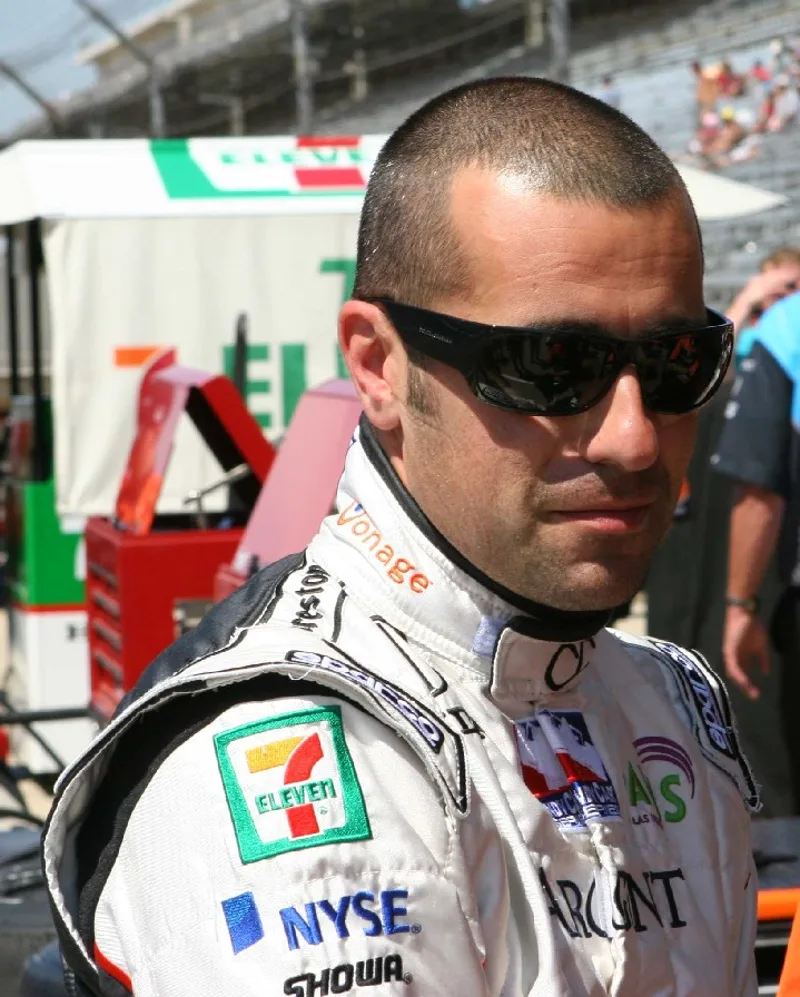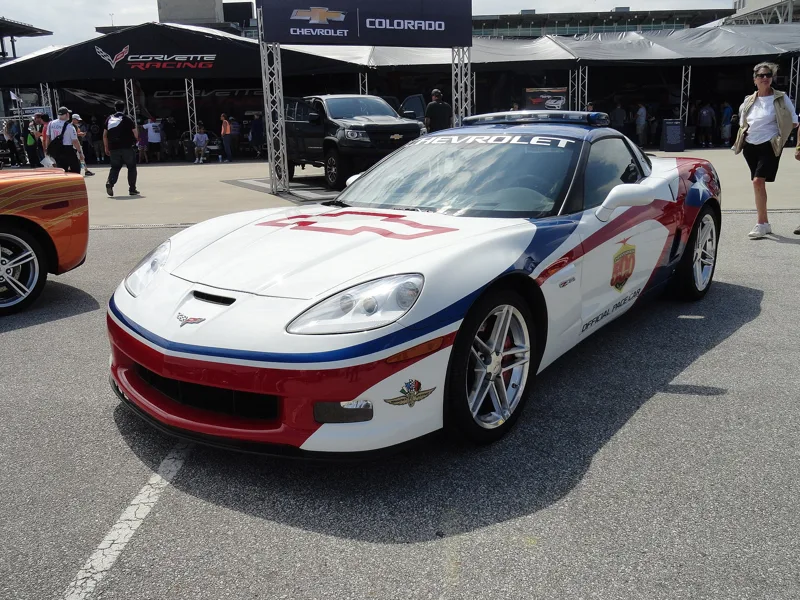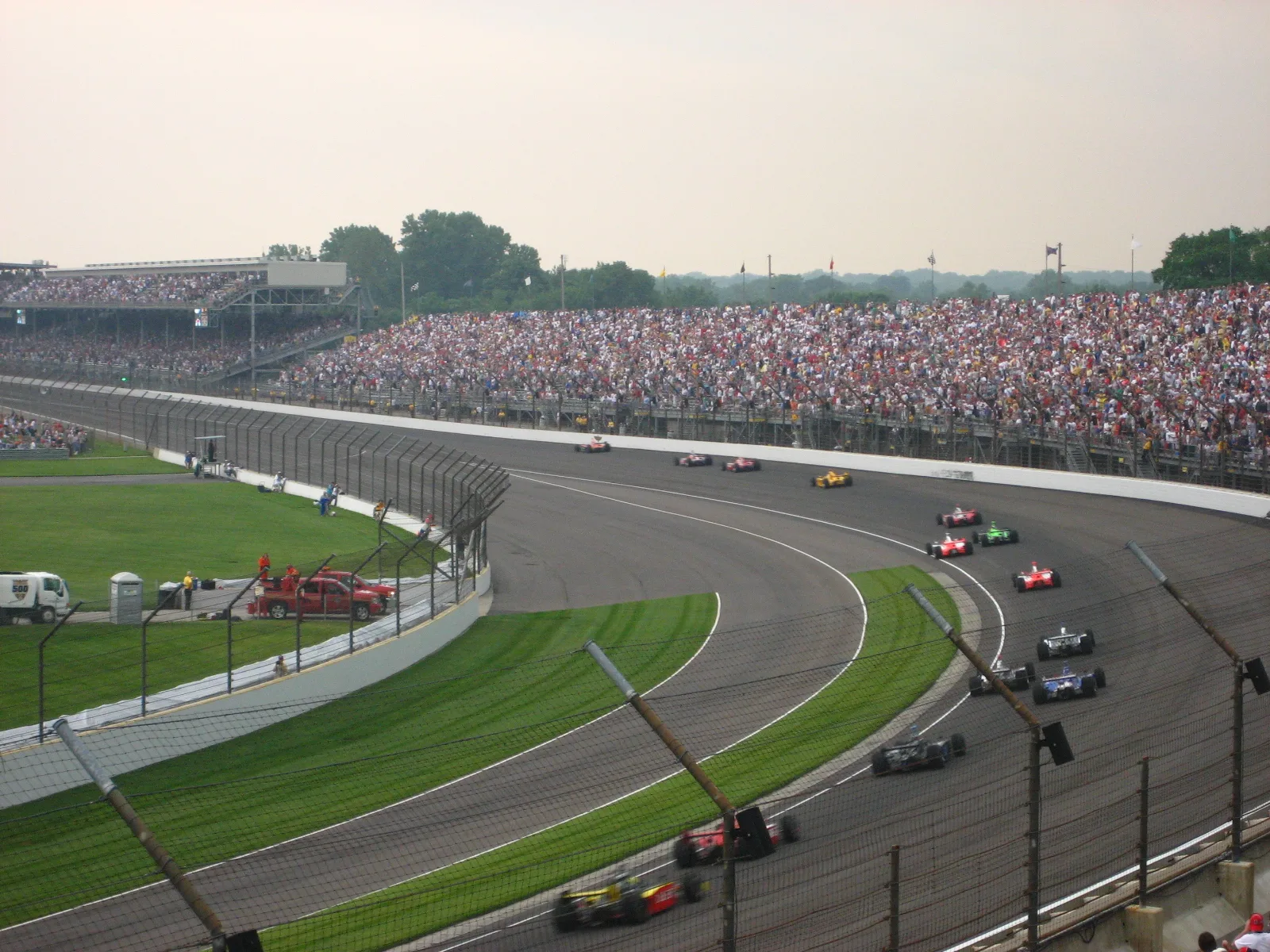
Dario Franchitti won the 91st Indianapolis 500 in a race stopped by rain, the first all-ethanol race and the last before open-wheel unity.
The 2007 Indianapolis 500 was the 91st running of the race, held on Sunday, 27 May 2007. Dario Franchitti won after rain stopped the race and it was called after 166 laps, with every car running on ethanol for the first time.
The 91st Indianapolis 500 was held at the Indianapolis Motor Speedway on Sunday, 27 May 2007. Dario Franchitti won after the race was stopped by rain and called after 166 laps, having led 34 of them. It was the last Indy 500 before the open-wheel split was unified in early 2008, and it was the first race in which every entrant ran on ethanol.
Why was the 2007 race a turning point?
The race was the 12th Indy 500 sanctioned by the Indy Racing League, and the fifth round of the 2007 IndyCar Series. It came at the end of what fans called the Split, the period in which two rival open-wheel series had competed for the same drivers and audiences.
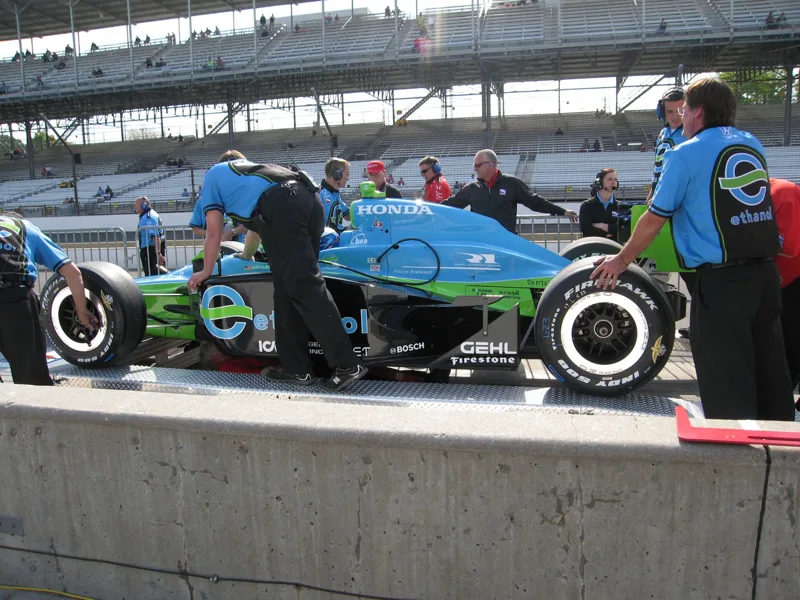
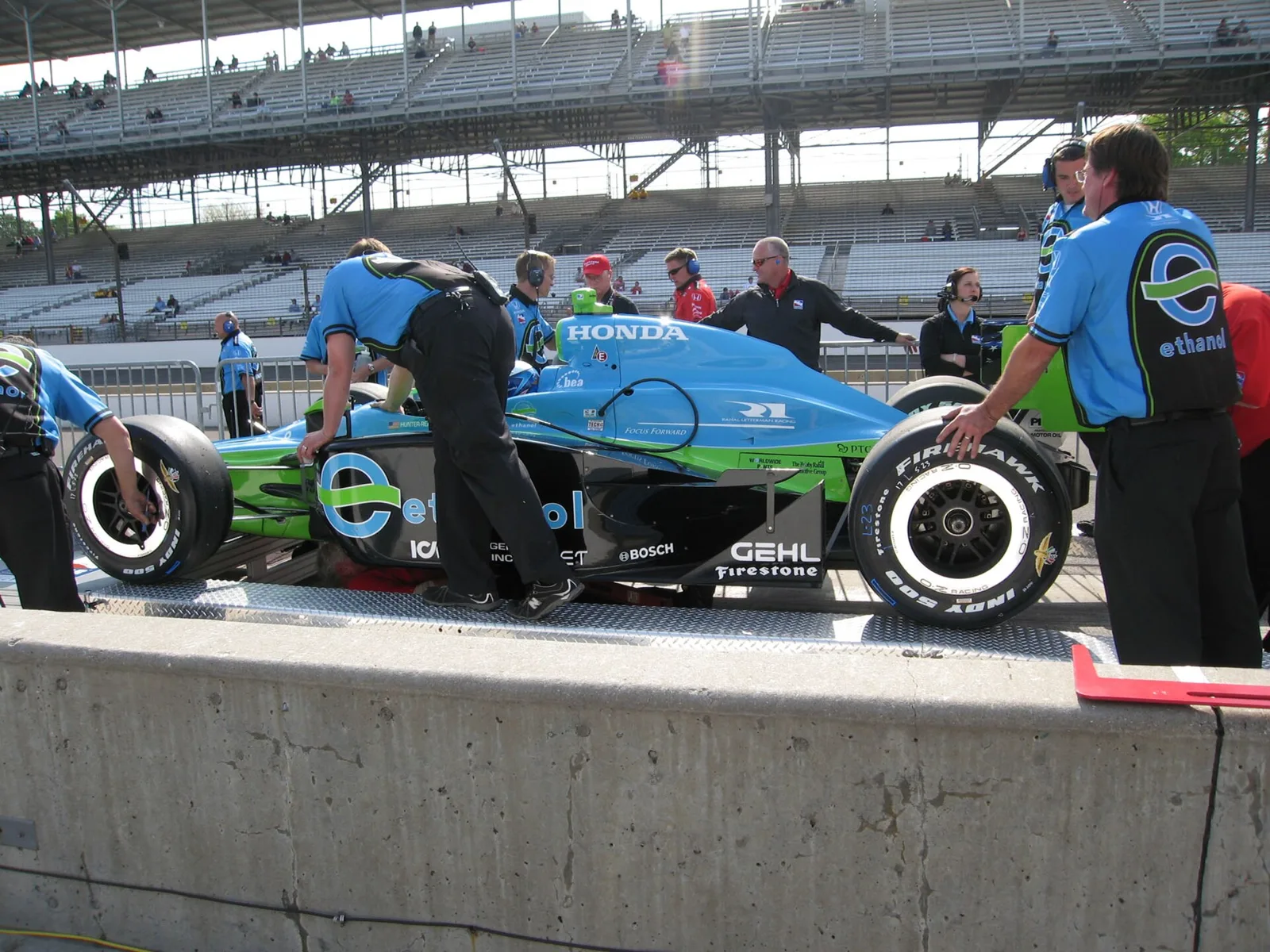
Fuel was another change. Ethanol had replaced methanol after 42 years of methanol use, with a 10% ethanol blend used in 2006 and a full ethanol mixture from 2007. The fuel was branded as 100% fuel-grade, but it was really a denatured 98% ethanol and 2% gasoline blend, called E98.
The race also closed a chapter in chassis history. It was the final 500 to feature Panoz chassis in competition. Jim Nabors, who had sung Back Home Again in Indiana before the race 29 times from 1972 to 2006, was absent through illness, and the fans were asked to sing in his place.
A rain-shortened 500, an all-ethanol field and a late restart gave Franchitti a win the weather almost took away.
How did practice and qualifying go?
There was no official open test before May, because private testing had been banned for 2007. Dreyer and Reinbold Racing was fined $25,000 after an illegal fuel mixture containing 27% methanol was found in one car during practice. The team blamed an old fuel container, and the series called that explanation at least plausible.
The initial entry list had 69 cars, four former winners and one rookie. A. J. Foyt marked his fiftieth year of participation with a ceremonial lap on opening day, when rookie tests for Milka Duno and Phil Giebler were the main activity. Dan Wheldon led the speed chart over 225 mph later in the week, and Scott Dixon turned the month's fastest lap on Friday, 11 May.
Pole day used a new procedure in which only the top 11 cars qualified before the rest were bumped. Dario Franchitti took the provisional pole, but Helio Castroneves ran a second attempt later in the day. After nearly four hours of attempts, Castroneves knocked Franchitti off the pole, his second Indy 500 pole after the one he won in 2003.
The second day of time trials filled positions 12 to 22. Scott Sharp was the first to qualify, and his speed of 223.875 mph held up as the fastest of that day. Sarah Fisher became the second woman to qualify, and Al Unser Jr. was the most notable driver bumped, forcing him to try again the following weekend.
What did the second week of practice show?
Practice resumed in the second week, when cold and windy weather kept speeds down. Danica Patrick set the fastest lap of the day, and Jaques Lazier, who had not yet qualified, was the fastest driver outside the field at 349.484 km/h (217.159 mph). Teams spent the rest of the time in packs.
The following day was also cold, and only fewer than 800 total laps were turned among 23 drivers. Stephan Gregoire, still outside the field, set the quickest time among those yet to qualify at 350.597 km/h (217.851 mph), before he hit the wall in the south short chute. He complained of back pain, and he was ruled out for the rest of the month.
The final full day of practice went without incident, as 31 cars took to the track. Sam Hornish Jr. set the day's fastest lap during one of the pack sessions, and the non-qualified cars trimmed their set-ups for the time trials that followed.
What happened on the third day of qualifying?
On the third day, Milka Duno qualified and became the third woman to make the same race, a record for the event. She was the fifth female driver in the race's history to start, and Roberto Moreno replaced Stephan Gregoire on the grid. By the end of that day the field stood at 32 cars.
Bump Day on 20 May saw Phil Giebler recover from his crash the previous day to take a place in the field, bumping Jimmy Kite. Marty Roth held on, qualifying for his third Indy 500. The field reached 33 cars, and Roth held on as the 6 p.m. gun sounded. All 33 qualified cars took part in the final practice before the race.
The Pit Stop Challenge that week was won by Team Penske, which took its record tenth overall victory in the event. Helio Castroneves and his chief mechanic Rick Rinaman won the $100,000 first prize after an 8.335-second stop in the final. Carb Day that year was headlined by Kid Rock at the Miller Lite Concert.
How did the race start and unfold?
Rain fell overnight, then stopped before the gates opened on race morning. Mari Hulman George gave the start command at 1:05 p.m. EDT, and crews had dried the track after the rain stopped around 10:00 a.m. Television coverage on ABC was set to follow the green flag.
The race began at 1:11 p.m. EDT, televised on ABC. Castroneves' car failed to fire on the pace lap, and after several attempts it joined the field at turn 4. Tony Kanaan slipped past him into turn 1 to lead lap one.
John Andretti lost a rear-view mirror on lap 11, which brought out a caution. When racing resumed, Castroneves, Kanaan, Marco Andretti and Scott Dixon all took turns at the front. Roberto Moreno hit the wall twice, causing the second caution, and Jon Herb and Milka Duno also hit the wall and ended their races.
Dario Franchitti took the lead for the first time on lap 74 and kept it until his pit stop. Around then, officials warned that rain was approaching the area. John Andretti crashed into the outside wall late in that stint, which brought another caution, and Jeff Simmons briefly led before pitting. Marco Andretti then took the lead, and the stage was set for a restart that could decide the race.
Why was the race stopped?
The lap 107 restart was the turning point. Tony Kanaan took the lead in turn 1, and Phil Giebler spun and crashed in the same corner, bringing out a yellow. Before the track could be cleared, heavy rain fell, and the race was red-flagged after 113 laps.
The race had to reach at least 101 laps to be official. When it was stopped, Andretti Green Racing held the top three places, with Kanaan ahead of Marco Andretti and Danica Patrick. The wait lasted nearly three hours before the track dried, and the cars lined up in the pits for a restart shortly after 6:00 p.m.
How did the final laps decide the winner?
About 30 laps of green-flag racing followed the restart, and the field held its formation for much of that time. Another round of green-flag pit stops followed, and the leaders all went down pit road before the rain threatened again.
Kanaan took over where he had left off and pulled away from the field, while Patrick passed Marco Andretti for second. After a further sequence of pit stops, Jaques Lazier led the race for the first time in his career. He had stayed out a couple of extra laps, which put him at the front before the field came back in.
Late in the race, Marty Roth slid high in turn 1 and hit the wall, and the rain began to approach again. Kanaan came up behind Lazier in turn four, sending Lazier into the wall and his own car into a spin. Kanaan blew a tyre and coasted into the pits, and the cars lined up for what looked like the last restart before the weather turned.
Franchitti kept the lead entering the backstretch. Marco Andretti then got tangled up with Dan Wheldon and his car went over, and Buddy Rice was another driver caught in the incident. Before the wreckage could be cleared, a downpour drenched the circuit, and officials called the race after 166 laps with Franchitti as the winner.
What were the final results?
| Result | Detail |
|---|---|
| Winner | Dario Franchitti, 34 laps led |
| Race length | 166 laps, called for rain |
| Race purse | Record total of $10,668,815 |
| Winner's prize | $1,645,233 |
| Rookie of the Year | Phil Giebler |
| Scott Brayton Driver's Trophy | Tony Kanaan |
| Lead changes | Nine drivers led, with 23 lead changes |
Victory-lane celebrations were cancelled, and the ceremonies were moved indoors. Franchitti drove his car into the Pagoda, the control tower, and that approach has since become the usual one in bad weather.
The awards were presented at a victory celebration. Phil Giebler took the Rookie of the Year honour even though his race ended in a crash in turn 1, and Tony Kanaan won the Scott Brayton Driver's Trophy for his efforts. The purse was a record, and Franchitti's winner's share was $1,645,233.
How was the race covered?
ABC televised the race for the 43rd consecutive year, and it was the first 500 broadcast in high definition. Time trials were shown live on ABC, ESPN and ESPN2. Rusty Wallace, who was involved in ABC's NASCAR coverage, made his final 500 broadcast that year.
The IMS Radio Network carried the race for the 55th consecutive year, with Mike King as anchor. Davey Hamilton returned to the cockpit for the first time since 2001 and offered in-car reports during cautions. Bob Jenkins was back on the network after earlier years, taking over the turn two reporting spot from Adam Alexander.