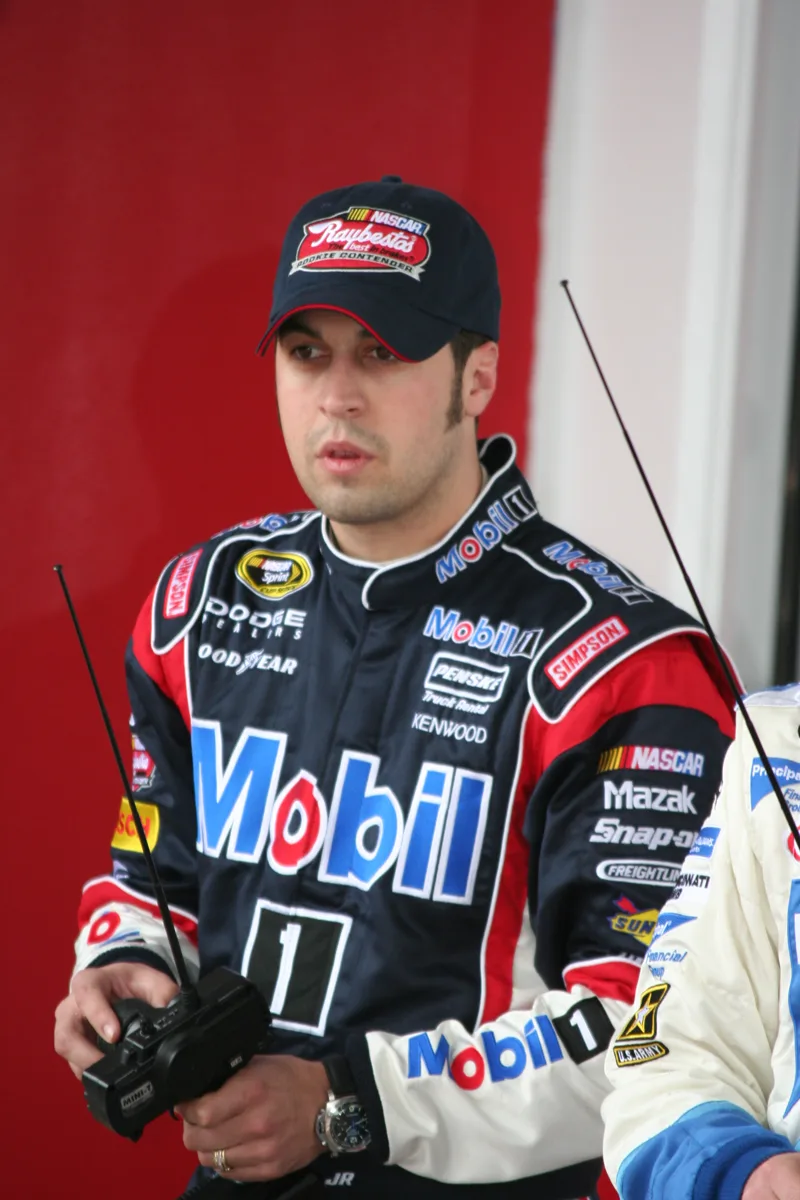
A new Chevrolet engine, a last-lap pass and a finish decided by a few thousandths of a second made the 2003 Michigan race one of the closest in IndyCar history.
Alex Barron won the 2003 Firestone Indy 400 by 0.0121 seconds from Sam Hornish Jr., who had led 126 laps with a new Chevrolet engine. The IRL race was run on 27 July 2003 at Michigan International Speedway, and Barron started sixth.
The 2003 Firestone Indy 400 was decided by a margin so small that it is still remembered at Michigan International Speedway. Alex Barron edged Sam Hornish Jr. at the flag to win by 0.0121 seconds, a result that made it the fourth-closest finish in IndyCar history at the time. Barron started sixth, and his win came on a day when a new Chevrolet engine had caused debate across the paddock.
The race was also a turning point in the championship. Tony Kanaan led the standings before the race, but Scott Dixon finished fifth and took the lead afterwards, with Kanaan falling to second.
What was the 2003 Firestone Indy 400?
The Firestone Indy 400 was round ten of an 18-race IRL schedule for 2003, and only the second time the event had been run, after its 2002 debut. It was held on 27 July 2003 in Brooklyn, Michigan, at Michigan International Speedway, and the race covered 200 laps and 640 km (400 miles).
Around 30,000 people attended. Barron won the race for Mo Nunn Racing, a team that took its second and final win in the series at the event. Barron was substituting for Felipe Giaffone, who had been injured in a crash at the Kansas Indy 300.
A last-lap pass decided by 0.0121 seconds, a new Chevrolet engine and a Mo Nunn Racing win that closed the team's story in IndyCar.
What was the track like?
Michigan International Speedway is a four-turn tri-oval of 2 miles (3.2 km) with asphalt surfaces. The corners are banked at 18 degrees, the front stretch at 12 degrees and the back stretch at 5 degrees. That combination allowed drivers to race side by side for long periods, and the event produced several lead changes at high speed.
The track also rewarded patience. Drivers who could hold a line and run in the draft often made progress, while those who got loose in the corners lost time quickly.
What was the championship situation before the race?
Kanaan led the Drivers' Championship with 303 points before the race, 14 ahead of Gil de Ferran in second and 15 ahead of Scott Dixon in third. Helio Castroneves was fourth with 282 points. Kenny Brack was fifth on 245 points, a gap that gave the leaders a strong hold on the top of the table.
In the Manufacturers' Championship, Toyota led with 84 points, Honda had 67 and Chevrolet 47. Tomas Scheckter was the defending race winner, and the Firestone Indy 400 had been a stop on the schedule for several seasons.
Why was the new Chevrolet engine controversial?
Chevrolet debuted a new variant of its Indy V8 at this race. The Generation IV engine was built by Cosworth, and General Motors had to win clearance from the Indy Racing League before it could be used. Mid-season engine changes were usually forbidden, but IRL vice president Brian Barnhart said Chevrolet had a performance deficiency compared with Honda and Toyota.
Sam Hornish Jr. was selected to race with the engine, because he was the highest-placed Chevrolet driver in the standings. The next-highest Chevrolet driver would receive the new engine for the Emerson Indy 250. The decision drew criticism from some drivers. Dixon called it kind of shady, and Greg Ray felt it was a poor move from a financial standpoint.
Before the race, Dan Wheldon and Roger Yasukawa had completed more than 160 laps of private testing at the track on 1 July. Both later said that the pack racing at Michigan would force competitors to be patient in order to succeed.
How did practice and qualifying go?
Four practice sessions were held before the race, two on Friday and two on Saturday. Hornish Jr. was the fastest in the first session on Friday morning, at 32.1677 seconds. Dixon led the second session with 32.3605 seconds and then topped the third on Saturday at 32.3682 seconds. Tomas Scheckter led the final session at 32.4822 seconds.
Scheckter earned the pole with a time of 32.3657 seconds. It was his fifth career pole and his second in a row at Michigan. Dixon, his Chip Ganassi Racing teammate, joined him on the front row. Castroneves took third after a helpful gust of wind, with Hornish Jr. fourth and Al Unser Jr. fifth.
Barron, Ray and Brack took the next three positions. De Ferran took ninth after his team fixed a mechanical issue during the third practice session, and Scott Sharp started 10th. Takagi, Yasukawa, Wheldon, Herta and Kanaan came next, and the rest of the grid was filled by the remaining entries.
How did the race start?
The weather was overcast and windy when the race began, with air temperatures of 27 C (81 F) and track temperatures of 37 C (98 F). Approximately 30,000 people watched the start. ABC televised the race in the United States, hosted by Bob Jenkins, with Paul Page and Scott Goodyear as commentators and Jack Arute, Gary Gerould and Jerry Punch as pit reporters.
Al Unser, who won the Indianapolis 500 four times, gave the drivers the signal to fire their engines. The race began at 3:00 pm local time, when Firestone brand marketing executive director Phil Pacsi waved the green flag. On the pace laps, Yasukawa thought a sidepod had come loose and turned into pit road, but his crew found nothing wrong.
On the first lap, Hornish Jr. swerved up the track to take the lead. Dixon improved to second, Kanaan moved up ten positions into fifth, and pole sitter Scheckter was relegated to sixth. By lap four, Brack had moved to third, and two laps later Kanaan, Barron, Brack, Scheckter and Castroneves were all running side by side for third. Scheckter took the position on lap seven and passed Dixon a lap later.
Scheckter overtook Hornish Jr. on the outside of turn one to lead on the 10th lap. Dixon fell to fourth behind Castroneves by lap 11.
What happened in the early middle of the race?
Vitor Meira slowed on the front stretch on lap 17 and drove into pit road two laps later, when a small fire broke out from an internal fuel leak. Wheldon's car began to smoke after an engine failure, forcing him out of the race. Ten laps on, Hornish Jr. moved ahead of Scheckter through the third corner.
Dixon briefly lost fourth to Kanaan, but he reclaimed the position on lap 31. Scheckter found room on the inside line and retook the top spot from Hornish Jr. Hornish Jr. surrendered second place when he came down pit road for his first stop, the start of the field's first round of stops. Herta came in with an engine issue and became the third retirement.
Scheckter made his stop on lap 42, handing the lead to Dixon for two laps. After Barron pitted, Dixon picked up the lead once again. Hornish Jr. went past Dixon for second on lap 49 and then tried to pull level with Scheckter for the lead. He took the front on lap 50, Scheckter got it back a lap later, and Hornish Jr. then pulled clear.
The first caution of the race came five laps later, when debris was found on the track. The leaders made stops under the caution for tyres and fuel. After Foyt IV left pit road, he sensed a problem with his car and drove back in, and his right-rear tyre came off and bounced into the inside wall.
The restart on lap 64 saw Hornish Jr. out front, with Castroneves, Kanaan, Dixon and Scheckter behind him. On the next lap, Brack's car had trouble and slid into the outer wall in turn two, which brought out the second caution. Castroneves had a faulty radiator that leaked oil into his engine, and he was sidelined for the rest of the race.
How did the lead change in the middle stint?
Green-flag racing resumed, with Hornish Jr. still out front and Kanaan, Dixon, Scheckter and Barron chasing. By lap 76, Unser Jr. had moved into fourth ahead of Scheckter and Barron, and Sharp came into pit road with a punctured tyre. He rejoined a lap behind the leaders.
For the next 14 laps, Kanaan stayed as close as 0.1 seconds to Hornish Jr., but he never found a way by. Scheckter passed Kanaan for second, and Hornish Jr.'s lead grew to one second by lap 100.
A second round of green-flag stops started on lap 104, and Hornish Jr. came in for new tyres and fuel, giving up the lead to Scheckter for the next four laps. Kanaan and Unser Jr. each led a lap before they pitted. Once Barron came down pit road, Hornish Jr. took the lead back, 4.7 seconds clear of Scheckter.
Scheckter was then relegated to fourth by Barron and Unser Jr., and Hornish Jr. kept extending his advantage. He led by 7.8 seconds until the third caution came out on lap 145 for debris. During that stop, Hornish Jr. nearly collided with the rear of Dixon's car as he left pit road, which dropped him to sixth.
What happened in the final stint?
Barron exited pit road first at the lap 151 restart, with Unser Jr. second and Dixon third. Hornish Jr. moved to the inside line into turn one and lost two places in turn three. He was back in third by then, with Takagi having climbed from seventh into second, only 0.05 seconds behind Barron, a Mo Nunn Racing team-mate.
On lap 155, Hornish Jr. got around Takagi on the front stretch and moved into second. Kanaan's car lost power while running seventh on lap 157, and he retired. Seven laps later, Hornish Jr. pulled ahead of Barron in turn four as the three drivers ran three-abreast for the lead. Barron drifted up into Scheckter, and both made contact, which sent Barron spinning into the grass on the front stretch. He regained control without damage.
The fourth and final caution then came out, and most of the leaders made their last fuel stops. Unser Jr. was the only driver who did not stop, and he assumed the lead for the restart on lap 169. Hornish Jr. accelerated more quickly and overtook him for the lead.
How did the final lap decide the race?
On lap 170, Unser Jr. dropped to ninth as Scheckter, Hornish Jr. and Takagi ran alongside each other. Hornish Jr. nosed ahead of Scheckter for the lead. Barron used Hornish Jr.'s slipstream to move into second, and On lap 175 the three leaders ran three-wide for the top spot.
Hornish Jr. and Barron then pulled away from the rest of the field and raced side by side. Hornish Jr. led laps 180 to 189 with a 0.02-second advantage, and Sharp moved up to third with twelve laps left. With ten to go, Barron got ahead by seven thousandths of a second, but Hornish Jr. retook the lead the next lap. Scheckter passed Sharp for third with seven laps left.
With four laps left, Scheckter raced alongside Barron for second and let Hornish Jr. get by Barron for the lead. Barron tried several slingshot passes over the next three laps, but he failed each time. Heading into the last lap, Barron moved to the high side in turn three while Hornish Jr. held the inside. Barron got enough speed to slip past, and he won by 0.0121 seconds.
The margin was the closest finish in the track's history, and it ranked among the closest in IndyCar history. Scheckter finished third, ahead of Sharp in fourth and Dixon in fifth.
Who finished where?
Barron won, Hornish Jr. was second, and Scheckter third. Sharp, Dixon, Takagi, de Ferran, Yasukawa, Unser Jr., Ray, Rice, Lazier and Buhl completed the classified finishers in the order they crossed the line.
| Specification | Detail |
|---|---|
| Race date | 27 July 2003 |
| Race length | 200 laps, 640 km (400 miles) |
| Winner | Alex Barron, from sixth |
| Margin | 0.0121 seconds over Sam Hornish Jr. |
| Third | Tomas Scheckter, Chip Ganassi Racing |
| Pole | Tomas Scheckter, 32.3657 seconds |
| Laps led by Hornish Jr. | 126, the most of any driver |
| Cautions | 4 |
| Lead changes | 30 among six drivers |
| Average speed | 291.158 km/h (180.917 mph), the fastest race in series history at the time |
| Barron's earnings | $117,500 |
How did the drivers react?
Barron went to victory lane with his team and said afterwards that he hoped the win would bring more opportunities in the series. Toyota Racing Development's president Jim Aust praised him as one of the sport's best kept secrets. It was also the final win for Mo Nunn Racing in IndyCar competition.
Hornish Jr. was happy with the new engine's debut, saying the team had been up front, led many laps and gained points. Scheckter was pleased with third and praised Hornish Jr. for racing him cleanly. Sharp called the day a big one for the Delphi team, while Andretti Green Racing suffered three engine failures, and team president Kim Green was disappointed despite praising the pit crews.
How did the standings change?
Dixon took the lead in the Drivers' Championship with 318 points after finishing fifth, and Kanaan dropped to second with 317. De Ferran fell to third, three points behind Dixon, and Castroneves and Brack rounded out the top five with 295 and 257 points. Six races remained in the season.
In the Manufacturers' Championship, Toyota held its lead with 94 points. Honda earned 72 points to stay second, ahead of Chevrolet with 54 points.