A rookie won, Team Penske returned with a one-two finish, and the Indy Racing League and CART split still decided who could take the grid.
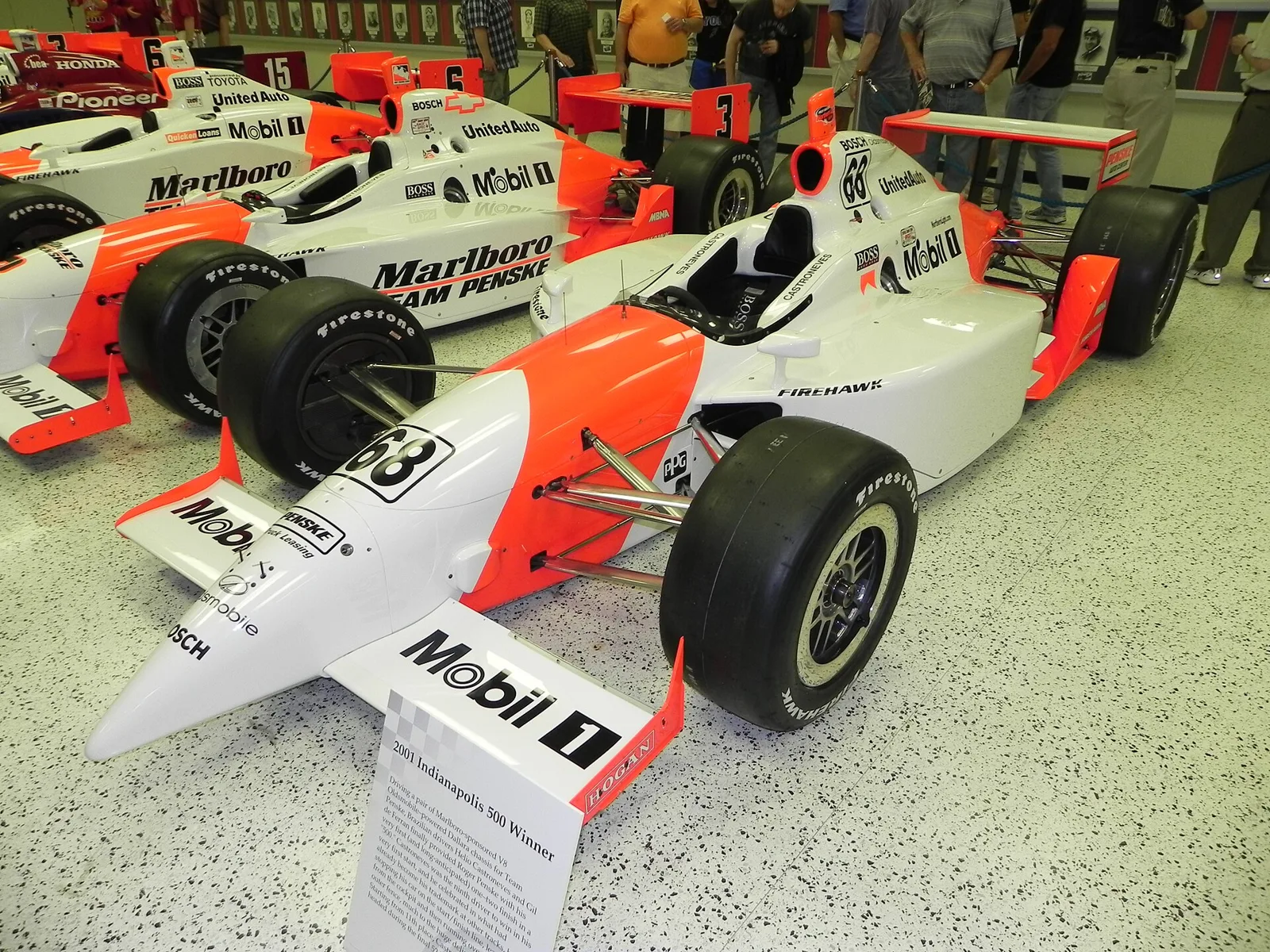
The 2001 Indianapolis 500 was won by Helio Castroneves for Team Penske, who led the final 52 laps. The team filled the top two places, with Gil de Ferran second. The 85th running on 27 May 2001 was shaped by the IRL and CART split.
The 2001 Indianapolis 500 was won by Helio Castroneves, a race rookie with three seasons in CART, who led the final 52 laps for Team Penske. Team Penske finished first and second, and the race was run under the shadow of the Indy Racing League and CART split that had kept many top teams away from Indianapolis for years. The 85th running, held on 27 May 2001, is remembered for the winner, the rain delays and a controversial national anthem.
Who won the 2001 Indianapolis 500?
Helio Castroneves won the 85th Indianapolis 500 for Team Penske after leading the final 52 laps. His teammate Gil de Ferran finished second, 0.4838 seconds behind, so the team took the first and second places. It was Castroneves' first of four victories in the race.
Castroneves had spent three seasons in the CART series before arriving at Indianapolis as a race rookie. He became the second straight rookie to win, after Juan Pablo Montoya in 2000. He retook the lead after Tony Stewart pitted during a spell of rain, and after the restart from the red flag he led Robbie Buhl before holding off his teammate over the closing laps.
On the victory lap he stopped at the finish line and climbed the catch fence. Members of the team's crew came up to join him on the wire, and the fans responded with delight.
A rookie won, Team Penske returned with a one-two finish, and the split still decided who could take the grid.
Why did Team Penske's return matter?
Team Penske had skipped Indianapolis from 1996 to 2000 during the split, and its previous entry in 1995 had ended with both cars failing to qualify. Returning with IRL-type machines, the team swept the top two places and gave Roger Penske his eleventh Indianapolis 500 victory.
Penske called the result a payback for 1995, and the one-two finish was the first the team had achieved in the race. It was a reversal of fortune after that failed qualifying effort.
The team also had a sponsorship problem. Marlboro logos appeared on its cars during the first week of activity, but the state attorney general objected and the logos came off by mid-May. Rather than repaint the liveries, the team left the sidepods blank and kept the familiar white and red scheme.
The wider backdrop was the split itself. Team Penske and Team Green bought IRL-type machines for the race, and CART scheduled no races on the Indianapolis weekends, the first time that had happened during the split. The race therefore brought several top CART teams back to the Speedway for the first time since 1995.
How did qualifying shape the grid?
Qualifying belonged to the IRL teams. Scott Sharp won pole with the quickest four-lap average of the week, Greg Ray qualified second, and IRL-based cars occupied the front row and held the four best grid slots overall. Gil de Ferran was the highest-placed CART regular, starting fifth.
Pole day was Saturday 12 May. Tony Stewart set the fastest practice lap of the month, but Eliseo Salazar blew an engine and crashed at turn one, which halted the session. The field reached 27 cars by the end of Saturday and 32 after the second weekend of qualifying on Sunday 13 May.
Bump Day was Sunday 20 May. The field reached 33 cars, several drivers were displaced that afternoon, and Billy Boat held the bubble spot at 5:07 p.m. Memo Gidley made the last attempt of the day and missed the field by 0.242 seconds.
Carb Day brought all 33 cars and the first alternate out for laps. Scott Sharp was the fastest of the day, while Jeret Schroeder needed a tow-in after his car stuck in gear. Shigeaki Hattori, the first alternate, was bumped.
How did the race unfold?
The race was held in overcast weather with rain forecast, and pole sitter Scott Sharp crashed in turn one on the opening lap. Two rain delays, a long caution and a 17-minute red flag shaped the afternoon, yet the race ran its full distance. Castroneves led the final 52 laps when the chequered flag fell.
The start was costly. Greg Ray and Robby Gordon narrowly avoided Sharp's crash, but the green flag was not out for long. Within two laps of the first green flag, Sarah Fisher lost control in turn two and made contact with Scott Goodyear. Goodyear suffered a broken back and retired from IndyCar racing after the race.
The restart after the long yellow on lap 17 also went wrong. Cold tyres caused Sam Hornish Jr. to spin in turn four, and Al Unser Jr. moved high to avoid him, brushed the outside wall and retired. Racing resumed properly on lap 22, with Ray and Gordon leading the early stages.
Rain changed the race again on lap 107, when Jon Herb crashed in turn one. The caution was extended to lap 119 as the rain fell on the circuit. Michael Andretti led when the downpour began but pitted soon after, which handed the lead to Gil de Ferran with Castroneves second.
On lap 134 Cory Witherill went off in turn four, and the leaders headed for the pits. Both Castroneves and de Ferran received penalties for leaving the pit lane incorrectly, and that put Tony Stewart at the front for the first time that day. He kept it until the rain returned on lap 149.
Rain came down heavier on lap 155, and officials showed the red flag. The track dried once the sun came out, and after the 17-minute stoppage the cars were refired. When the race went green again, Castroneves was ahead of Robbie Buhl. Buhl tried to pass for the lead on lap 159 but could not get by, and on lap 166 he spun exiting turn two and tapped the inside wall.
The green flag returned on lap 171 with Castroneves still in front and de Ferran back in second. Castroneves kept his teammate at bay and crossed the line 0.4838 seconds in front. The table below lists the places that defined the result.
| Finish | Driver | Entry | Note |
|---|---|---|---|
| 1st | Helio Castroneves | Team Penske, rookie | Led the final 52 laps; first of four Indy 500 wins |
| 2nd | Gil de Ferran | Team Penske | 0.4838 seconds behind the winner |
| 6th | Tony Stewart | Chip Ganassi Racing | Double Duty; visiting NASCAR driver |
| 7th | Eliseo Salazar | IRL regular | First regular IRL driver home, a lap down |
| 33rd | Scott Sharp | Pole sitter | Crashed on the opening lap |
What happened to Tony Stewart during Double Duty?
Tony Stewart was making his second attempt at the Indianapolis and Charlotte double. He qualified 7th at Indianapolis, finished 6th there and then reached the Coca-Cola 600 to finish 3rd. Covering the combined 1,100 miles (1,800 km) made him the only driver to have done so.
Stewart was a former IRL champion who was racing full-time in NASCAR's Winston Cup Series, driving the No. 20 Home Depot Pontiac for Joe Gibbs Racing. For Indianapolis he signed with Chip Ganassi Racing. Critics had questioned his fitness, so he followed a month-long fitness and diet programme with a personal trainer.
The day was a logistical squeeze. The Charlotte start had been moved forward for a new television package, and Stewart was reportedly due to leave his Indianapolis car on a strict schedule, whether or not the race there had finished. A red flag gave him a chance to deal with a cramping leg, and he needed first aid. Relief driver Richie Hearn was almost called in, but Stewart got back into the car and the race resumed.
He completed the Indianapolis race in 6th place on the lead lap, then travelled to Lowe's Motor Speedway and reached the grid on time. Missing the drivers' meeting dropped him to the back for the pace lap, and he spun on the second lap while running last. He worked back through the field to finish 3rd on the lead lap, and afterwards he said he had proved his critics wrong.
Why was the anthem performance controversial?
Steven Tyler of Aerosmith sang the national anthem before the race, and the performance drew a largely negative reaction from the crowd, television and radio commentators and veterans in attendance. He opened with a harmonica solo, threw the instrument into the crowd, finished a cappella and changed the closing line to mention the Indianapolis 500.
The Speedway had invited Tyler while Aerosmith was kicking off its Just Push Play Tour. The band had also performed at the Super Bowl XXXV halftime show earlier that year. Normally the anthem is backed by the Purdue All-American Marching Band, but on this occasion the band was restricted to the opening chorus.
Medal of Honor recipients were in attendance for the Memorial Day holiday, which made the reaction more pointed. Speedway president Tony George said afterwards that the offence was not intended and that the Speedway holds great respect for its veterans. Tyler apologised and said he had meant no disrespect.
The harmonica was reportedly retrieved by Purdue band member David Hornthal. A harmonica said to be the one Tyler threw was later offered on the television show Pawn Stars on 20 February 2012, but it did not sell.
What did the race mean for the IRL and CART split?
The 2001 race showed that CART teams could still beat the IRL field on race day, even though the IRL had dominated qualifying. The top six finishers were visiting CART or NASCAR drivers, and the first regular IRL driver finished seventh, a lap down. The result put the split firmly in the spotlight.
Race day belonged to the CART-based teams. Every one of the top six came from CART or the NASCAR Cup series, and Eliseo Salazar, the first regular IRL driver to finish, took seventh place. That was a public relations setback for the IRL, which had led the time trials.
Juan Pablo Montoya, the reigning champion, had moved to Formula One and did not defend his title. He would not race at Indianapolis again until 2014. Arie Luyendyk returned to the cockpit after a year of retirement, and Scott Goodyear, a two-time runner-up in the race, made his final IndyCar start before moving to ESPN colour commentary the following season.
The race was broadcast live on radio by the Indy Racing Radio Network, with Mike King as chief announcer and Johnny Rutherford and Johnny Parsons as driver experts. The Speedway's flagship station had moved back to 1070 WIBC-AM, now WFNI. On television, ABC Sports carried flag-to-flag coverage with Al Michaels as host and Bob Jenkins as announcer.